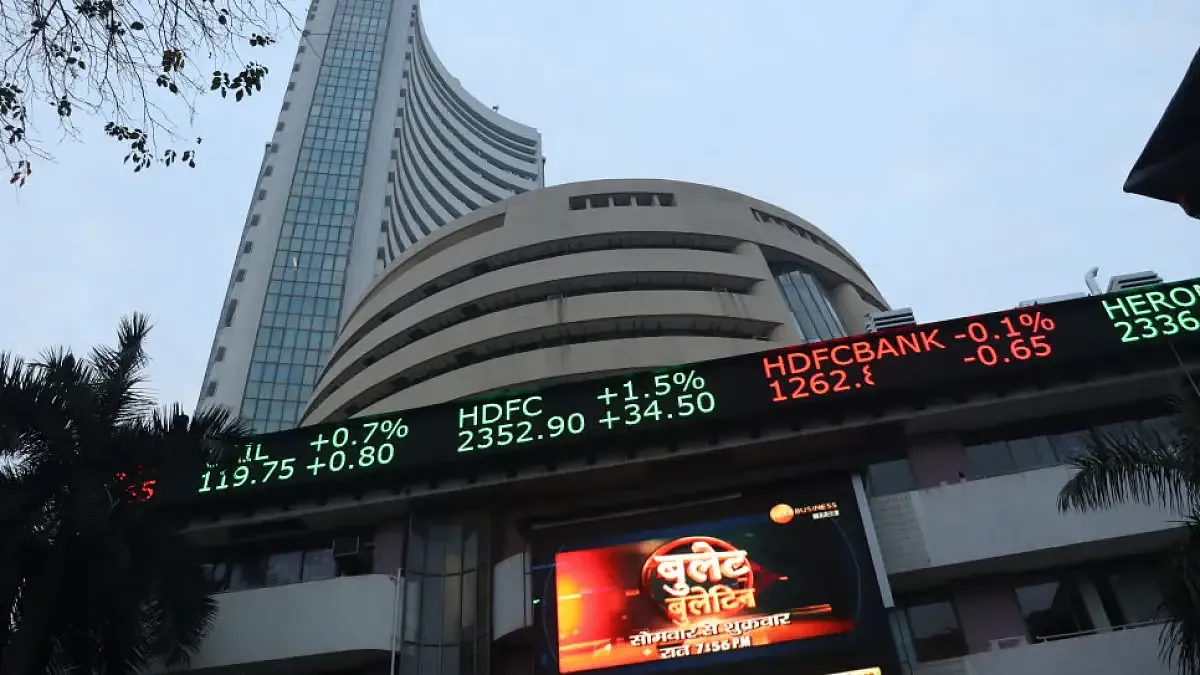
The sectoral carnage was particularly visible in PSU banking and realty stocks, both of which are traditionally viewed as high-beta plays that amplify broader market moves. When risk appetite evaporates, these are typically among the first pockets of the market to see aggressive profit booking, as traders rotate out of cyclical, rate-sensitive names and into more defensive sectors such as FMCG, pharmaceuticals and IT, which tend to hold up better during periods of macro uncertainty.
The broader market indices told an even more sobering story than the headline benchmarks. The Nifty MidCap index ended 1.09 per cent lower, while the Nifty SmallCap index fell a sharper 1.54 per cent, underlining how the pain was not confined to large caps alone but had percolated through the entire market capitalisation spectrum. Mid- and small-cap stocks, which had enjoyed a strong run over the preceding months on the back of retail investor enthusiasm, are often the most vulnerable segment during a risk-off phase, given their comparatively thinner liquidity and higher retail ownership.
Individual stock movements underscored the depth of the selling. Among the prominent laggards on the Nifty50 were InterGlobe Aviation, Dr. Reddy's Laboratories and Jio Financial Services, each of which featured among the index's top losers for the session. The presence of an aviation major among the worst hit is particularly telling, given that airline stocks are directly and immediately sensitive to fluctuations in crude oil prices, which form a substantial share of operating costs for carriers.
Market watchers point out that this is not merely a one-off correction but part of a longer narrative that has been playing out through the July earnings season. With the June quarter, or Q1 FY27, results season now in full swing, stock-specific volatility has been the order of the day, as investors dissect individual company performance against a backdrop of macro headwinds. Even companies delivering healthy earnings growth have, in several instances, seen muted or negative stock reactions, as the broader risk-off environment overwhelms company-specific good news.
Global cues have offered little comfort either. Wall Street's own struggles, coupled with geopolitical rhetoric out of Washington concerning the West Asia conflict, have kept international investors on edge. Comments from senior US political figures warning of consequences for regional actors have only added to the sense that the conflict could escalate further, a scenario that would almost certainly send crude prices higher still and deepen the pressure on oil-importing economies such as India's.
For retail investors who have poured record sums into Indian equities over the past several years through systematic investment plans and direct stock purchases, the three-day slide serves as a reminder of the two-way nature of markets. While the structural growth story of the Indian economy remains intact in the eyes of most long-term analysts, near-term volatility driven by external shocks — oil prices, currency movements and geopolitical flashpoints — can and does periodically interrupt even the most robust bull runs.
Looking ahead, market participants will be watching a cluster of triggers closely. On the domestic front, the continuing flow of Q1 FY27 corporate earnings will keep stock-specific action in focus, with several large-cap and mid-cap names still due to report over the coming days. On the global front, any signs of de-escalation in West Asia, movements in crude oil benchmarks, and shifts in the rupee's trajectory against the dollar will all factor heavily into whether the current corrective phase deepens or finds a floor.
For now, the mood on Dalal Street remains cautious rather than panicked. Seasoned market participants note that three-session declines of this magnitude, while uncomfortable, are far from unprecedented in a market that has otherwise delivered strong multi-year returns. The coming sessions will be closely watched for signs of stabilisation, with support levels on the Nifty being tested in real time as the index searches for a base amid one of its more turbulent stretches of the year.
As trading desks across Mumbai, Bengaluru and Delhi prepare for the next session, the consensus view is one of watchful caution: a market searching for direction, buffeted by forces largely outside its control, and waiting for either a spark of positive news or a clearer signal from the charts before committing fresh capital with conviction.
Historically, Indian markets have shown a resilient pattern of absorbing external shocks of this nature and recovering within a handful of sessions, provided the underlying triggers do not escalate into something structurally more damaging, such as a prolonged spike in crude prices well beyond current levels or a sustained, months-long acceleration in foreign outflows. Veteran fund managers point out that three-session corrections of a similar magnitude have occurred multiple times over the past two years, and in most of those instances, the market found a base and resumed its broader uptrend within two to three weeks, once the immediate catalyst either faded or was fully priced in.
Domestic mutual funds and insurance companies, which have built up substantial buying capacity through years of steady systematic investment plan inflows, are being watched closely for signs of counter-cyclical buying. In several previous episodes of FII-driven selling, domestic institutional investors have stepped in to absorb a meaningful share of the supply, cushioning the market from steeper declines and, in some cases, setting the stage for a faster recovery once foreign flows stabilise. Whether that pattern repeats in the current environment will be one of the more closely tracked data points in the sessions ahead.
The banking sector, which carries substantial weight in both the Sensex and the Nifty given its large index representation, will be a particularly important bellwether for the market's near-term direction. Private sector banks have generally held up better than their public sector counterparts through this correction, a divergence that some analysts attribute to relatively stronger asset quality metrics and lower direct exposure to the kind of cyclical, rate-sensitive lending that tends to underperform sharply during risk-off phases.
Currency traders, meanwhile, are watching the rupee's behaviour closely for early signs of stabilisation. The Reserve Bank of India has, in past episodes of sharp currency depreciation, intervened selectively in the forex markets to smooth excessive volatility, and market participants will be alert to any signs of similar action should the rupee's slide accelerate meaningfully from current levels in the sessions ahead.
For long-term investors, financial advisors have generally counselled against overreacting to short-term index swings driven by geopolitical headlines and commodity price movements, noting that India's underlying economic growth trajectory, corporate earnings trends and demographic tailwinds remain the more important drivers of long-run equity returns. Systematic investors following disciplined SIP strategies, in particular, are often advised to treat such corrections as opportunities to accumulate quality names at more attractive valuations, rather than as signals to pause or exit their investment programmes altogether.

Options market data has also offered some clues about how traders are positioning for the days ahead. Elevated implied volatility readings in Nifty options, coupled with a build-up of open interest around key strike prices near the 24,000 mark, suggest that traders are actively hedging against further downside even as some are simultaneously positioning for a potential bounce should the index hold above its immediate support levels.
As the earnings season progresses further into its second half, market participants expect stock-specific dispersion to remain elevated, with well-executed companies delivering earnings beats likely to be rewarded even within an otherwise cautious index backdrop, while companies missing expectations could see outsized punishment given the market's currently reduced risk appetite. That dynamic is likely to reward careful stock selection over broad index-level bets in the sessions immediately ahead.
Foreign brokerages covering Indian equities have, in recent commentary, sought to draw a distinction between near-term tactical caution and their longer-term structural view on the market. Several continue to describe India as one of the more attractive large emerging markets on a multi-year basis, citing steady corporate earnings growth, a still-favourable demographic profile and continued policy support for domestic manufacturing and infrastructure investment, even as they acknowledge that near-term flows could remain volatile given the current combination of elevated crude prices and unresolved geopolitical tensions in West Asia.
Sector rotation patterns observed during the current pullback also offer some insight into how professional money managers are currently positioning their portfolios. A relative shift toward defensive sectors such as FMCG, pharmaceuticals and select IT names, away from more cyclical, rate-sensitive sectors, suggests that at least part of the institutional investor base is treating the current environment as a tactical, rather than permanent, repositioning — the kind of rotation typically seen when investors expect volatility to persist for a defined period rather than indefinitely.
For policymakers, the current bout of market weakness, while not yet severe enough to prompt any specific policy response, will likely factor into ongoing discussions around measures to support market stability and investor confidence, particularly if foreign outflows were to accelerate meaningfully from current levels or if the rupee's depreciation were to intensify further in the sessions ahead.