Indian benchmark equity indices extended their losing streak to a fourth consecutive session on Thursday, July 23, with the Nifty 50 slipping 0.53 per cent to close at 23,869, dropping below the psychologically significant 24,000 mark for the first time in several weeks, while the Sensex shed 0.47 per cent to settle at 76,391. The declines, though modest in single-session percentage terms, represent the continuation of a broader corrective trend that has gripped Dalal Street through the back half of July, driven by a confluence of pressures that market strategists say are unlikely to dissipate quickly: surging global crude oil prices, a rupee sliding toward record-low territory, sustained foreign institutional investor selling, and an escalating geopolitical crisis in West Asia that shows no clear signs of near-term resolution.
Thursday's session saw broad-based selling pressure across the market, with declines evident well beyond just the headline indices. Sectoral indices bore the brunt of the sell-off unevenly, with banking counters, metals, and PSU stocks among the more prominent laggards, while a handful of defensive pockets — pharmaceuticals aside, given Dr Reddy's own company-specific troubles this week — offered some relative shelter. The breadth of the decline, spanning both largecap and broader midcap and smallcap segments, points to a market-wide risk-off mood rather than a narrower, sector-specific correction, a distinction technical analysts consider meaningful when assessing whether a pullback is likely to be short-lived or the start of a more extended consolidation phase.
At the heart of the pressure is the continued climb in global crude oil prices, with Brent crude hovering near a six-week high above $98 a barrel as of Thursday's close, driven by escalating tensions in West Asia that have periodically threatened to disrupt tanker traffic through the Strait of Hormuz, one of the world's most critical energy chokepoints. For India, which imports roughly nine in every ten barrels of crude it consumes, a sustained rise in oil prices carries outsized economic consequences — inflating the country's import bill, pressuring its current account, and feeding through into broader inflationary dynamics that complicate the Reserve Bank of India's policy calculus. Equity markets, ever forward-looking, have been pricing in exactly these concerns over recent sessions, marking down sectors and companies seen as most exposed to elevated input costs and margin compression.

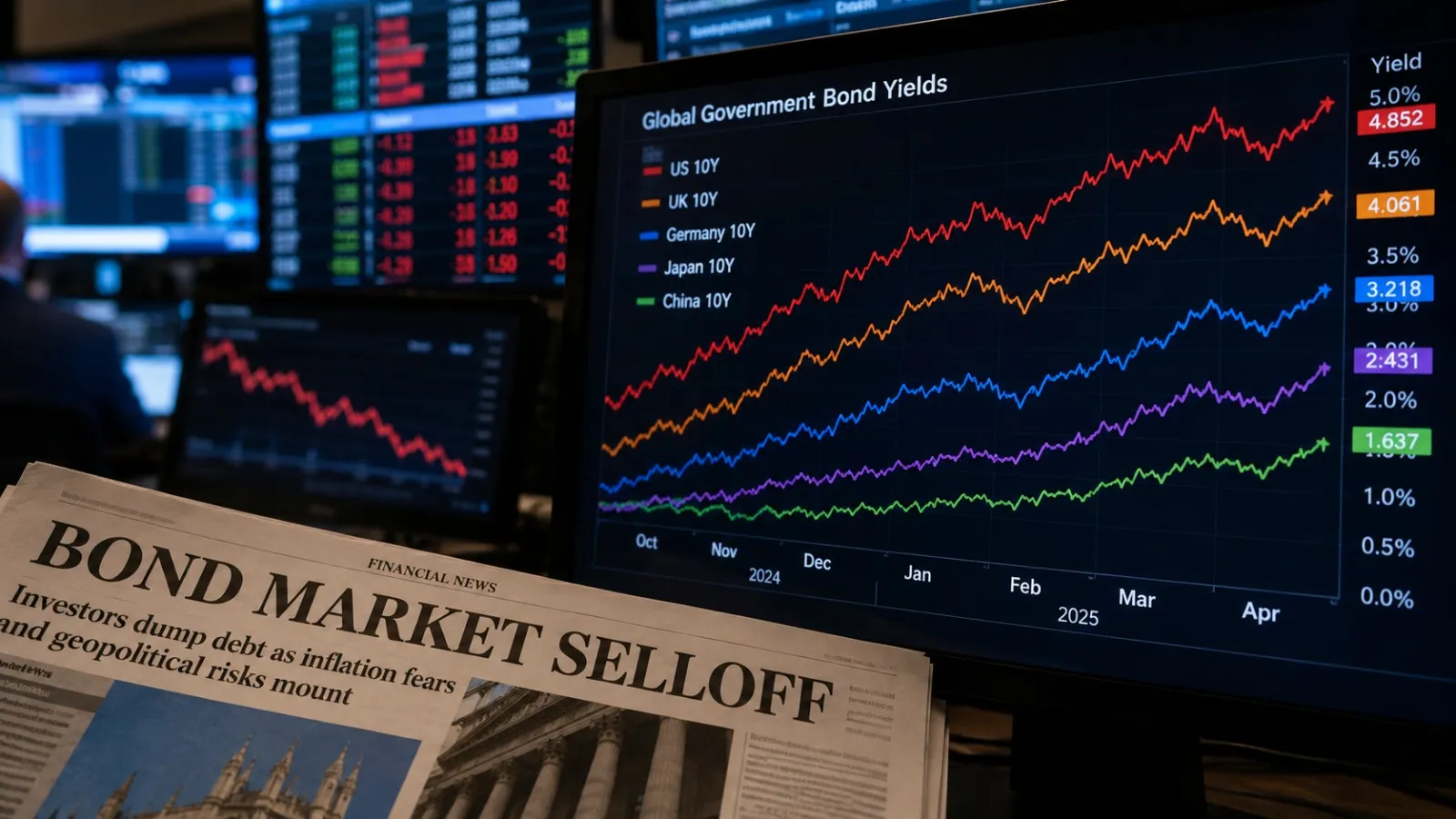
Compounding the crude-driven pressure has been a steady drumbeat of foreign institutional investor selling, a trend that has persisted through much of July even as domestic institutional investors have continued to provide some offsetting support to the market. FII outflows from Indian equities tend to accelerate during periods of global risk aversion or when relative valuations and yield differentials shift unfavourably compared to other emerging or developed markets, and the current environment — marked by elevated US treasury yields, a strengthening dollar, and geopolitical uncertainty — has created exactly the kind of backdrop that historically triggers sustained FII selling in Indian markets. That selling pressure, in turn, has fed directly into the rupee's weakness, since large FII outflows require converting rupee-denominated equity proceeds back into dollars, adding further depreciation pressure on the currency.
The rupee itself closed at 96.73 against the US dollar on Thursday, edging toward the record-low territory it touched earlier this year, with currency traders explicitly citing the sharp spike in Brent crude tied to the West Asia escalation as the primary driver of the local currency's weakness. That currency depreciation creates a feedback loop of its own for equity markets: a weaker rupee raises the cost of dollar-denominated debt servicing for Indian corporates with foreign-currency borrowings, increases input costs for companies reliant on imported raw materials, and can trigger further FII outflows if investors anticipate continued currency depreciation eroding their dollar-denominated returns from Indian equity holdings.
Technical analysts tracking the Nifty's chart patterns have flagged the index's approach toward what they describe as an important support zone, with the break below the 24,000 level on Thursday seen as a meaningful technical development that traders will be watching closely in the sessions ahead. According to commentary from Bajaj Broking Research, the Nifty has continued to exhibit what analysts characterise as a corrective structure, with the index's ability to hold above key support levels in the coming sessions likely to determine whether the current pullback stabilises or extends into a deeper correction. Siddhartha Khemka, Head of Research, Wealth Management at Motilal Oswal Financial Services, characterised the near-term outlook as one where Indian equities are likely to remain under pressure, citing elevated crude prices as a key overhang alongside continued geopolitical tensions in West Asia, rupee weakness, and persistent FII selling as the factors likely to keep investor sentiment cautious in the absence of major domestic positive triggers.
Ahead of Friday's session, GIFT Nifty futures were seen trading largely flat, around the 23,862 to 23,873 range, signalling a muted to range-bound opening for Indian equities as traders await fresh domestic and global cues before committing to directional positions. That range-bound signal reflects a market caught between competing forces — a genuinely challenging macro backdrop on one hand, and a still-robust Q1 FY27 corporate earnings season on the other, with several major companies, including Nestlé India and Bandhan Bank, having delivered results this week that beat market expectations even as the broader index continues to slide. That divergence between company-specific strength and index-level weakness is one of the more interesting undercurrents of the current market phase, suggesting stock-picking and earnings quality may matter more than broad index exposure in the current environment.
The earnings season itself has added its own layer of volatility to individual stock movements this week, with HDFC Bank shares coming under pressure despite delivering results broadly in line with estimates, Dr Reddy's Laboratories crashing nearly 9 per cent after a steep profit decline, and Adani Enterprises and Shriram Finance among the notable losers in Wednesday's session, according to market wrap commentary. That kind of stock-specific volatility, layered on top of the broader index-level correction, has made for a genuinely challenging trading environment this week, with even fundamentally sound companies seeing their shares marked down amid the broader risk-off mood gripping the market.
Looking at the broader market internals, the Nifty Midcap and Nifty Smallcap indices have also been under pressure through this stretch, trading lower alongside the benchmark indices, suggesting the correction has not been confined to large, index-heavy stocks but has instead touched the broader market fairly comprehensively. That kind of broad-based weakness tends to weigh more heavily on retail investor sentiment than a narrower, largecap-only correction, given the significant retail participation that has built up in India's midcap and smallcap segments over recent years through both direct equity investment and mutual fund flows into small and midcap-focused schemes.
For market participants, the coming sessions will likely hinge on several interlinked variables: whether crude oil prices continue climbing or find some stabilisation as the West Asia situation evolves; whether the rupee's slide toward record-low territory triggers more aggressive RBI intervention; whether FII selling shows any signs of abating; and whether the ongoing Q1 FY27 earnings season continues to deliver enough positive surprises, as seen this week from Nestlé India and Bandhan Bank, to offset the negative macro narrative weighing on the broader indices. With India's flash PMI data and weekly RBI banking-sector statistics also due for release, Friday's session carries its own set of fresh data points that could meaningfully influence trading direction into the weekend.
For now, Dalal Street finds itself navigating one of its more genuinely challenging stretches of 2026 so far — not because of any single dramatic shock, but because of the steady, grinding accumulation of multiple negative pressures arriving simultaneously: a currency under strain, a commodity-price spike tied to an unresolved geopolitical crisis, persistent foreign capital outflows, and a market structure still working through the process of finding a durable floor. Whether that floor arrives in the coming sessions, or whether the correction has further to run, remains one of the more closely watched open questions on Dalal Street heading into the final full week of July.
It is worth placing this current corrective phase within the broader context of how Indian equity markets have historically behaved during comparable multi-factor stress episodes. Markets rarely correct because of a single, isolated catalyst; more often, as is the case this week, a genuine correction emerges when several distinct pressures — currency, commodity, capital-flow, and geopolitical — begin reinforcing one another simultaneously, each amplifying the others' impact on investor sentiment. That kind of multi-factor alignment tends to produce corrections that, while often sharper in the short term, also tend to prove more responsive to positive resolution on any one of the underlying pressures — meaning a meaningful de-escalation in West Asia, a stabilisation in the rupee, or a resumption of FII buying could each independently help arrest the current slide, even without all factors resolving simultaneously.
Domestic institutional investors, including mutual funds and insurance companies, have continued to provide a partial offsetting counterweight to the FII selling pressure through this stretch, a pattern that has become an increasingly important stabilising feature of Indian equity markets over recent years as domestic retail participation in equities, both direct and through systematic investment plans in mutual funds, has grown substantially. That growing base of domestic institutional and retail capital has, in many previous episodes of FII-driven selling pressure, helped cushion the Indian market from the kind of outsized declines that heavy foreign outflows might have triggered in earlier market cycles when domestic capital pools were considerably shallower — a structural evolution in Indian market dynamics that many strategists consider one of the more important, if less immediately visible, developments shaping how Dalal Street absorbs external shocks in the current period.

Sector-specific positioning within portfolios has also become an increasingly important theme for investors navigating the current environment, with strategists broadly advising a more selective, bottom-up approach to stock selection rather than broad index-level exposure given the sharply divergent company-specific outcomes seen through this earnings season — from Nestlé India's blockbuster beat to Dr Reddy's dramatic earnings miss, all playing out within the same trading week. That kind of dispersion between winners and losers within the same market environment is often cited by fund managers as creating genuine alpha-generation opportunities for actively managed strategies, even during periods when the broader index itself is trending lower.
Looking at historical seasonal patterns, late July and early August have, in past years, sometimes proven to be a period of elevated volatility for Indian markets, coinciding with the tail end of the Q1 earnings season, monsoon-related agricultural and rural-demand data points, and — in years featuring US trade policy deadlines or global central bank meetings — additional external catalysts that can compound domestic market pressures. With India's flash PMI data and RBI's weekly banking statistics both due for release on the same day as this report, alongside a continued stream of Q1 earnings from companies still to report, the coming sessions carry a genuinely dense data calendar that could meaningfully influence which direction the current corrective phase ultimately resolves toward. Traders and portfolio managers alike will be watching that data flow closely, aware that in a market this finely balanced between conflicting pressures, even a single, well-timed positive surprise could be enough to shift sentiment meaningfully heading into the first week of August. Retail investors, meanwhile, are being reminded once again that periods like this — uncomfortable as they are to sit through — have historically also been the periods in which patient, long-term capital has found some of its better entry points into fundamentally sound businesses trading at temporarily depressed valuations. That lesson, repeated across enough market cycles, tends to be exactly what separates disciplined long-term investors from those who let short-term headlines dictate their portfolio decisions. Whether this particular correction proves to be one of those opportunities in hindsight will, as always, only become clear with the benefit of time. For now, the safest conclusion is also the most obvious one: markets that fall on genuine, identifiable macro pressures tend to recover once those specific pressures ease, and every one of the four forces weighing on Dalal Street this week — crude prices, the rupee, FII flows, and West Asia tensions — remains, at least in principle, capable of turning constructive again just as quickly as it turned negative.