Mumbai, July 31, 2026 — Indian equity markets closed firmly in the green on Thursday, July 30, extending a rebound that has quietly rebuilt investor confidence over the past week even as the broader macro backdrop — an unresolved India-US trade negotiation, elevated crude oil prices, and a still-fragile global rate environment — remained far from settled. The BSE Sensex ended the session at 77,928.15, up 273 points or roughly 0.35%, while the NSE Nifty 50 climbed 67 points to close at 24,317.15, a gain of about 0.28%. The Bank Nifty settled at 57,147.50, trailing the broader market as banking and financial stocks lagged the overall rally.
The session's tone was set early, with GIFT Nifty futures signalling a mixed-to-positive opening after a choppy previous session in which the index had wavered around the flatline amid weak Asian cues. By the closing bell, however, sustained buying in technology counters and continued foreign institutional investor (FII) inflows had pushed the index comfortably higher, marking the fifth consecutive session of gains for India's IT pack — a run that has increasingly become the dominant storyline of this week's market action.
The IT rally: five days and counting
Information technology stocks have emerged as the standout performers of the past week, extending gains for a fifth straight session on July 30 even as other pockets of the market, particularly banking and realty, struggled to find similar conviction. The rally has been broad-based across the IT pack rather than concentrated in one or two names, suggesting genuine sector-wide repricing rather than a narrow, stock-specific move. Market participants attribute the streak to a combination of factors: relatively resilient June-quarter earnings from several large IT bellwethers, renewed optimism around enterprise technology spending in key export markets including the United States and Europe, and a degree of rotation by institutional investors out of more richly valued domestic cyclical sectors and into IT names that had underperformed for much of the preceding two years.
This IT-led leadership marks a notable shift in market character. For much of 2025 and the early part of 2026, India's equity rally had been driven predominantly by domestic cyclicals — banking, autos, capital goods and infrastructure — riding the coattails of robust domestic consumption and government capital expenditure. IT, by contrast, had lagged for an extended period, weighed down by concerns over US client budget discipline, the disruptive potential of generative AI on traditional IT services business models, and a stronger rupee that periodically squeezed dollar-denominated export margins. The past week's rally suggests at least a partial rotation of sentiment back toward the export-oriented technology sector, even if it remains to be seen whether this marks a durable trend reversal or a shorter-lived tactical rebound.
FII flows return, but cautiously
Supporting the IT-led rally has been a renewed, if still measured, wave of foreign institutional investor buying. FIIs net bought close to ₹2,982 crore of Indian equities on July 29 alone, continuing a pattern of positive net inflows that has persisted for several sessions running. This marks a meaningful shift from the more cautious, occasionally net-selling posture foreign investors had adopted earlier in the year amid concerns over India's relatively rich valuations compared to other emerging markets, as well as broader uncertainty tied to the unresolved US tariff situation.
Market strategists caution against reading too much into any single week of FII flows, noting that foreign investor positioning in Indian equities has been notably volatile through 2026, swinging between periods of aggressive buying and equally aggressive profit-booking as global risk appetite has ebbed and flowed alongside shifting expectations for US Federal Reserve policy, fluctuating crude oil prices, and the on-again, off-again trajectory of India-US trade talks. Even so, the sustained nature of this week's inflows — spanning multiple consecutive sessions rather than a single outsized day — has been read by several market participants as a modestly encouraging signal about near-term foreign investor sentiment toward Indian equities.
Banking and realty lag the rally
rket participated equally in Thursday's gains. Banking and financial services stocks lagged the broader index, with profit booking evident in several large private and public sector banking names even as the overall market advanced. Realty stocks, which had enjoyed a strong two-day rally earlier in the week, saw that momentum broken on July 30, with the sector index snapping its recent winning streak even as the Sensex itself notched a gain.
This divergence between IT strength and banking softness has become a recurring pattern over the past several sessions, and analysts offer a few possible explanations. Some point to simple sector rotation dynamics — as investors moved capital into IT names, they necessarily had to fund those purchases by trimming positions elsewhere, with banking, given its large index weight and strong prior-period performance, a natural source of profit-booking. Others point to more sector-specific factors weighing on banking stocks specifically, including ongoing questions about net interest margin trajectories as deposit competition remains intense, and a degree of investor caution ahead of the Reserve Bank of India's recently announced bulk deposit rate reforms, which introduce a new, still-being-digested variable into how the market models bank funding costs going forward.
The global backdrop: crude, currency and the Fed
Beyond domestic sector rotation, Indian markets continue to navigate a genuinely complex external environment. Brent crude oil has climbed back above $90 a barrel, a level that, if sustained, directly pressures India's import bill and, by extension, the current account and the rupee — both variables that domestic equity investors watch closely given India's heavy dependence on imported energy. The rupee itself has been holding in a relatively wide band near 95.59 against the US dollar, reflecting both this crude-driven pressure and the broader uncertainty stemming from the unresolved India-US trade negotiation.
On the global monetary policy front, the US Federal Reserve's recent decision to hold interest rates steady — via what was reported as a divided vote among policymakers — combined with softer-than-expected US GDP data for the second quarter, has added a layer of uncertainty to the global rate outlook that Indian markets, like most emerging markets, remain sensitive to. Dow Jones futures were trading modestly higher heading into the Thursday evening session, up around 0.20%, offering a mildly supportive global backdrop for Friday's Indian market open, alongside broadly positive European equity trading that had offset a somewhat weaker Wall Street tone earlier in the week.
What market watchers are saying about Friday's open
Heading into Friday, July 31, market commentary pointed to a cautiously positive opening for the Nifty 50, underpinned by the combination of sustained FII buying, the ongoing IT sector rally, and Gift Nifty futures trading marginally above Wednesday's close. Several risk factors were flagged as worth monitoring closely: continued strength in crude oil above the $90 mark could trigger risk-off selling in inflation-sensitive sectors, particularly oil marketing companies, while any meaningfully disappointing set of June-quarter results from a major large-cap name reporting before the market open — with insurance giant LIC specifically flagged as a name to watch — could unsettle the otherwise constructive near-term narrative.
A further, more structural risk highlighted by market strategists centred on the rupee. Should the currency weaken meaningfully beyond the 96-per-dollar mark, it could raise fresh questions about the sustainability of the recent FII buying trend, potentially triggering at least partial outflows as foreign investors reassess currency-adjusted returns on their Indian equity holdings.
Sector scorecard: auto joins IT in the winners' column
Beyond the headline IT rally, the auto sector also featured prominently among Thursday's gainers, buoyed by a wave of strong June-quarter earnings from major manufacturers reporting results that day. This combination of IT and auto sector strength — two segments with very different underlying demand drivers, one export-oriented and dollar-denominated, the other tied closely to domestic consumption and rural demand recovery — offered a reassuring signal to market watchers that Thursday's rally was not simply a single-theme, narrowly-based move, but reflected a somewhat broader improvement in risk appetite across genuinely distinct parts of the Indian economy.
The bigger picture heading into August
As India's markets head into August, several cross-currents will likely determine whether the current rally has legs or proves to be another short-lived bounce in what has been, by most accounts, a choppier and more range-bound year for Indian equities than many investors had anticipated at the start of 2026. The trajectory of the India-US trade negotiation remains perhaps the single largest swing factor: a resolution on favourable terms could unlock a fresh wave of both foreign and domestic institutional buying, while continued stalemate — or worse, an escalation in tariff measures — could quickly reverse the cautious optimism currently building in the market.
Equally important will be the remainder of the Q1 FY27 corporate earnings season, with a substantial number of large-cap results still to come in the days ahead. Given how central both IT and banking sector performance have been to this week's market narrative, upcoming results from major players in both sectors will be closely parsed for signs of whether the current rotation into IT and out of banking reflects a durable shift in relative sector attractiveness, or merely a temporary pause before banking stocks resume their own leadership role in what remains, on balance, a resilient if increasingly selective Indian equity market.

A closer look at the broader market breadth
Beyond the headline Sensex and Nifty numbers, market breadth indicators offered a somewhat more nuanced picture of Thursday's session than the benchmark indices alone might suggest. The broader mid-cap and small-cap indices posted more modest gains than the headline benchmarks, reflecting a market in which large-cap IT and select auto names did much of the heavy lifting, while a wider cross-section of listed companies traded in a more mixed, directionless pattern. This kind of narrower breadth, even amid a positive headline close, is often read by technical analysts as a signal of a market still searching for conviction, rather than one experiencing a genuinely broad-based, self-reinforcing rally across the full spectrum of listed companies.
Volume patterns during Thursday's session also offered useful context. Trading activity was reported as moderate rather than exceptionally heavy, consistent with a market in a data-dependent, earnings-season holding pattern rather than one experiencing the kind of high-conviction, high-volume buying that typically accompanies a more decisive directional breakout. This measured trading pattern is broadly consistent with a market that remains attentive to the substantial stream of incoming Q1 FY27 earnings results, as well as the unresolved India-US trade situation, rather than one prepared to commit aggressively to a single directional view in either direction.
The options market's read on near-term volatility
Derivatives market positioning offers another useful lens on how sophisticated traders are currently pricing near-term risk in Indian equities. Implied volatility measures, while not at the elevated levels that typically accompany genuine market stress, have remained somewhat above the unusually placid levels seen during some of the calmer stretches of 2025, reflecting the market's awareness of several distinct sources of potential near-term volatility: the unresolved trade negotiation, the ongoing earnings season, and continued uncertainty around global monetary policy direction following the Federal Reserve's recent decision to hold rates steady amid a genuinely divided policy committee.
Options market positioning around key strike prices for the Nifty has, according to derivatives desk commentary, shown a moderately bullish tilt heading into the first week of August, with traders positioning for continued, if measured, upside rather than either a sharp breakout or a meaningful reversal. This kind of moderately constructive but not exuberant positioning is broadly consistent with the overall tone of this week's market commentary: cautious optimism, grounded in specific, identifiable positive catalysts like the IT rally and FII inflows, but tempered by clear-eyed awareness of the genuine macro and geopolitical risks that remain unresolved.
Currency and bond market context
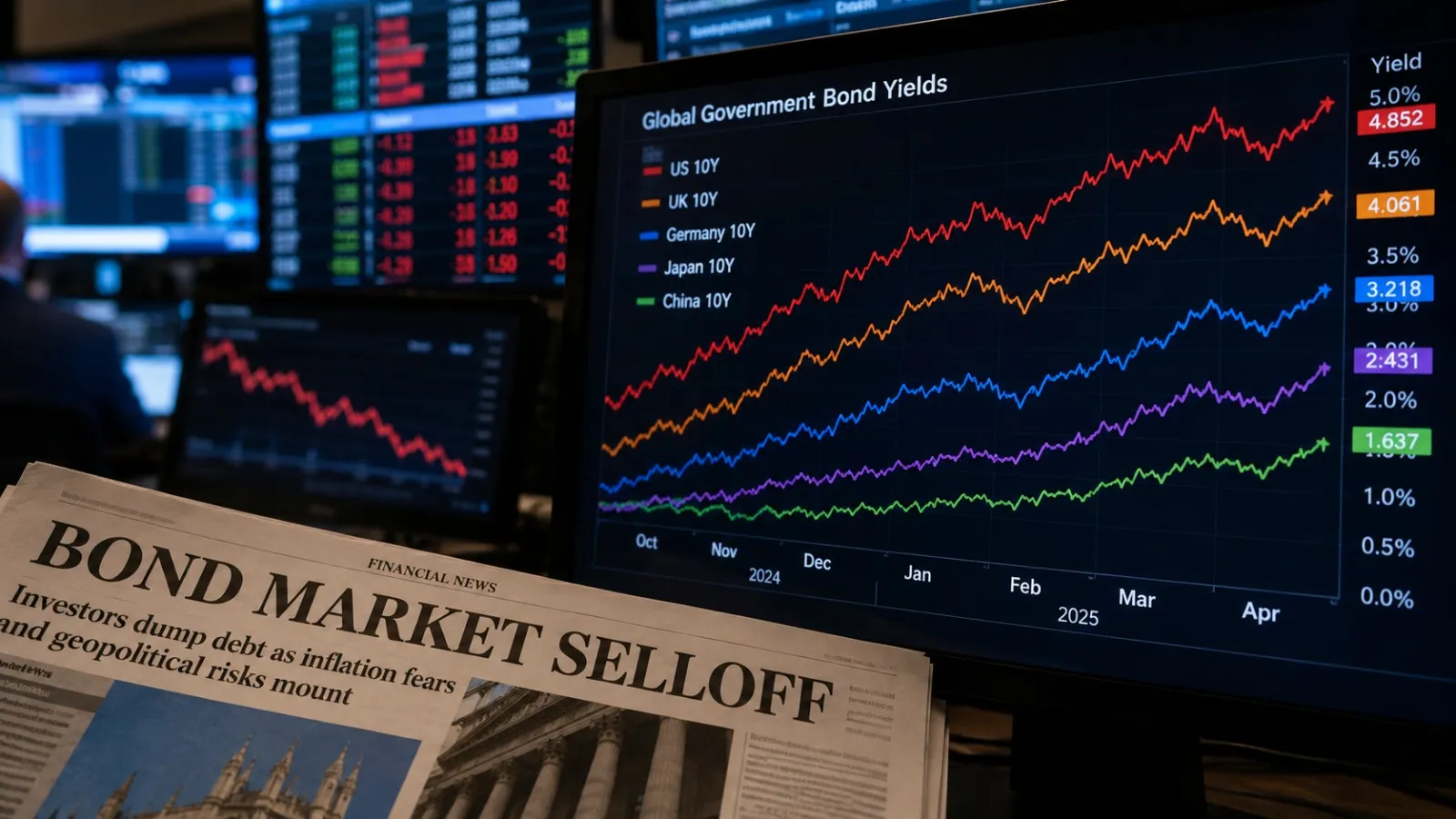
The rupee's relative stability near the 95.59 level against the US dollar through this week's trading sessions has provided a degree of reassurance to equity investors, even as the currency remains meaningfully weaker than levels seen for much of 2025. Bond markets, meanwhile, have continued to price in a cautious view of India's near-term inflation and fiscal trajectory, with government bond yields holding in a relatively narrow range that reflects the market's assessment of a Reserve Bank of India likely to maintain a measured, data-dependent approach to monetary policy through the remainder of the current fiscal year, rather than moving decisively in either an easing or tightening direction absent a clearer resolution of the current mix of external uncertainties.
For equity investors specifically, this relatively stable currency and bond market backdrop has provided at least a degree of supportive context for the current equity rally, even as it remains clear that a meaningful deterioration on either front — a sharper rupee slide or a more hawkish RBI policy shift — could quickly complicate the otherwise constructive near-term equity market narrative that has taken hold over the past week's trading sessions.