Dalal Street woke up on Friday, July 24, 2026, to a familiar and uncomfortable rhythm — red across the board, panic in the tickers, and a growing sense that the easy, upward-drifting market of the last two months had finally run out of road. The BSE Sensex crashed 683.2 points, or 0.89 per cent, at the opening bell to touch 75,708.19, while the NSE Nifty 50 tumbled 203.25 points to open at 23,666.35. It was the fifth consecutive session of losses for India's benchmark indices, and by the time the dust settled on the week, the Sensex had slipped to its lowest level since June 12 — a level that, only a fortnight earlier, had looked like a distant memory as the market chased fresh highs on the back of a resilient earnings season.
The proximate trigger was not a homegrown one. It rarely is, in a market as globally interconnected as India's now is. Brent crude, the international benchmark that dictates the fortunes of everything from India's fiscal math to the price of a litre of petrol at a roadside pump in Nagpur, shot past $90 a barrel this week, its highest level in months, as tensions in West Asia escalated sharply. The reason: an intensifying stand-off in the Gulf that has reignited fears of supply disruptions through critical shipping lanes, chief among them the Strait of Hormuz, through which roughly a fifth of the world's oil passes on any given day. When that chokepoint even hints at instability, energy markets do not wait for confirmation — they price in the worst case first and ask questions later.
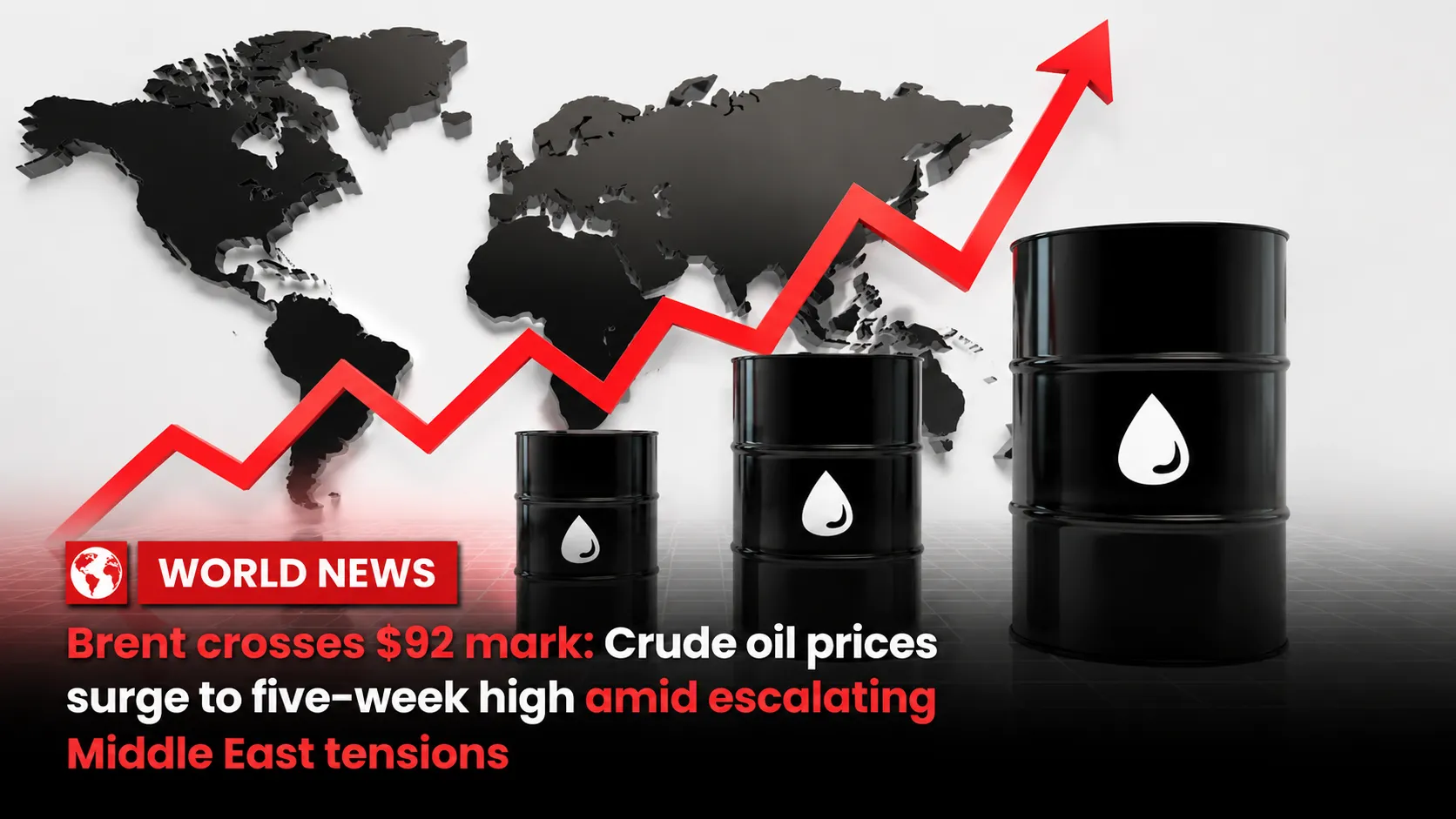
For an economy like India's, which imports more than 80 per cent of its crude oil needs, a sudden spike in oil prices is never just an energy story. It cascades instantly into a currency story, an inflation story, a current-account story, and — as investors were reminded this week — a stock market story. The mechanics are almost mechanical in their predictability by now: oil prices rise, India's import bill balloons, the rupee comes under pressure as oil marketing companies and other importers rush to buy dollars, foreign portfolio investors grow nervous about imported inflation eating into corporate margins and about the Reserve Bank of India's room to manoeuvre on interest rates, and equities get sold first and asked questions about fundamentals later.
That is more or less exactly what played out this week. Foreign Institutional Investors, who had already turned cautious through much of July as the India-US trade negotiations dragged on without resolution, stepped up their selling. On July 22 alone, FIIs offloaded Indian equities worth ₹2,999.23 crore, extending an outflow streak that has now become one of the more persistent overhangs on the market this earnings season. Domestic Institutional Investors, true to form in recent years, stepped into the breach — DIIs bought ₹2,947.14 crore worth of equities on the same day, cushioning what could otherwise have been an even sharper fall. This tug-of-war between foreign sellers and domestic buyers has effectively become the defining subplot of Indian market microstructure in 2026, and this week was no exception.
The broader market told the same story as the headline indices, only louder. The BSE Midcap Select Index shed nearly 94 points in early trade, while the BSE Smallcap Select Index dropped 31.01 points, or 0.36 per cent, to trade at 8,549.34. Midcaps and smallcaps — which tend to be disproportionately owned by retail and domestic institutional money and are typically the first to get hit when risk appetite evaporates — bore the brunt of the sell-off, a pattern market veterans will recognise from previous bouts of geopolitically driven volatility.
Sectorally, the pain was not evenly spread. Information technology stocks, ironically, emerged as one of the few pockets of relative resilience, with HCL Tech, TCS, and Sun Pharma among the gainers on the Sensex pack even as the broader index buckled — HCL Tech led the pack, gaining nearly 1.2 per cent in early trade, likely aided by a weaker rupee, which tends to be a tailwind for IT exporters who bill in dollars and pay costs in rupees. But that pocket of comfort was overwhelmed by weakness elsewhere. Individual stock casualties told their own story about how unevenly the volatility bit: Swiggy fell 6.5 per cent, Shadowfax Technologies dropped 5.3 per cent, InterGlobe Aviation slid 2.4 per cent, Bluestone Jewellery lost 1.9 per cent, Eternal fell 2.1 per cent, and even IT bellwether Infosys, despite the sector's relative outperformance elsewhere, slipped 1.8 per cent after a softer-than-expected earnings report earlier in the week. InterGlobe Aviation's weakness was particularly notable given that airlines are among the most direct casualties of a crude oil spike — jet fuel typically accounts for a third or more of an airline's operating costs, and a sustained rally in crude can compress margins overnight.
The pain was not confined to India. Asian markets broadly took a beating on Friday, in a sell-off that had started on Wall Street a day earlier and rippled eastward as trading opened across the region. Japan's Nikkei 225 was down a startling 2,086.60 points, or 3.14 per cent, at 64,336 at the time markets were being tracked — a far steeper fall than India's, underlining just how global and indiscriminate this bout of risk-aversion had become. Hong Kong's Hang Seng also slipped, and the broader mood across trading desks from Tokyo to Mumbai was one of caution bordering on alarm. GIFT Nifty, the early proxy for how the Nifty 50 is likely to open, had already flagged the coming weakness the previous session, opening with a fall of 175 points at 23,687.50 compared to its previous close of 23,862.50 — a signal that seasoned traders read correctly as an early warning of the storm to come.
Zooming out to the week's trajectory helps put Friday's fall in context. The SENSEX had already fallen 364 points, or 0.47 per cent, on Thursday to close at 76,391 points, with IndusInd Bank the biggest laggard, down 6.11 per cent, followed by Nestle India, down 3.39 per cent, and Adani Ports, down 2.01 per cent. Even the session's gainers were modest in the face of the broader tide — Eternal, Tata Consultancy, and Mahindra & Mahindra managed only fractional gains of around 1.5-1.75 per cent. By Thursday's close, the Sensex had already fallen to its lowest level since June, and Friday's opening crash only deepened that slide, extending the losing streak to its fifth consecutive session — a run of red that traders on Dalal Street have not seen in several months and one that has begun to invite the inevitable question: is this the start of a deeper correction, or a sharp but short-lived bout of geopolitical jitters that will fade as quickly as it arrived?
It would be a mistake, however, to read this purely as an oil story. It arrives layered on top of an already fragile market mood shaped by an uneven first-quarter earnings season. Q1 FY27 results — the April-June quarter numbers that dozens of India's largest companies have been reporting through July — have been a mixed bag at best. While some bellwethers, including Reliance Industries, posted record operating performance, others, including Infosys and InterGlobe Aviation, disappointed street expectations, adding to the sense that corporate India's growth engine, while not stalling, is running at an uneven pace across sectors. This has made the market more sensitive than usual to external shocks; when sentiment is already brittle, a crude oil spike does more damage than it might during a period of broad-based earnings optimism.
Layered on top of the earnings uncertainty is the unresolved question of the India-US trade agreement, which has been hanging over markets for weeks as a temporary tariff arrangement between the two countries approached its July 24 expiry. Negotiators on both sides have repeatedly signalled that a deal is close — described variously as being at the "last one per cent" of legal text — but the absence of a signed, published agreement has left exporters, investors, and market strategists in a state of prolonged uncertainty. Combined with the oil shock, this created a near-perfect storm of anxiety for a market that had, until recently, been one of the better-performing major markets globally in 2026.
The rupee, as expected, bore visible scars from the turmoil. The currency has been sliding through July, edging ever closer to its record low near 97 to the dollar, weighed down by the same combination of costlier oil imports and FII outflows that hit equities. A weaker rupee is a double-edged sword for the market — it helps exporters, particularly in IT and pharmaceuticals, but it hurts import-heavy sectors, stokes inflationary pressure, and complicates the Reserve Bank of India's policy calculus at a delicate moment for growth.
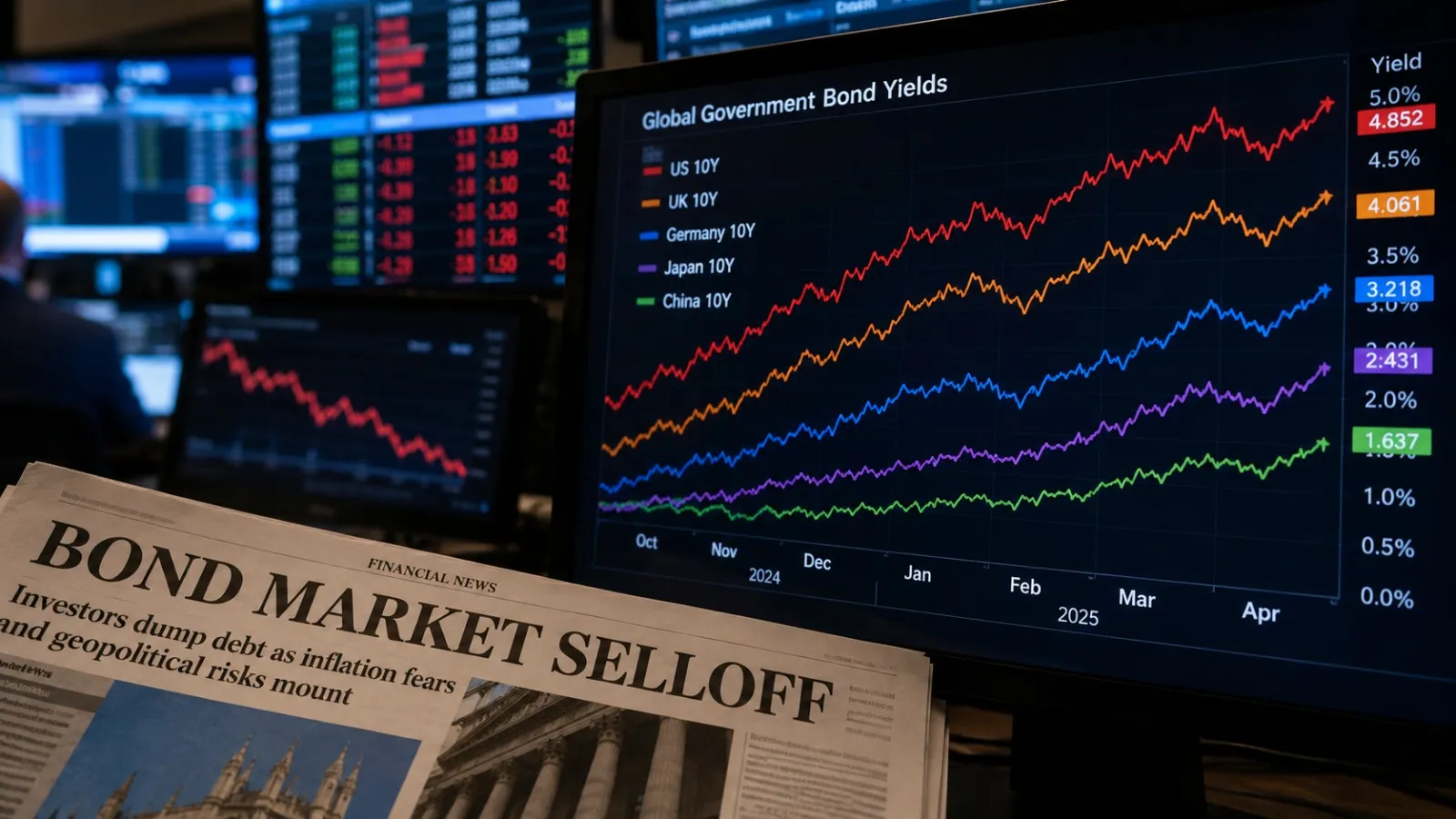
Bond markets, too, reflected the unease. With crude oil prices elevated and the rupee under pressure, yields on government securities have inched higher as investors price in a reduced likelihood of near-term rate cuts, and in some scenarios, a need for the RBI to defend the currency through open-market operations or targeted interventions, as it has done repeatedly through bouts of similar volatility earlier this year.
What happens next depends overwhelmingly on a variable that no algorithm, brokerage note, or seasoned trader can predict with confidence: the trajectory of the West Asia crisis itself. If tensions ease and shipping lanes remain unaffected, the oil price spike could prove transient, and markets — which have shown a repeated tendency to snap back sharply once acute geopolitical anxiety passes — could recover much of this week's lost ground within days. If, on the other hand, the conflict escalates further or genuinely threatens the Strait of Hormuz, the implications for India's import bill, inflation trajectory, and fiscal arithmetic would be considerably more serious, and markets would likely need to reprice growth and earnings expectations for the rest of the fiscal year.
For retail investors watching their portfolios turn red, market veterans have a familiar, if unglamorous, playbook: avoid panic selling into a geopolitically driven dip, stay diversified across sectors that respond differently to oil price shocks — IT and pharma exporters as a partial hedge against energy-importer-heavy sectors like aviation, paints, and tyres — and watch two data points above all others in the days ahead: the daily movement in Brent crude, and the pace of FII selling or buying, both of which have historically been the two most reliable leading indicators of where Dalal Street heads next in episodes like this one.
For now, the mood on Dalal Street is one of watchful caution rather than outright despair. Five sessions of losses is a meaningful losing streak, but not yet a rout — the kind of correction that, in the memory of India's market veterans, has happened before and been recovered from before. Whether this becomes one of those forgettable blips or the start of something more structurally serious will likely be decided not in Mumbai's trading rooms, but thousands of kilometres away, in the Gulf.
One silver lining that market watchers have been quick to point to is the sheer depth and maturity of India's domestic investor base today, compared to previous oil-shock episodes a decade or more ago. Systematic Investment Plan flows into mutual funds have remained remarkably sticky through 2026's bouts of volatility, providing a structural cushion of domestic buying that simply did not exist at this scale during earlier crude-driven sell-offs, such as the one that accompanied the rupee's slide past 69 to the dollar several years ago. This growing army of domestic retail investors, channelling monthly savings into equities largely irrespective of short-term headlines, has repeatedly proven to be one of the most understated stabilising forces in Indian markets — a trend that DII buying figures through this week's turmoil appear to reaffirm once again.

Options market data through the week also offered a window into trader sentiment beyond the headline index moves. India VIX, the market's so-called fear gauge, spiked sharply during the sessions of steepest decline, reflecting a jump in demand for downside protection as traders rushed to hedge portfolios against further near-term drawdowns. A VIX spike of this magnitude, while unsettling, is not unprecedented, and derivatives desks noted that positioning remained relatively balanced rather than one-sided, suggesting that professional money was hedging rather than capitulating outright — a subtle but meaningful distinction for anyone trying to gauge whether this correction has further to run.
Brokerages, for their part, have largely stuck to a "buy the dip, but selectively" stance in notes issued through the week, cautioning clients against reading too much into a handful of volatile sessions while simultaneously flagging valuation froth in pockets of the midcap and smallcap space that had run up sharply in the preceding months. The consensus emerging across trading desks is that the market's medium-term trajectory will continue to be shaped less by any single week's headlines and more by the resolution — or lack thereof — of the two overhangs that triggered this slide in the first place: the West Asia crude shock, and the still-unsigned India-US trade agreement. Until at least one of those clears, expect Dalal Street's mood to remain exactly what it has been this week: cautious, choppy, and closely tethered to headlines from thousands of miles away.