Anyone tracking Indian equity markets closely over recent sessions has likely noticed a consistent, almost rhythmic pattern playing out day after day: foreign institutional investors selling, domestic institutional investors buying, and the Sensex and Nifty largely holding within a narrow trading range as a result — a tug of war between foreign and domestic capital that has come to define the character of Indian equity markets through much of 2026.
**The recent flow data**
Daily institutional flow data from India's exchanges illustrates this pattern with striking consistency. On July 17, 2026, foreign institutional investors were net sellers of ₹376.40 crore in the cash segment, while domestic institutional investors stepped in as net buyers of ₹1,017.90 crore — domestic buying comfortably outpacing foreign selling on that particular session. This was not an isolated occurrence: just days earlier, on July 14, FIIs sold a net ₹739 crore while DIIs bought a substantially larger ₹2,927 crore, continuing what market commentators have described as a "familiar pattern seen through much of 2026," in which domestic institutions have consistently stepped in to absorb foreign selling pressure, helping cushion Indian equity markets from what might otherwise have been more pronounced downside volatility.
**Why this pattern has become so entrenched**
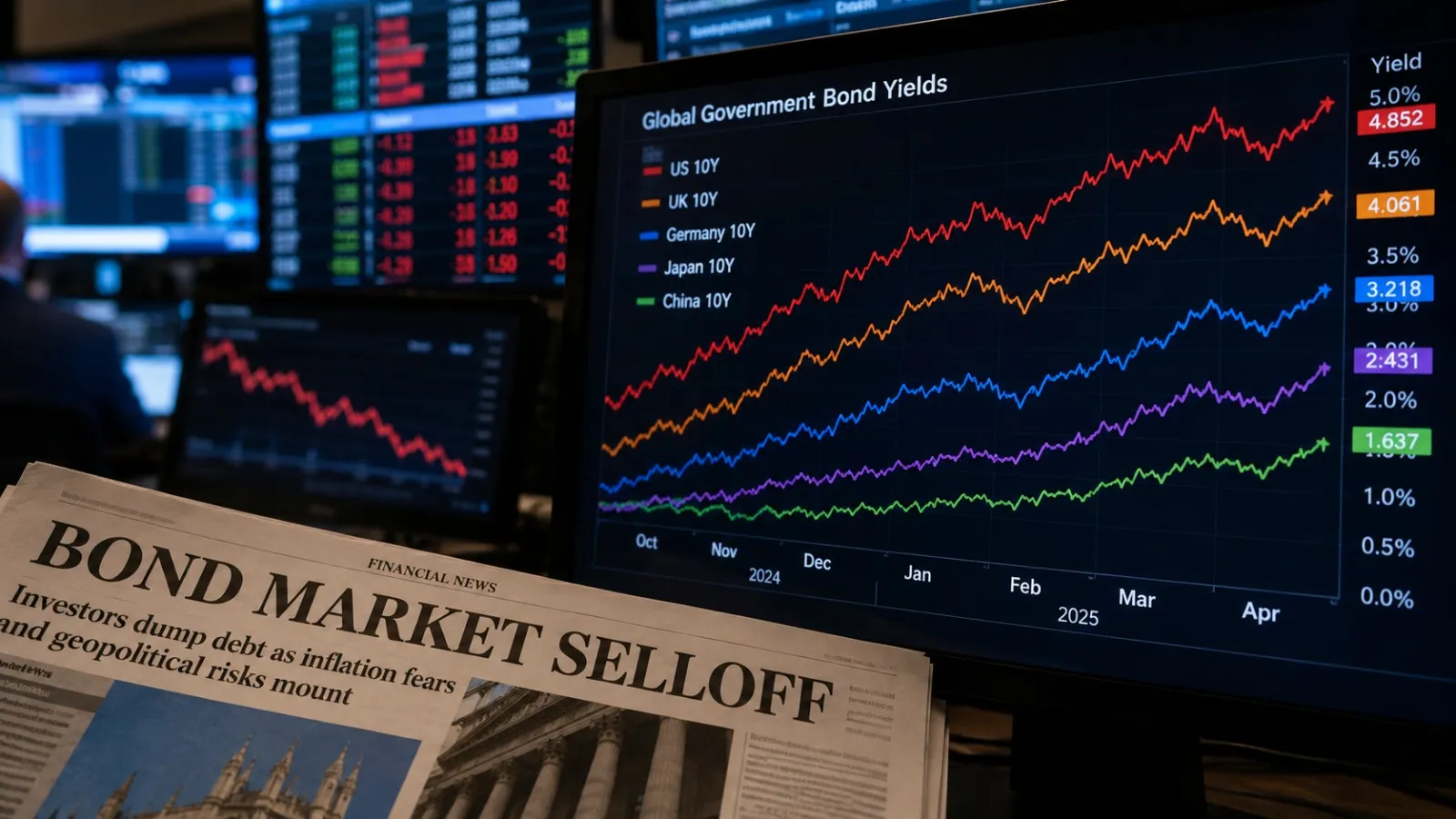
The persistence of this FII-selling, DII-buying dynamic through 2026 reflects the confluence of several distinct but mutually reinforcing forces. On the foreign investor side, the sustained pressure on the Indian rupee — driven by elevated crude oil prices tied to the ongoing Strait of Hormuz disruption — has made Indian equities less attractive to foreign portfolio investors on a currency-adjusted return basis, since any equity market gains in rupee terms can be partially or wholly offset by currency depreciation when returns are converted back into the investor's home currency. Elevated global bond yields, itself partly a function of the same broader geopolitical and energy market uncertainty affecting oil markets, have further reduced the relative appeal of emerging market equities including India's, as investors have found increasingly attractive risk-adjusted returns available in safer, yield-bearing instruments. On the domestic side, sustained and robust systematic investment plan flows into Indian mutual funds — reflected in the strong quarterly results reported separately by asset managers including ICICI Prudential AMC and HDFC AMC — have given domestic institutional investors a steady, reliable stream of fresh capital to deploy into Indian equities, largely independent of the day-to-day sentiment swings affecting foreign capital flows.

**How this shapes the market's technical picture**
From a purely technical market perspective, this FII-DII tug of war has translated into a distinctly range-bound trading pattern for India's benchmark indices over recent months, with the Nifty 50 and Sensex generally oscillating within a defined band rather than establishing a clear, sustained directional trend in either direction. Market commentary tracking daily trading cues has repeatedly flagged this dynamic explicitly, with typical session previews noting that "persistent FII selling pressure may cap upside moves, but robust DII inflows could cushion declines, keeping intraday swings in focus" — a characterisation that has proven remarkably consistent across numerous individual trading sessions throughout the period. This pattern of a capped upside alongside a cushioned downside is, in many respects, a textbook illustration of how competing institutional flows can produce genuine market equilibrium — neither buyers nor sellers gaining sufficiently decisive control to push the market convincingly in either direction over a sustained period.
**The historical precedent for this pattern**
Market veterans have noted that this specific dynamic — foreign selling offset by domestic buying, producing range-bound rather than sharply falling markets — has recurred at various points throughout Indian market history whenever foreign capital has turned cautious on India for macro or currency-related reasons while domestic retail and institutional capital has remained structurally committed to continued equity allocation. What distinguishes the current 2026 episode from some historical precedents, according to market analysts, is the sheer scale and persistence of the domestic offsetting flows, reflecting just how substantially India's domestic mutual fund and SIP ecosystem has grown and matured over the past decade, providing a considerably deeper and more reliable pool of offsetting domestic capital than was available during earlier periods of sustained foreign selling in Indian market history.
**What could break the range**
Market technicians and strategists tracking this dynamic have generally converged around a similar view regarding what would be required to break the market decisively out of its current range-bound pattern in either direction. A durable resolution to the Strait of Hormuz crisis, leading to sustained rupee stabilisation and reduced currency-related caution among foreign investors, would likely be needed to reverse the FII selling trend and potentially unlock a more decisive upward market move, particularly given the broadly resilient corporate earnings picture evident across this quarter's results season, including strong performances from bellwethers including Reliance Industries. Conversely, any sign of DII buying capacity beginning to wane — whether through a slowdown in SIP inflows or a shift in domestic investor sentiment — could remove the cushion that has thus far prevented more pronounced downside, potentially opening the door to a sharper correction should foreign selling pressure persist or intensify without that offsetting domestic support.
**What this means for different types of investors**
For long-term retail investors continuing to invest through SIPs, the current range-bound market environment, while perhaps less exciting from a headline index-level perspective than a strongly trending bull market, has historically offered a reasonably favourable environment for rupee-cost-averaging strategies, since periods of range-bound trading allow systematic investors to accumulate units at prices that fluctuate within a relatively contained band, rather than either chasing a rapidly rising market or catching a sharply falling one. For more tactically oriented traders and short-term market participants, the current environment has instead demanded a more nimble, range-trading approach, with technical analysts increasingly focused on identifying and trading the specific support and resistance levels defining the current trading band, rather than positioning for any single decisive directional breakout.
**The road ahead**
As India's corporate earnings season continues to unfold through the remainder of July and into August 2026, market participants will be watching closely to see whether continued strong results — of the kind delivered by Reliance Industries, HDFC AMC, and several other bellwethers this reporting season — can eventually provide the kind of sustained positive catalyst needed to shift sentiment more decisively in favour of domestic equities, potentially encouraging a reduction in foreign selling pressure even before the underlying Hormuz-related currency and energy market uncertainty is fully resolved. Until such a shift materialises, however, the current pattern of DII-cushioned, FII-pressured, range-bound trading appears likely to remain the dominant characteristic defining Indian equity market behaviour through the near-term.