For Years, India's investment boom was driven by long-term wealth creation. A new generation of investors is now looking for speed, sophistication and control—and startups like Sahi are building for that future.
India's retail-investing revolution has been one of the most remarkable financial stories of the past decade.
Millions of first-time investors entered stock markets through digital platforms, transforming investing from an activity associated with brokers and financial advisors into something accessible through smartphones. Low-cost trading, simplified onboarding and easy access to financial information helped create an entirely new generation of market participants. The result was an unprecedented expansion of retail investing that reshaped India's capital markets and created some of the country's most valuable fintech companies.
Yet as the market matured, investor behavior began to evolve.
The first wave of retail participation was largely centered around access. People wanted to buy stocks, mutual funds and ETFs more conveniently than before. The next wave appears increasingly focused on capability. Today's investors are not just looking for access to markets. They want advanced tools, real-time analytics, derivatives trading, options strategies and products that give them greater control over how they participate in financial markets. The modern retail investor is becoming more sophisticated, more engaged and significantly more active.
That shift is attracting serious capital.
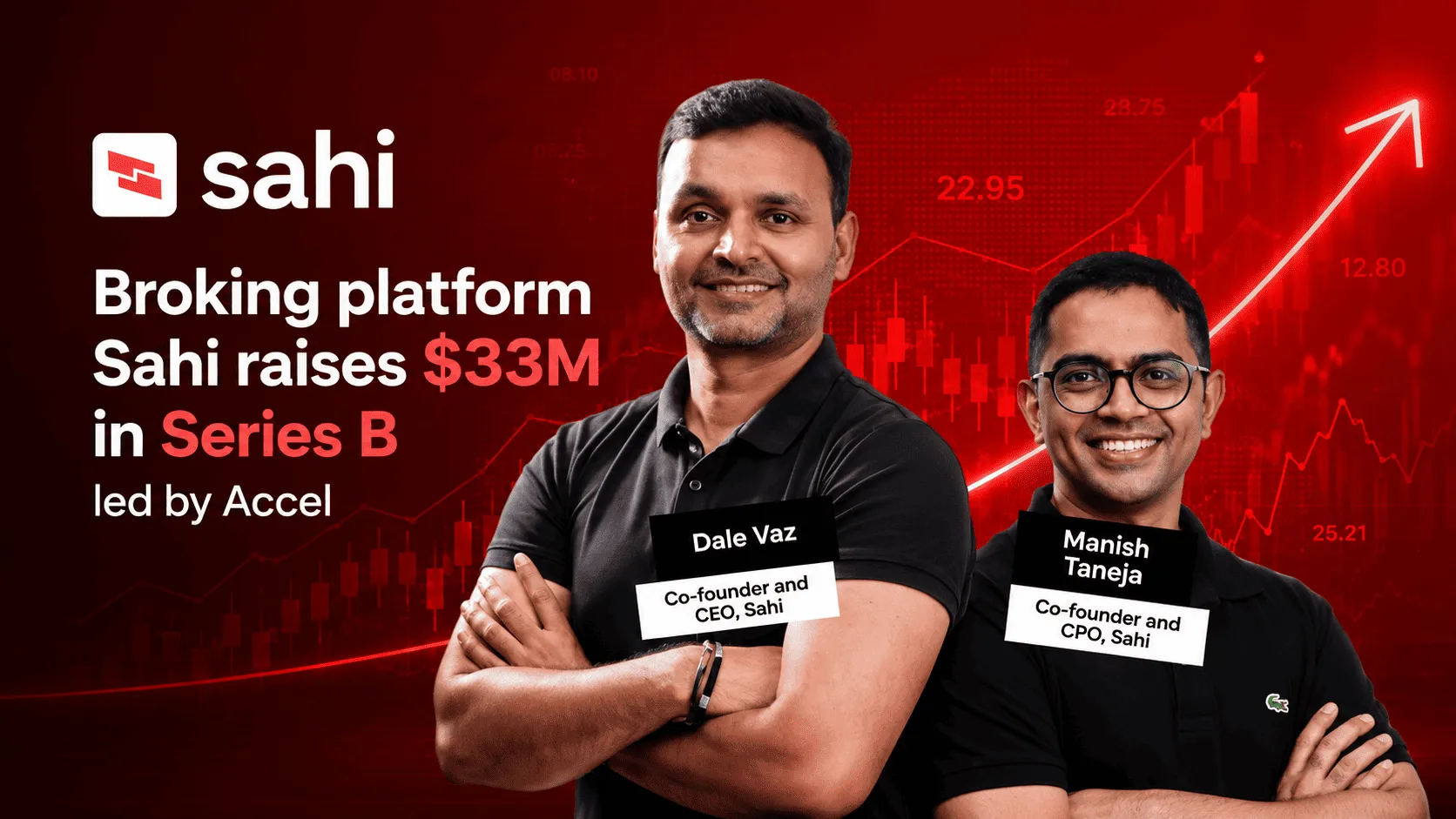
Broking platform Sahi has raised $33 million in a Series B funding round led by Accel, with participation from existing investors. While the funding strengthens the company's ability to expand its platform, the larger story involves a growing transformation taking place across India's investing ecosystem. Retail investors are evolving from passive participants into active market operators, and a new generation of fintech startups is being built to serve them.
India's Investor Has Changed
For many years, investing and trading occupied very different worlds.
Long-term investors focused on wealth creation through disciplined investing, while active trading remained concentrated among a smaller group of market participants with specialized knowledge and access to advanced tools. Technology has gradually blurred those distinctions. Mobile applications, educational content and real-time market information have made sophisticated strategies far more accessible than they were a decade ago.
The result is a noticeable shift in user expectations.
Investors increasingly expect platforms to provide more than basic execution capabilities. They want insights, analytics, risk-management tools and experiences that feel closer to professional trading environments. Younger users in particular have grown comfortable interacting with financial products through intuitive digital interfaces and increasingly expect the same sophistication they encounter in other technology platforms.
Sahi is positioning itself within this transition.
The company is targeting users who want a more active relationship with financial markets, offering products designed around participation rather than simple access. This reflects a broader trend in fintech where platforms are increasingly competing on user experience, engagement and capability rather than pricing alone.
The Next Fintech Battle Is About Engagement
One reason investors are backing companies like Sahi is that the brokerage industry is becoming increasingly competitive.
The first generation of digital brokers succeeded by making investing cheaper and more accessible. As those advantages become more common across the industry, platforms must find new ways to differentiate themselves. User acquisition remains important, but engagement is becoming equally critical. Companies increasingly want customers who trade, learn and interact regularly rather than simply maintaining dormant accounts.
This creates opportunities for specialized platforms.
Users who are highly engaged with markets often require different tools than occasional investors. They may be interested in options, derivatives, advanced charting, strategy building and risk management. Meeting those needs can create stronger relationships and potentially higher lifetime value for platforms capable of delivering compelling experiences.The trend mirrors developments seen in other technology sectors.As markets mature, companies often shift from competing on accessibility to competing on depth. Financial technology appears to be entering that phase.
Venture Capital Is Following Retail Participation
The funding round also reflects how investors view India's financial future.

Retail participation in Indian capital markets has increased significantly over the past several years, supported by growing financial awareness, rising incomes and widespread smartphone adoption. More people than ever before are interacting directly with financial products. For venture capital firms, this creates opportunities to build businesses around behaviors that continue expanding.
The appeal extends beyond brokerage revenues.
Companies operating in financial ecosystems often benefit from network effects, data advantages and opportunities to introduce additional products over time. A platform that successfully attracts active investors may eventually expand into adjacent categories such as wealth management, lending, education or premium services. Investors often evaluate these businesses not solely on their current offerings but on the ecosystems they could potentially build.This helps explain why fintech continues attracting substantial capital despite growing competition.The underlying market opportunity remains enormous.
Retail Trading Is Becoming A Consumer Technology Category
One of the most interesting developments in financial services is how closely trading platforms increasingly resemble consumer-technology companies.Historically, brokerage businesses were defined primarily by financial infrastructure. Today's platforms invest heavily in design, user experience, content and community-building. They are not simply processing transactions. They are creating digital environments where users spend time, learn and interact with financial markets.
This shift reflects changing consumer expectations.
Modern users compare financial applications not only with competing brokers but with the best experiences available across technology generally. They expect intuitive interfaces, personalization and seamless functionality. Companies capable of delivering those experiences often gain advantages that extend beyond traditional financial metrics.Sahi appears to be building within this framework.Its focus reflects a broader recognition that financial engagement increasingly depends on product design as much as market access.
The Democratization Of Sophisticated Finance
Another reason the funding matters is what it says about access to financial tools.
Historically, advanced trading capabilities were often available primarily to professional investors or large institutions. Retail participants faced significant barriers involving cost, technology and information. Digital platforms are gradually changing that equation by making sophisticated capabilities available to broader audiences.
This democratization is reshaping investor behavior.
As users gain access to more advanced products, they become increasingly willing to explore strategies previously associated with professionals. Education, community discussions and digital tools further accelerate this process. While risks remain, the overall trend points toward greater participation in financial markets across multiple levels of sophistication.Platforms positioned at the center of this shift may benefit significantly.They are effectively helping redefine what retail investing looks like in the digital era.
The Bigger Story Is About Financial Confidence
Viewed narrowly, Sahi's Series B funding is another fintech fundraising announcement.
Viewed more broadly, it reflects growing confidence among Indian consumers in their ability to engage directly with financial markets. A decade ago, many individuals relied heavily on intermediaries when making investment decisions. Today, increasing numbers are comfortable researching opportunities, building strategies and managing portfolios through digital platforms.
That behavioral change is creating entirely new business opportunities.
Companies are emerging not merely to facilitate transactions but to support increasingly sophisticated financial participation. Investors backing these platforms are effectively betting that India's retail-investing story is still in its early stages and that future growth will come not only from new investors entering markets but also from existing investors becoming more engaged.The $33 million funding round therefore represents more than capital for a brokerage startup.It represents a bet that the future of investing in India will be more active, more digital and far more personalized than the past.