India's Gen Z Is Not Watching TV. Rusk Media Built the Company That Figured Out What They Are Watching.
The average Indian Gen Z consumer does not consume entertainment on a television. They consume it on a phone — vertically oriented, short-form or mid-form, algorithm-sorted, often on a commute or in a bedroom with earphones in. The shows they care about are not scheduled. The formats they love are not designed for a 65-inch screen. And the attention economy they live in has created a content appetite that the traditional media industry was not built to serve.
Rusk Media was built to serve it.
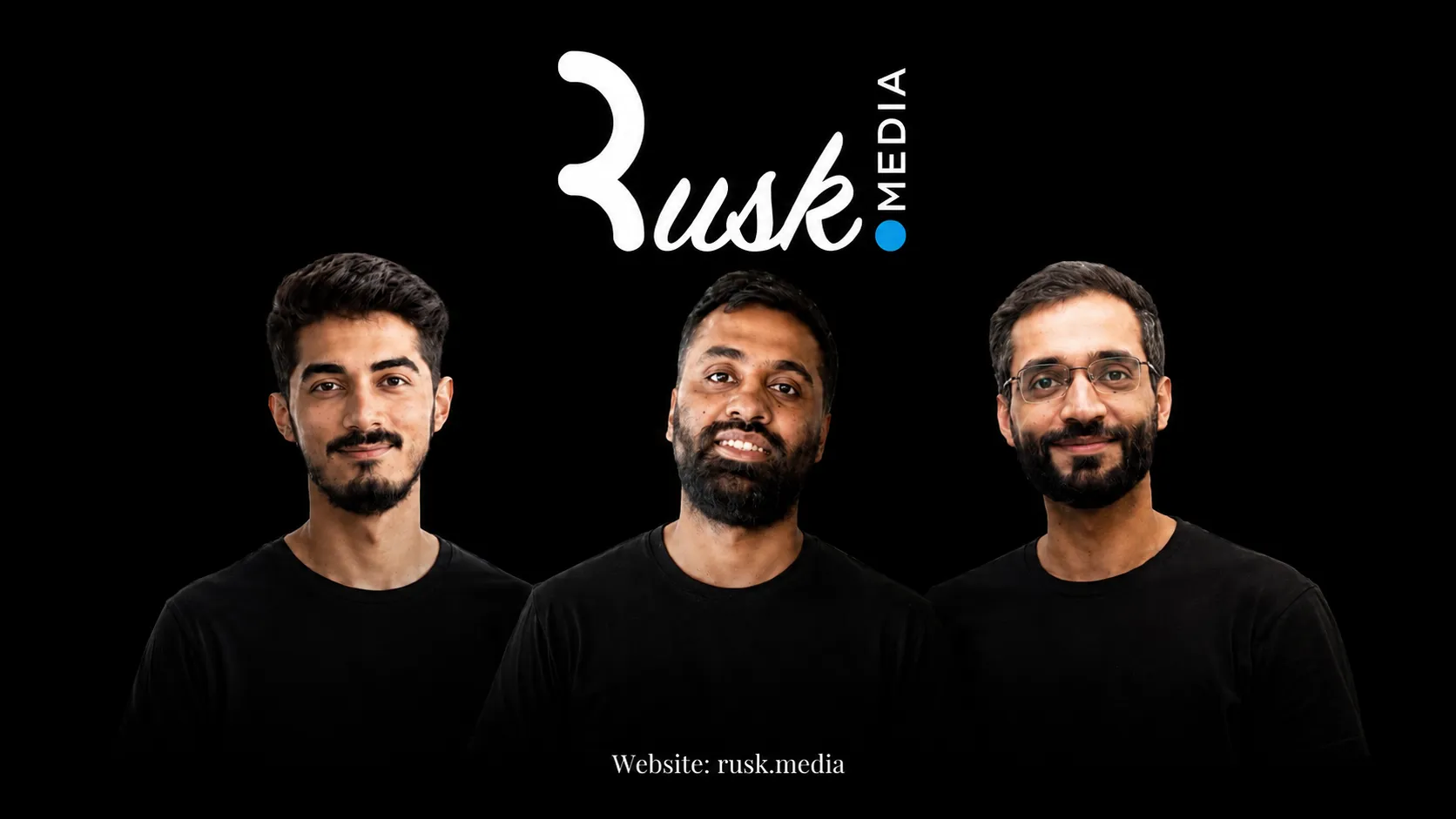
Founded in Mumbai in 2019 by Mayank Yadav, Rusk Media is a digital entertainment company that operates across content creation, distribution, and monetisation for Gen Z and millennial audiences. It makes mobile-first video — scripted fiction, unscripted shows, animation, vertical dramas, live entertainment — and distributes it through social media platforms, streaming services including Amazon MX Player and JioHotstar, and its own platform, Alright! TV.
On June 18, 2026, the company announced it had raised ₹100 crore (approximately $10.6 million) in a pre-Series C funding round led by Nazara Technologies — the listed gaming and sports media company — with participation from InfoEdge Ventures, IvyCap Ventures, and a consortium led by Audacity VC. As part of the investment, representatives from Nazara Technologies and Audacity VC will join Rusk Media's board.
What Rusk Media Has Actually Built
The ₹100 crore round is not a bet on a content idea. It is a bet on an infrastructure that Rusk Media has been building for six years across three interconnected businesses.
The first is the content studio. Rusk Media's production capability spans the full range of formats that digital-first audiences consume: scripted fiction, unscripted reality formats, vertical dramas, animation, and live entertainment. The output is distributed across platforms — social media, OTT, and Alright! TV — which means the company operates a multi-channel distribution model that is not dependent on any single platform's algorithm or licensing terms.
The intellectual property that anchors this business is increasingly significant. I-Popstar, the company's talent reality franchise, has built a fanbase and a format that is expandable into new languages and markets. Engaged, a reality dating format aimed at younger audiences, operates in the genre that has consistently driven the highest engagement metrics across digital platforms globally — reality television for the smartphone generation.
The second business is Alright! TV — Rusk Media's proprietary mobile entertainment platform. In a media landscape where every content company distributes through someone else's infrastructure, owning a direct-to-consumer platform is a meaningful structural advantage. Alright! TV gives Rusk Media a direct relationship with its audience, control over the user experience, and a monetisation layer that is not subject to the revenue-sharing terms of third-party streaming platforms.
The third is Rusk Ads — an advertising business that connects brands to Rusk Media's digital audiences through content-led campaigns. This is the revenue model that the creator economy and digital media have been iterating toward: brands pay not for interruption but for integration, and the authenticity of the integration determines the effectiveness of the spend. For a company with strong IP and a loyal Gen Z audience, a content-led ad business is a significantly more defensible revenue stream than display advertising or pre-roll.
Why Nazara Led the Round — and What It Tells You About Where Gaming and Entertainment Are Converging
Nazara Technologies' involvement as lead investor is the most structurally interesting element of this round.
Nazara is India's most prominent listed gaming company. Its portfolio includes Nodwin Gaming (esports), SportsKeeda (gaming and sports media), Datawrkz (ad tech), and licensing agreements for games including Candy Crush and Call of Duty mobile. It is a company that has spent years building the audience infrastructure, monetisation models, and platform relationships for India's young digital entertainment consumer.
Nitish Mittersain, Managing Director of Nazara Technologies, described the investment rationale with precision:
"Technology-first approach to production" is the phrase that matters most in that sentence. Nazara is not investing in Rusk Media because it has good content ideas. It is investing because Rusk Media's approach to building content infrastructure — using technology to lower production costs, speed cycles, and create new monetisation pathways — is the same philosophy that has made technology-first entertainment companies globally more durable than pure content studios.
The convergence of gaming audiences and digital entertainment audiences is one of the most consequential structural trends in Indian media. Nazara's core audience — the young, mobile-native, entertainment-hungry Indian consumer who plays games on their phone — is the same consumer that Rusk Media's content is built for. The investment is as much a portfolio thesis as it is a financial return calculation.
The AI Bet — and Why It Changes the Economics of Content at Scale
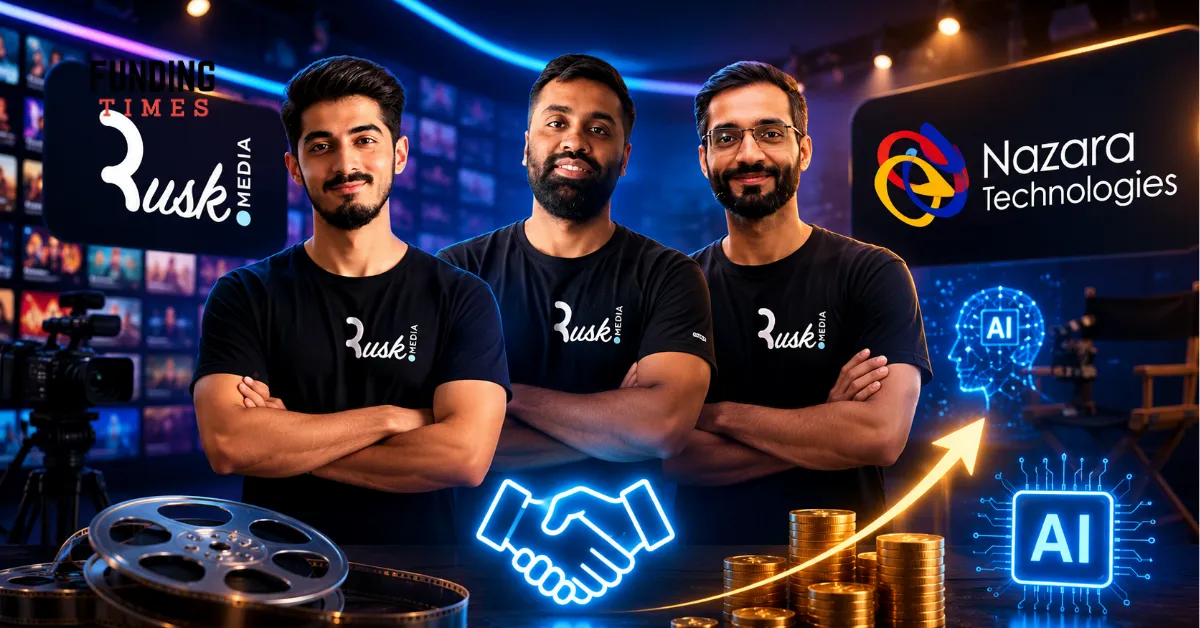
One of the most specific uses of the ₹100 crore is the development of proprietary AI-driven production tools.
In a traditional content production model, the cost of scaling is directly proportional to the volume of content produced — more shows, more editors, more writers, more post-production hours. AI changes that relationship fundamentally. Editing automation, AI-assisted scriptwriting, automated localisation into multiple languages, audience analytics that predict which content formats will perform before production begins — these are the capabilities that allow a digital content company to produce more content, in more languages, for more markets, at a cost structure that traditional studios cannot match.
Rusk Media's stated intention is to build these tools proprietary rather than licensing them from third-party AI vendors. That distinction matters commercially: proprietary production AI becomes a competitive moat rather than a shared commodity, and the data generated by the Alright! TV platform — audience behaviour, engagement patterns, format performance — feeds the model improvement that makes the AI more accurate over time.
The Engaged dating format and I-Popstar reality franchise, described as the initial IP for international expansion, will likely be the first test cases for the AI-enabled localisation strategy. Taking a format that has already demonstrated audience loyalty in India into a new language market is a different — and considerably cheaper — challenge than building a new IP from scratch. If the AI tools work, the marginal cost of expanding I-Popstar into Tamil, Telugu, Bengali, or Indonesian is dramatically lower than the cost of launching it as a new format.
The Investor Chorus — and What Three Firm Types Backing One Company Signals
The investor composition of this round is worth reading carefully, because it reflects three different theses about why Rusk Media wins.
Nazara Technologies brings the gaming and youth entertainment audience thesis — this is the next generation of content infrastructure for the same consumer they have been serving in gaming.
InfoEdge Ventures brings the platform business thesis. InfoEdge built Naukri, 99acres, Jeevansathi, and Shiksha — platforms that became category defaults in their respective markets. InfoEdge Ventures partner Amit Behl's framing of unscripted formats as the "universal language" of younger digital audiences reflects a platform investor's view of what Rusk Media is building: not just a content studio, but a destination.
IvyCap Ventures, the homegrown VC firm whose reinvestment in Snitch's $40 million round was described as a clear conviction signal, brings the India-first growth investor thesis. Founder Vikram Gupta's framing — Rusk Media at the intersection of content, technology, and audience engagement — is the thesis statement for a company that is not just producing content but building the infrastructure layer on which content value is created and captured.
Three different investor types, three different thesis frames, one agreement: the company at the intersection of mobile-first content, proprietary platform, IP expansion, and AI production is the one worth backing with ₹100 crore in pre-Series C capital.
What the Money Is Building Toward
Mayank Yadav, co-founder and CEO, has articulated the ambition in terms that position Rusk Media not as a content company but as an infrastructure builder:
"Globally relevant entertainment infrastructure from India." Not a Indian content company that might someday export. A company that is building the infrastructure for a generation of entertainment consumption — mobile-first, AI-produced, multi-language, multi-format — from India outward.
The distinction is the ambition. Infrastructure companies are valued differently from content studios because infrastructure compounds. The technology stack, the platform, the production AI, the IP portfolio, the audience data — each element reinforces the others, and the combination becomes harder to replicate the longer it is built.
India's digital content ecosystem is at an early point in a long structural shift. Short-form video, creator-led entertainment, mobile-first formats, and AI-assisted production are converging to create a media landscape that looks fundamentally different from the broadcast and OTT model of the previous decade. The companies that built the infrastructure for that shift during its formative years — the Alright! TV platforms, the I-Popstar IP libraries, the proprietary production AI systems — will be the ones that define what Indian entertainment looks like when that shift completes.
Rusk Media has ₹100 crore, a board that includes Nazara's gaming intelligence and InfoEdge's platform experience, and six years of audience trust already built. The next phase is about whether the infrastructure can scale at the speed the market is moving.