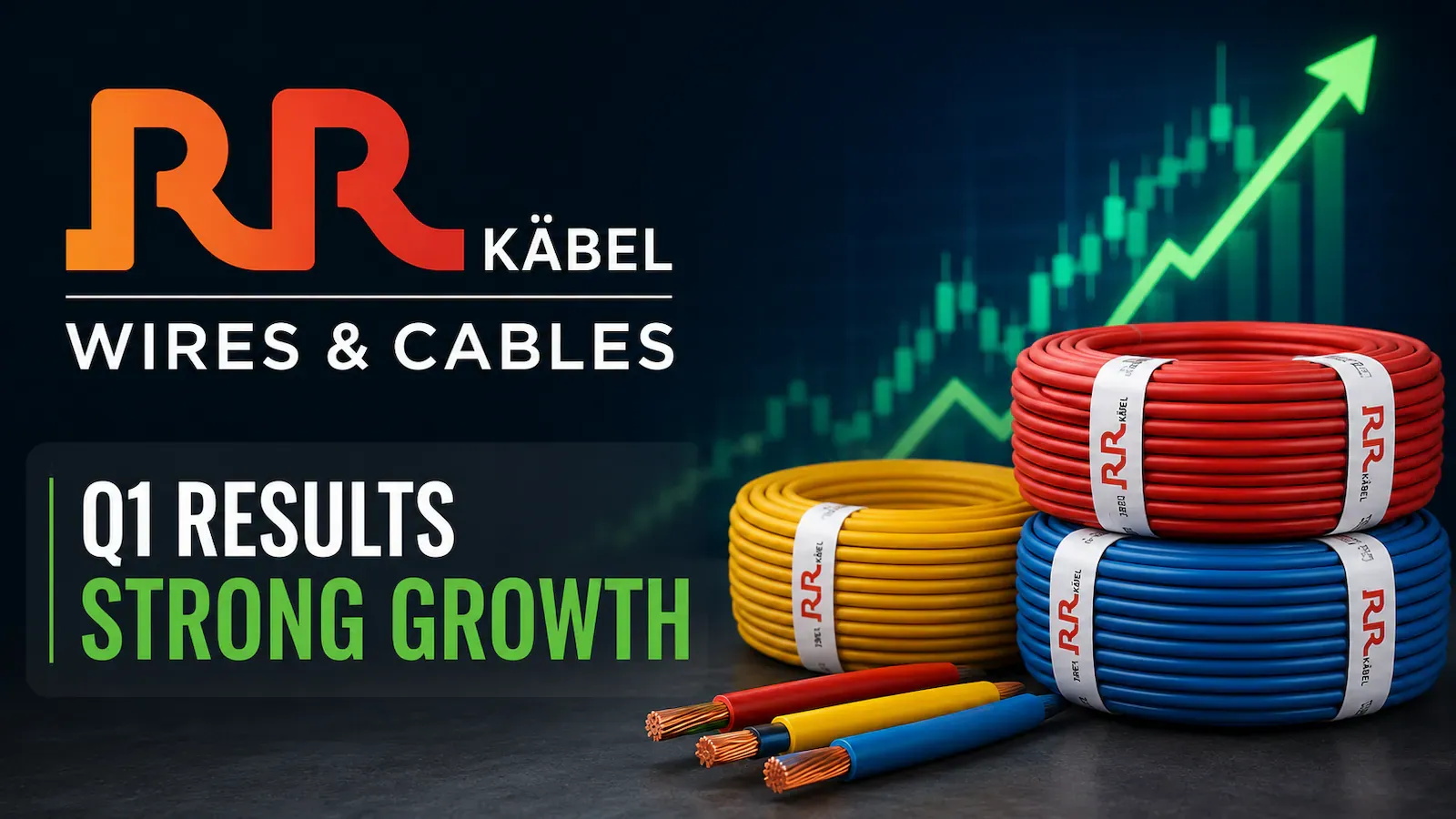
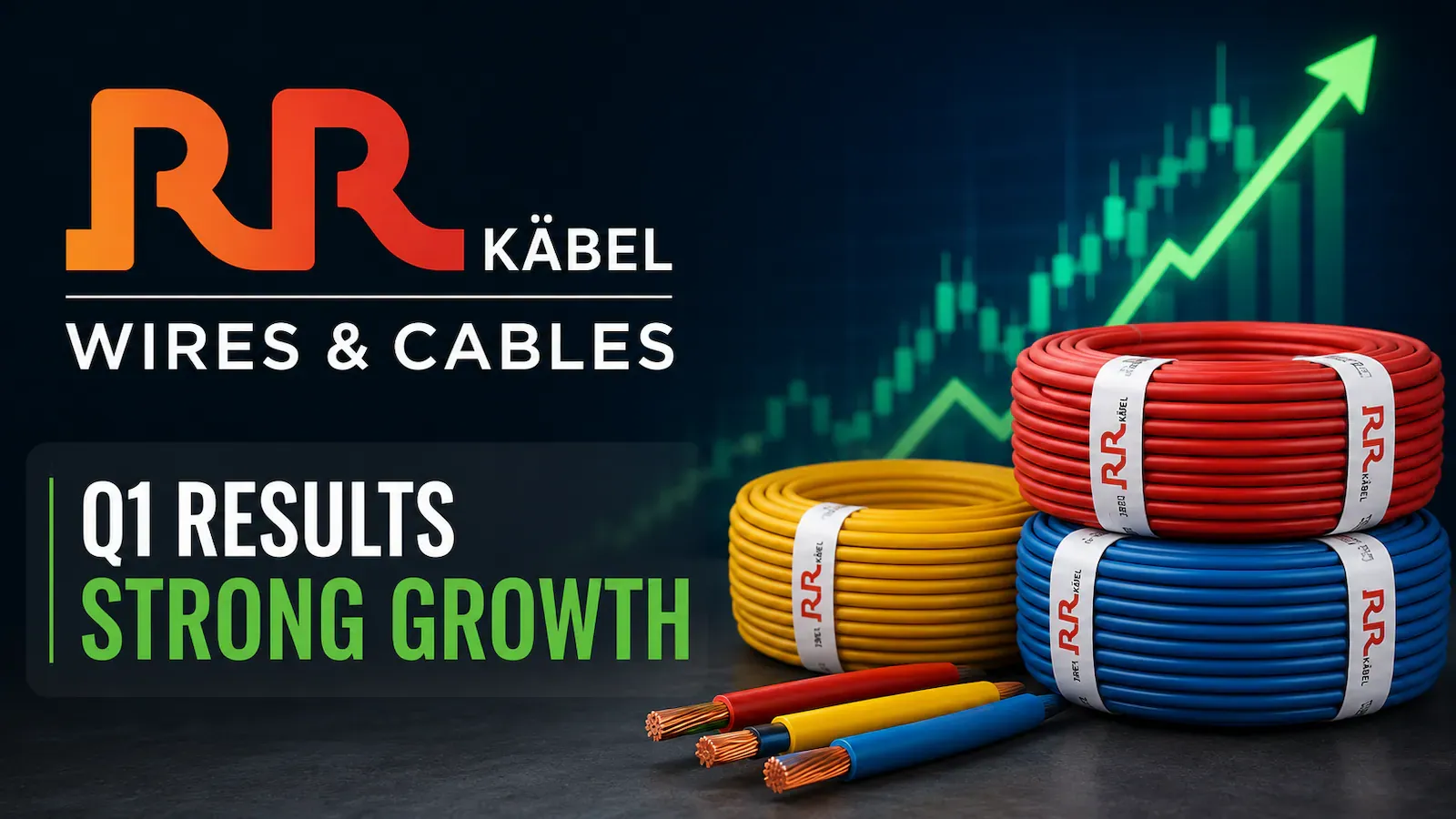
In a trading session dominated by headline-grabbing large-cap earnings from the likes of Tata Capital and a broad market rally led by information technology stocks, one of the more remarkable individual stock performances of the week came from a considerably less glamorous corner of Indian manufacturing: cables and wires maker R R Kabel, whose shares surged approximately 10 per cent to touch a fresh 52-week high of ₹2,775, propelled by a quarterly profit that rocketed roughly 128 per cent year-on-year. For a company operating in what many investors might consider an unremarkable, commoditised industrial category, the scale of both the profit growth and the resulting share price reaction offers a compelling reminder of how powerfully India's ongoing infrastructure and electrification boom is flowing through to companies positioned at the more unglamorous end of that supply chain.
To understand why a cables and wires manufacturer might post such extraordinary profit growth, it helps to step back and consider the breadth of demand drivers currently converging on India's electrical products sector. Cables and wires sit at the literal and figurative foundation of virtually every category of infrastructure and construction activity currently underway across India — from residential and commercial real estate construction, which as reflected in the strong recent performance of listed developers like Lodha Developers has been experiencing a genuine structural upcycle, to the renewable energy build-out, where solar and wind installations require extensive cabling infrastructure to connect generation capacity to the broader electricity grid, to data centre construction, a category experiencing explosive growth in India as global technology companies and domestic players alike race to build out artificial intelligence and cloud computing infrastructure, to the government's continued heavy investment in transmission and distribution infrastructure as part of its broader push to strengthen and modernise India's electricity grid.
Each of these demand drivers alone would represent a meaningful tailwind for a well-positioned cables and wires manufacturer; the fact that they appear to be converging simultaneously helps explain how a company like R R Kabel could post profit growth as dramatic as 128 per cent in a single quarter. Unlike more discretionary consumer categories, where demand can be more volatile and sentiment-driven, infrastructure-linked demand for cables and wires tends to be more directly tied to the pace of actual construction and capital expenditure activity underway across the economy — meaning that a genuine acceleration in India's broader infrastructure investment cycle translates fairly directly into volume growth for well-positioned suppliers of foundational products like electrical cables and wires.
R R Kabel's specific positioning within this broader opportunity set deserves closer examination. The company has built its business around a combination of retail-facing wire and cable products, sold through an extensive dealer and distributor network to electricians, contractors, and individual consumers undertaking home wiring and renovation projects, alongside institutional and project-based sales to larger construction, industrial, and infrastructure customers. This dual exposure — to both steady, repeat-purchase retail demand and larger, more variable but higher-value institutional and project business — gives the company a demand profile that can benefit disproportionately when both channels are experiencing simultaneous strength, as appears to have been the case in the quarter just reported.
The competitive landscape within India's cables and wires industry adds important context to R R Kabel's performance. The sector has historically featured a mix of large, well-established national players including Polycab India, Havells India's wire and cable business, KEI Industries, and Finolex Cables, alongside a long tail of smaller, often regional or unorganised manufacturers. Over recent years, the sector has seen a gradual but meaningful shift toward organised, branded players at the expense of the unorganised segment, driven by factors including increasing safety consciousness among both retail and institutional buyers, tighter regulatory standards around electrical product quality and safety certification, and the growing preference among larger institutional and infrastructure customers for suppliers with established quality track records and the manufacturing scale to reliably fulfil large, time-sensitive orders. This shift toward organised players has generally benefited established branded manufacturers like R R Kabel, allowing them to capture market share from unorganised competitors even independent of the broader demand tailwinds driving overall category growth.
R R Kabel's relatively recent listing on Indian stock exchanges also merits mention in understanding the significance of this quarter's results. As one of the more recent additions to India's universe of publicly traded manufacturing companies, the stock has had a comparatively limited trading history against which analysts and investors can benchmark its performance, making each successive quarterly result an important data point in establishing the market's longer-term view of the company's growth trajectory, margin profile, and overall investment merit. A 128 per cent profit growth quarter, particularly one strong enough to push the stock to a fresh 52-week high, represents an unusually powerful signal for a company still in the relatively early stages of building its public market track record, and is likely to feature prominently in how analysts recalibrate their growth and valuation models for the stock going forward.
Raw material cost dynamics represent another important variable underlying any cables and wires manufacturer's profitability, given the sector's heavy reliance on copper and, to a lesser extent, aluminium as primary input materials, both of which are globally traded commodities subject to meaningful price volatility driven by factors well beyond any individual company's control. Copper prices in particular have experienced their own periods of volatility in recent years, driven by a combination of global supply constraints, shifting demand patterns linked to the broader energy transition — since copper is also a critical input for renewable energy infrastructure and electric vehicle manufacturing, creating a degree of demand overlap and competition for the same underlying commodity — and macroeconomic factors including currency movements and global interest rate policy. How effectively R R Kabel has managed to navigate copper price volatility, whether through hedging strategies, pricing pass-through mechanisms with customers, or inventory management practices, will likely be a topic of considerable interest to analysts parsing the detailed results and management commentary in the days following this quarter's announcement.
The broader macroeconomic backdrop against which R R Kabel's results landed also deserves attention. India's construction and infrastructure sectors have benefited in recent quarters from a combination of continued government capital expenditure commitment, even amid periodic concerns about the pace of that spending relative to budgeted targets, alongside a private sector real estate cycle that, as reflected in strong recent performance from listed developers, appears to be genuinely accelerating rather than merely stabilising after its earlier period of distress and consolidation. This combination of sustained public infrastructure investment and an accelerating private real estate cycle creates a particularly favourable demand environment for foundational infrastructure input suppliers like R R Kabel, one that could plausibly sustain elevated growth rates for the sector over multiple quarters if the underlying construction and infrastructure investment trends continue on their current trajectory.
Export market dynamics represent an additional dimension worth considering for India's cables and wires manufacturers more broadly, including R R Kabel. India's electrical equipment and cables sector has increasingly positioned itself as an export-oriented manufacturing base, benefiting from the same broader trend of global supply chain diversification away from China that has supported growth across multiple Indian manufacturing sectors, alongside India's expanding network of free trade agreements that have reduced tariff barriers for Indian electrical goods exports to markets including the UAE, UK, and Australia. Whether R R Kabel's blockbuster quarter reflects meaningful contribution from export growth alongside its domestic market strength, or whether the growth has been predominantly domestically driven, will likely be clarified as more detailed segment-level results disclosures become available.
For investors evaluating R R Kabel's longer-term investment case following this results announcement, several key questions are likely to dominate analyst discussions in the coming weeks. Chief among them: is the 128 per cent profit growth rate reported this quarter a genuinely sustainable reflection of accelerating structural demand tailwinds across India's infrastructure, real estate, and electrification sectors, or does it partly reflect a particularly favourable, and potentially difficult-to-repeat, combination of factors specific to this quarter, including possibly favourable input cost timing, a particularly strong base of institutional or project-based orders, or other quarter-specific dynamics that may not recur at the same magnitude in subsequent periods.
The stock's technical positioning following this results-driven rally also deserves brief mention for market participants tracking near-term trading dynamics. Having touched a fresh 52-week high on the back of this results announcement, R R Kabel shares now sit at a level that will likely attract both fresh buying interest from momentum-oriented traders seeking to participate in a demonstrated strong growth story, and potential profit-booking from existing shareholders who have already captured substantial gains and may choose to lock in some of that appreciation following such a sharp, results-driven rally. How the stock behaves in the sessions immediately following this rally, and whether it can consolidate and build on its new 52-week high rather than giving back a substantial portion of the gains, will offer an early signal of how durably the market has come to believe in the company's newly demonstrated growth trajectory.
Looking beyond R R Kabel specifically, this quarter's results offer a useful broader signal for investors tracking India's infrastructure and construction-linked manufacturing sectors as a category. A 128 per cent profit growth quarter from a cables and wires manufacturer suggests that the demand tailwinds from India's ongoing infrastructure build-out, real estate cycle, renewable energy expansion, and data centre construction boom are translating into genuinely powerful financial results for well-positioned suppliers across these value chains — a dynamic that could plausibly extend to other companies operating in adjacent segments of India's infrastructure supply chain, from switchgear and transformer manufacturers to construction materials producers more broadly, as investors increasingly look for ways to gain exposure to what appears to be an increasingly robust and broad-based Indian infrastructure investment cycle.
As India's Q1 FY27 earnings season continues to unfold through the remainder of the week and beyond, R R Kabel's blockbuster results and resulting share price surge stand as one of the more striking reminders that some of the most compelling growth stories in Indian equities this season have emerged not from the headline-grabbing large-cap names dominating financial media coverage, but from smaller, less glamorous companies operating in unglamorous but economically essential categories — a pattern that seasoned market watchers have long noted tends to characterise genuinely strong, broad-based economic growth cycles, where the benefits extend well beyond the most visible, widely covered large-cap names into the less-followed but no less economically significant corners of the market.
Dealer and distributor sentiment offers another useful, if less quantifiable, indicator of the underlying strength behind R R Kabel's results. Cables and wires companies rely heavily on extensive networks of regional distributors and local electrical retailers to reach both individual consumers and smaller contractors, and sustained order growth from this dealer network typically signals genuine, broad-based demand strength rather than a result concentrated in a handful of large institutional orders that might prove less representative of the company's underlying business momentum. Anecdotal industry commentary around India's electrical products retail channel has, in recent quarters, pointed to sustained strength in demand for home renovation and new construction wiring, consistent with the broader real estate and infrastructure tailwinds already discussed.
The stock's inclusion, or potential future inclusion, in broader small-cap and mid-cap indices also carries implications worth noting for investors tracking the company. As R R Kabel's market capitalisation has grown alongside its share price appreciation, the company has moved closer to thresholds that could qualify it for inclusion in various benchmark indices tracked by passive investment funds, a development that, if it materialises, could introduce a further layer of structural buying demand for the stock independent of the fundamental growth story, as index-tracking funds are required to purchase shares in proportion to the company's index weighting regardless of their own independent view on the stock's valuation or growth prospects.
Promoter and management commentary in the immediate aftermath of results of this magnitude typically carries outsized weight in shaping how sustainably the market prices in the newly demonstrated growth trajectory. Investors and analysts will be listening closely for any guidance on order book visibility, capacity utilisation levels, and planned capital expenditure for further manufacturing expansion, since a company reporting this scale of profit growth while already operating near full capacity would face a genuinely different set of near-term growth constraints than one with substantial spare capacity still available to absorb continued strong demand without requiring additional capital investment.