Investors Once Focused Almost Entirely On Metro Consumers. Now Capital Is Rapidly Moving Toward Rural And Semi-Urban India’s Expanding Digital Economy
India’s startup ecosystem spent more than a decade building aggressively around metro consumption because major cities offered higher purchasing power, stronger logistics infrastructure and faster internet adoption. E-commerce, food delivery and digital payment companies largely concentrated on urban consumers because metros generated predictable demand and scalable customer acquisition opportunities. Rural India, despite representing a massive population base, often remained operationally difficult because fragmented supply chains, lower digital penetration and infrastructure challenges made scaling more complex.
That investment focus is now beginning to shift.
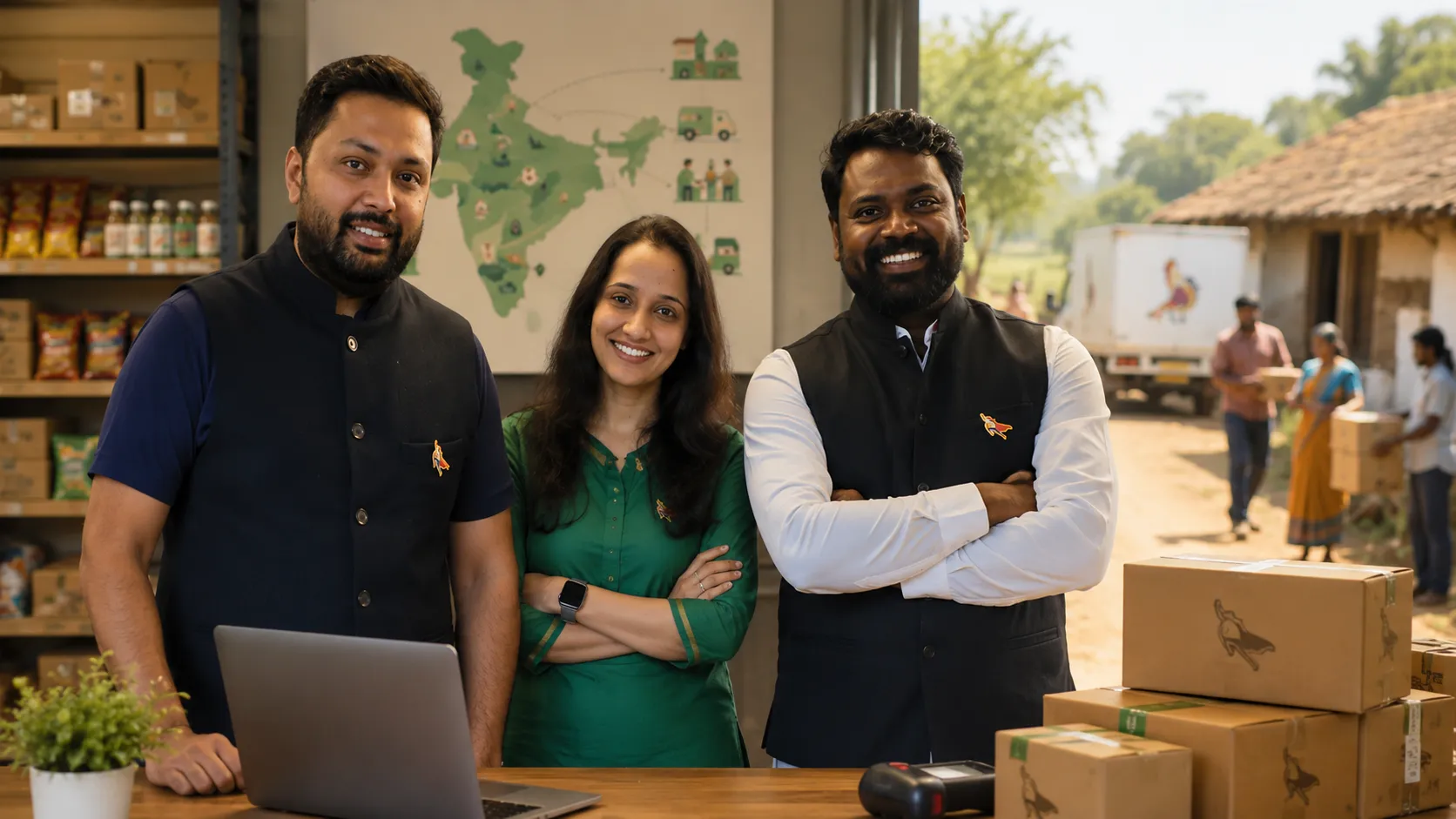
Rozana recently raised ₹290 crore as the omnichannel commerce platform expanded its push into rural and semi-urban India, signaling growing investor confidence that the country’s next major consumption story may emerge far beyond metropolitan centers. The funding reflects a broader realization inside India’s startup economy: urban digital markets are maturing, while enormous untapped demand still exists across smaller towns and underserved regions.
The timing is particularly important because India’s consumption geography itself is changing.Over the last several years, smartphone adoption, digital payments and internet access expanded rapidly beyond Tier-1 cities because cheaper data and affordable devices brought millions of new users online. Consumers in smaller towns increasingly shop digitally, engage with social commerce and use app-based services because digital behavior is no longer concentrated only within affluent urban clusters. What was once viewed as a “future market” is now becoming an active commercial battleground.Rozana is positioning itself directly inside that transition.
The startup operates through an omnichannel retail model combining digital commerce with localized distribution and neighborhood-level engagement because rural and semi-urban markets often require very different operational strategies compared to metro-focused e-commerce. Consumers outside major cities frequently depend on hybrid systems blending online ordering, assisted commerce and local delivery infrastructure rather than fully app-native shopping experiences alone.This is why investors increasingly see rural commerce as a specialized opportunity rather than simply a geographic expansion.
Traditional metro e-commerce models do not always translate smoothly into smaller towns because purchasing patterns, logistics realities and consumer trust mechanisms differ significantly. Rural and semi-urban consumers often prioritize affordability, familiarity and assisted buying experiences because digital adoption itself continues evolving unevenly across regions. Startups capable of adapting to these nuances potentially unlock enormous long-term markets that mainstream urban platforms still struggle to penetrate deeply.The funding round also reflects changing venture capital psychology in India.
For years, investors heavily rewarded startups serving affluent urban consumers because those segments generated visible transaction growth and faster monetization opportunities. Today many urban internet categories are becoming highly competitive and operationally saturated because major platforms already dominate large portions of metro demand. Rural commerce therefore appears increasingly attractive as the next expansion frontier where digital infrastructure remains relatively underdeveloped but consumer potential remains enormous.India’s demographic structure strengthens this opportunity further.
A substantial percentage of the country’s population still lives outside major metropolitan regions because economic activity, consumption growth and digital participation are gradually decentralizing across smaller towns and rural clusters. Rising aspirations, improving connectivity and expanding financial inclusion are creating new consumer classes that increasingly expect access to modern retail ecosystems without depending entirely on physical urban infrastructure.This creates significant strategic value for omnichannel models like Rozana’s.
Unlike pure-play digital commerce companies, omnichannel platforms combine physical distribution networks, local partnerships and digital interfaces because rural retail ecosystems still rely heavily on trust-based community relationships and offline accessibility. Hybrid infrastructure therefore becomes essential for scaling sustainably across fragmented markets where consumer behavior differs from metro-first shopping culture.The category is also attracting attention because it aligns with broader national economic narratives.
Government initiatives around digital inclusion, financial access and rural connectivity have accelerated significantly because policymakers increasingly view rural digitization as critical for long-term economic growth. Startups operating in underserved markets therefore benefit not only from rising consumer adoption but also from improving digital infrastructure ecosystems supporting commerce expansion.Of course, operational challenges remain substantial.
Rural logistics, inventory management and customer acquisition often involve higher complexity because infrastructure quality and purchasing density vary dramatically across regions. Profitability can also take longer because transaction sizes may initially remain smaller than urban benchmarks. Startups entering this space therefore need deep operational execution rather than simply technology-led scale strategies.
Yet investors appear increasingly willing to embrace that complexity.The reason is simple: the next hundred million Indian consumers may not emerge primarily from large cities anymore. They may emerge from smaller towns, expanding highways, semi-urban districts and digitally connected rural communities where organized commerce infrastructure still remains relatively early-stage.
And Rozana’s ₹290 crore funding round suggests venture capital firms increasingly believe that India’s next major retail transformation may happen far beyond traditional startup hotspots.