
Mumbai: Reliance Industries, India's most valuable listed company and the flagship conglomerate controlled by Mukesh Ambani, disclosed that its promoter group increased its shareholding to 50.48 percent during the June quarter, up from exactly 50 percent at the start of the period, according to the company's latest regulatory filings. The incremental stake increase, while modest in percentage terms, carries symbolic and strategic significance given Reliance's position as the anchor stock within India's benchmark equity indices and the broader signal that promoter accumulation typically sends to the market about insider confidence in a company's near-term prospects.
The disclosure arrived in close proximity to Reliance's June quarter, or Q1 FY27, earnings announcement, which drew a notably positive reception from brokerages and market analysts, many of whom highlighted improving trends across the conglomerate's diverse business segments, including its core oil-to-chemicals operations, the continued value creation narrative around its Jio digital services business, and progress on its rapidly scaling new energy initiatives, as key factors underpinning their constructive outlook on the stock.
WHY PROMOTER STAKE INCREASES MATTER TO THE MARKET
Promoter shareholding changes represent one of the more closely watched categories of corporate disclosure within Indian equity markets, given the widely held view among investors that promoters and controlling shareholders typically possess considerably more detailed and timely insight into a company's underlying business performance and prospects than external analysts or investors relying primarily on publicly available information. When promoters choose to increase their stake in a company, particularly during a period when the broader market or specific stock may be facing headwinds or trading at what promoters perceive to be an attractive valuation, this action is frequently interpreted by the market as a signal of underlying confidence in the company's future trajectory.
For a company of Reliance Industries' scale and market significance, even a relatively modest percentage increase in promoter shareholding translates into a substantial absolute value of shares acquired, given the conglomerate's position as India's most valuable listed company by market capitalisation. This scale amplifies the signalling significance of the stake increase, even as market analysts are typically careful to note that promoter shareholding changes should be evaluated as one input among many, rather than as a standalone basis for investment decisions, particularly given that promoter transactions can sometimes reflect a range of considerations beyond simple confidence signalling, including estate planning, corporate restructuring, or specific financing arrangements that may not directly relate to the promoters' assessment of the company's near-term business prospects.
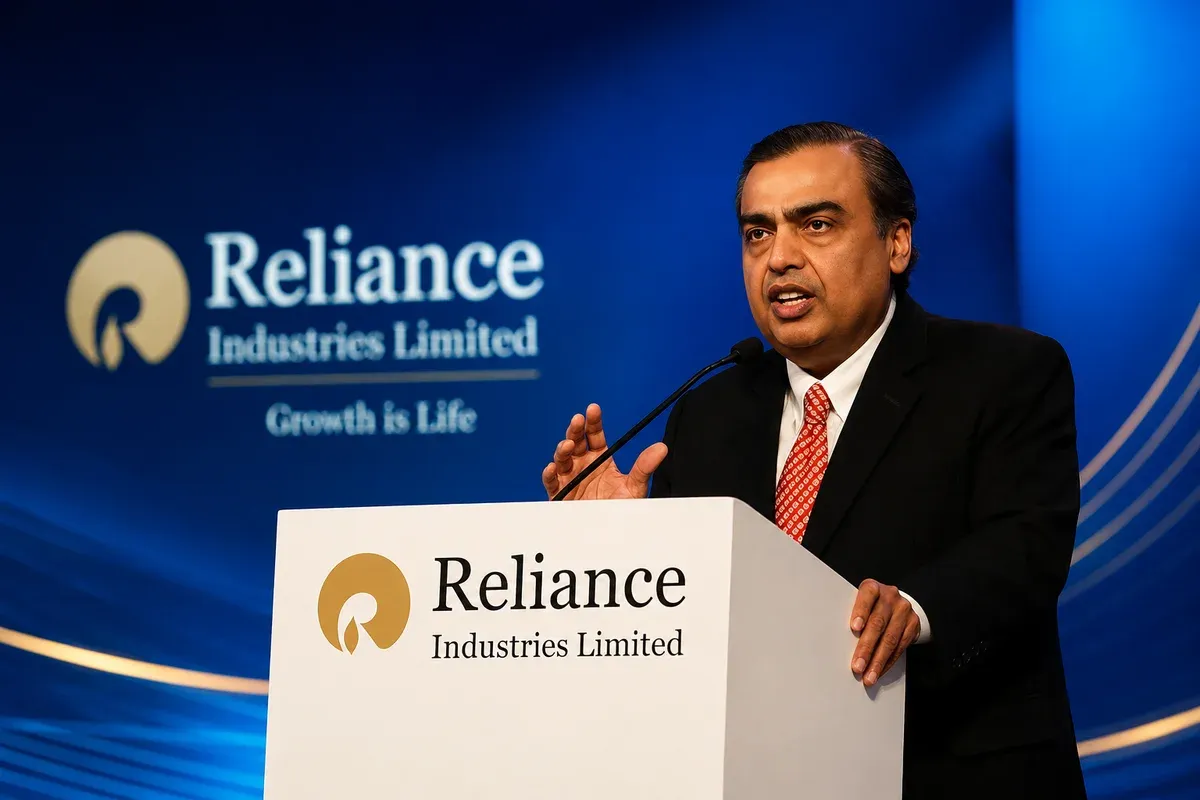
BROKERAGE REACTION TO Q1 RESULTS
The timing of the promoter stake increase, arriving alongside Reliance's broadly well-received June quarter results, has amplified its significance in the eyes of market participants. Brokerages covering the stock offered a notably positive assessment of the results, highlighting recovery trends within the company's oil-to-chemicals business, which has historically represented one of the more cyclically sensitive segments of the conglomerate's diverse operations, alongside continued progress on unlocking value from the Jio digital services business, which has increasingly become a focal point of investor attention given its substantial and growing contribution to the group's overall enterprise value.
Reliance's new energy initiatives, encompassing the company's ambitious plans across renewable energy generation, battery storage, and green hydrogen production, among other emerging clean energy verticals, also featured prominently in brokerage commentary, with several analysts pointing to continued ramp-up progress across these initiatives as an important additional growth driver that could meaningfully contribute to the conglomerate's overall earnings trajectory over the coming years, even as the specific pace and scale of this contribution remains subject to ongoing execution risk given the capital-intensive and technologically complex nature of many of these new energy ventures.
RELIANCE'S DIVERSIFIED BUSINESS MODEL AS A RESILIENCE FACTOR
Reliance Industries' position as India's most valuable listed company reflects, in substantial part, the diversified nature of its underlying business portfolio, spanning traditional energy and petrochemicals operations, telecommunications and digital services through Jio, organised retail through Reliance Retail, and increasingly, new energy and clean technology initiatives. This diversification has historically provided the conglomerate with a degree of resilience against sector-specific headwinds that might more significantly affect companies with narrower business focus, allowing strong performance in one segment to help offset any weakness in another during periods of uneven sectoral performance.
This diversification dynamic has taken on particular relevance amid the current period of elevated crude oil price volatility, stemming from the ongoing Middle East conflict and its disruptive effects on global shipping through the Strait of Hormuz. While Reliance's oil-to-chemicals business carries direct exposure to crude oil price movements, both as an input cost consideration for certain operations and as a factor affecting refining and petrochemical margins more broadly, the company's substantial and growing non-oil business segments, particularly its telecommunications and retail operations, provide a meaningful counterbalance that has helped support overall group profitability even amid the volatile energy price environment.
CONTEXT: RELIANCE'S POSITION WITHIN INDIAN MARKETS
As India's largest listed company by market capitalisation, Reliance Industries carries an outsized influence over the direction of India's benchmark equity indices, including both the BSE Sensex and the NSE Nifty 50, given the substantial weight the stock commands within each index's overall composition. This outsized index weighting means that Reliance's individual stock performance, whether driven by quarterly earnings results, promoter shareholding changes, or broader sector dynamics affecting its various business segments, frequently exerts a disproportionate influence on headline index-level movements, making the stock a particularly closely watched barometer for overall market sentiment among both domestic and international investors tracking Indian equities.
The company's shares have, over recent trading sessions, shown notable strength, a pattern that market participants have attributed substantially to the combination of the positive earnings reception and the promoter stake increase disclosure, reinforcing the broader narrative of renewed investor confidence in the conglomerate's near-term trajectory even as broader market sentiment has remained constrained by ongoing geopolitical uncertainty and its associated effects on crude oil prices and the Indian rupee.
WHAT ANALYSTS ARE WATCHING NEXT
Looking ahead, analysts covering Reliance Industries have identified several key variables that are likely to shape the stock's trajectory over the coming quarters, including the pace of continued recovery within the oil-to-chemicals business as global refining margins evolve, the trajectory of Jio's subscriber growth and average revenue per user metrics as India's telecommunications market continues to mature, the pace of value unlocking initiatives across the broader Reliance corporate structure, and the execution progress on the company's substantial new energy capital expenditure programme, which represents one of the largest such investment commitments undertaken by any Indian corporate entity in recent years.
The promoter group's decision to increase its stake during the June quarter, even as it represents a relatively modest incremental change in percentage terms, will likely continue to be cited by bullish analysts as one supporting data point within a broader constructive investment thesis for the stock, even as the ultimate trajectory of Reliance's share price performance will, as with any large diversified conglomerate, depend substantially on the cumulative execution across its various business segments over the coming quarters and years.
REGULATORY DISCLOSURE FRAMEWORK FOR PROMOTER HOLDINGS
Promoter shareholding disclosures of the kind that revealed Reliance's stake increase are governed by a well-established regulatory framework administered by the Securities and Exchange Board of India, which mandates that listed companies periodically disclose the shareholding pattern of their promoter and promoter group entities, alongside various other categories of shareholders including public, institutional, and foreign investors. This disclosure framework is designed to ensure transparency around ownership concentration and changes therein, allowing the broader investing public to track promoter behaviour over time as one input among many in forming their own investment views.
For a company of Reliance's scale and public market prominence, these periodic shareholding disclosures typically attract considerable analyst and media attention, given the widely held view that promoter transaction patterns can offer valuable, if imperfect, signals about insider sentiment. The regulatory framework also imposes various restrictions and disclosure requirements around the specific timing and manner in which promoters can transact in company shares, designed to prevent potential misuse of material non-public information that promoters, by virtue of their operational involvement in the business, may possess ahead of the broader investing public.
RELIANCE'S JIO AND RETAIL VALUE UNLOCKING JOURNEY
Beyond the core oil-to-chemicals and new energy narratives, Reliance's ongoing efforts to unlock value from its Jio digital services and Reliance Retail businesses continue to represent a significant component of the broader investment thesis that has attracted sustained brokerage and investor attention. Various strategic initiatives undertaken over recent years, including fundraising rounds involving global technology and private equity investors into both Jio Platforms and Reliance Retail, have been widely interpreted by market analysts as steps toward eventual public listings or other value-realisation events for these increasingly valuable digital and consumer-facing business segments, even as the specific timing and structure of any such eventual listing remains subject to ongoing market speculation and management discretion.
Continued progress on this broader value unlocking journey, alongside the core operational performance improvements reflected in the company's latest quarterly results, together form the foundation of the increasingly bullish brokerage sentiment that has characterised much of the analyst commentary following Reliance's June quarter earnings announcement.
INSTITUTIONAL AND RETAIL SHAREHOLDING TRENDS
Beyond the promoter group's own stake increase, Reliance's overall shareholding pattern continues to attract attention from investors seeking insight into broader institutional and retail sentiment toward the stock. Foreign institutional investor and domestic institutional investor holdings in Reliance are tracked closely by analysts as an additional gauge of professional investor confidence, with any notable shifts in these categories often analysed alongside promoter shareholding changes to build a more complete picture of the overall ownership dynamics shaping the stock's supply and demand fundamentals. Given Reliance's substantial weight within India's benchmark indices, institutional shareholding patterns in the stock also carry implications for broader index fund and exchange-traded fund flows, given the mechanical rebalancing that such passive investment vehicles undertake in response to index composition and weighting changes.

CONGLOMERATE DISCOUNT CONSIDERATIONS
As with many large, diversified conglomerates, Reliance Industries has periodically faced investor debate around whether its current valuation adequately reflects the sum of its diverse business parts, or whether the stock trades at a discount to this theoretical sum-of-the-parts value due to the complexity inherent in valuing a business spanning such disparate sectors as energy, telecommunications, retail, and emerging clean technology ventures. This "conglomerate discount" debate has featured prominently in various analyst reports over recent years, with some arguing that continued progress on unlocking standalone value from segments like Jio and Reliance Retail, potentially through future listing events, could serve as a catalyst for narrowing any such discount, a consideration that adds further context to why market participants continue to closely monitor developments across each of Reliance's individual business segments rather than focusing solely on consolidated group-level financial metrics.
INVESTOR TAKEAWAY
Taken together, the promoter stake increase and the broadly positive brokerage reception to Reliance's June quarter results paint a picture of a conglomerate that continues to command considerable confidence among both insiders and professional market analysts, even as the stock's ultimate performance will, as always, hinge on sustained execution across its various business verticals amid a broader macroeconomic backdrop that remains far from straightforward given the ongoing volatility in global energy markets and currency conditions.
For long-term shareholders, the combination of these developments reinforces a narrative of steady, if occasionally uneven, progress across Reliance's sprawling business empire, offering a reminder of why the stock continues to command such close and sustained attention from India's investing community, both retail and institutional, spanning virtually every corner of the country's financial markets ecosystem.
As the current earnings season progresses further, market participants will continue parsing each fresh data point, from segment-level margin trends to updates on the various strategic initiatives underway across the group, in their ongoing effort to build a complete and current picture of where India's largest conglomerate stands and where it appears headed next, with the promoter group's own trading behaviour likely to remain one small but closely watched piece of that larger, evolving puzzle facing analysts and long-term shareholders alike as they continue to assess the conglomerate's overall trajectory.