Later today, the Reserve Bank of India is scheduled to release its weekly statistical supplement, a routine data drop that in calmer times might pass with barely a mention outside specialist trading desks, but which this week has taken on outsized significance for a very simple reason: India's currency and its broader macro-financial buffers are under real pressure. The release, expected around 5 pm as is customary, will update three closely watched indicators — year-on-year bank credit growth, deposit growth across the banking system, and the level of India's foreign exchange reserves — each of which offers a distinct lens into the underlying health of the Indian economy at a moment when several external shocks are converging simultaneously.
Going into today's release, the most recently available readings showed bank credit growth running at around 18.6 per cent year-on-year and deposit growth at roughly 13.3 per cent, alongside a headline forex reserves figure that had, as of the last comparable weekly print, stood in the region of $675 billion. Each of those three numbers carries its own distinct narrative weight. Credit growth outpacing deposit growth, a pattern that has persisted for a considerable stretch, has been a recurring talking point among bank treasurers and economists, since it implies banks are increasingly leaning on non-deposit funding sources — certificates of deposit, borrowings, and other wholesale instruments — to fund loan-book expansion, a dynamic that can eventually put upward pressure on funding costs and, by extension, lending rates across the system.
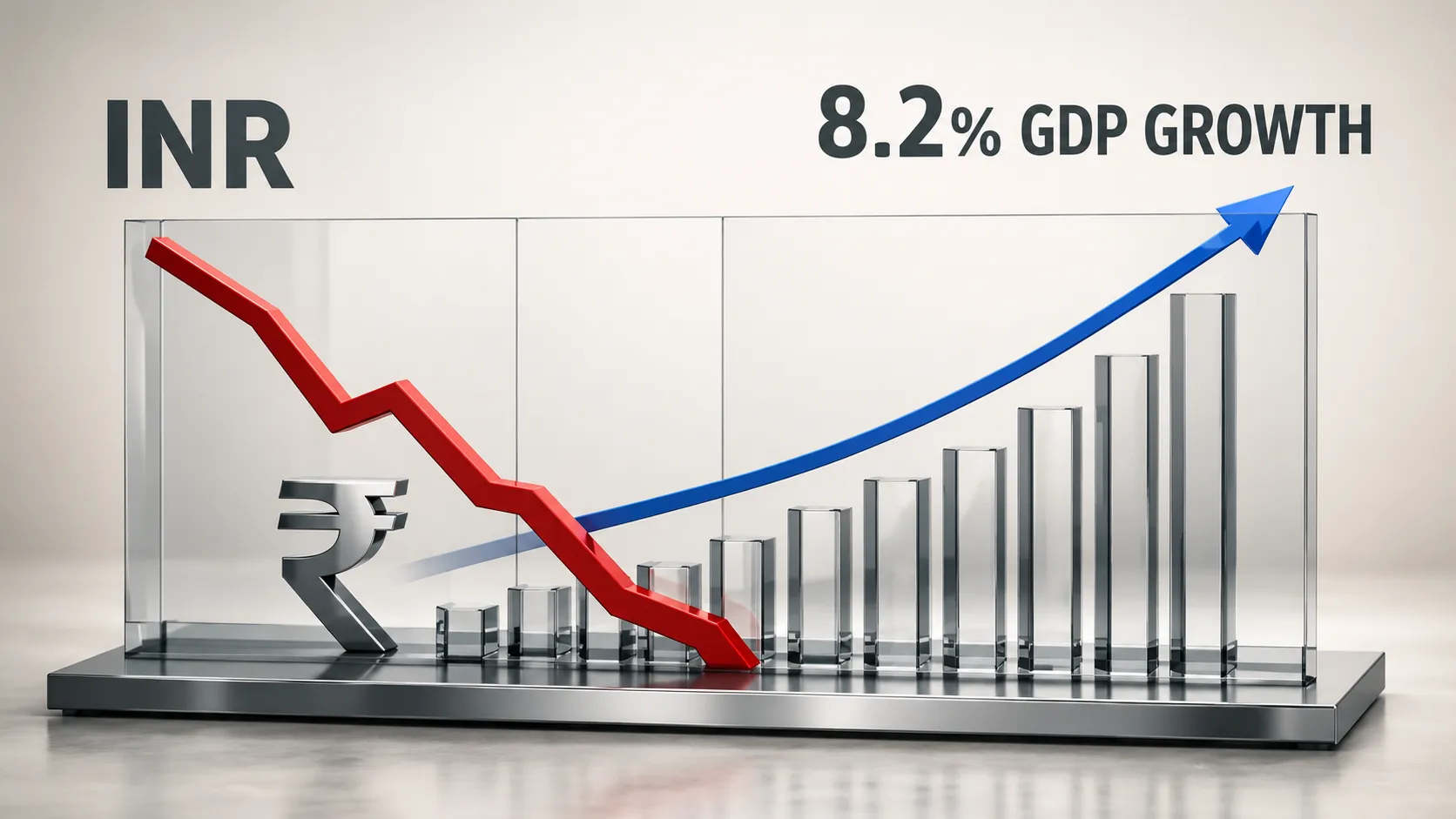
The forex reserves number, however, is the figure likely to draw the most attention today, given the currency backdrop against which this data drop is landing. The rupee closed at 96.73 against the US dollar on Thursday, July 23, edging toward the record-low territory it touched earlier this year, weighed down by a combination of surging crude oil prices tied to the deepening West Asia crisis, continued foreign institutional investor selling in Indian equities, and a broadly stronger US dollar. Against that backdrop, India's forex reserves function as the central bank's primary line of defence — the war chest the RBI draws upon when it intervenes in the currency market to smooth out excessive volatility or arrest a disorderly slide in the rupee's value, typically by selling dollars into the market to absorb excess demand and support the local currency.
That intervention has, in fact, already been substantial and publicly acknowledged in recent months. The central bank reportedly conducted net dollar sales of $6.1 billion in May, following an even larger net sale of $8.9 billion in April, as it worked to counter the depreciation pressure building on the rupee through the first half of 2026. Each of those interventions draws down the headline reserves figure, which is precisely why today's update carries real informational value: it will show market participants, in near-real-time, how much of the RBI's currency-defence capacity has been deployed in the most recent week, and by extension, how much ammunition remains available should the West Asia-driven crude spike continue to intensify pressure on the rupee in the days ahead.
It is worth noting that India's reserves position, even after the recent bouts of intervention, remains substantial by historical and international standards — sufficient, by most recent estimates, to cover somewhere in the region of ten months of the country's import requirements, a comfortable buffer by conventional benchmarks that typically consider three to four months of import cover as an adequate minimum threshold for external stability. That cushion is one reason why, despite the rupee's slide toward record-low territory, there has been no sense of acute currency crisis in the way markets might have reacted to comparable pressure a decade or more ago, when India's reserves position was considerably thinner and the economy correspondingly more vulnerable to external shocks.
The credit and deposit growth figures due today will also be read closely for what they say about the underlying momentum of India's real economy, independent of the currency and crude-oil noise dominating headlines. Robust credit growth is generally interpreted as a signal of healthy demand for capital across both retail and corporate borrowers — everything from home loans and personal credit to working-capital financing for businesses — while deposit growth trends offer a window into household savings behaviour and the competitive dynamics between banks and alternative savings instruments such as mutual funds and small savings schemes. A widening gap between the two, sustained over an extended period, is something the RBI itself has flagged in past policy communications as worth monitoring, given its implications for systemic liquidity and the loan-to-deposit ratios of individual banks.
This week's data also arrives just as India's Q1 FY27 corporate earnings season has been delivering a genuinely mixed bag of outcomes across the banking sector specifically — HDFC Bank posted results broadly in line with expectations, with healthy deposit growth of 13.3 per cent year-on-year cited in its own disclosures, while other private lenders have shown more divergent trends, some reporting strong profit growth and improving asset quality, others facing pressure on margins and provisioning. The systemic credit and deposit numbers due from the RBI today will offer useful context for interpreting those individual bank results against the backdrop of the sector as a whole, helping market participants distinguish company-specific performance from broader sectoral trends.
Economists and market strategists will also be parsing today's release for early signals of how the Reserve Bank's recent policy measures aimed at attracting foreign capital inflows are performing. The RBI has, over recent months, introduced a series of measures designed to draw in overseas capital — steps that reportedly helped attract meaningful foreign-currency deposit inflows into the banking system, with cumulative figures in the range of $17 billion or more cited in recent market commentary. Sustained strength in these inflows would represent a partial offsetting force against the FII equity outflows and current-account pressures stemming from elevated crude prices, and today's reserves figure will offer one more data point in assessing whether that offsetting dynamic is holding up.
Beyond the immediate market reaction, today's release matters because it feeds directly into the broader policy calculus the RBI's Monetary Policy Committee will be weighing as it approaches its next scheduled review. A central bank managing a currency under pressure, credit growth that is running ahead of deposit growth, and reserves that have been drawn down through active intervention faces a genuinely complex balancing act — between supporting growth, containing inflationary pass-through from a weaker rupee and costlier imported crude, and preserving enough reserve buffer to maintain credibility in currency markets. Each weekly data release, however routine it may appear on the surface, adds another data point to that calculus.
For now, market participants across trading desks, treasury departments, and economic research teams will be watching the 5 pm release today with more than the usual level of attention. In a week defined by crude oil spikes, a rupee testing multi-month lows, and a jittery equity market extending its losing streak into a fifth session, the RBI's routine weekly scorecard has, for the moment, become anything but routine.
It is worth stepping back to appreciate just how much India's macro-financial resilience has evolved over the past decade and a half, a context that helps explain why today's data, however closely watched, is unlikely to trigger the kind of panic that comparable currency pressure might once have induced. During the 2013 'taper tantrum' episode, for instance, India was frequently grouped among the so-called 'Fragile Five' emerging economies, with reserves and current-account metrics that left the country meaningfully more exposed to sudden capital-flow reversals. The reserves cushion India has built since then — even after accounting for the substantial intervention deployed in recent months to defend the rupee — reflects years of deliberate policy effort aimed at building exactly the kind of buffer that allows the RBI to manage episodes like the current one from a position of relative strength rather than acute vulnerability.
The interplay between today's credit-growth data and the RBI's broader monetary stance also merits attention. With bank credit growth running at a healthy clip even as deposit growth lags somewhat behind, the central bank has periodically used tools beyond just interest rates — including adjustments to the cash reserve ratio, targeted liquidity operations, and regulatory guidance on specific lending categories — to manage systemic liquidity conditions without necessarily having to move the headline policy repo rate. Today's data will feed into that ongoing liquidity-management calculus, offering the RBI's own internal teams, as much as external market analysts, an updated read on how effectively recent liquidity measures have been transmitting through the banking system.
Currency traders, for their part, tend to parse the reserves figure specifically for its rate of change as much as its absolute level — a large one-week decline, even from a still-comfortable overall base, can sometimes trigger speculative positioning against the rupee on the assumption that continued heavy intervention signals the central bank views the currency as particularly vulnerable at current levels. Conversely, a smaller-than-expected decline, or even a modest increase in reserves, can be read as a sign that intervention pressure is easing, potentially alongside offsetting inflows from foreign-currency deposit schemes or portfolio investment that are helping counterbalance the crude-driven pressure on the currency. Today's specific reserves print will therefore be parsed almost as closely for its trend as for its headline number.
For everyday households and businesses well outside the trading rooms and treasury desks that parse this data most closely, the practical relevance of today's release ultimately flows through a few key channels: a well-defended, stable rupee helps contain imported inflation on everything from fuel to electronics to edible oils; healthy but not excessive credit growth supports continued access to home loans, vehicle finance, and business credit without building up the kind of systemic fragility that has historically preceded banking-sector stress episodes; and robust foreign exchange reserves provide the kind of macro-stability backstop that supports investor confidence, credit ratings, and ultimately the cost at which both the government and Indian corporates can borrow in international markets. Each of those channels, while abstract in the framing of a weekly statistical release, has very concrete downstream consequences for ordinary economic life across the country.
As India's Q1 FY27 corporate earnings season continues to unfold over the coming weeks, and as the geopolitical situation in West Asia remains fluid and unpredictable, data releases like today's weekly RBI supplement are likely to retain an elevated level of market significance for the foreseeable future — a reminder that even the most routine-seeming institutional data drops can, under the right set of macro circumstances, become genuinely market-moving events. Investors, borrowers and policymakers alike would do well to keep this weekly rhythm on their radar in the weeks ahead, since in the current environment, the gap between a routine data release and a market-moving one has rarely been thinner. Treasury desks across India's banking and corporate sectors have, in recent weeks, reportedly increased the frequency with which they review this specific data set, a small but telling sign of just how closely the market is now tracking every incremental signal on India's currency-defence capacity. Whatever today's numbers show, the broader story of 2026 so far has been one of a central bank actively, visibly defending its currency rather than allowing market forces to run unchecked — a stance that, while costly in terms of reserves deployed, has so far kept the rupee's depreciation orderly rather than disorderly, a distinction that matters enormously to how global investors ultimately price Indian risk. This report will be updated once the official weekly figures are published later today. In the meantime, the takeaway for anyone outside the trading rooms is a simple one: India's central bank still has room to manoeuvre, but that room is not unlimited, and every week that crude prices stay elevated is a week that room gets a little tighter. That is the quiet arithmetic sitting underneath every headline number this week, and it is exactly why today's otherwise routine release deserves a closer read than usual.