The IPO That Will Tell Us What Indian Fintech Is Actually Worth
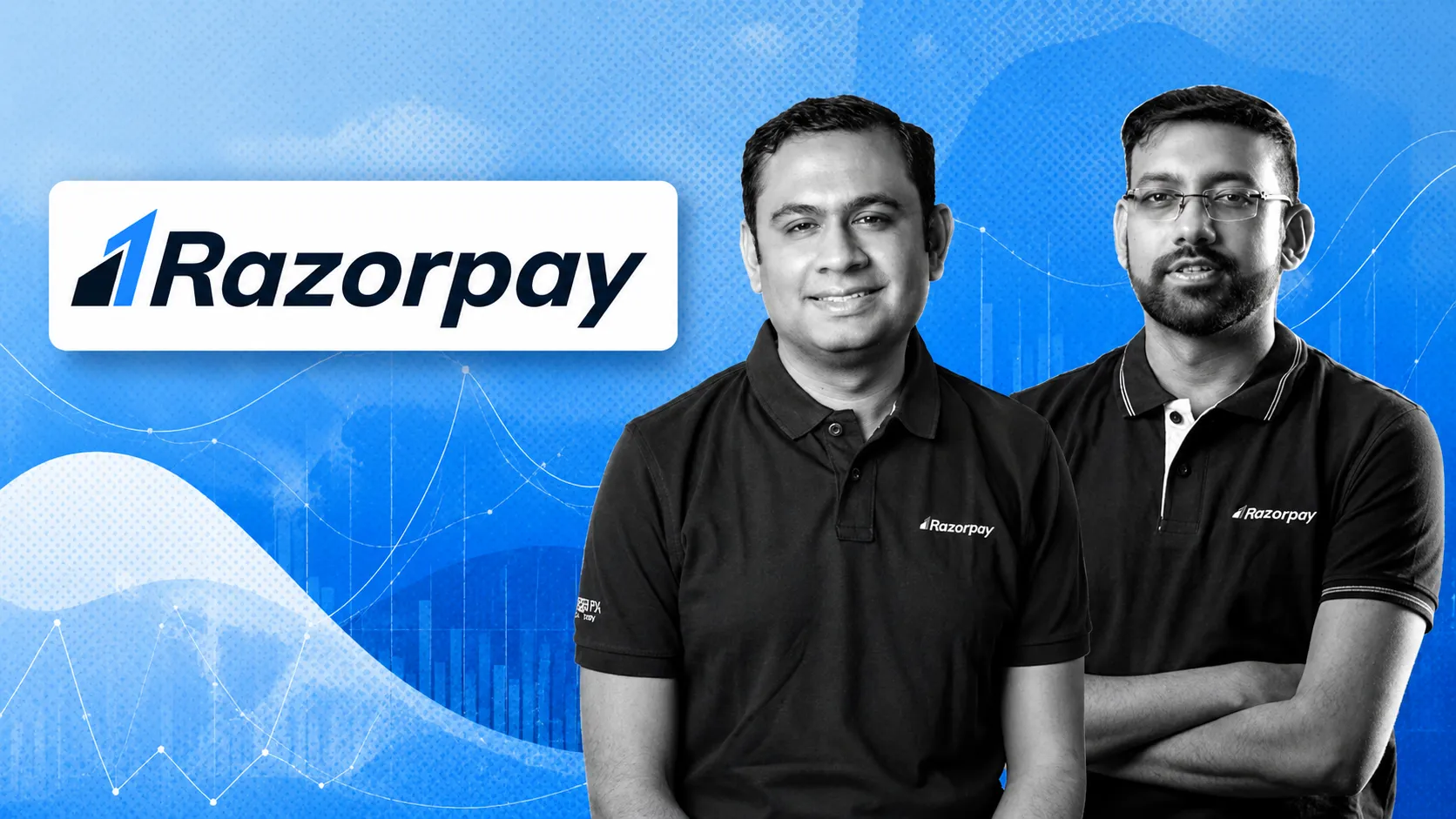
On June 12, 2026, Razorpay filed a confidential Draft Red Herring Prospectus with SEBI and the relevant stock exchanges. The company publicly disclosed the filing three days later through a newspaper advertisement — as required under the confidential pre-filing route — confirming what the market had been anticipating since the reverse-flip from the US to India was completed in 2025.
The numbers being reported are these: a proposed raise of ₹5,000–6,000 crore (approximately $600 million), a target valuation of ₹50,000–60,000 crore (approximately $5–6 billion), and a syndicate of four banks — Axis Capital, Kotak Mahindra Capital, JPMorgan, and Citi — suggesting an institutional process that is seriously organised.
The number that shadows everything else is this: $7.5 billion. That was Razorpay's valuation in December 2021, in its last private funding round — the peak of the zero-interest-rate era, when fintech companies globally were being priced as if rapid growth was a permanent condition rather than a phase. Razorpay is now heading to the public market at an expected $5–6 billion. That is a markdown of roughly 20 to 33 per cent from the peak, and it will be the central question the IPO has to answer: is this a company that has been appropriately repriced for the 2026 environment, or is there still a gap between what the private investors need to exit at and what the public market is actually willing to pay?
What Razorpay Is — and What It Has Become
Razorpay was founded in 2014 by Harshil Mathur and Shashank Kumar, both IIT Roorkee alumni. They started with a simple and important observation: Indian businesses needed an easier way to accept online payments. At the time, integrating payment gateways into websites required lengthy bank approvals, technical complexity, and timelines that startups could not afford.
Razorpay built what was missing: a developer-friendly, API-first payments infrastructure that let Indian businesses accept money online in days rather than months. UPI, credit and debit cards, net banking, digital wallets, and buy now, pay later — the platform processes transactions across the full range of payment methods that the Indian digital economy uses, and earns a fee on each one.
Over the decade since, Razorpay has expanded significantly beyond that original gateway product. Its product stack now includes payment processing, settlements, payout management, business banking (RazorpayX), payroll software (Razorpay Payroll), lending support, point-of-sale payment terminals, and international payment processing for merchants selling across borders. It has moved from being a payments gateway to being, in its own framing, a full-stack financial operating system for Indian businesses.
That expansion has brought both revenue growth and the complexity that accompanies it. FY25 operating revenue grew 65 per cent year-on-year to ₹3,783 crore, with gross profit reaching ₹1,277 crore. The core payments business has reached EBITDA profitability — Harshil Mathur himself said as much publicly. The net loss of ₹1,209 crore reflects ESOP costs and one-time charges related to the reverse-flip tax liabilities rather than structural operational losses. These are distinctions that investors will parse carefully in the public DRHP when it becomes available.
The company is backed by Peak XV Partners (formerly Sequoia India), Tiger Global, Ribbit Capital, TCV, Matrix Partners, Lightspeed Venture Partners, Y Combinator, and GIC — Singapore's sovereign wealth fund. This is the institutional investor roster that serious Indian technology companies carry. Several of these investors have held their positions for multiple years and are looking at the IPO as the liquidity event their fund economics require.
The Reverse Flip: Why It Had to Happen First
The most structurally important thing Razorpay did before filing the DRHP was not the filing itself. It was completing the reverse flip.
When Razorpay raised its major growth rounds in the late 2010s and early 2020s, it was, like most Indian startups seeking global venture capital, domiciled in the United States — specifically in Delaware, the default legal home of US-funded technology companies. This structure was convenient for raising from US-based funds and for structuring employee option pools. It was an obstacle to listing on Indian stock exchanges, which require the issuing entity to be an Indian company.
Starting in 2023, Razorpay began the process of redomiciling its holding structure back to India. This required approvals from the Reserve Bank of India and the Ministry of Corporate Affairs, a complex corporate restructuring, the resolution of cross-border tax liabilities — hence the one-time tax charge reflected in FY25 — and a conversion from a private limited to a public limited company. The process was completed in 2025.
This reverse flip is now a well-worn path. Meesho, Groww, Zepto, Swiggy — a cohort of Indian consumer technology companies have moved through the same process ahead of their own listings, using the confidential SEBI filing route to manage the transition in private. Razorpay's ability to complete the reverse flip cleanly and file within months is itself a signal of organisational readiness.
The Valuation Question That Every Indian Fintech Faces
The $7.5 billion to $5–6 billion markdown is Razorpay's version of a problem that every Indian fintech unicorn that was valued in the 2021 era is now navigating: the distance between what investors paid in a zero-rate, high-growth-premium environment and what the public market will price in 2026's reality.
India's public fintech experience has a single dominant reference point: Paytm. One97 Communications, Paytm's parent, listed in November 2021 at a ₹18,300 crore IPO that valued the company at approximately $13 billion — and then fell 27 per cent on listing day, eventually dropping over 70 per cent from its IPO price over the following months before a slow partial recovery. The Paytm IPO became the defining cautionary tale for Indian fintech public market readiness, teaching both companies and investors a lesson about the gap between private market narrative and public market scrutiny.
Razorpay is not Paytm. The comparison is worth making because it is the comparison every Indian institutional investor will make — and then noting the differences. Paytm at IPO had a sprawling, hard-to-explain business model across payments, financial services, entertainment, and devices. Razorpay's core business — B2B payments infrastructure for Indian merchants — is cleaner, more focused, and more analogous to the global payments infrastructure companies (Stripe, Adyen, Worldline) that trade at well-understood multiples.
The global payments infrastructure comparables matter here. Adyen trades at roughly 20–25 times revenue. Stripe, still private, was valued internally at roughly 10 times revenue in its most recent round. Razorpay at a ₹60,000 crore valuation against ₹3,783 crore in FY25 revenue would imply a multiple of approximately 15–16 times — within the range of global peers but at the upper end, in a market where investors have become considerably more demanding about the path to profitability.
The net loss question will be the most debated. ₹1,209 crore in net losses against ₹3,783 crore in revenue is not a comfortable ratio for a company heading to a market that has, since the Paytm experience, developed a marked preference for demonstrated path to profit over growth-at-all-costs narratives. The ESOP and one-time tax charge explanation is credible — and Mathur's statement that the core payments business is EBITDA profitable is the most important single data point in the story — but institutional investors will want to see the adjusted numbers, the segment-level economics, and the trajectory clearly laid out in the public DRHP before they commit capital at the implied multiples.
The Market Context: PhonePe Paused, IPO Pipeline Builds
Razorpay's filing arrived in a specific market moment that shapes how it will be received.
The first half of 2026 has been notably quiet for India's IPO market — only 22 companies listed on the NSE and BSE mainboards in the first six months, against 103 listings in all of 2025. Market volatility linked to tensions in West Asia, combined with global investor caution about emerging market technology valuations, created a first half that most issuers chose to sit out.
Razorpay's filing signals confidence that the second half will be more receptive. That confidence is partially validated by the 236 companies that reportedly have proposals in the pipeline and are expected to hit the market in H2 2026. If the macro stabilises, Razorpay would be listing into a receptive institutional environment rather than a cautious one.
The context of PhonePe is instructive in a different way. PhonePe — Razorpay's most comparable Indian competitor in terms of payments scale and institutional backing — reportedly paused its IPO process amid heightened market volatility. That pause is not a sign of problems at PhonePe specifically. It is a signal that even well-prepared fintech companies are making tactical timing decisions about when to enter the public market — and that Razorpay's decision to file now, confidentially, is itself a strategic bet on timing.
The confidential route is specifically designed for this kind of environment. It allows Razorpay to complete the regulatory review process with SEBI in private, receive observations, prepare the public DRHP, and then launch into the market when conditions are optimal rather than when the regulatory clock forces the issue. The full IPO — roadshows, price band, anchor allocation, retail subscription — is several months away even under the most optimistic timeline. By then, Razorpay will have more financial quarters to report, more comparables to point to, and more certainty about the market environment.
What the IPO Actually Tests
Razorpay's IPO is, in the truest sense, a test of Indian fintech's maturation moment.
The Indian digital payments ecosystem has been one of the most genuinely extraordinary stories in global financial history. UPI — the Unified Payments Interface built by NPCI — processed roughly 172 billion transactions in FY25, making India's real-time payments infrastructure the largest and most active in the world by volume. Razorpay sits directly in that infrastructure, processing a meaningful share of the commercial transactions that flow through it, and has built on top of it a product suite that extends into every financial workflow a growing Indian business needs.
The business is real. The scale is real. The question is whether the public market will price that reality at a multiple that allows the IPO to succeed — which means satisfying the early investors who need liquidity, the institutional investors who need a credible growth story, and the retail investors who will compare the price against every fintech IPO that came before it.
The answer to that question is not yet known, and it will not be known until the public DRHP is filed, the roadshows happen, and the price band is set. What the confidential filing confirms is that Razorpay is ready to find out.
After a decade of building, a pandemic that accelerated everything it was building toward, a valuation peak at $7.5 billion, a complex corporate restructuring, and a deliberately timed market entry, Razorpay is at the door of the public market. The door is not yet open. But the hand is on the handle.