Mumbai: If the past week on Dalal Street has felt relentless, that's because it largely has been. India's Q1 FY27 corporate earnings season is now hitting its peak intensity, with today's session bringing yet another dense batch of quarterly results into a market that is simultaneously trying to digest a three-session losing streak, elevated crude oil prices, persistent foreign institutional selling and an unresolved conflict in West Asia — a genuinely crowded backdrop against which today's fresh wave of corporate numbers will need to compete for investor attention and, ultimately, for influence over where the Sensex and Nifty head next.
The scale of this week's earnings calendar has been extraordinary even by the standards of a market that has grown accustomed to dense quarterly reporting clusters. Wednesday alone saw 63 companies report results, spanning consumer goods, banking, energy, pharmaceuticals and renewable power, and today's session continues that pace with another substantial roster of companies due to disclose their April-June quarter numbers — a cadence that reflects the regulatory reality of India's results season, in which the bulk of the country's listed companies are required to report within a tightly compressed window following the close of each quarter, concentrating an enormous amount of market-moving information into a relatively narrow multi-week stretch each quarter.
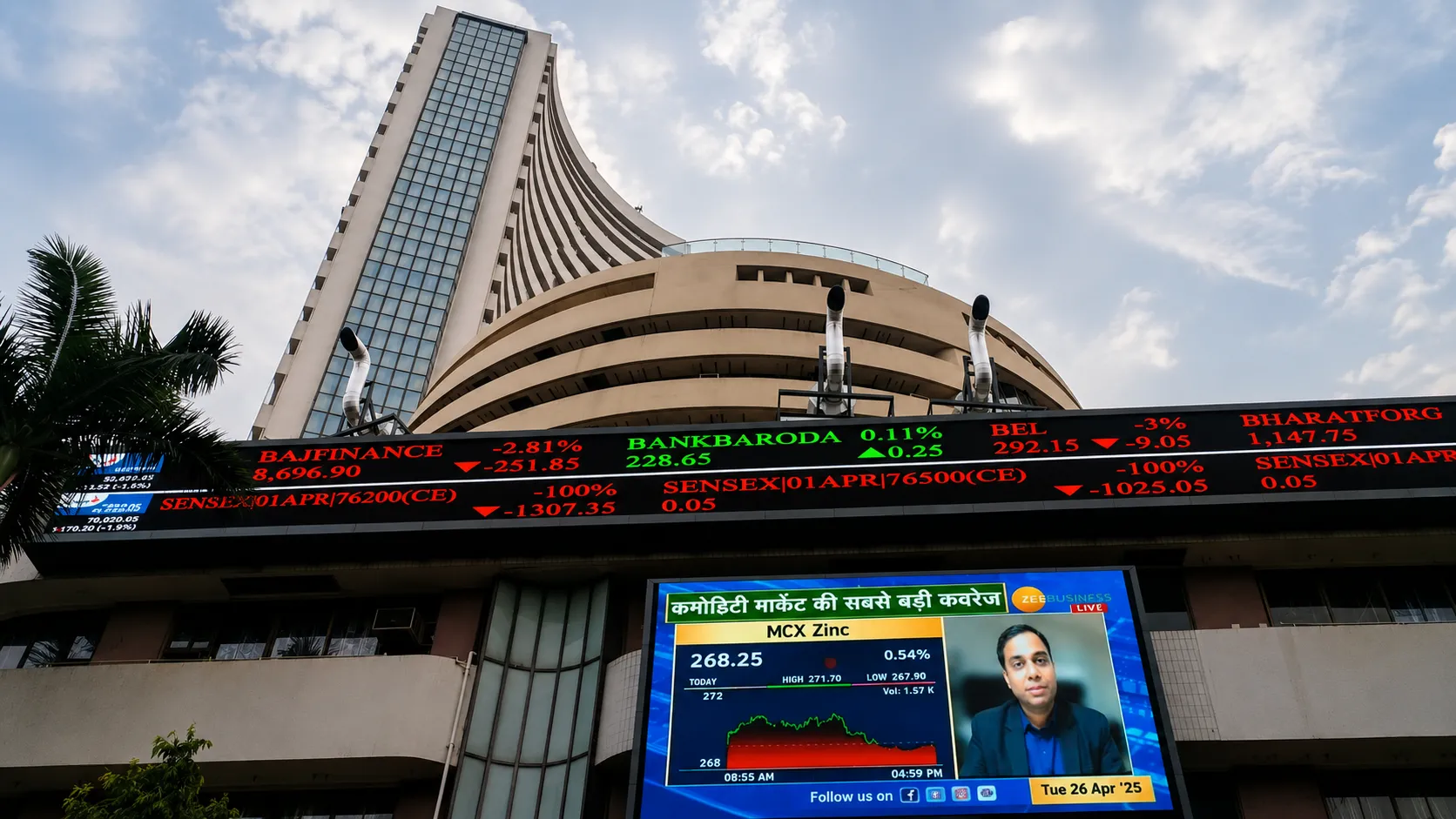
For a market already searching for direction after three consecutive sessions of losses, the question hanging over today's results is a genuinely important one: can sufficiently strong corporate earnings provide the market with a reason to stabilise, even as the broader macro overhangs of crude oil prices, FII outflows and West Asia tensions continue to weigh on sentiment largely independent of what any individual company reports? The honest answer, based on how the market has behaved through the earnings season so far, is a qualified one — strong results have not, on their own, been sufficient to reliably move the broader indices higher this week, even when individual companies have delivered results that comfortably beat expectations.
That dynamic was on clear display just one session earlier, when Wednesday's dense earnings slate included several genuinely standout results — Eternal's 268 per cent profit surge, Nestle India's near-48 per cent profit jump, and IndusInd Bank's 88 per cent sequential profit increase among them — and yet the broader market still closed the session down more than 700 points on the Sensex, extending the index's losing streak to a third consecutive session. The lesson for today's session is fairly direct: strong individual results, however impressive in isolation, are likely to continue driving meaningful stock-specific moves in the affected counters without necessarily translating into broader index-level strength, given how thoroughly the macro overhangs currently dominate overall market sentiment.
Technical analysts tracking the Nifty's chart structure continue to flag the same two levels that have anchored much of this week's commentary: 24,200 as the key near-term resistance that would need to be reclaimed on a sustained basis to revive bullish momentum and repair the index's broader technical structure, and the psychologically important 24,000 mark — already breached to the downside earlier this week — as the level whose further, decisive loss could trigger an additional, sharper round of selling pressure. According to a note from Bajaj Broking Research, the index is expected to extend its consolidation within a broad range of roughly 23,800 to 24,350 in the absence of a clear, decisive catalyst in either direction, a forecast that has held up reasonably well against the market's actual behaviour through the week's trading so far.
Today's specific earnings roster, following on from Wednesday's dense slate, is expected to bring further results from across India's banking, industrials, consumer and technology sectors, continuing the pattern of the past several sessions in which the sheer volume of simultaneous corporate disclosures has made stock-specific dispersion, rather than broad sectoral or index-level moves, the dominant feature of daily trading. Investors and analysts alike are likely to continue parsing today's results primarily for company-specific investment signals — margin trends, management commentary on demand conditions, and forward guidance where available — rather than expecting the aggregate results to meaningfully shift the broader index-level narrative on their own.
The macro backdrop against which today's results will be read remains largely unchanged from the conditions that have weighed on the market through the preceding sessions. Brent crude continues to trade near its highest levels in roughly five weeks, driven by the ongoing and unresolved conflict in West Asia, keeping pressure on India's import bill, the rupee, and by extension, the broader risk sentiment that has been dragging on Indian equities even independent of the earnings season's actual results. Foreign institutional investors have remained net sellers through recent sessions, a pattern that, if it persists through today's trade, would likely continue to act as a headwind on index levels regardless of how today's specific corporate results land.
Sector-specific dynamics established over the preceding sessions also look likely to persist into today's trade. Auto and FMCG stocks have emerged as pockets of relative resilience through the week's broader weakness, buoyed by strong company-specific results including TVS Motor's 51 per cent jump in standalone profit and Bajaj Auto's record export performance, while realty, PSU banking and, to a lesser degree, pharmaceutical stocks have continued to bear the brunt of the broader risk-off positioning, the latter compounded specifically this week by fresh uncertainty tied to the newly announced US tariff plan targeting generic pharmaceutical imports.
For retail and institutional investors alike, market strategists continue to emphasise a consistent message through this stretch of earnings-heavy, macro-dominated trading: near-term index-level direction is likely to remain driven predominantly by the trajectory of crude oil prices, the pace of FII flows, and any developments — positive or negative — on the West Asia conflict, rather than by the aggregate tenor of corporate earnings alone, however genuinely constructive that aggregate earnings picture has been across large swathes of corporate India this quarter. That said, strategists also continue to emphasise that this dynamic is a near-term phenomenon rather than a structural one — India's underlying corporate earnings growth trajectory, they argue, remains the more important driver of returns over any meaningfully longer investment horizon, once the current cluster of macro overhangs eventually resolves one way or another.
As the trading session gets underway, market participants will be watching a familiar set of triggers: whether the day's fresh batch of Q1 results includes any results significant or surprising enough to meaningfully move index-level sentiment; whether crude oil prices show any signs of easing from their recent five-week highs; whether FII selling shows any signs of moderating in the day's provisional trading data; and whether the Nifty can hold its ground within the 23,800 to 24,350 range that technical analysts have flagged as the market's likely near-term battleground.
With the earnings season now at its most intense point and the broader macro backdrop showing few signs of near-term resolution, today's session looks set to extend the same fundamental tension that has characterised trading through this entire stretch of the July results calendar: a corporate earnings picture that is, in aggregate, considerably more constructive than the headline index performance would suggest, set against a macro backdrop powerful enough to keep that constructive earnings story from translating into sustained index-level strength — at least for as long as crude oil, FII flows and West Asia tensions remain as unresolved as they currently are.
Historical precedent from previous earnings seasons offers some perspective on how this kind of macro-dominated dynamic has typically resolved in the past. In prior quarters where a similarly dense corporate earnings calendar coincided with an unrelated macro shock, the eventual pattern has generally involved a lag effect — index-level performance catching up with the underlying earnings picture only once the acute macro pressure eased, sometimes weeks after the bulk of quarterly results had already been reported and absorbed by the market. Whether the current earnings season follows a similar delayed-recognition pattern will depend heavily on how quickly the crude oil, FII and West Asia overhangs discussed throughout this week's coverage begin to resolve.
For long-term investors specifically, market strategists continue to point to the aggregate strength of this quarter's results — spanning standout performances from Eternal, Nestle India, IndusInd Bank, Adani Green, Adani Power, TVS Motor and Bajaj Auto, among others — as evidence that the structural earnings growth story underpinning India's equity market remains intact, even during a stretch when day-to-day index performance has told a considerably more downbeat story. This distinction between near-term index volatility and longer-term earnings-driven value creation is one that financial advisors have consistently emphasised through this period of market turbulence, cautioning against conflating the two when making longer-horizon investment decisions.
Options market positioning ahead of today's session continues to reflect the same cautious, hedged posture seen through the preceding sessions this week, with elevated implied volatility and put option activity clustered around key support levels suggesting institutional investors remain focused on protecting existing positions rather than either capitulating entirely or aggressively adding to equity exposure at current levels — a holding pattern that is likely to persist until either the earnings season concludes and its full aggregate picture becomes clear, or one of the macro overhangs shows a decisive sign of resolution in either direction.
As the final stretch of the Q1 FY27 earnings season plays out over the coming days, the fundamental question framing today's session — and the sessions immediately following it — remains unchanged: whether corporate India's demonstrably resilient underlying earnings performance can eventually reassert itself as the dominant driver of index-level sentiment, or whether the market remains, for now, a hostage to forces that have comparatively little to do with what any individual company actually reported this earnings season.
Global cues heading into today's session offer a similarly mixed picture to what has characterised much of the week's trading. Overnight movements across major Asian and European markets have shown no strong consistent directional signal, leaving domestic factors — the day's specific earnings results, crude oil price movements, and any incremental West Asia developments — as the more likely drivers of intraday price action rather than any clear, unified global risk-on or risk-off signal that Indian markets might otherwise take their cue from.
By the time markets close today, the combination of a fresh batch of Q1 results, the latest read on crude oil and currency movements, and any incremental West Asia headlines will together determine whether the week ends on a note of stabilisation or extends the corrective phase that has now defined Dalal Street's trading for the better part of a week — an outcome that, as has been true throughout this stretch, will likely owe more to macro developments than to the specific companies reporting results on any single day.
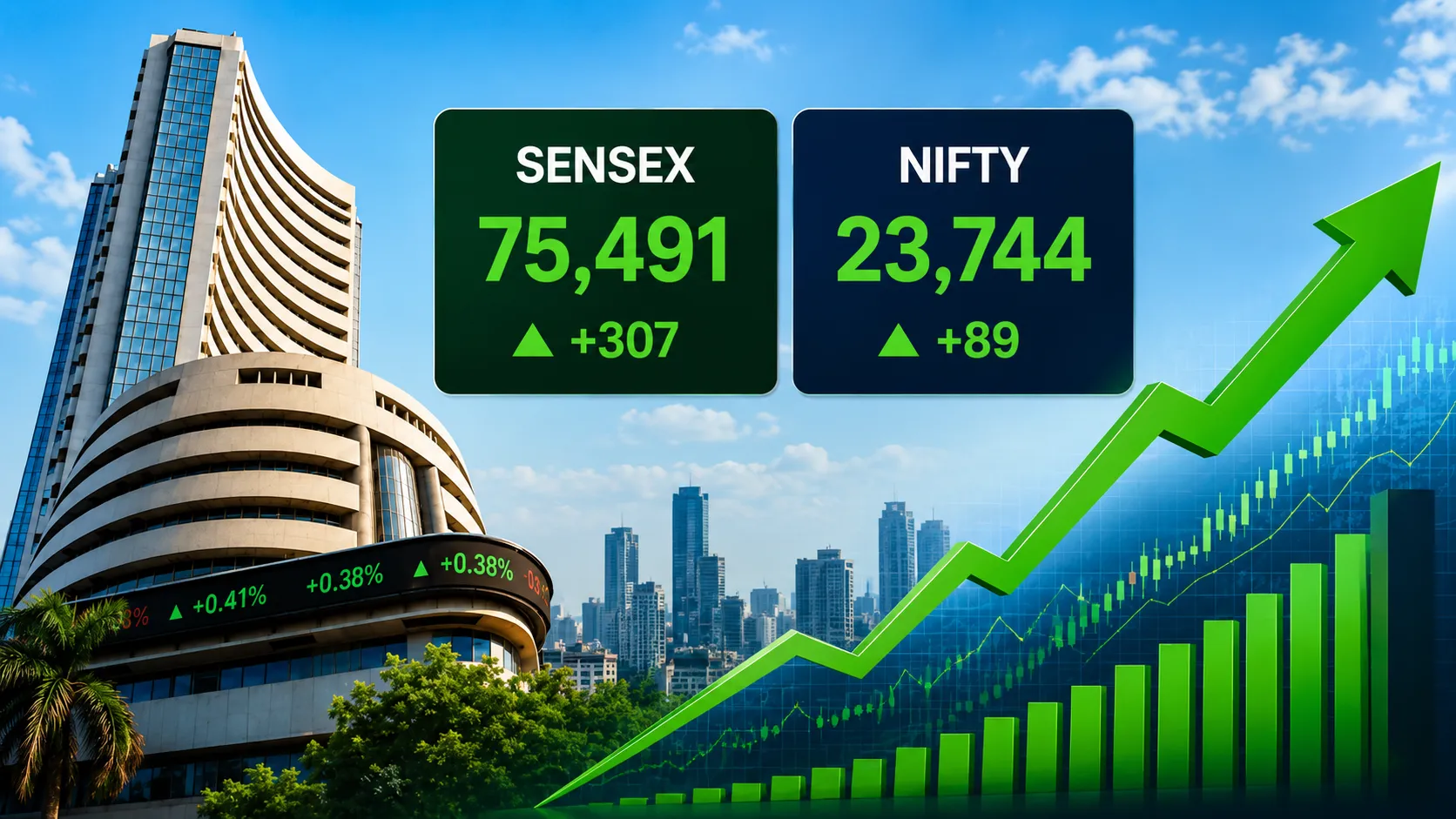
Whatever today's session ultimately delivers, market participants entering the weekend will be looking for at least a preliminary read on whether the combination of a genuinely strong aggregate earnings season and any stabilisation in crude oil, FII flows or West Asia sentiment is finally beginning to shift the market's overall trajectory, or whether next week opens with the same watchful, headline-driven caution that has defined trading through virtually the entirety of this stretch of the July results calendar.
For now, the safest conclusion available to market participants is also the simplest: today's fresh batch of results will matter enormously for the individual stocks involved, and comparatively little for the broader indices, until the macro overhangs that have dominated this week's trading finally begin to lift.
That conclusion, unglamorous as it may be, is likely to remain the defining feature of Dalal Street's trading pattern for as long as this particular combination of a peaking earnings season and an unresolved set of external shocks continues to coexist — a reminder that even in a market brimming with company-specific news, the biggest single driver of near-term index direction can still lie entirely outside the earnings calendar altogether.
Investors would do well to keep both timeframes in view simultaneously through the remainder of this week: the immediate, stock-specific signal buried within today's fresh results, and the slower-moving, macro-driven signal that will ultimately decide whether the broader market's current corrective phase proves brief or protracted.