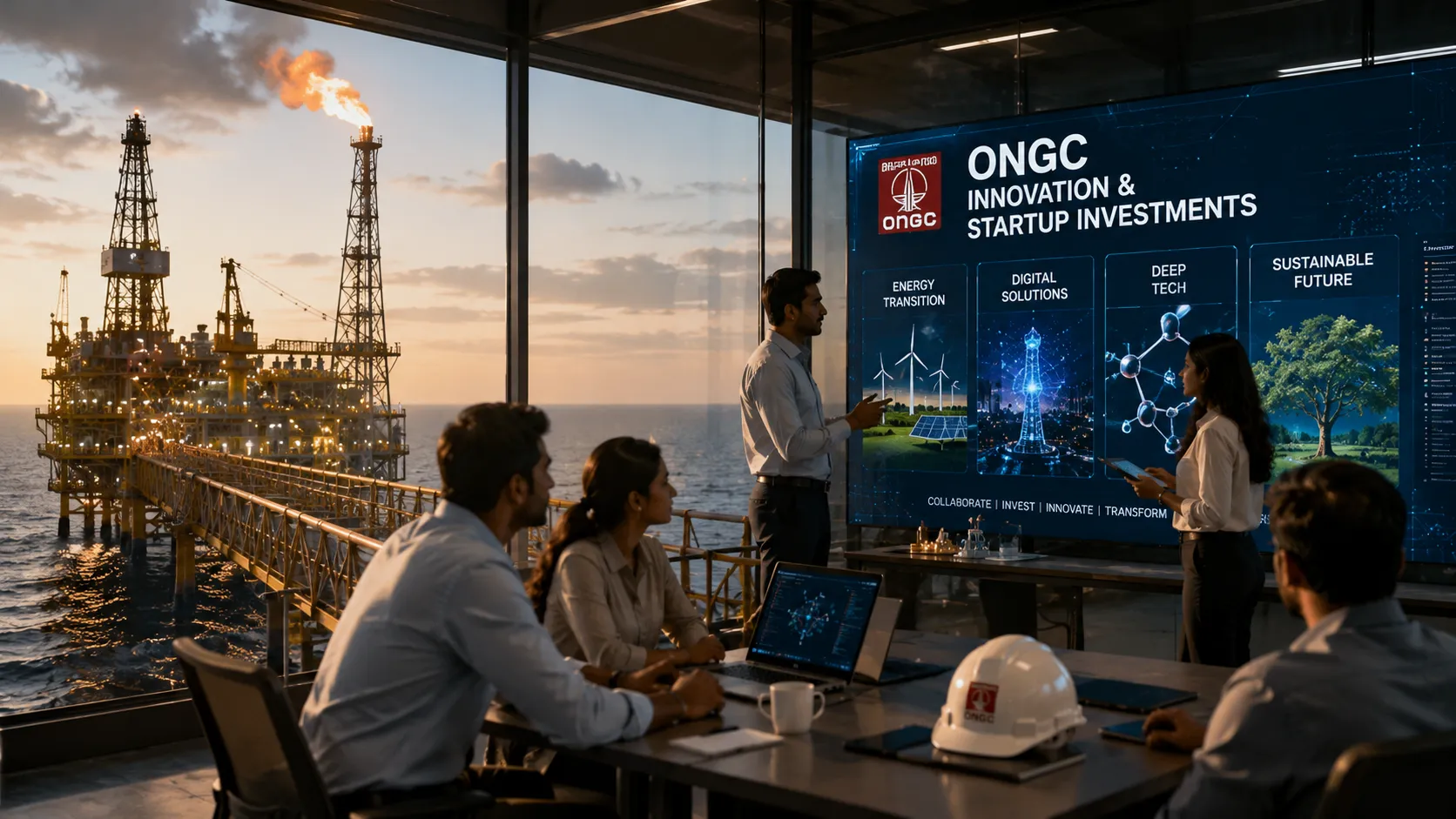
Traditional Industries Are Beginning To Redefine What Innovation Means
For decades, large industrial organizations approached innovation through a familiar playbook. Growth was often driven by expansion projects, internal research teams and long-term infrastructure investments. Sectors such as oil, gas, manufacturing and heavy industry traditionally relied on scale and operational experience to remain competitive. Technology existed within those environments, but innovation itself was frequently viewed as an internal process controlled through established structures. Startup ecosystems, meanwhile, evolved separately — often associated with software, consumer technology and fast-moving digital businesses.
That separation increasingly appears to be fading. Around the world, large corporations are beginning to rethink how innovation is discovered, tested and scaled. Rather than relying exclusively on internal systems, many established organizations are now looking outward toward startups, emerging technologies and entrepreneurial ecosystems capable of moving faster and experimenting differently. India’s energy major ONGC appears to be embracing elements of that broader transition.
The company has increasingly expanded its engagement with startup initiatives through innovation-focused programs and investment plans aimed at identifying technologies relevant to the future of energy and industrial systems. While startup partnerships once occupied peripheral positions within traditional sectors, they are increasingly becoming strategic priorities. The significance of this transition may ultimately extend beyond ONGC itself. It reflects a larger shift where legacy industries are beginning to reconsider not only what they invest in, but how they think about growth itself.
The Startup Conversation Is Expanding Beyond Software And Consumer Technology
For much of the last decade, startup narratives often revolved around ecommerce platforms, fintech businesses, delivery companies and consumer applications. Venture capital activity frequently followed categories capable of demonstrating rapid user growth and visible scale. Industrial sectors often sat outside those conversations because their innovation cycles operated very differently.
However, technology itself has changed. Artificial intelligence, industrial analytics, automation systems and deep-tech solutions increasingly possess applications extending directly into sectors such as energy, manufacturing and infrastructure. These technologies are no longer simply digital tools layered on top of existing businesses. They are increasingly becoming core operational systems capable of influencing how industries function.
This shift is creating a new investment environment. Startups today increasingly build technologies involving predictive maintenance, industrial AI, robotics, data intelligence and sustainability-focused solutions. For traditional industries, these capabilities can introduce efficiencies that were difficult to achieve through internal systems alone.

ONGC’s startup-oriented direction increasingly reflects recognition of this changing reality. Instead of viewing startups merely as vendors or experimental collaborators, industrial organizations increasingly appear interested in treating them as strategic partners capable of influencing long-term business capability.
Energy Companies Face Pressures That Look Very Different Today
The broader energy landscape itself is undergoing significant change. Companies operating in the sector increasingly face multiple pressures simultaneously. Efficiency expectations continue rising. Digital systems are becoming more important. Environmental priorities increasingly shape decision-making. Operational complexity continues expanding.
Historically, many industrial businesses addressed challenges primarily through infrastructure expansion or internal process improvements. But technology cycles today evolve at speeds that frequently exceed traditional organizational structures.
Artificial intelligence increasingly illustrates this challenge. AI systems are beginning to influence areas involving exploration analytics, predictive asset monitoring, supply-chain optimization and industrial operations. Advanced data environments can help identify inefficiencies and improve decision-making processes across complex infrastructure systems.
Building all these capabilities internally can become difficult. Startups often provide an alternative because they frequently specialize in highly focused technological areas capable of introducing innovation more rapidly.
This dynamic increasingly explains why startup ecosystems are becoming relevant within industries previously considered distant from venture environments.
Corporate Venture Strategies Are Quietly Becoming Mainstream
One of the most important developments occurring across global business environments involves how corporations increasingly think about investment itself. Historically, venture investing was primarily associated with specialized funds and financial institutions. Today, corporations themselves are increasingly adopting venture-style approaches.
Corporate investment strategies frequently involve objectives extending beyond immediate financial returns. Companies invest because they seek access to technologies likely to shape future industries. Investments increasingly function as learning mechanisms that allow organizations to understand emerging capabilities before larger disruptions occur.ONGC’s broader startup initiatives increasingly fit within that framework. By participating more actively within startup ecosystems, companies gain opportunities to observe new technologies while simultaneously creating pathways for collaboration and experimentation.Globally, organizations across sectors have already embraced similar strategies. Energy giants, automotive manufacturers and industrial corporations increasingly operate venture arms focused on emerging technologies ranging from clean energy to advanced computing systems. These efforts frequently produce strategic insights extending beyond investment performance itself.
India’s Startup Ecosystem Is Entering A Different Phase
The significance of ONGC’s startup ambitions also reflects changes happening within India’s broader entrepreneurial environment. Startup ecosystems in India increasingly appear to be entering a more diversified stage.
Earlier waves focused heavily on consumer internet and software platforms. Today, categories involving deep technology, AI infrastructure, sustainability systems and industrial innovation increasingly attract stronger attention. Founders are increasingly building businesses designed around solving highly specialized problems rather than purely pursuing scale.
This evolution matters because industrial sectors often require different kinds of startup environments. Deep-tech businesses typically involve longer development cycles and more complex technical requirements. Strong partnerships with larger corporations can therefore become particularly valuable because they provide access to operational environments, infrastructure and industry expertise.The relationship increasingly becomes mutually beneficial. Large companies gain exposure to emerging technologies while startups gain access to scale and industry understanding.
Why ONGC’s Direction Could Influence More Than Energy
The broader significance of ONGC’s startup strategy may extend beyond one company or one sector. Traditional industries frequently influence ecosystem behavior because they control substantial resources, infrastructure and institutional knowledge. When organizations of this scale begin embracing startup collaboration more actively, wider shifts often follow.
Corporate engagement can influence where founders focus attention. It can create new market opportunities. It can encourage capital flows toward categories previously viewed as niche or difficult.
Sectors involving industrial software, climate technology, predictive systems and enterprise infrastructure may increasingly benefit from stronger partnerships between startups and established organizations. These environments can accelerate experimentation while reducing barriers that often limit emerging technologies.
Over time, the distinction between startup ecosystems and industrial sectors may become less visible altogether.
The Future Of Innovation May Depend On Collaboration Rather Than Separation

For years, innovation conversations frequently framed startups and large corporations as fundamentally different worlds. Startups represented speed and disruption. Corporations represented scale and structure.
Today that distinction increasingly appears outdated.
Large organizations increasingly need startup agility. Startups increasingly need infrastructure and operational access. As technology becomes more complex and industries become more interconnected, ecosystems may increasingly depend on collaboration rather than separation.
ONGC’s startup ambitions may therefore matter not simply because of investment activity itself, but because they reflect changing assumptions around how future industries evolve.The larger lesson may be simple: innovation increasingly belongs to networks rather than individual