
SEO Title: Omega Seiki Mobility Raises ₹50 Crore Funding Round: Revenue, Profit And Growth Plans Explained
Meta Description: Electric commercial vehicle maker Omega Seiki Mobility has raised ₹50 crore to expand manufacturing and R&D, reporting ₹333 crore FY26 revenue and a 7.7% EBITDA margin.
---
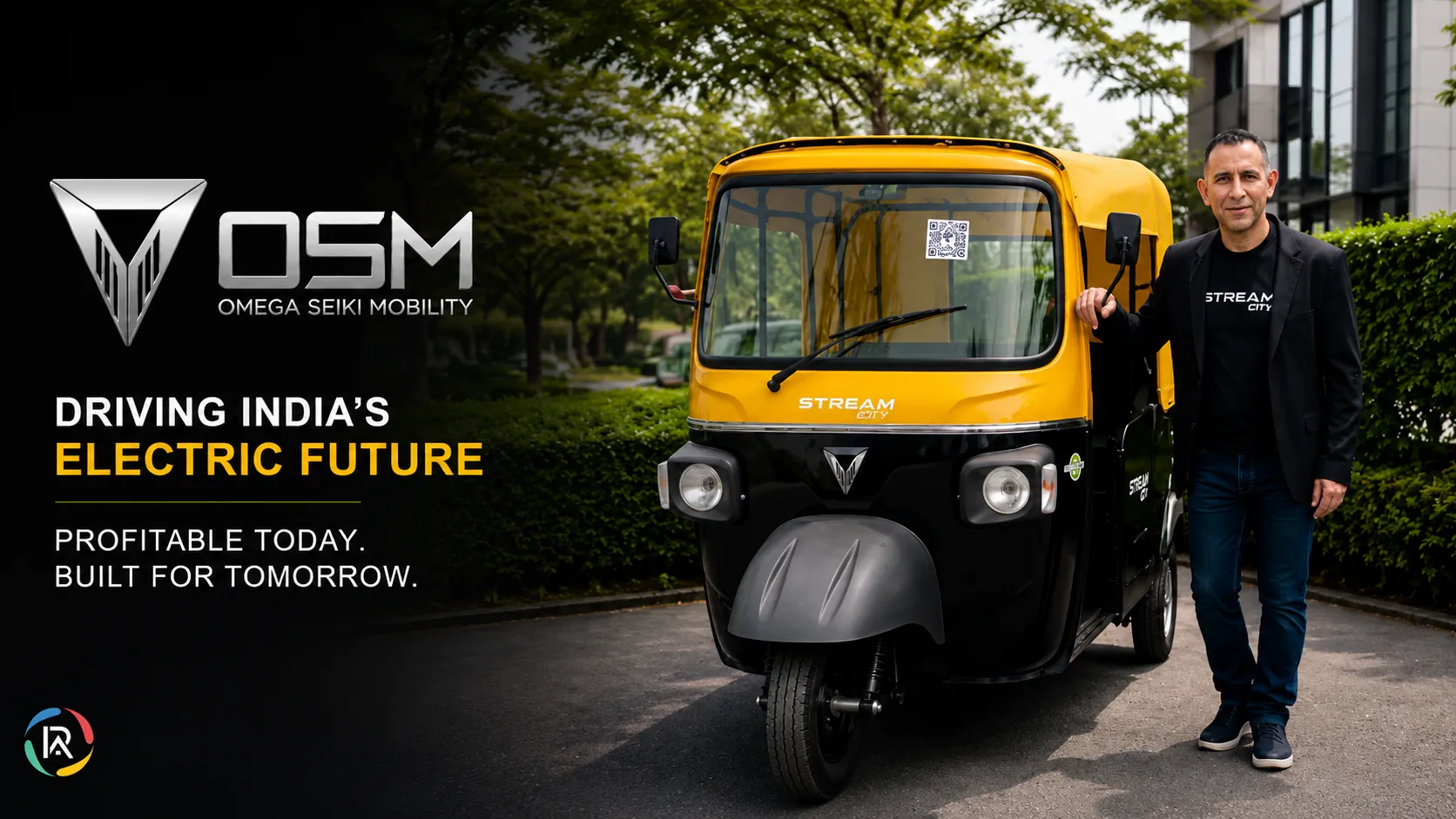
Every day, an Omega Seiki Mobility electric three-wheeler somewhere in India is likely delivering a Flipkart parcel, an Amazon package, a Zomato order, or a BigBasket grocery run — the unglamorous, high-frequency work of last-mile logistics that rarely makes headlines but underpins the entire promise of India's e-commerce and quick-commerce boom. That quiet but essential role is now attracting fresh capital: Omega Seiki Mobility has raised ₹50 crore in a funding round as the electric commercial vehicle manufacturer looks to expand production capacity and accelerate its next generation of products ahead of a market that shows little sign of slowing down.
The round was co-led by Securocorp Securities, with participation from investors including Sangeeta Pareekh, the Saket Aggarwal Family Office, and Vanshika Sharma. According to the company, the fresh capital will be deployed across four connected priorities: increasing manufacturing capacity, strengthening research and development, expanding OSM's nationwide dealer and service network, and accelerating the rollout of next-generation electric mobility products.
A Profitable EV Maker — A Rarer Story Than It Should Be
What distinguishes Omega Seiki Mobility's funding story from much of India's broader electric vehicle narrative is the underlying financial profile behind the raise. According to the company, OSM reported revenue of approximately ₹333 crore in FY26, alongside a profit after tax (PAT) of ₹7.3 crore and an EBITDA margin of 7.7%. In an industry where profitability has often remained an aspirational, multi-year-out target for even well-funded electric vehicle manufacturers — burdened by battery costs, thin margins on vehicle sales, and heavy upfront capital expenditure on manufacturing capacity — a genuinely profitable, revenue-generating EV company represents a comparatively rare and therefore more investable proposition.
"This investment reflects the confidence investors have in our vision, execution and long-term strategy," said Dr. Uday Narang, Founder and Chairman of Omega Seiki Mobility. "Over the last eight years, we have built a company grounded in manufacturing excellence, innovation, and financial discipline. As India's EV market enters its next phase of growth, we remain committed to delivering sustainable mobility solutions while creating long-term value for our customers, partners, and investors."
That phrase — "financial discipline" — is doing real work in Narang's framing, and it reflects a broader shift in how India's electric vehicle sector has evolved since its earlier, more speculative funding cycles. The current generation of investor interest in Indian EV manufacturers appears considerably more focused on demonstrated unit economics and near-term profitability pathways than the growth-at-any-cost capital deployment that characterised the sector's earlier years, when subsidised customer acquisition and aggressive geographic expansion often took precedence over sustainable margins.
Inside Omega Seiki's Product And Customer Base
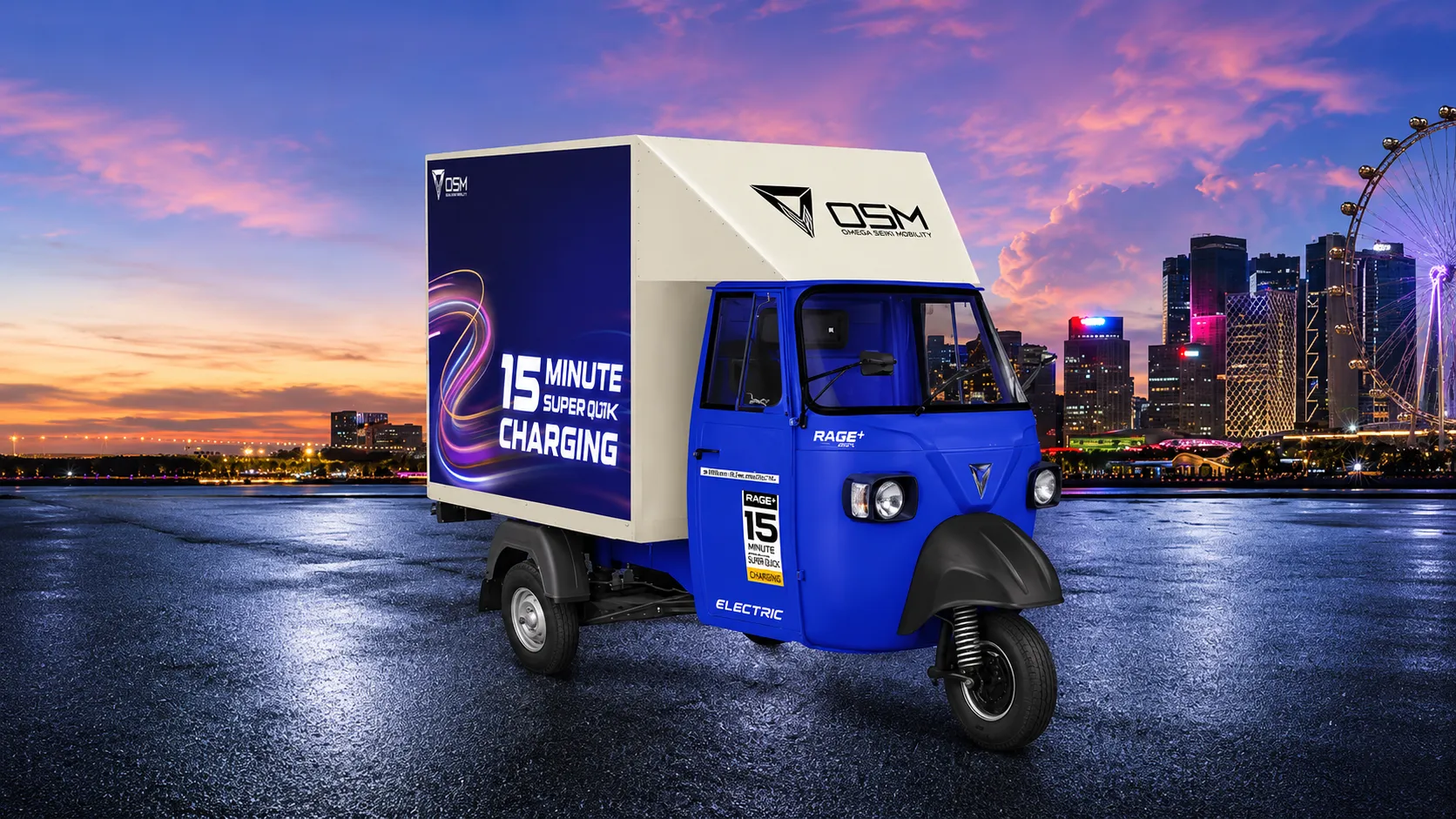
Founded in 2018, Omega Seiki Mobility manufactures a range of electric vehicles spanning two-wheelers, three-wheelers and light commercial trucks, with a specific focus on the commercial and last-mile logistics segment rather than the personal or consumer mobility market that has drawn the bulk of India's EV media attention. The company operates manufacturing facilities in Faridabad and Pune, and is backed by the Anglian Omega Group, which brings what the company describes as 55 years of manufacturing legacy to OSM's operations — a lineage that likely contributes to the operational and manufacturing discipline reflected in the company's profitability figures.
OSM's customer roster reads like a checklist of India's largest logistics-dependent consumer businesses: Amazon, Flipkart, Zomato, BigBasket, Porter, Maersk and Nestlé are all listed among the company's clients, underscoring how deeply embedded electric commercial vehicles have already become in the operational infrastructure of India's e-commerce and quick-commerce ecosystem. This customer concentration in essential, high-frequency logistics use cases — rather than more discretionary personal-vehicle purchases — provides OSM with a demand base that is comparatively insulated from consumer sentiment swings, since businesses like Amazon and BigBasket need last-mile delivery capacity regardless of broader macroeconomic conditions.
The company has also been building out the broader ecosystem infrastructure necessary to support electric commercial vehicle adoption at scale, including partnerships with financial institutions and green mobility companies such as cKers Finance to help address one of the persistent barriers to EV adoption among smaller co
mmercial operators: access to affordable vehicle financing, given that electric commercial vehicles typically carry a higher upfront purchase price than their internal combustion engine equivalents, even if total cost of ownership over the vehicle's lifetime often favours the electric option once fuel and maintenance savings are accounted for.
What A Pre-IPO Valuation Report Suggests
According to the company, a recent pre-IPO research report valued Omega Seiki Mobility in a range between ₹1,775 crore and ₹2,833 crore — a valuation band that, set against the company's roughly ₹333 crore FY26 revenue, implies a revenue multiple broadly consistent with how public markets have historically valued profitable, mid-sized industrial and mobility manufacturers in India, rather than the far higher multiples that loss-making, hyper-growth technology startups have commanded during more speculative funding cycles.
The mention of a pre-IPO research report is itself a signal worth noting: it suggests Omega Seiki Mobility, or its advisors, are actively positioning the company for an eventual public listing, using the current funding round partly as a step in building the institutional credibility and financial track record that would support a future IPO process, rather than treating this raise as a standalone, terminal funding event.
The Competitive Landscape For Electric Commercial Vehicles
Omega Seiki Mobility operates within an increasingly crowded and rapidly scaling segment of India's broader electric vehicle industry. India's electric two-wheeler registrations alone crossed 1.1 million units in the first seven months of 2026, putting the industry on track for its strongest annual sales performance to date — growth that reflects both improving vehicle economics as battery costs decline and expanding charging infrastructure, and continued policy support through central and state-level EV incentive schemes aimed at reducing India's dependence on imported fossil fuels and addressing urban air pollution.