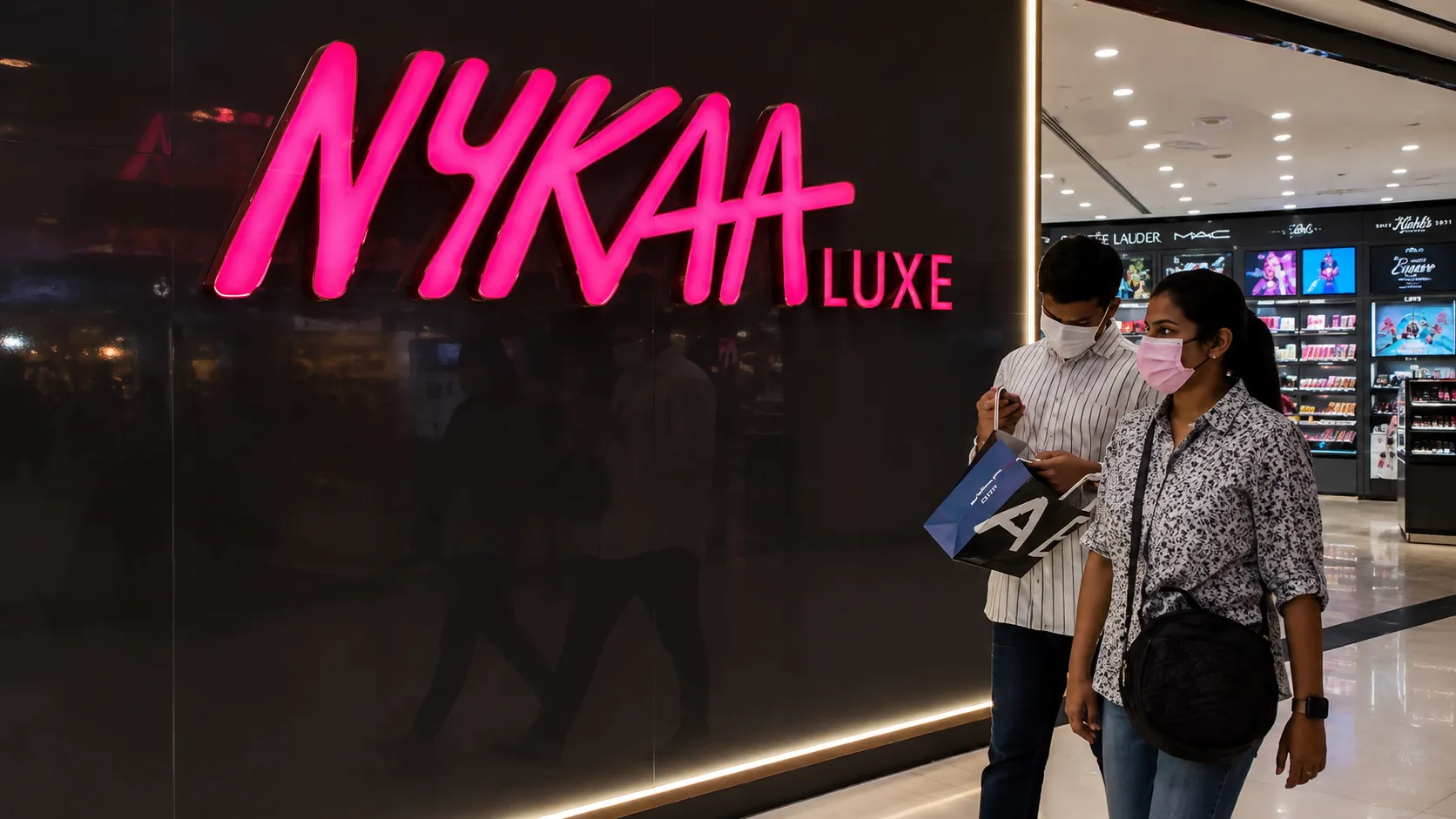
FundingLatest Deals11 MIN READ

Nykaa Buys Into Aminu Wellness As It Doubles Down On Premium Skincare

Nykaa has acquired a 51% stake in dermocosmetic skincare brand Aminu Wellness for ₹32 crore, alongside Q1 FY27 results showing profit up 3.3X to ₹79.76 crore.

By Nisha Omkumar · Author5 August 2026
Nykaa Buys Into Aminu Wellness As It Doubles Down On Premium Skincare

SEO Title: Nykaa Acquires 51% Stake In Aminu Wellness For ₹32 Crore: What It Means For India's Skincare Market

Meta Description: Nykaa has acquired a 51% stake in dermocosmetic skincare brand Aminu Wellness for ₹32 crore, alongside Q1 FY27 results showing profit up 3.3X to ₹79.76 crore.

---

When a company reports its quarterly earnings and announces an acquisition on the very same day, the two disclosures are rarely unrelated. In Nykaa's case, the pairing tells a coherent story: a business that has, after years of investor scrutiny over its path to sustainable profitability, finally built up the financial confidence and balance sheet strength to go shopping again — this time for a dermocosmetic skincare brand called Aminu Wellness.

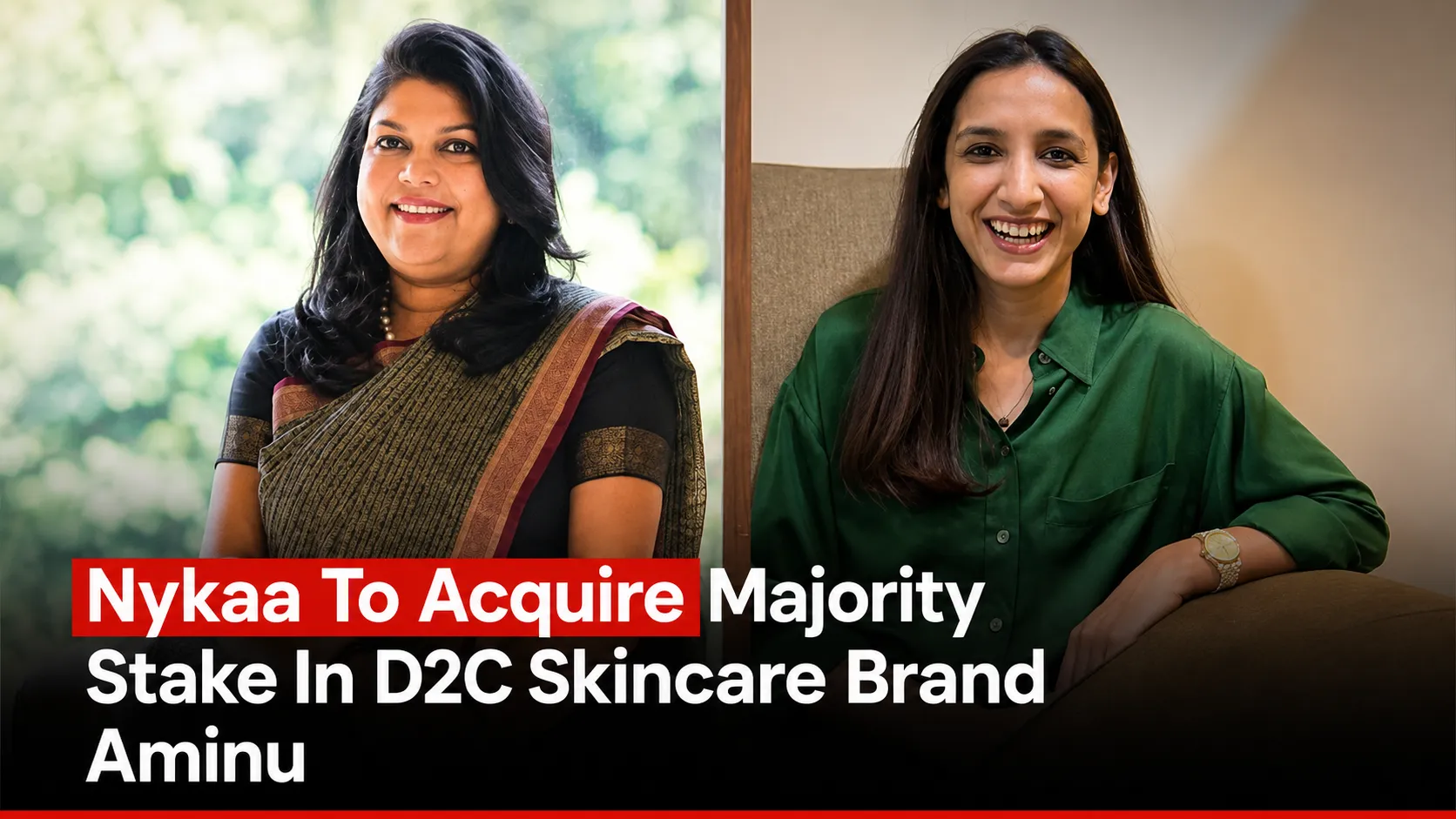
FSN E-Commerce Ventures, the parent company of Nykaa, has agreed to acquire a 51% stake in Aminu for approximately ₹32 crore, with the remaining 49% expected to be acquired over the following years according to terms set out in the transaction documents. The deal was disclosed alongside Nykaa's first-quarter FY27 results, in which the beauty and fashion retailer reported net profit rising 3.3 times year-on-year to ₹79.76 crore, up from ₹24.47 crore in the same quarter last year — a headline profit jump strong enough that the acquisition risked being overshadowed by the earnings number, were the two not so clearly connected as parts of the same strategic story.

Getting To Know Aminu

Aminu Wellness was founded in 2019 by Prachi Bhandari, a clinical cosmetologist and aesthetician, alongside co-founder and business lead Aman Mohunta. The brand has been bootstrapped since inception — meaning it grew without significant external venture funding, relying instead on its own revenue to fund expansion — and according to Nykaa's disclosures, has scaled roughly eightfold over its operating history. For the financial year 2026, Aminu recorded a turnover of ₹19.44 crore, a figure that, while modest in absolute terms compared to Nykaa's overall scale, represents a meaningful and profitable niche business in the increasingly crowded Indian dermocosmetic skincare category.

The "bootstrapped since inception" detail is worth dwelling on, because it distinguishes Aminu from the more familiar acquisition profile of a venture-backed startup running out of runway and seeking an exit through a strategic buyer. A founder team that has built an eightfold-scaled, profitable business without significant outside capital typically negotiates from a position of relative strength in acquisition talks — they are not selling out of necessity, but choosing a partner who can accelerate distribution and growth that the brand's own resources might have taken considerably longer to achieve organically.
ChatGPT Image Aug 5, 2026, 12_22_21 PM.png


Nykaa's Playbook: Buy The Brand, Lend The Infrastructure

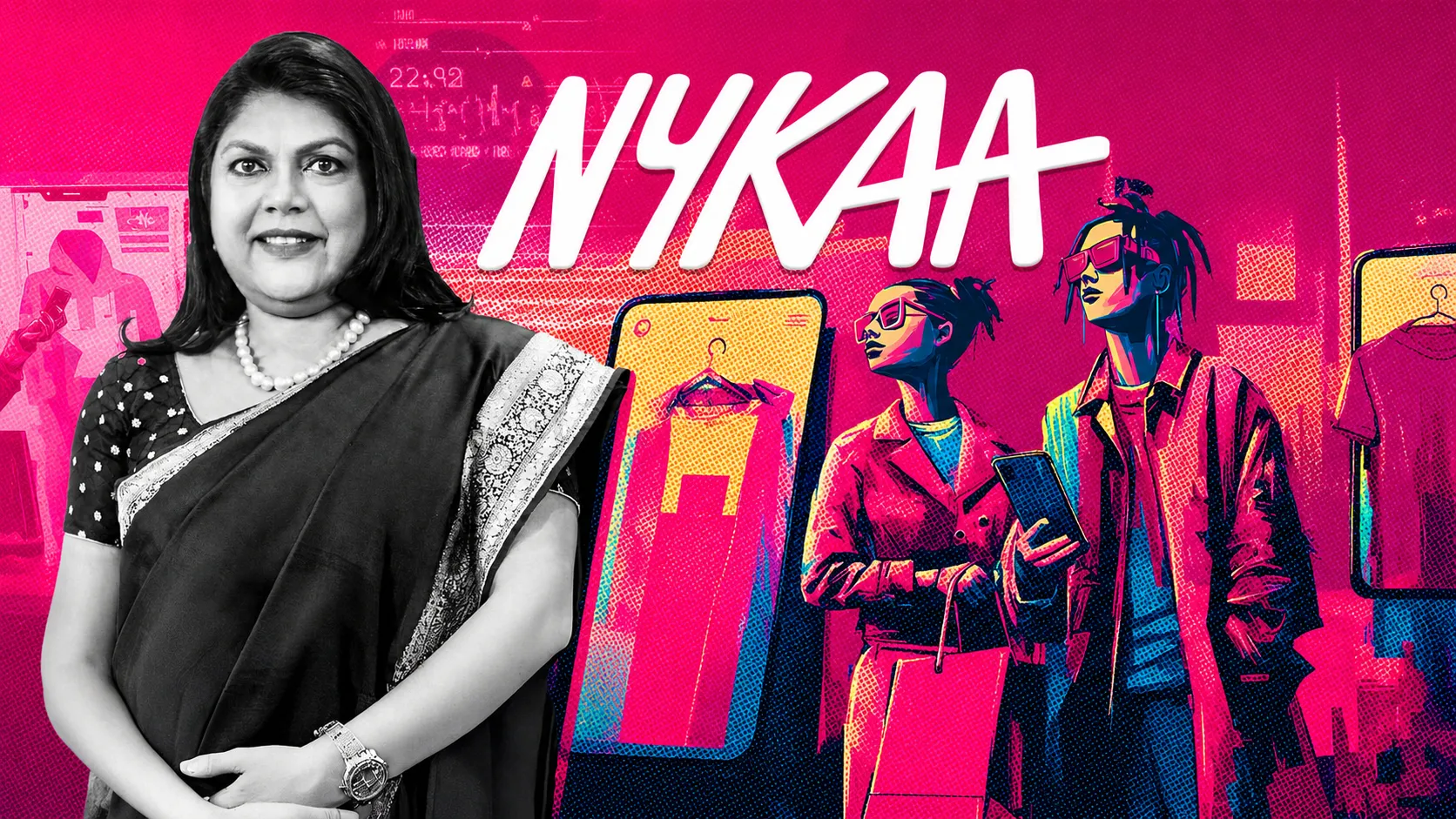
The Aminu deal fits a well-established pattern in Nykaa's growth strategy, one the company has deployed repeatedly since its own IPO: identify a promising, founder-led beauty or wellness brand with a genuine product differentiation and loyal customer base, take a majority or growing stake, and then plug the acquired brand into Nykaa's substantial retail infrastructure — its e-commerce platform, its physical retail footprint, its logistics network, and its marketing and merchandising expertise.

Nykaa has run this playbook before, notably with Earth Rhythm, a clean-beauty skincare brand in which the company progressively increased its stake through several tranches of investment before the brand became a full subsidiary, and with Dot & Key, another skincare acquisition that has since become one of Nykaa's higher-profile owned brands. The Aminu deal explicitly continues this pattern: according to the company, the acquisition complements Nykaa's previous investments in beauty brands such as Dot & Key and Earth Rhythm, further strengthening what the company calls its "House of Nykaa" portfolio of owned and partner brands.

The strategic logic behind this repeated approach is straightforward, even if the execution requires real discipline: acquiring a smaller stake first, with the option to increase ownership over time as the brand's performance under the Nykaa umbrella becomes clearer, allows the company to de-risk each individual bet while still gaining early access to the brand's growth trajectory and distribution economics. It also, not incidentally, keeps founding teams like Bhandari and Mohunta financially and operationally invested in the brand's continued success during the critical integration period, rather than exiting entirely and leaving Nykaa to manage the transition alone.

The Numbers Behind The Headline Profit Jump

Nykaa's underlying Q1 FY27 performance provides useful context for why the company felt confident enough to deploy fresh capital into an acquisition at this particular moment. Beyond the 3.3-fold jump in net profit, the company reported a 29% rise in revenue, driven by strength across both its beauty and fashion businesses, alongside continued expansion of its quick-commerce delivery network — a channel that has become an increasingly important battleground in Indian e-commerce as consumer expectations around delivery speed have compressed dramatically in recent years.

The House of Nykaa's overall business also reached an annualised gross merchandise value (GMV) of ₹3,760 crore, marking 39% year-on-year growth. On the business-to-business side, Nykaa's Superstore distribution channel — which supplies beauty and personal care products to offline retailers rather than selling directly to consumers — now serves nearly 523,000 retailers across more than 1,200 cities, with business orders growing 11% year-on-year on the back of an expanding retailer network. That B2B distribution arm, often overshadowed in coverage by Nykaa's more visible consumer-facing e-commerce and retail operations, represents a genuinely differentiated growth lever: it lets Nykaa monetise its supply-chain and brand-relationship infrastructure by essentially becoming a wholesale distributor to the wider Indian beauty retail ecosystem, independent of its own direct-to-consumer sales.

The company's fashion segment, which has historically taken longer than the core beauty business to reach profitability, also appears to be turning a corner, with the segment's improving EBITDA performance cited by analysts as evidence that Nykaa's earlier investments in fashion are beginning to pay off after a prolonged period of subsidised growth.

Why Skincare, Specifically, And Why Now

India's skincare category has been one of the standout growth pockets within the broader beauty and personal care sector over the past several years, driven by a confluence of factors: rising disposable incomes, a cultural shift toward more elaborate, multi-step skincare routines popularised in part through social media and Korean and Japanese beauty trends, and the broader normalisation of online beauty shopping that has made specialised, harder-to-find dermocosmetic products accessible to consumers well beyond India's largest metro markets.

Aminu has been bootstrapped since inception, scaling roughly eightfold on its own resources before Nykaa's ₹32 crore acquisition of a 51% stake
a reminder that not every successful Indian beauty brand needs venture capital to get acquirers' attention.

Dermocosmetic skincare specifically — products positioned at the intersection of cosmetic beauty and clinical dermatological efficacy, often developed or endorsed by qualified skincare professionals rather than purely marketing-led beauty brands — has emerged as a particularly attractive sub-segment for both consumers and acquirers, precisely because the clinical credibility embedded in a brand like Aminu, founded by a practising cosmetologist, is difficult for larger, more generalist beauty companies to replicate organically. Acquiring that credibility, rather than attempting to manufacture it from scratch through marketing spend, is often the more capital-efficient path — which is precisely the logic underlying Nykaa's acquisition strategy across this category more broadly.

The Founder's Perspective: Why Sell A Profitable, Bootstrapped Brand

From Aminu's own vantage point, the decision to sell a majority stake in a bootstrapped, profitable business — rather than continuing to grow independently, or raising external venture capital while retaining full ownership — reflects a calculation that is common, if underexamined, among India's growing population of profitable, founder-led D2C brands. Bootstrapped growth, while it preserves ownership and avoids the dilution and governance obligations that come with venture funding, also inherently caps the pace at which a brand can scale, since growth is constrained by the brand's own cash generation rather than external capital injection.

For a brand like Aminu, built by a clinical cosmetologist with genuine product and formulation expertise but not necessarily the retail distribution, marketing infrastructure, or e-commerce logistics capability that a company like Nykaa has spent over a decade building, a majority-stake sale to a strategic partner offers a way to access that missing distribution and infrastructure layer without having to build it independently — effectively trading some ownership and full operational control for a meaningfully faster growth trajectory than continued bootstrapped scaling would likely have allowed. The structure of the deal, with the remaining 49% stake to be acquired over subsequent years rather than in a single transaction, also suggests both parties negotiated a structure that keeps the founding team financially aligned with the brand's performance under Nykaa's ownership for an extended period, rather than allowing for a clean, immediate full exit.

Reading The Quarter Alongside The Deal

It is worth stepping back to consider why Nykaa chose to disclose this acquisition alongside, rather than separately from, its quarterly results. Bundling an acquisition announcement with strong earnings is a fairly common investor-relations strategy, allowing a company to frame a capital deployment decision within the context of demonstrated financial strength rather than requiring investors to evaluate the acquisition in isolation, without visibility into whether the company can genuinely afford it. Given that Nykaa's overall profit nearly quadrupled year-on-year, the ₹32 crore Aminu transaction represents a comparatively small capital commitment relative to the company's improving cash generation — a scale of deal that a company in Nykaa's current financial position could reasonably fund from operating cash flow rather than requiring new external financing, which likely simplified the board-level decision to proceed.

The Clinical Credibility Premium

There is a broader category dynamic worth naming explicitly here: skincare brands founded by qualified dermatologists, cosmetologists or aestheticians have increasingly commanded a premium in acquisition conversations across global beauty markets, not just in India, precisely because that clinical credibility is difficult and slow for a larger, more generalist beauty conglomerate to manufacture through marketing spend alone. Consumers navigating an increasingly crowded skincare market, where ingredient lists and clinical claims have become a meaningful part of purchase decision-making, tend to place greater trust in products with a genuine practitioner's expertise behind the formulation — a trust signal that shows up in brand loyalty and repeat-purchase behaviour in ways that are commercially valuable but difficult to quantify precisely, which likely factored into how Nykaa's dealmakers approached Aminu's valuation.

ChatGPT Image Aug 5, 2026, 12_25_05 PM.png

Integration Risk Nykaa Has Learned To Manage

Any acquisition of this kind carries integration risk — the challenge of preserving a founder-led brand's distinct identity and product quality while plugging it into a much larger corporate parent's systems, reporting requirements and operational cadence. Nykaa's repeated experience running this exact playbook across Earth Rhythm, Dot & Key and now Aminu suggests the company has developed institutional muscle memory for managing that integration relatively smoothly, at least based on the continued growth trajectories of its earlier skincare acquisitions. That accumulated experience is itself a competitive advantage difficult for less acquisitive beauty retailers to replicate quickly, since integration playbooks are typically refined through repeated practice rather than developed in the abstract ahead of a company's first acquisition.

What This Means For India's Beauty Ecosystem

For India's broader ecosystem of founder-led beauty and wellness brands, the Aminu deal offers a data point worth watching closely: it suggests that Nykaa remains an active, credible acquirer for well-run, profitable niche brands, even in a funding environment where venture capital has grown more selective across most consumer categories. For founders building in adjacent categories — clean beauty, nutraceuticals, men's grooming, or other underserved corners of India's personal care market — Nykaa's continued appetite for majority-stake acquisitions of profitable, founder-led brands offers a viable alternative exit and growth pathway to the venture-funding treadmill that has become considerably harder to stay on in 2026's more disciplined investment climate.

For Nykaa itself, the successful integration of Aminu will be the real test of whether this latest deal follows the trajectory of its earlier, apparently successful skincare acquisitions, or proves harder to fold into the broader House of Nykaa portfolio than the clean strategic logic suggests. With the company's overall Q1 FY27 numbers giving it both the profit momentum and balance sheet confidence to keep making these bets, Aminu is unlikely to be the last founder-led beauty brand Nykaa adds to its growing house of acquisitions before the year is out.

TagsNykaaAminuSkincareIndiaBeautyAcquisitionHouseOfNykaaD2CBeautyFSNEcommerceDermocosmeticIndiaNykaaQ1ResultsBeautyRetail

Reader reviews

Sign in to rate and review this article.
Loading reviews…