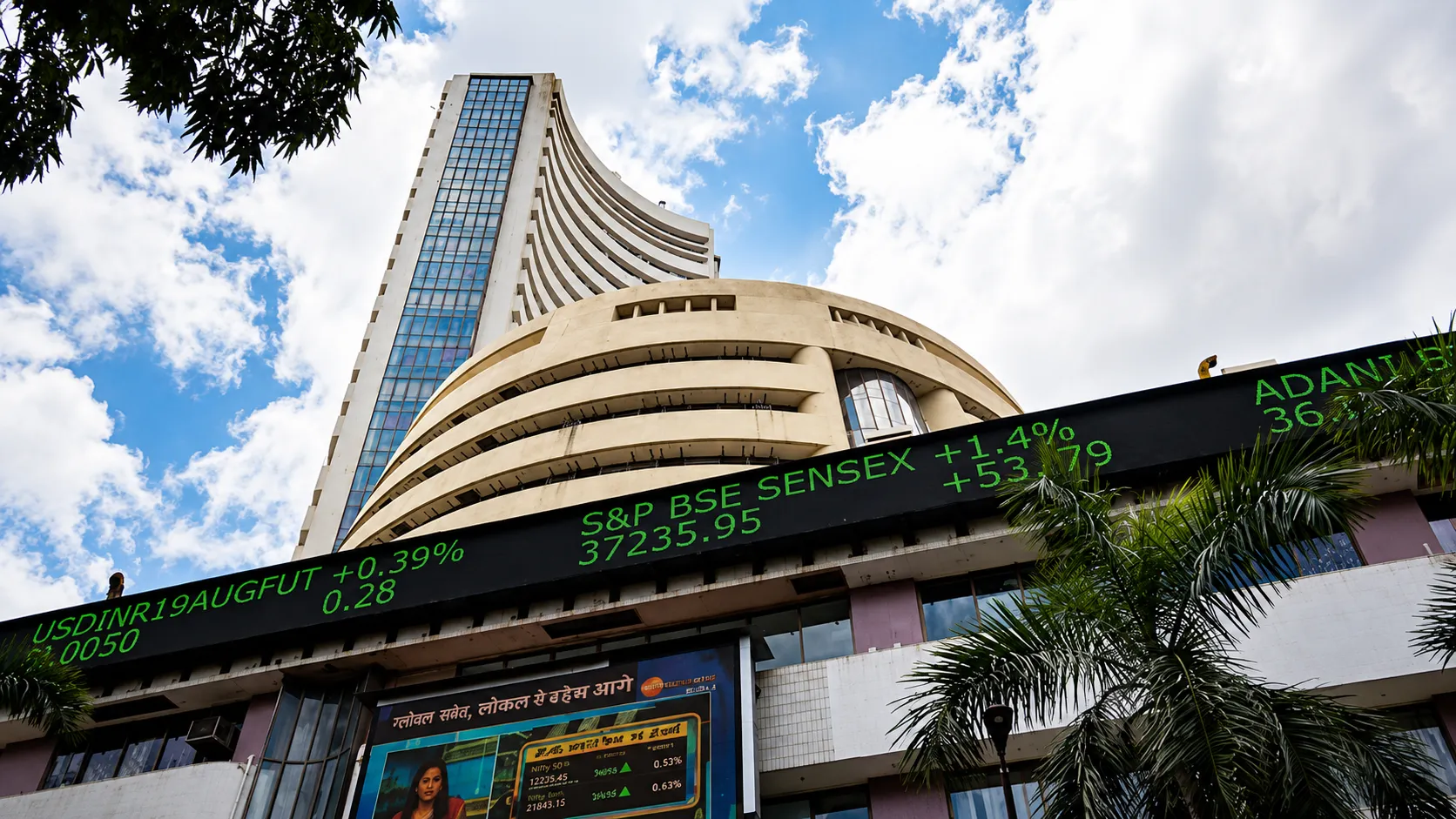
Indian derivatives traders entered this week navigating a market structure quirk that, while easy to overlook amid the more headline-grabbing story of a broad equity market rally, carries genuine practical significance for how options and futures positioning needs to be managed: the National Stock Exchange's monthly Nifty derivatives expiry, following a 2025 rule change, now falls on the last Tuesday of each month rather than the traditional last Thursday, while the BSE's Sensex derivatives continue to expire on Thursdays — creating a week where traders face two distinct, non-aligned expiry events within a span of just three trading sessions.
To understand why this scheduling shift matters beyond the level of a mere administrative footnote, it helps to appreciate just how significant expiry days are within the broader rhythm of Indian derivatives trading. Options and futures contracts, by their fundamental design, carry finite lifespans, with all open positions in a given monthly series required to be settled, squared off, or rolled over into the next series by the contract's expiry date. This settlement dynamic tends to concentrate an outsized share of each month's total trading volume and volatility into the expiry session itself, as traders holding open positions make final decisions about whether to close out, exercise, or roll their exposure into the subsequent month's contracts.

The 2025 rule change that shifted the NSE's expiry day from Thursday to the last Tuesday of the month was implemented as part of a broader effort by market regulators and the exchange itself to better distribute expiry-related volatility across the trading week and to reduce the historical concentration of expiry events on a single day of the week, a pattern that had, over time, developed into something of a predictable, and at times problematic, source of concentrated market volatility that both retail and institutional traders had needed to specifically plan around. By shifting the Nifty expiry to Tuesday while the BSE's Sensex expiry remained on its traditional Thursday schedule, the exchanges have effectively created a more staggered expiry calendar, though the practical effect this week is that traders active across both exchanges' derivatives products face expiry-related considerations on two separate days within the same trading week rather than a single, consolidated expiry session.
Wednesday, July 29, marks the first trading session of the fresh NSE derivatives series following Tuesday's expiry, meaning options and futures traders active in Nifty-linked products began the week establishing entirely new positions rather than managing positions carried over from the prior series. This kind of fresh-series dynamic typically carries its own distinct trading characteristics compared to sessions occurring in the middle or latter part of a derivatives series, since open interest — the total number of outstanding contracts — tends to be considerably lower immediately following an expiry, building up gradually as traders establish new positions through the early days of the fresh series.
For traders and portfolio managers who maintain exposure across both NSE Nifty derivatives and BSE Sensex derivatives simultaneously, this week's staggered expiry calendar requires a somewhat more complex risk management approach than would be needed during a week when both exchanges' expiries aligned on the same day. Managing a portfolio that includes both Nifty and Sensex derivative exposure means accounting for the fact that Nifty positions have already rolled into a fresh series as of Wednesday, while Sensex positions remain within their existing series until Thursday's expiry, creating a period where the two major index derivative products are, in a meaningful structural sense, in different phases of their respective monthly cycles.
The broader implications of this staggered expiry structure extend to how market volatility is likely to manifest through the remainder of the week. Historically, expiry days have tended to exhibit distinctive intraday volatility patterns, often including pronounced price movements in the final hour of trading as market participants finalise their settlement and rollover decisions — a phenomenon sometimes referred to informally as expiry-day volatility or, in more colourful market parlance, expiry-day pinning, where underlying index or stock prices can, at times, gravitate toward specific strike price levels where large volumes of options open interest are concentrated, as market makers and large options participants manage their hedging exposure into the close.
With this week featuring both a Tuesday Nifty expiry that has already passed and a Thursday Sensex expiry still ahead, traders need to remain alert to the possibility of this kind of expiry-specific volatility pattern manifesting on Thursday specifically, even as Wednesday's session — falling in the immediate aftermath of the Nifty expiry but ahead of the Sensex expiry — has already demonstrated the kind of strong, broad-based rally discussed extensively elsewhere in this week's market coverage, a reminder that fresh-series dynamics do not preclude, and can sometimes even accompany, genuinely significant directional market moves driven by fundamental catalysts like corporate earnings and macro developments occurring alongside the more technical, structural expiry-related trading patterns.
Options strategy considerations for retail traders navigating this particular week's calendar deserve specific mention, given the meaningfully different risk profiles associated with holding options positions through an expiry event versus establishing fresh positions in a newly opened series. Traders holding Nifty options positions established prior to Tuesday's expiry would have needed to make explicit decisions about closing out, exercising, or rolling those positions forward by Tuesday's close, while traders with Sensex options exposure retain that same decision point still ahead of them as Thursday's expiry approaches — a genuinely different set of near-term considerations depending on which specific index derivatives a given trader's portfolio includes.
Institutional trading desks and proprietary trading firms, which typically maintain more sophisticated systems for managing derivatives exposure across multiple expiry cycles and index products simultaneously, are generally better positioned to navigate this kind of staggered expiry calendar smoothly compared to retail traders who may be managing derivatives positions with less automated or systematic risk management infrastructure. This dynamic has, at times, prompted market commentators to suggest that retail options traders in particular should pay especially close attention to expiry calendars and consider simplifying their positioning around expiry-heavy weeks like this one, given the genuinely elevated complexity and potential for unexpected volatility that weeks featuring multiple, non-aligned expiry events can introduce.
The broader context of India's derivatives market growth adds further relevance to understanding why these structural expiry calendar details matter more today than they might have a decade ago. India's options and futures trading volumes have grown enormously over recent years, with retail participation in derivatives trading expanding dramatically alongside the broader growth in India's overall equity market participation. This growth has, at various points, prompted regulatory attention and intervention aimed at ensuring market structure and rules keep pace with the genuinely transformed scale and character of Indian derivatives trading activity, of which the 2025 expiry day rule change represents one specific example of this broader regulatory evolution.
Looking beyond this specific week's staggered expiry dynamics, the broader trend toward more distributed, carefully managed expiry scheduling across India's major exchanges reflects a maturing derivatives market infrastructure increasingly attentive to the practical trading and risk management implications of its own structural design choices. As Indian derivatives markets continue to grow in scale and sophistication, further refinements to expiry scheduling, contract specifications, and related market structure elements are likely to remain an ongoing area of regulatory and exchange-level attention, aimed at balancing the goals of orderly, well-distributed market activity against the practical needs of an increasingly diverse and large base of both institutional and retail derivatives market participants.
For now, this week's specific combination of a Tuesday Nifty expiry already behind the market and a Thursday Sensex expiry still ahead offers a useful, concrete illustration of how these structural market design details translate into genuine, practical trading considerations — a reminder that even amid the more headline-grabbing story of a broad market rally driven by corporate earnings and macro catalysts, the underlying plumbing of how Indian derivatives markets are structured continues to shape the texture and rhythm of day-to-day trading activity in ways that attentive market participants need to factor into their own positioning and risk management decisions.
Bank Nifty and other sectoral index derivatives add a further layer of scheduling complexity worth noting for traders active across multiple derivative products simultaneously. While the broader Nifty 50 and Sensex expiry calendars have dominated this week's discussion, traders holding positions in sectoral index derivatives or individual stock futures and options need to track their own specific expiry dates, which generally follow the broader monthly cycle but can carry their own nuances depending on the specific underlying instrument and exchange listing.
Margin requirements imposed by exchanges and clearing corporations also tend to fluctuate around expiry periods, with heightened margin requirements sometimes applied in the days immediately preceding a major expiry event as a risk management measure designed to ensure adequate collateral is available to cover potential settlement obligations. Traders managing leveraged derivatives positions through this particular week's staggered expiry calendar need to factor these margin dynamics into their capital planning, since unexpected margin calls during a volatile expiry period can force premature position closures at potentially unfavourable prices.
Historical data on post-expiry trading patterns offers some additional context for how this week might unfold beyond Thursday's Sensex expiry itself. Markets have, in past cycles, sometimes shown a tendency toward reduced volatility in the one or two sessions immediately following a major expiry event, as the concentrated positioning and settlement activity that characterises expiry day itself gives way to a comparatively calmer period while fresh-series open interest gradually builds. Whether this pattern holds following Thursday's Sensex expiry will offer traders a useful data point for calibrating their expectations heading into the following week's trading.
Foreign institutional and domestic mutual fund rebalancing activity often clusters around expiry periods as well, given that many large institutional portfolios use derivatives for hedging purposes tied to their broader equity holdings, meaning expiry-driven rebalancing in the derivatives market can occasionally spill over into corresponding activity in the underlying cash equity market. This interconnection between derivatives expiry dynamics and cash market trading activity adds a further reason why market participants across both segments continue to watch expiry calendars closely, even those who do not themselves actively trade options or futures contracts.
For newer retail participants in India's options and futures markets, many of whom have entered derivatives trading only over the past few years amid the broader boom in retail market participation, weeks featuring unusual scheduling complexity like this one's staggered Nifty and Sensex expiries offer a useful, practical lesson in the importance of understanding market structure mechanics that extend beyond simply having a directional view on where prices are headed. Exchanges and brokerages have increasingly emphasised investor education around these structural nuances, recognising that a full understanding of expiry mechanics and their potential volatility implications represents an important component of responsible derivatives trading practice.
Regulatory attention to derivatives market structure has itself intensified in recent years, with India's securities market regulator having introduced various measures aimed at moderating what officials have periodically characterised as excessive speculative retail participation in options trading, given the well-documented tendency for a large majority of individual retail options traders to lose money over sustained periods. Whether the 2025 expiry calendar restructuring itself was motivated in part by these broader regulatory concerns around market stability and retail investor protection, or reflected purely operational and market-structure considerations on the exchanges' part, the practical effect has been to add a further layer of complexity that retail traders navigating India's options markets now need to understand alongside the more fundamental question of accurately forecasting price direction.
As India's derivatives market continues to mature and its retail trading base continues to expand, the kind of structural adjustments reflected in this 2025 expiry calendar change are likely to remain an ongoing feature of the market's evolution, with exchanges continuing to refine market structure based on accumulated trading data, evolving regulatory priorities, and lessons learned from market behaviour observed since each successive change takes effect.
International comparisons offer a useful benchmark for evaluating India's current dual-expiry approach against practices in other major derivatives markets globally. Several developed markets, including the United States, have historically maintained more consolidated, single-day monthly expiry conventions for their major index derivatives products, though some have also experimented with weekly expiry structures that spread volatility across more frequent, smaller events rather than concentrating it within a single monthly date. India's current bifurcated NSE-BSE approach represents its own distinct structural choice within this broader spectrum of possible derivatives market designs, one that reflects the particular history and competitive dynamics between the country's two major exchanges.