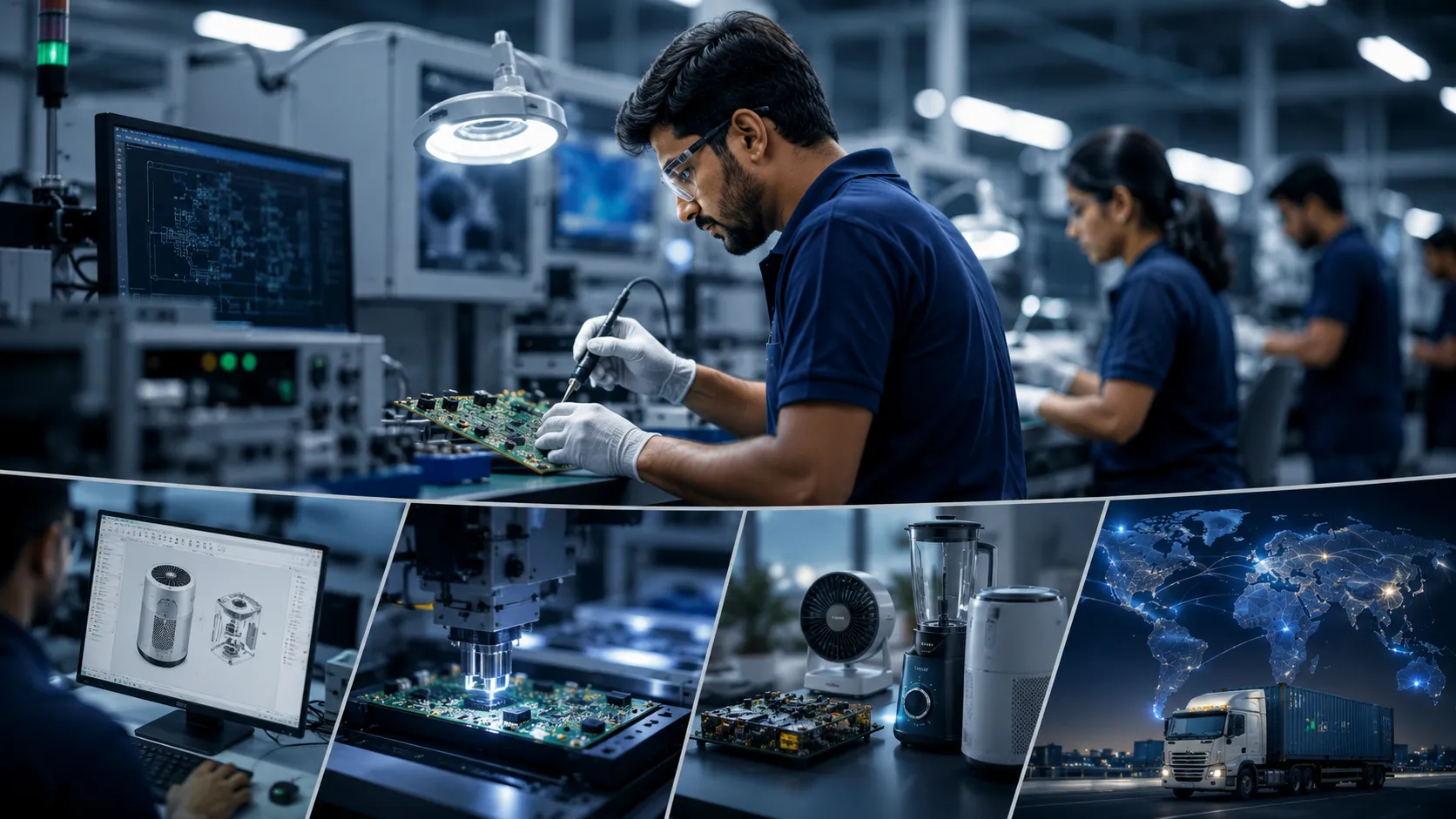
India’s manufacturing ambitions continue drawing stronger investor attention, and the latest signal comes from Mekr Technologies, which has secured ₹67 crore in Series A funding in a round led by Avaana Capital, with participation from Titan Capital Winners Fund. The investment arrives at a time when venture capital firms are increasingly expanding beyond software and consumer internet businesses into sectors tied to industrial infrastructure, supply-chain resilience and domestic manufacturing capabilities. The round reflects growing confidence in startups building systems and platforms designed to strengthen India's long-term production ecosystem.
For years, India’s startup narrative was shaped primarily by software platforms, fintech businesses and consumer applications. Manufacturing startups often remained outside mainstream venture conversations because they demanded larger capital commitments, longer product cycles and more complex execution requirements. That pattern appears to be shifting. Investors increasingly seem willing to back businesses operating in industrial technology and design-led manufacturing as larger structural changes reshape global production strategies. As supply chains continue diversifying globally and companies seek alternatives to concentrated manufacturing networks, India's role within that transition is drawing greater attention from both policymakers and investors.
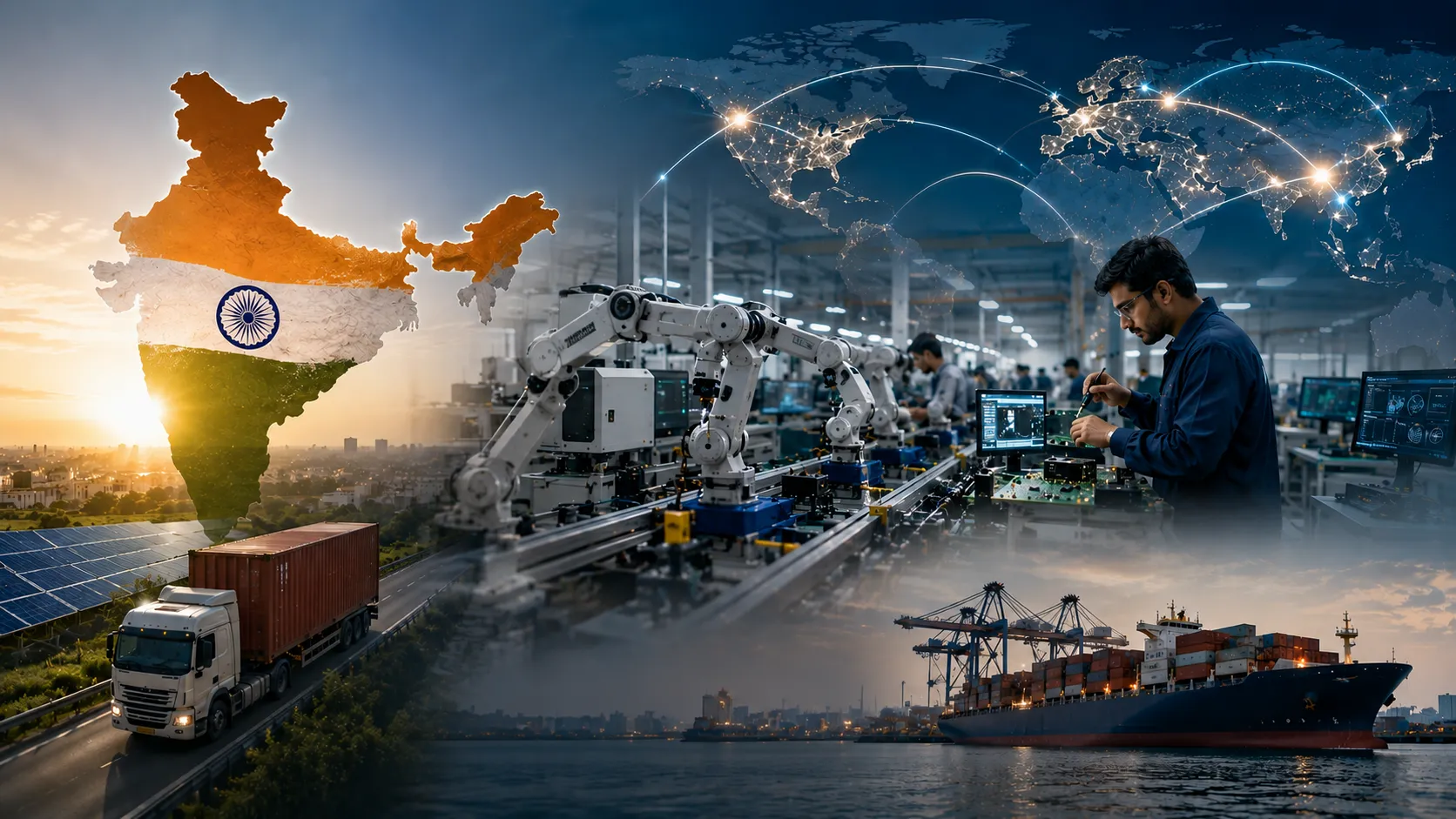
The timing of the funding round is particularly significant because India's broader manufacturing ecosystem is undergoing a larger transformation. Over the last several years, initiatives linked to domestic production, localization and supply-chain development have gained momentum. Increasingly, conversations around manufacturing are no longer focused solely on increasing output. Attention is shifting toward strengthening engineering capabilities, product design ownership and integrated systems capable of reducing dependence on imports.
Operating as an Original Design Manufacturer (ODM), the company works across product engineering, prototyping, tooling, certification and large-scale manufacturing. Rather than functioning purely as a contract manufacturer, it aims to create a more integrated production ecosystem that enables brands to move products from concept to market through a single workflow. Industry observers suggest this model is increasingly attracting investor attention because of its ability to shorten development timelines while strengthening supply-chain efficiency.
The newly raised capital is expected to support a broad range of operational priorities. According to the company, funding will be deployed toward research and development, proprietary tooling, supplier localisation, product engineering and manufacturing automation, alongside efforts to strengthen quality systems and expand export readiness. Rather than focusing only on production capacity, the strategy appears centered around building infrastructure around manufacturing itself. That distinction matters because investor priorities around manufacturing technology are increasingly evolving. Venture firms appear less interested in pure assembly-led businesses and more interested in platforms capable of controlling larger parts of the manufacturing value chain. Companies building intellectual property, engineering capabilities and integrated systems increasingly appear more attractive because they can potentially create stronger margins and long-term defensibility.
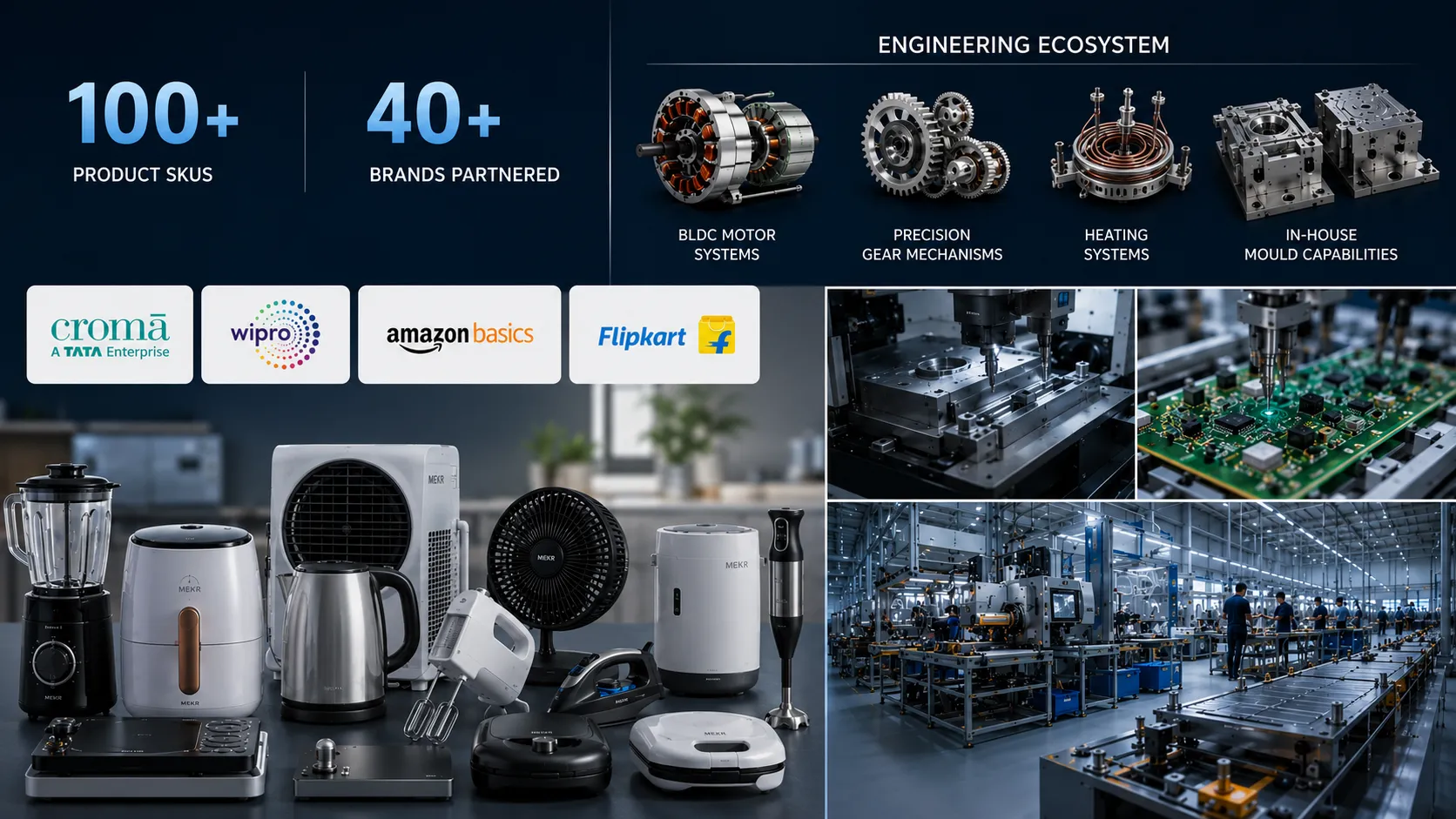
The funding also arrives amid growing attention around India's consumer appliance ecosystem. Industry estimates place India’s small home appliance market at over ₹40,000 crore, with significant dependence still existing around imported components and fragmented supplier networks. Investors increasingly appear to see opportunities in startups capable of reducing those dependencies while creating more localized production ecosystems. The company has reportedly developed more than 100 product SKUs and partnered with over 40 brands, including Croma, Wipro, Amazon Basics, and Flipkart. Its engineering ecosystem includes technologies such as BLDC motor systems, precision gear mechanisms, heating systems and in-house mould capabilities, allowing faster development cycles and greater manufacturing flexibility.
Commenting on the broader investment rationale, Vikas Verma, Partner at Avaana Capital, noted that platforms building stronger engineering and manufacturing capabilities can help address structural dependence on imported components while strengthening supply-chain resilience. Industry participants increasingly view integrated and design-led manufacturing platforms as important pieces of India’s broader industrial transformation story.
The funding round may ultimately represent more than growth capital for a single startup. Increasingly, investors appear to be placing bets on businesses positioned around India's larger manufacturing transition. As global supply chains continue evolving and governments prioritize domestic capabilities, venture capital itself seems to be expanding into categories once viewed as too operationally complex or capital intensive.
For India's startup ecosystem, that may signal a broader shift underway. The next wave of venture-backed businesses may not emerge solely from software or digital platforms. Increasingly, it may come from engineering systems, supply chains and manufacturing infrastructure capable of shaping how products are built.