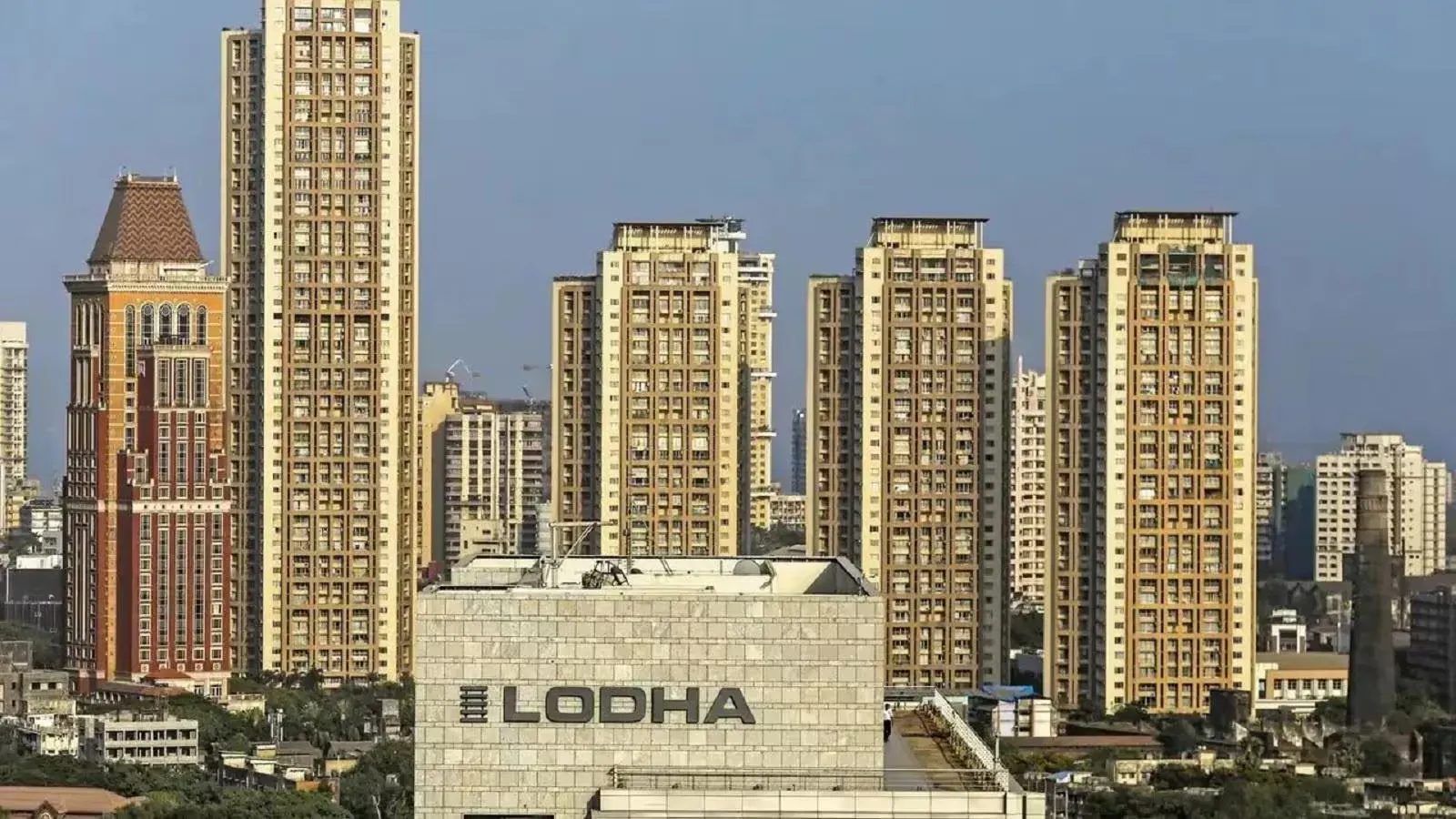
Somewhere in the crowded universe of Indian real estate stocks, one name has been putting on a show that few of its peers, and indeed few stocks across the broader market, have managed to match in recent weeks. Lodha Developers, one of India's most prominent listed real estate companies, has seen its share price surge a remarkable 38 per cent over the past month, a rally so pronounced that it dwarfs both the broader market's performance and even the gains posted by its own sector index. Over the same period, the BSE Sensex has moved a mere 0.05 per cent — effectively flat — while the BSE Realty index, which tracks a broader basket of listed real estate developers, has climbed a still-impressive but comparatively modest 11 per cent. Lodha's outperformance against both benchmarks raises an obvious and important question for investors: is this a company-specific story, a broader re-rating of the entire real estate sector, or some combination of both?
To appreciate the scale of what has happened, it's worth putting the numbers side by side. A stock rising 38 per cent while the broader market index it trades within has moved essentially nothing represents an extraordinary divergence, the kind of gap that typically reflects either a major company-specific catalyst — a blockbuster quarterly result, a transformative land acquisition, a major project launch generating exceptional pre-sales, or significant new analyst coverage and upgraded price targets — or a sector-wide re-rating so powerful that it has concentrated disproportionately in the names investors consider best positioned to capture it. Given that Lodha's gains have run more than three times ahead of even the broader realty index's own strong 11 per cent showing, the evidence points toward at least some meaningful combination of both dynamics being at play.
Indian real estate as a sector has, for the better part of the past several years, been in the midst of what many industry observers describe as a genuine structural upcycle, following an extended and often painful period of consolidation and distress that characterised the sector through much of the previous decade. That earlier downturn, triggered by a combination of regulatory disruption from the introduction of the Real Estate Regulatory Authority framework, a liquidity crisis triggered by the collapse of major non-banking financial companies that had been significant funders of real estate development, and broader macroeconomic headwinds, forced widespread consolidation across the industry. Smaller, less well-capitalised developers exited the market or were absorbed by larger, better-financed rivals, while the developers that survived and thrived through that difficult period — companies like Lodha, DLF, Godrej Properties, and a handful of others — emerged with significantly strengthened balance sheets, more disciplined project execution capabilities, and, crucially, dominant market positions in an industry that had shed much of its weaker competition.
Lodha Developers, in particular, has positioned itself as one of the clearest beneficiaries of this consolidation trend, with a strong presence across key markets including the Mumbai Metropolitan Region, Pune, and, more recently, an expanding footprint in Bengaluru and other high-growth urban markets. The company's brand strength in the premium and luxury residential segment, an area of the market that has shown particularly robust demand resilience even during periods when more affordable housing segments faced greater price sensitivity, has been a consistent theme in analyst coverage of the stock over recent quarters. India's luxury and premium housing segment has, somewhat counterintuitively to observers used to thinking of real estate demand primarily through an affordability lens, been one of the standout performers within the broader residential real estate market, driven by a combination of rising high-net-worth individual wealth, increased demand for larger living spaces following pandemic-era shifts in housing preferences, and a general flight to quality among buyers who increasingly favour well-established, financially secure developers with strong track records of timely project delivery.
The broader macro backdrop for Indian real estate has also turned increasingly favourable in recent months, a dynamic that likely underpins at least part of the sector-wide 11 per cent rally in the BSE Realty index over the past month. Easing inflationary pressures, hopes for further monetary policy accommodation from the Reserve Bank of India, and continued strong urban employment and income growth in India's major metropolitan markets have all contributed to a more constructive narrative around housing demand. Real estate stocks, given their inherent sensitivity to interest rate movements — since both developer financing costs and homebuyer mortgage affordability are directly affected by prevailing rate levels — tend to respond particularly strongly to shifts in the broader interest rate narrative, and any signal, however preliminary, of a more accommodative monetary policy stance tends to be greeted enthusiastically by investors in the sector.
For Lodha specifically, company-level catalysts have likely played an outsized role in driving the stock's outperformance relative to sector peers. Real estate developers with strong execution track records tend to see their stocks re-rate meaningfully around periods of strong pre-sales momentum, successful new project launches, and encouraging management commentary on future project pipelines and land bank monetisation plans. While the precise granular drivers of Lodha's specific rally over the past month would require detailed review of the company's own disclosures and analyst notes published during this period, the scale and speed of the move is consistent with the kind of investor reaction typically triggered by a combination of strong quarterly business updates, encouraging pre-sales figures for the quarter, and a broader analyst community upgrading earnings estimates and price targets in response.
It's also worth situating Lodha's rally within the context of India's broader real estate sector transformation over recent years — a transformation that has seen listed developers increasingly command investor attention and premium valuations that would have seemed unlikely a decade ago, when Indian real estate stocks were more commonly associated with governance concerns, opaque balance sheets, and inconsistent project execution than with the kind of institutional-grade corporate discipline that has come to characterise the sector's leading players today. The RERA regulatory framework, whatever near-term disruption it caused during its implementation phase, has over time contributed to a more transparent and accountable real estate development ecosystem, one where established, well-capitalised developers with strong compliance track records have been able to command an increasing share of both market demand and, correspondingly, investor capital, at the expense of smaller, less disciplined competitors.
The consolidation dynamic within Indian real estate deserves particular emphasis here, since it forms a crucial part of the investment thesis that has drawn increasing institutional and retail investor interest to a select group of listed developers, Lodha prominently among them. As smaller and mid-sized developers have struggled to access financing, navigate increasingly complex regulatory compliance requirements, and compete against larger rivals with stronger brand recognition and deeper balance sheets, market share within India's organised real estate development sector has increasingly concentrated among a relatively small cohort of large, listed players. This consolidation trend has, in turn, created a self-reinforcing dynamic where the companies best positioned to capture disproportionate market share gains — through land acquisitions, project launches, and brand-driven pricing power — have also become the companies best positioned to deliver the kind of earnings growth trajectories that justify sustained investor enthusiasm and, in periods like the past month, outsized share price rallies.
Analysts covering the real estate sector will likely be parsing Lodha's specific drivers closely in the coming days and weeks, particularly given that the company's rally has run so far ahead of even its listed peers within the same sector index. Questions that typically arise in the wake of such a pronounced outperformance include whether the rally reflects sustainable, fundamentals-driven re-rating based on genuine improvements in the company's earnings trajectory and project pipeline, or whether at least part of the move reflects shorter-term momentum trading and speculative positioning that could prove more vulnerable to reversal if subsequent quarterly results or project updates fail to sustain the elevated expectations now embedded in the stock's price. Given the scale of the move — 38 per cent in a single month is an extraordinary rate of appreciation by almost any standard, even for a historically volatile sector like real estate — some degree of near-term consolidation or profit-taking would not be unusual, even if the broader medium-term trend for the stock and sector remains constructive.
The broader implications of Lodha's rally, and the real estate sector's strong performance more generally, extend beyond the immediate universe of real estate investors to touch on broader questions about the health of India's urban consumption and investment cycle. Real estate development activity has significant multiplier effects across the broader economy, supporting employment and demand across construction materials, labour, ancillary services, and household goods and furnishings sectors that see demand tied closely to new home purchases and possession. A genuinely healthy and expanding real estate development cycle, of the kind that Lodha's rally and the broader sector index's strong performance both seem to be signalling, carries positive read-through implications for a considerably wider swathe of the Indian economy than the real estate sector alone.
As India's real estate sector continues to navigate this current upcycle, the performance divergence between Lodha and the broader market — and even between Lodha and its own sector peers — offers a useful reminder of how concentrated and company-specific even sector-wide rallies can become in practice. Investors drawn to the broader real estate re-rating story by headline sector index performance numbers may find, on closer inspection, that the actual gains have been considerably more concentrated among a smaller cohort of best-in-class operators like Lodha, rather than being broadly distributed across the full universe of listed real estate names. For a sector that spent much of the previous decade working through consolidation, distress, and regulatory disruption, that kind of concentrated outperformance among the strongest, best-capitalised players represents, in many respects, exactly the outcome that industry observers and policymakers pushing for a more disciplined, transparent real estate sector would have hoped to see emerge over time — even if it makes stock-picking within the sector considerably more consequential than simply betting on the broader realty index as a whole.
Whether Lodha's extraordinary month-long rally proves to be the start of a sustained multi-quarter re-rating or a sharper, shorter-term move that eventually gives back some of its gains will depend heavily on the company's ability to continue delivering the kind of pre-sales momentum, project execution, and earnings growth that appear to have driven investor enthusiasm over the past several weeks. For now, though, Lodha stands as one of the more striking individual stock performance stories in a market that has, on the whole, spent much of the past month searching for direction — a reminder that even in a broadly range-bound index, individual stocks with the right combination of company-specific catalysts and favourable sector tailwinds can deliver returns that few investors would have confidently predicted a month ago.
Institutional ownership patterns within Lodha's shareholder base will also be worth monitoring as the rally continues to unfold. Real estate stocks with strong recent momentum often attract increased attention from mutual funds and other institutional investors who may have previously held underweight positions relative to the sector's growing weight within broader market indices, and any such institutional buying can itself become a self-reinforcing driver of further share price appreciation, independent of the underlying business fundamentals that originally triggered the rally. Conversely, if the stock's valuation runs meaningfully ahead of what institutional investors consider justified by the company's earnings trajectory, profit-booking from these same large holders could introduce two-way volatility in the sessions and weeks ahead, even if the longer-term structural story for the company and sector remains intact.
Land bank strategy represents another important lens through which analysts evaluate developers like Lodha, given how directly a company's future revenue visibility depends on the scale, location, and monetisation timeline of the land parcels it controls. Developers that have been able to acquire well-located land banks at favourable valuations during the sector's earlier distressed period, and that have subsequently demonstrated disciplined, timely execution in converting those land holdings into launched and sold residential projects, have generally commanded the strongest investor confidence and, correspondingly, the most resilient stock market valuations. Any recent disclosures from Lodha regarding new land acquisitions, joint development agreements, or accelerated monetisation plans for its existing land bank would likely factor prominently into the analyst commentary and price target revisions that typically accompany a rally of this magnitude.
Looking beyond Lodha itself, the broader real estate sector's performance carries implications for India's banking and non-banking financial sector as well, given how significant real estate-linked lending, both to developers and to individual homebuyers through mortgage financing, remains within the loan books of many Indian financial institutions. A healthier, more confidently growing real estate sector generally translates into improved asset quality trends for lenders with meaningful real estate exposure, while also supporting continued growth in mortgage lending volumes as homebuyer confidence and affordability both improve. In this sense, the real estate sector's current strength, exemplified by moves like Lodha's remarkable monthly rally, carries read-through implications that extend well beyond the sector's own listed developers and into the broader health of India's financial system and urban economy.