FundingIPO Watch12 MIN READ

KKR-Backed LEAP India Prices ₹2,480 Crore IPO, Betting Public Markets Understand The Pallet Business

KKR-backed LEAP India has set a ₹151-159 price band for its ₹2,480 crore IPO opening August 7, valuing the supply-chain firm at roughly ₹7,005 crore.

By Shaym Kumar · Author5 August 2026
KKR-Backed LEAP India Prices ₹2,480 Crore IPO, Betting Public Markets Understand The Pallet Business

SEO Title: LEAP India IPO: ₹2,480 Crore Issue Price Band, Dates And Everything Investors Need To Know

Meta Description: KKR-backed LEAP India has set a ₹151-159 price band for its ₹2,480 crore IPO opening August 7, valuing the supply-chain and asset-pooling firm at roughly ₹7,005 crore.

---

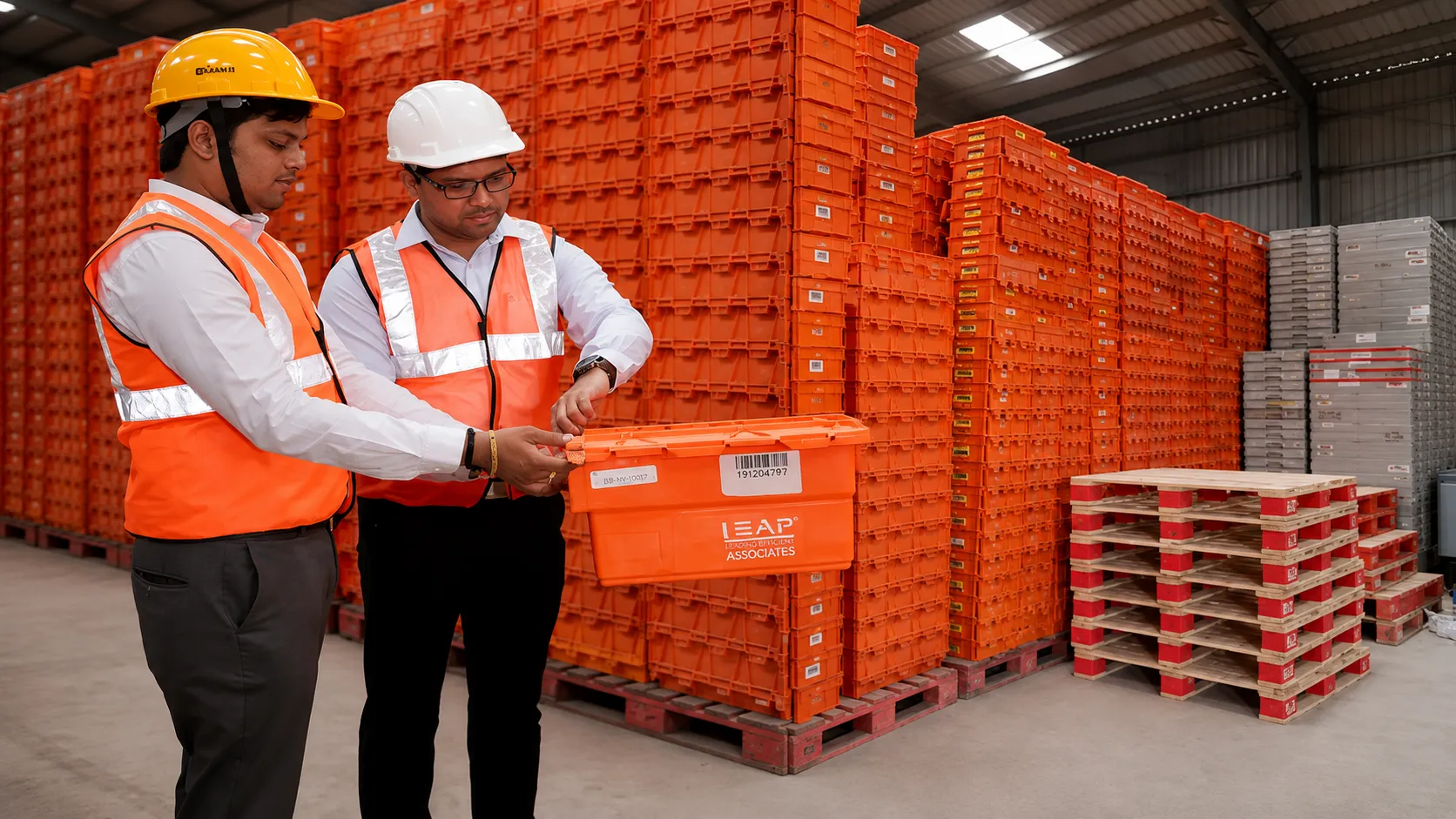
Somewhere in a warehouse outside Mumbai, a stack of steel pallets and reusable plastic crates is being catalogued, tracked, cleaned and prepared for its next journey — probably to an FMCG distribution centre, or a quick-commerce dark store, or an automotive parts supplier. It is about as unglamorous a business as India's supply chain has to offer. It is also, according to the terms of a newly announced initial public offering, worth roughly ₹7,000 crore to investors willing to bet that the future of Indian logistics runs through exactly this kind of infrastructure.

LEAP India, the KKR-backed supply chain and asset-pooling company, has fixed a price band of ₹151 to ₹159 per equity share for its initial public offering, targeting total proceeds of approximately ₹2,480 crore — around $260 million. The issue will open for public subscription on August 7 and close on August 11, with a single-day anchor investor allocation window opening on August 6. At the upper end of the price band, the offering values LEAP India at roughly ₹7,004.5 crore.

ChatGPT Image Aug 5, 2026, 12_30_30 PM.png


What LEAP India Actually Does

Founded in 2013 by Sunu Mathew, LEAP India operates what is known in supply-chain circles as a "share and reuse" or asset-pooling model — essentially, the company owns and manages a large pool of reusable logistics equipment (pallets, crates, containers and similar packaging infrastructure) that it rents out to businesses across sectors, rather than requiring each individual company to purchase, store and maintain its own equipment. According to the company's red herring prospectus, LEAP now operates an asset-pooling platform managing 1.47 crore individual assets, supported by a network of more than 10,100 customer touchpoints spread across India.

The company's service offerings extend beyond simple equipment rental to include returnable packaging, inventory management, transportation coordination, and repair-and-maintenance services — effectively positioning LEAP as an outsourced logistics infrastructure layer for companies that would otherwise need to build and maintain this capability internally. Its customer base spans fast-moving consumer goods, food and beverages, third-party logistics providers, e-commerce and quick-commerce operators, automotive manufacturers and broader industrial companies — a client roster wide enough that LEAP's fortunes are, in effect, a proxy for the overall health and growth of organised Indian retail and manufacturing logistics.

The Structure Of The Offering

The IPO comprises a fresh issue of shares worth up to ₹480 crore, alongside an offer for sale (OFS) of up to ₹2,000 crore, under which existing shareholders will sell down part of their holdings without the company itself receiving those proceeds. Notably, the fresh issue component was increased from an earlier proposed ₹400 crore, suggesting the company opted to raise incrementally more primary capital than originally planned — a detail that can sometimes signal either stronger-than-expected demand indications from anchor investors during pre-marketing, or a late-stage decision to fund additional growth capital needs ahead of listing.

Under the offer-for-sale component, promoter entities Vertical Holdings II Pte Ltd and KIA EBT Scheme 3 — both linked to global investment firm KKR, which acquired a majority stake in LEAP India through a 2023 transaction — will offload shares worth ₹1,998.6 crore and ₹1.4 crore respectively. According to the red herring prospectus, KKR-managed Vertical Holdings currently holds a 73.78% stake in LEAP India, while founder Sunu Mathew retains a 21.07% holding, with Sixth Sense India Opportunities and First Bridge India Growth Fund listed among the company's other institutional investors.

Of the fresh issue proceeds, ₹360 crore is earmarked for the full or partial repayment of certain existing borrowings, a use-of-funds allocation that suggests the company is using part of its public listing to delever its balance sheet ahead of what it presumably hopes will be an easier path to future debt or equity financing as a listed entity, rather than deploying the entirety of fresh capital toward pure growth investment.

The KKR Investment Backstory

LEAP India's path to this IPO has been shaped substantially by KKR's involvement since 2023, when the global investment firm signed definitive agreements to acquire a majority stake in what was then a considerably smaller business — at the time of that initial investment, LEAP operated a network of 21 warehouses and more than 3,500 customer locations, managing over 6 million total assets. The scale-up since that 2023 transaction has been substantial: the company's current asset base of 1.47 crore (14.7 million) pooled assets and more than 10,100 customer touchpoints represents more than double the scale reported at the time of KKR's initial acquisition, evidence of an aggressive growth phase under private equity ownership ahead of the eventual public listing.

Commenting at the time of KKR's original investment, LEAP India founder and Managing Director Sunu Mathew had described the company's mission in terms that remain relevant to understanding its current growth trajectory: "From Day One, LEAP's mission has been to provide quality supply chain solutions to support our clients' needs and contribute to India's modernization." That framing — supply-chain infrastructure as a contributor to broader economic modernisation, rather than simply a logistics cost line item for individual client companies — has been a consistent thread in how LEAP has positioned itself to both private equity investors and, now, public market participants.

Why Investors Should Care About A Pallet Company

For investors unfamiliar with the asset-pooling business model, it is worth explaining why a company built around what is, at its core, industrial packaging infrastructure represents a genuinely interesting investment thesis rather than a mundane one. The "share and reuse" pooling model that LEAP operates carries several structurally attractive characteristics: it generates recurring, contracted revenue from customers who rent equipment on an ongoing basis rather than making one-time purchases; it benefits from network effects, since a larger pool of assets and touchpoints makes the service more valuable and convenient for any individual customer; and it aligns with a broader sustainability narrative, since pooled, reusable packaging infrastructure reduces the aggregate amount of single-use or duplicated packaging assets that would otherwise be manufactured across an economy's supply chains.
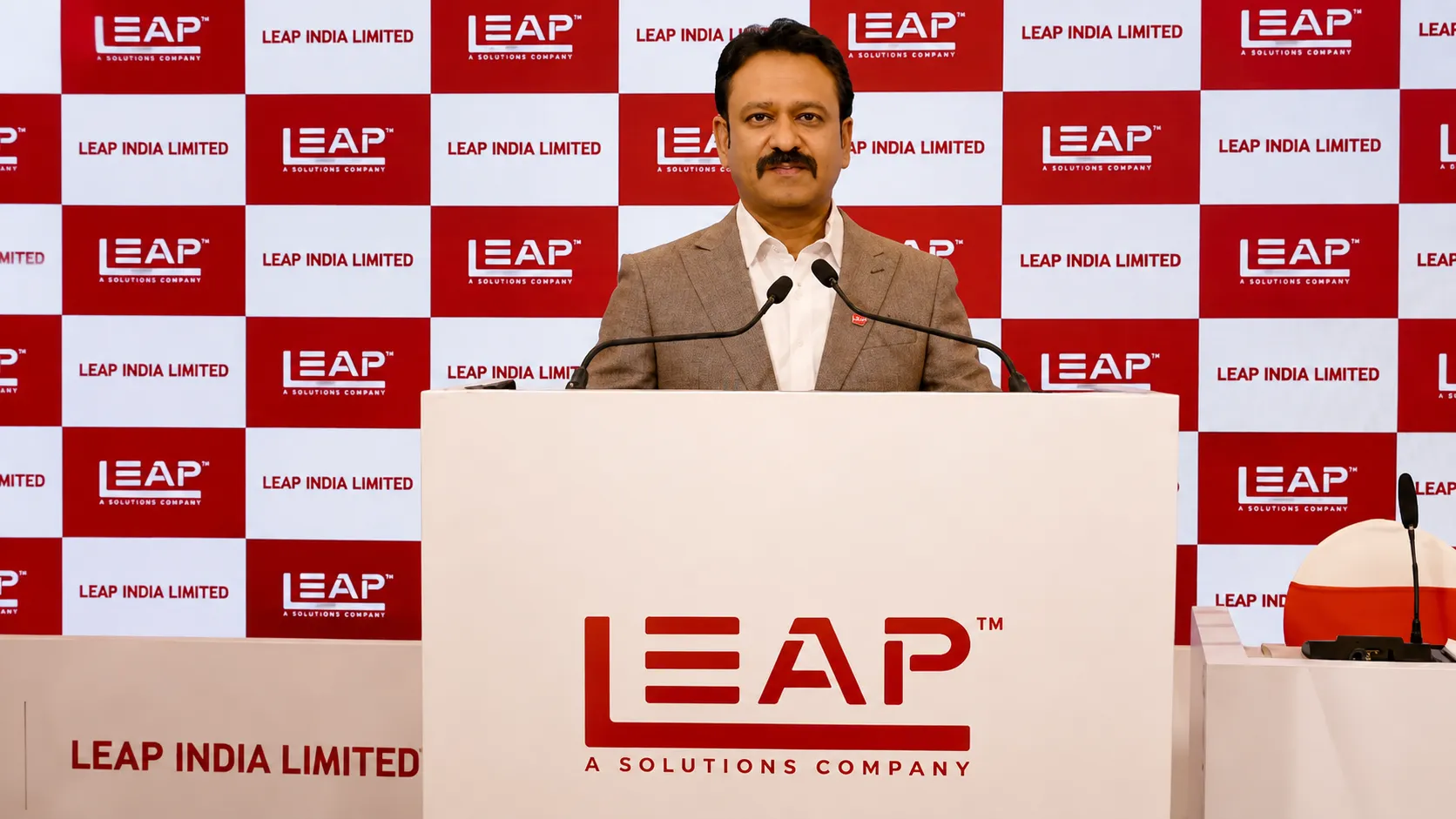

From Day One, LEAP's mission has been to provide quality supply chain solutions to support our clients' needs and contribute to India's modernization.
Sunu Mathew, Founder and Managing Director, LEAP India

That sustainability angle is not merely marketing framing — it reflects genuine macroeconomic tailwinds. As Indian corporations increasingly focus on modernising and optimising logistics efficiency, and as sustainable supply-chain practices become both a regulatory consideration and a genuine cost-saving opportunity, platforms like LEAP that can provide standardised, high-quality pooled infrastructure are positioned to benefit from a secular shift away from each individual company managing its own fragmented, less efficient packaging and equipment logistics.

The Broader IPO Market Context

LEAP India's listing arrives amid an unusually active period for India's primary equity markets. Industry data indicates that 175 companies currently hold valid SEBI observations — the regulatory approval required before a company can proceed to actually launch an IPO — while an additional 70 firms await regulatory approval for their own forthcoming issues, pointing to a substantial pipeline of primary market activity extending well beyond LEAP India's own offering. August 2026 in particular has been flagged by market participants as likely to be one of the busiest IPO months of the year, with companies spanning quick commerce, housing finance, logistics, dairy, education and asset management all preparing to tap public markets around the same window.

Within that crowded calendar, LEAP India's offering is reserved along fairly standard institutional lines: half of the issue has been allocated to qualified institutional buyers, 15% to non-institutional investors, and the remaining 35% to retail investors, with a minimum bid requirement of 94 equity shares and multiples thereof — translating to a minimum investment of approximately ₹14,946 at the upper end of the price band, a threshold designed to be accessible to a broad base of retail participants rather than restricted to larger institutional or high-net-worth bidders alone.

How To Think About Valuation For An Unfamiliar Business Model

For retail investors encountering an asset-pooling business for the first time, one of the harder tasks in evaluating LEAP India's IPO will be finding appropriate valuation benchmarks. Unlike more familiar categories — consumer internet platforms valued on user growth and engagement metrics, or manufacturing companies valued on more conventional price-to-earnings or price-to-book multiples — asset-pooling and supply-chain infrastructure businesses require investors to think in terms of asset utilisation rates, customer retention and contract renewal economics, and the capital efficiency of continuously expanding a physical asset base (in this case, 1.47 crore individual pooled items) while maintaining service quality across a rapidly growing, geographically dispersed customer network.

Globally, comparable businesses in the pallet-pooling and returnable-packaging space — companies like CHEP, operated by Australian logistics giant Brambles — have historically traded at valuation multiples reflecting their status as capital-intensive but highly recurring-revenue infrastructure businesses, generally command a premium over simple equipment-rental companies precisely because of the network effects and switching costs embedded in an established pooling platform. Whether Indian public market investors, who have comparatively limited prior exposure to this specific business model, will apply similarly favourable valuation logic to LEAP India remains one of the more interesting open questions this IPO will help answer, with the eventual listing-day and subsequent trading performance likely to function as a genuine price-discovery exercise for an asset class India's public markets have not previously had the opportunity to value directly.

Employee Participation As A Confidence Signal

One detail in LEAP India's offering structure is worth noting for what it signals about internal confidence in the listing: the company has reserved shares worth up to ₹1.25 crore for eligible employees, a relatively standard but nonetheless meaningful feature of Indian IPO structuring. Employee reservation quotas allow staff to participate in the offering, often at a modest discount to the price offered to other investor categories, and while ₹1.25 crore is a small figure relative to the overall ₹2,480 crore issue size, the mere inclusion of an employee quota reflects a degree of internal confidence that the listing represents a genuine value-creation opportunity worth extending to the workforce that built the underlying business, rather than treating the IPO purely as a mechanism for existing institutional shareholders to realise liquidity.

ChatGPT Image Aug 5, 2026, 12_32_58 PM.png


The Underwriters Behind The Offering

LEAP India's listing is being managed by a syndicate of prominent domestic and international investment banks, including JM Financial, Avendus Capital, IIFL Capital Services and UBS Securities India, with MUFG Intime India serving as registrar to the issue. That roster of book-running lead managers — combining established Indian investment banking names with a global bank in UBS — reflects the kind of syndicate typically assembled for offerings expected to draw interest from both domestic institutional investors and international funds evaluating exposure to Indian supply-chain infrastructure specifically. The involvement of a global underwriter alongside domestic banks also suggests LEAP India and KKR are positioning this listing to be marketed, at least in part, to international institutional investors who may already hold positions in comparable asset-pooling businesses in other markets and could bring a more informed, less India-specific valuation framework to their participation.

What Happens Next

With the price band now set and the anchor investor window opening August 6, the coming days will reveal how institutional investors price LEAP India's growth story relative to comparable logistics and supply-chain infrastructure businesses, both listed and private. For KKR, a successful, well-subscribed listing would validate the scale-up strategy pursued since its 2023 acquisition and provide a partial exit pathway through the offer-for-sale component, while for LEAP India itself, life as a public company will bring new disclosure obligations and quarterly scrutiny to a business that has, until now, operated largely outside the public eye — a genuine test of whether India's public markets are prepared to reward the unglamorous, infrastructure-heavy businesses that keep the country's supply chains actually functioning.

TagsLEAPIndiaIPOIPOWatchKKRSupplyChainIndiaLogisticsIndiaIndianIPO2026AssetPoolingStockMarketIndiaPrimaryMarketInvestorGuide

Reader reviews

Sign in to rate and review this article.
Loading reviews…