The Week That Made People Pay Attention
There are moments in the life of an ecosystem that function as clarifying events — moments that cut through the noise of individual deal announcements and reveal, with sudden and striking clarity, the underlying state of health or momentum that daily observation can obscure. The second week of April 2026 was one such moment for India's startup ecosystem.
Across seven days, 27 Indian startups closed funding rounds totaling $588 million. This figure — the second-highest weekly funding total in all of 2026, trailing only February's $705 million week — was itself remarkable. What made it extraordinary was its composition: the money came from investors of every type — institutional private equity, venture capital, family offices, strategic corporate investors — deploying capital across companies at every stage from early growth to pre-IPO, in sectors ranging from consumer fintech to deep technology to defense. This was not a moment when one very large deal distorted an otherwise quiet week. It was a moment when the entire ecosystem, across its full breadth, was moving simultaneously.
At the center of this capital activation was KreditBee. The Bengaluru-based personal lending platform closed a $280 million Series E round led by a consortium including Motilal Oswal Alternates, Hornbill Capital, and Dragon Funds, at a valuation of $1.5 billion — the threshold that places it in India's unicorn club. The $280 million was the largest single deal of the week and accounted for nearly half its total. But KreditBee's story is as important as its number, because it illuminates precisely why this capital is flowing and where it is going.
KreditBee: Financial Inclusion as a Unicorn Business
KreditBee was built to solve a problem that is simultaneously enormous and strangely neglected: the creditworthiness gap in India's personal lending market. India has hundreds of millions of salaried professionals, self-employed individuals, and small business owners who are genuinely creditworthy by any reasonable measure — they earn regular income, they manage their finances responsibly, they pay their obligations — but who are invisible to traditional lenders because they lack the thin-file credit history, the formal employment documentation, or the asset collateral that conventional banking requires.
This gap is not a small inconvenience. It is a structural barrier that prevents millions of Indians from accessing the capital they need to manage health emergencies, fund their children's education, invest in their businesses, or smooth the income volatility that characterizes life for the majority of the Indian workforce. The consequences cascade through families and communities in ways that compound over generations.
KreditBee's approach to this gap uses alternative data — transaction patterns, social signals, device data, and other non-traditional inputs — to build credit assessments that are more predictive and more inclusive than traditional credit scores. The machine learning models that power these assessments improve continuously as the company accumulates more data about borrower behavior across the credit cycle. This learning loop creates a competitive advantage that grows over time: the more loans KreditBee originates, the better its models become, the better its models become, the more accurately it can price risk, the more competitively it can price its products, and the more borrowers it can serve.
The $280 million will fund the next phase of this growth: expanded geographic coverage, new product categories beyond personal loans, and the technology investments required to maintain the model quality advantage on which KreditBee's commercial proposition depends. The investors backing this round are not financing a hope. They are financing a demonstrated machine.

The 26 Other Deals and What They Tell Us
The media coverage of the April 2026 funding surge understandably focused on KreditBee's headline number. But the other 26 deals closed in that week contain information that is, in some ways, more important for understanding the state of India's startup ecosystem.
Defense technology companies received capital in the same week as consumer skincare brands. AI infrastructure startups closed rounds alongside logistics optimization platforms. Space technology companies were funded alongside accounting software providers. This is not a one-sector story or a one-thesis story. It is a comprehensive, multi-dimensional story about an ecosystem in which investors across every specialization have found something compelling to back.
The strategic activity that accompanied the fundraising rounds was equally revealing. Exotel's acqui-hire of the core team from voice AI startup Dubverse brought sophisticated voice AI capabilities inside one of India's most important cloud communications companies — a move that accelerates Exotel's ability to offer AI-powered call analytics, voice automation, and customer service tools to its large enterprise customer base. Fashinza's acquisition of Qckin, a manufacturing-focused design-to-delivery startup, extended its supply chain platform's capabilities upstream into the design process, creating a more integrated and therefore more defensible value proposition.
Quest Global's absorption of BITSILICA, a semiconductor design services firm, is perhaps the most strategically interesting acquisition of the period. As India builds its semiconductor industry — driven by the CHIPS-equivalent investments from Micron, Tata, and others — the demand for specialized semiconductor design expertise will grow rapidly. Quest Global, by acquiring BITSILICA's team and IP, has positioned itself at the intersection of India's manufacturing ambitions and its engineering services strengths. This is the kind of anticipatory acquisition that distinguishes companies with genuine strategic foresight from those simply following the market.
The Global Context: Why Indian Resilience Matters More Now
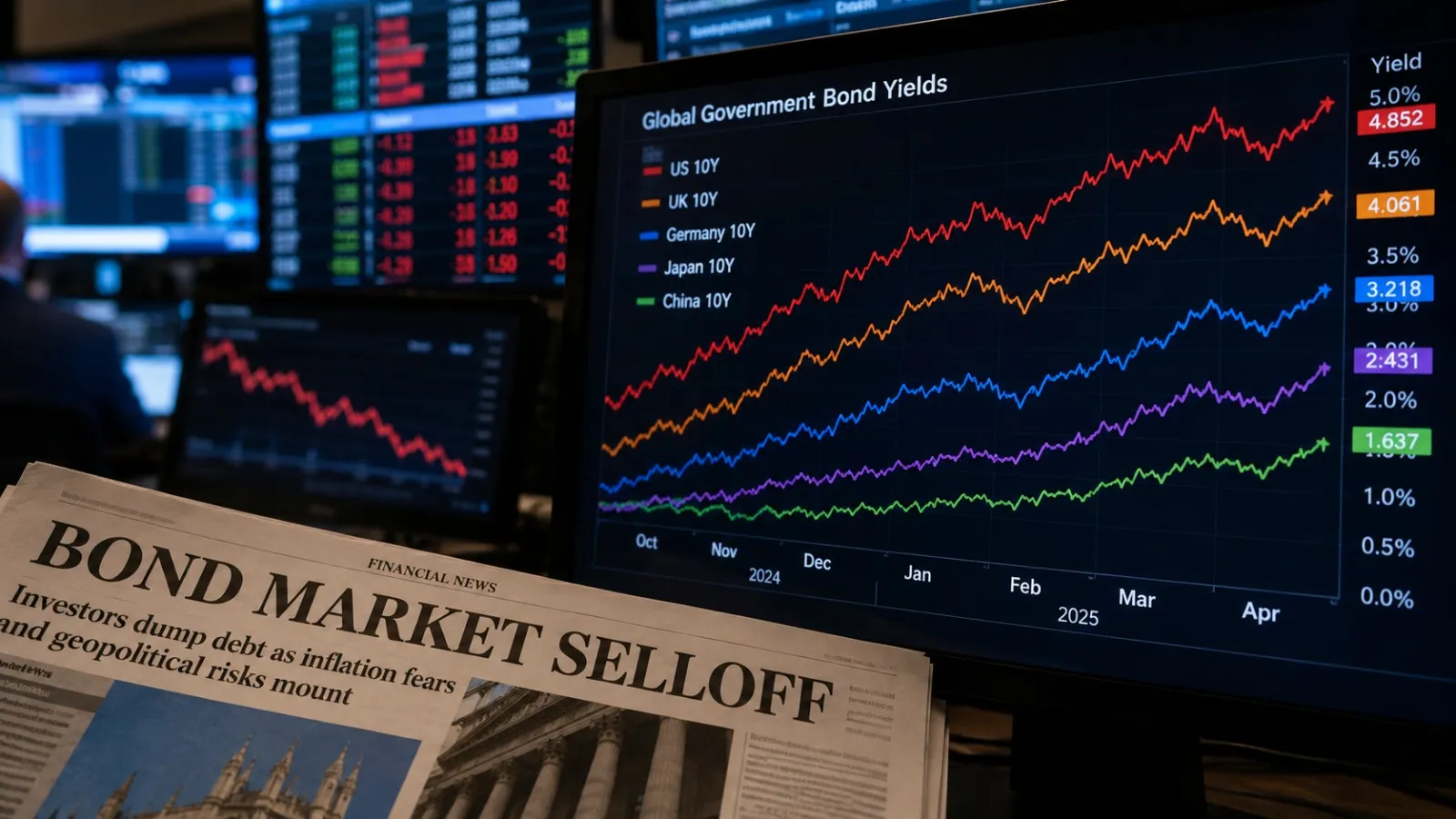
The April 2026 funding surge did not occur in a favorable global environment. Rising interest rates in the United States and Europe have made growth capital globally more expensive. Technology valuations in public markets have been recalibrating from their pandemic-era peaks. Many global venture capital firms have slowed their overall deployment pace as they navigate the implications of a more complex macroeconomic environment.
Against this backdrop, India's funding resilience is not merely impressive. It is strategically significant. It suggests that India's startup investment case has decoupled, at least partially, from the global technology investment cycle — that the underlying fundamentals of the Indian market (scale, demographic growth, digital adoption, engineering talent, and the vast unmet need for AI-enabled services across every sector) are compelling enough to attract capital even when global investors are more selective.
This decoupling is exactly what a mature, world-class ecosystem looks like. The United States' technology investment market does not dry up every time Europe faces a financial stress. China's technology sector maintained significant domestic investment activity even during periods of international capital retraction. India, for the first time, appears to be building a domestic investment base of sufficient depth and conviction to sustain the ecosystem through periods when international capital becomes more selective.
For The Impactful Global Indian, the April 2026 funding period is a data point worth holding on to when the noise of global economic uncertainty threatens to obscure the signal of India's fundamental strength. The $588 million week is not a lucky spike. It is the visible expression of a compounding system — an ecosystem accumulating proof points, deepening relationships between founders and investors, developing the institutional knowledge and norms of a mature market — that is becoming more powerful with every passing quarter. The rhythm is finding itself. And the rhythm is strong.