
FundingMarket Data10 MIN READ

Jio Platforms Posts ₹45,961-Crore Quarterly Revenue as EBITDA Growth Outpaces Sales Ahead of Mega IPO

Jio Platforms posted Q1FY27 revenue of ₹45,961 crore with EBITDA up 15.1% and 533 million subscribers, offering an early preview ahead of its record-breaking IPO.

By Shaym Kumar · Author18 July 2026Trending
Jio Platforms Posts ₹45,961-Crore Quarterly Revenue as EBITDA Growth Outpaces Sales Ahead of Mega IPO

Buried within Reliance Industries' sprawling Q1FY27 results disclosure on July 17, 2026, was a set of segment-level numbers that will likely draw disproportionate scrutiny from investors over the coming months: the standalone quarterly performance of Jio Platforms, the digital services arm now widely expected to complete India's largest-ever initial public offering sometime between August and October this year. For a business about to be valued independently by public markets for the first time, this quarter's numbers offer an early, closely watched preview of exactly the kind of growth story Jio will be pitching to prospective IPO investors.

**The headline numbers**

Jio Platforms reported quarterly revenue of ₹45,961 crore for the three months ended June 30, 2026, marking a 12 percent increase year-on-year. More striking than the top-line growth figure, however, was the pace of profitability expansion beneath it: EBITDA climbed 15.1 percent year-on-year to a record ₹20,865 crore, meaning earnings growth meaningfully outpaced revenue growth during the quarter — a pattern that speaks directly to improving operating leverage and a maturing revenue mix within the business, rather than growth achieved purely through subscriber volume expansion or aggressive pricing that might otherwise compress margins.

**Subscriber base and 5G penetration**

Jio's subscriber base crossed 533 million during the quarter, cementing its position as one of the largest single telecom operator subscriber bases anywhere in the world. Of particular note to analysts tracking the company's technology transition is the scale of 5G adoption within that base: approximately 285 million subscribers, or well over half of Jio's total customer base, are now on the company's True 5G network — a penetration rate that reflects just how aggressively and rapidly Jio has pushed its 5G rollout since launch, converting what was once a purely 4G-dominant subscriber base into a majority-5G network in a comparatively short window. This scale of 5G penetration carries direct commercial significance, since 5G subscribers typically generate meaningfully higher average revenue per user than their 4G counterparts, owing to higher data consumption, premium plan adoption, and growing uptake of value-added digital services bundled with 5G plans.

**Where the growth is coming from**

Commenting on the quarter's performance, Reliance Industries Chairman and Managing Director Mukesh Ambani specifically highlighted the breadth of Jio's growth across its core business lines, noting that the company's performance across mobility, home broadband, and enterprise services remained strong, driving healthy earnings growth of 15 percent year-on-year. This diversification across multiple revenue streams — spanning traditional mobile connectivity, the rapidly scaling JioFiber home broadband business, and an increasingly significant enterprise connectivity and cloud services segment serving corporate clients — represents a meaningful evolution from Jio's earlier years, when growth was almost entirely a function of mobile subscriber additions during its aggressive market entry phase following the 2016 launch. Enterprise services in particular have emerged as an increasingly important growth vector, encompassing offerings such as private 5G networks for corporate campuses and industrial facilities, managed cloud and IoT services, and unified communications platforms targeting large Indian and multinational enterprises operating in India.

ChatGPT Image Jul 17, 2026, 12_14_41 PM.png

**The margin story: why EBITDA outpacing revenue matters**

For a telecom operator of Jio's scale, the divergence between revenue growth of 12 percent and EBITDA growth of 15.1 percent carries outsized significance for how analysts are likely to model the business ahead of its independent listing. Telecom is, by its underlying economics, a business with substantial fixed infrastructure costs — network towers, spectrum, fibre backbone, and data centre capacity — meaning that once a network is built out, incremental subscribers and incremental data consumption tend to carry disproportionately high contribution margins relative to the company's average cost base. When EBITDA growth outpaces revenue growth, as it did this quarter, it typically signals that a company has moved past the heaviest phase of network build-out investment relative to its current subscriber base and is now benefiting from genuine operating leverage — additional revenue increasingly flowing through to the bottom line rather than being consumed by proportionally rising costs. For prospective IPO investors, this is precisely the kind of margin trajectory that supports a premium valuation multiple, since it suggests the business's profitability could continue to scale favourably even as absolute revenue growth rates naturally moderate over time from a larger base.

**Content and platform ecosystem: JioHotstar's role**

Beyond the core connectivity business, Jio's broader platform ecosystem continues to play an increasingly important role in customer retention and average revenue per user uplift. JioHotstar, the company's streaming and digital entertainment platform, has emerged as one of the largest streaming services globally by subscriber count, and its integration into Jio's broader mobile and broadband bundles has become an important differentiator in a fiercely competitive Indian telecom market where pure price competition on connectivity alone offers limited scope for sustainable differentiation. By bundling premium content access with connectivity plans, Jio has been able to support higher-value plan adoption and improve customer stickiness — both factors that feed directly into the kind of durable, high-margin revenue growth reflected in this quarter's EBITDA outperformance.

**Setting the stage for the IPO roadshow**

With Jio Platforms' Draft Red Herring Prospectus already filed with SEBI and formal regulatory clarifications already sought and addressed as of late June 2026, this quarter's results will almost certainly feature prominently in the investment materials investment bankers are preparing for prospective anchor and institutional investors ahead of the IPO's expected August-to-October 2026 listing window. A quarter combining continued subscriber growth, majority 5G penetration, and EBITDA growth outpacing revenue offers exactly the kind of momentum narrative that tends to support strong demand in an anchor investor book, particularly for an offering of the scale Jio is targeting — an estimated ₹37,700 crore fresh issue that would comfortably become the largest IPO in Indian stock market history if it proceeds as currently structured.

**Leadership context: a new CEO steering the numbers**

This quarter's results also mark one of the first full quarters reported under Jio Platforms' new Chief Executive Officer, Pankaj Pawar, who took charge on March 24, 2026, following the departure of his predecessor Kiran Thomas. Pawar, who continues to serve concurrently as Managing Director of Reliance Jio Infocomm Limited, brings deep operational continuity to the CEO role at a moment when consistency and credibility with prospective public market investors matter more than ever. Strong, margin-accretive results delivered in his early tenure atop Jio Platforms will likely be read as an encouraging signal by investors assessing management continuity risk ahead of the IPO — a factor that institutional investors evaluating large-scale offerings frequently weigh alongside the underlying business fundamentals themselves.
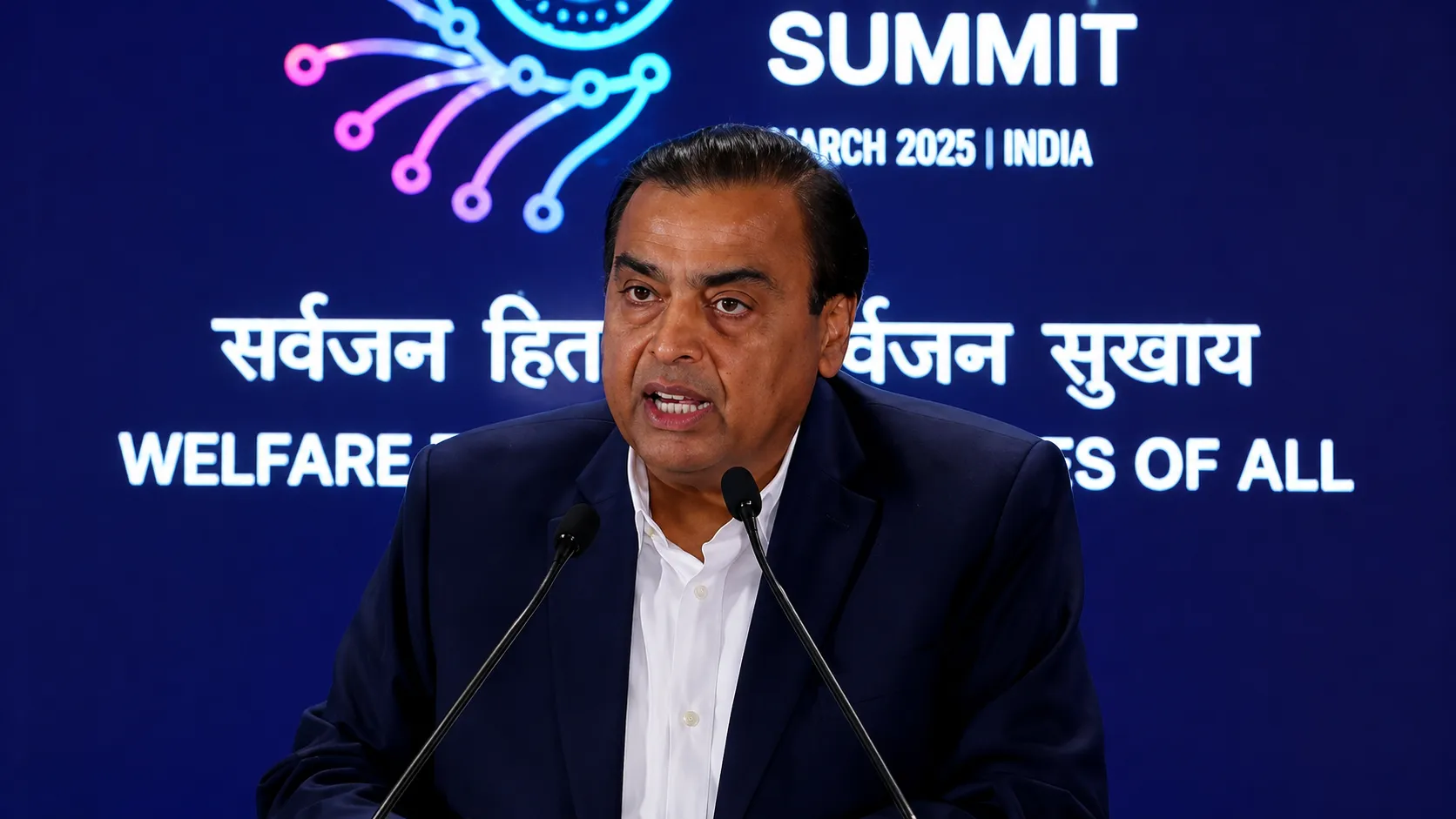

Jio's performance across mobility, home broadband, and enterprise services remained strong, driving healthy earnings growth of 15% year-on-year.
The Impactful Global Indian Editorial Desk

**What comes next for Jio's standalone story**

As Jio Platforms moves closer to its public market debut, each subsequent quarterly disclosure between now and the actual listing date is likely to draw increasingly close scrutiny from the investment community, given how directly these results will shape investor expectations and eventual IPO pricing. Key metrics analysts will continue tracking closely include the pace of continued 5G subscriber migration, average revenue per user trends across the mobility and home broadband segments, enterprise services revenue contribution, and — perhaps most importantly for a business about to be valued independently for the first time — whether the margin expansion demonstrated this quarter proves to be a sustainable trend rather than a single-quarter anomaly. For a company preparing to ask public market investors to underwrite what could be the largest IPO in Indian history, this quarter's results offer an encouraging, if still early, data point in that direction.

**Benchmarking Jio against global telecom peers**

One useful way for investors to contextualise Jio's Q1FY27 performance is to compare its subscriber scale and growth trajectory against other large global telecom operators preparing similarly scaled public offerings or already trading on major exchanges. Few telecom operators anywhere in the world can claim a subscriber base approaching Jio's 533 million, and fewer still have achieved 5G migration at the pace and scale Jio has managed within its domestic market. This scale advantage matters directly for how prospective IPO investors are likely to value the business: telecom operators with larger subscriber bases typically benefit from stronger negotiating leverage with equipment vendors, greater ability to amortise fixed network costs across a larger revenue base, and a more resilient competitive moat against smaller rivals lacking comparable scale — all factors that tend to support valuation multiples at the premium end of the range for comparable telecom and digital services businesses globally.

**JioFiber and enterprise: the next growth frontiers**

While mobile connectivity remains the largest single component of Jio's overall revenue base, management commentary emphasising strength across "mobility, home broadband, and enterprise services" points to a deliberate strategic effort to diversify growth drivers beyond pure mobile subscriber additions, which naturally face a ceiling as Jio's mobile market share in India approaches saturation levels in several regions. JioFiber, the company's fixed broadband offering, continues to represent a substantial under-penetrated growth opportunity given India's historically low fixed broadband penetration relative to mobile connectivity, particularly outside major metro markets. Enterprise services, meanwhile, tap into an entirely different revenue pool tied to corporate digital transformation spending, private network deployments, and cloud services adoption — a market segment with materially different growth dynamics and competitive positioning than the consumer mobile business, offering Jio Platforms a genuinely diversified growth profile that IPO investors are likely to value as a hedge against any potential deceleration in the core consumer mobile segment over time.

ChatGPT Image Jul 17, 2026, 03_02_22 PM.png

**The competitive response from rivals**

Jio's continued strong performance inevitably invites the question of how its principal competitors — Bharti Airtel and the Vodafone Idea combine — are positioned to respond competitively. Both rivals have pursued their own network investment and 5G rollout strategies over the past several years, though neither has matched Jio's combination of subscriber scale and balance sheet strength to fund network expansion at a comparable pace. This competitive dynamic has generally allowed Jio to maintain leadership in net subscriber additions even as the overall Indian telecom market has matured and consolidated to just three major private operators plus the state-owned BSNL. For IPO investors, the durability of this competitive positioning — and specifically whether rivals can mount a more effective response once Jio's standalone financials and strategic priorities become fully transparent through public market disclosure requirements following the listing — will likely remain an important ongoing consideration well beyond the IPO itself.

**Data monetisation and the road ahead**

Beyond core connectivity and content bundling, Jio's longer-term growth thesis increasingly rests on its ability to monetise its vast base of subscriber and usage data through targeted advertising, financial services partnerships, and an expanding suite of digital applications spanning payments, commerce, and enterprise software. While these newer revenue streams remain smaller relative to core connectivity revenue today, management commentary and past investor communications have consistently flagged this broader platform monetisation opportunity as a key part of the long-term investment case for Jio Platforms — a thesis that IPO investors will be evaluating closely as they assess whether the business deserves to be valued as a pure telecom operator, a diversified digital platform company, or some hybrid combination reflecting elements of both.

**Capital intensity and the funding logic behind the IPO**

It is worth situating this quarter's operating strength alongside the broader capital structure rationale driving the IPO itself. Telecom remains one of the most capital-intensive industries globally, requiring sustained, heavy investment in spectrum acquisition, network densification, and technology upgrades merely to maintain competitive positioning, let alone to extend leadership. The bulk of the IPO's roughly ₹27,500 crore earmarked for debt repayment at Reliance Jio Infocomm reflects a deliberate effort to strengthen the balance sheet supporting this continued capital intensity, freeing up future cash flow generation — of exactly the kind reflected in this quarter's strong EBITDA growth — for reinvestment in next-generation network capabilities, including continued 5G densification and eventual 6G research, rather than being disproportionately consumed by debt servicing costs accumulated during the company's earlier, more aggressive network build-out phase. A stronger post-IPO balance sheet, freed from a meaningful share of its current debt load, would also give Jio Platforms considerably greater strategic flexibility to pursue future acquisitions, technology partnerships, or accelerated capital expenditure programmes without the constraint of servicing legacy debt obligations accumulated during its earlier growth phase — an outcome that would likely be viewed favourably by public market investors evaluating the company's long-term capital allocation flexibility.

TagsJio PlatformsJio IPO5G IndiaReliance IndustriesTelecomQ1 ResultsMukesh AmbaniDigital Services

Reader reviews

Sign in to rate and review this article.
Loading reviews…