Funding headlines in artificial intelligence have become increasingly common over the past two years. Billions have flowed into chatbots, infrastructure companies and next-generation computing platforms as investors race to identify where the technology could create lasting value. Yet every so often, a funding announcement emerges that appears larger than a conventional investment story. Google DeepMind spinout Isomorphic Labs’ massive $2.1 billion funding round increasingly looks like one of those moments. More than a capital raise, it reflects a growing conviction across technology and healthcare circles that artificial intelligence may soon begin reshaping one of medicine’s most difficult and expensive challenges: discovering new drugs.
The funding round, led by Thrive Capital with participation from Alphabet, GV, Temasek, MGX and additional investors, represents one of the largest investments made into an AI-driven healthcare company. At first glance, the numbers themselves are extraordinary. But the broader significance may lie in what investors increasingly appear willing to believe. For decades, drug discovery remained one of the most resource-intensive activities in modern science. Bringing a single successful treatment from laboratory research to market often requires years of development, thousands of experiments and enormous financial commitments, with no guarantee of success. Many compounds fail before reaching clinical trials, while others disappear during testing despite years of research investment. The process has traditionally depended on a combination of scientific expertise, experimentation and patience. Artificial intelligence is now being viewed as a force capable of changing that equation.
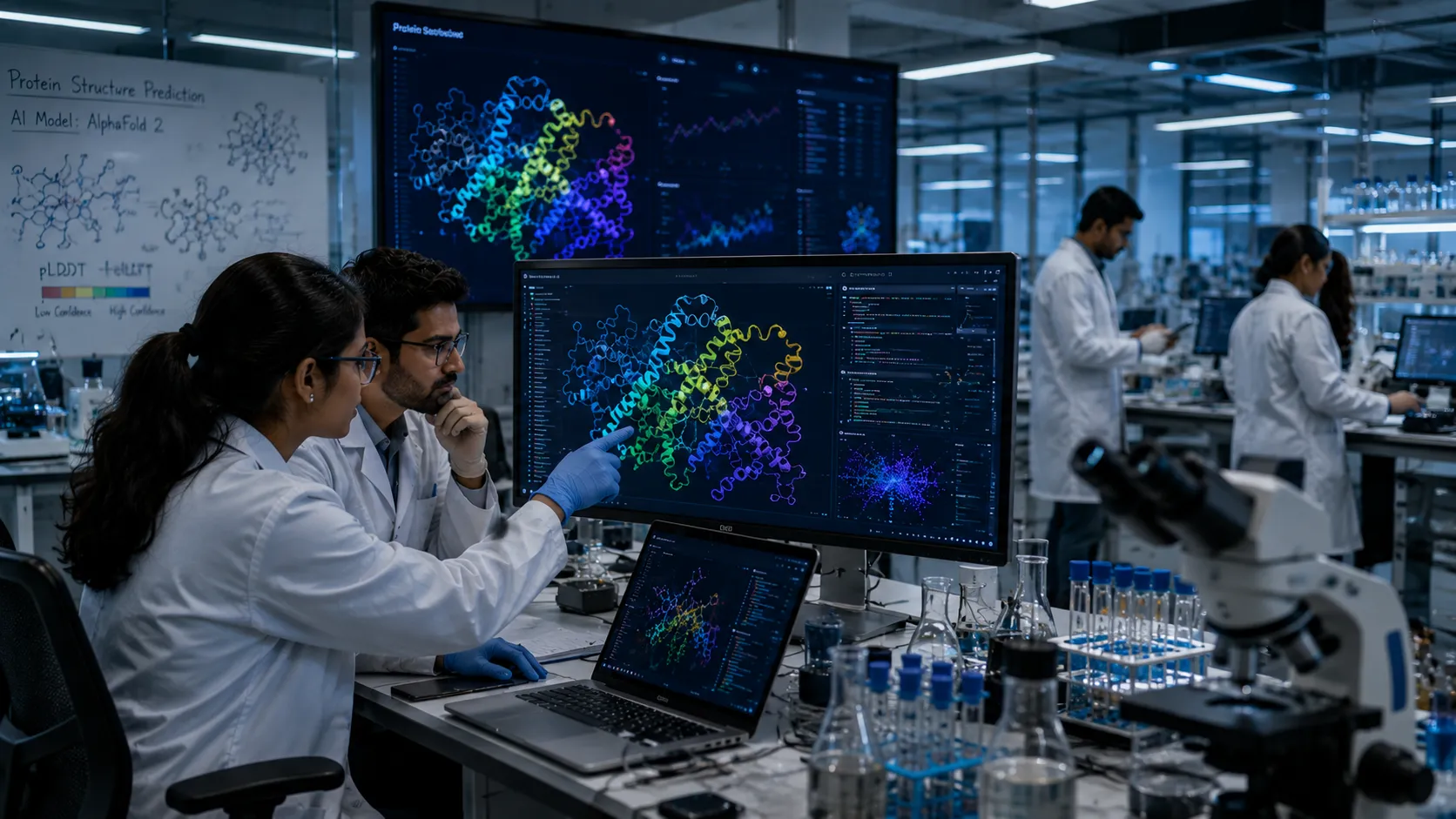
The excitement surrounding Isomorphic Labs stems partly from its origins and partly from the technology powering it. Founded by Sir Demis Hassabis and built from research foundations developed within Google DeepMind, the company emerged following one of AI’s most celebrated scientific achievements: AlphaFold. The system transformed biological research by solving one of science’s long-standing challenges involving protein structure prediction. By accurately predicting the shape and interaction patterns of proteins, AlphaFold offered researchers a significantly faster way to understand biological systems that previously required years of experimentation. For many observers, it represented one of the earliest moments where artificial intelligence moved beyond automation and demonstrated the ability to accelerate scientific discovery itself.
Isomorphic Labs is now attempting to build on that foundation. Rather than functioning as a standalone research platform, the company is developing an artificial intelligence-driven drug design engine capable of analyzing biological data, predicting molecular behavior and identifying potential treatment pathways at speeds difficult to achieve through traditional approaches. The broader ambition extends beyond finding one successful drug. The goal increasingly appears to involve creating an integrated platform that can repeatedly identify and design therapeutic possibilities across multiple diseases and treatment categories.
Historically, pharmaceutical research often followed a lengthy process of trial and refinement. Scientists would identify disease targets, screen candidate molecules and conduct years of laboratory work before understanding whether a compound demonstrated meaningful therapeutic promise. While technological advances improved efficiency over time, timelines often remained slow and costs remained substantial. Some medicines required more than a decade of work before eventually reaching patients. Artificial intelligence introduces a different possibility altogether. Rather than testing thousands of possibilities manually, advanced systems increasingly possess the ability to process enormous biological datasets, recognize hidden relationships and predict outcomes before many physical experiments even begin.

That shift is precisely why investors increasingly see AI-powered drug discovery as one of the most consequential opportunities emerging from artificial intelligence. Earlier waves of AI enthusiasm focused heavily on visible consumer products and productivity applications. But over time, attention gradually shifted toward sectors where AI could create deep structural change. Healthcare quickly emerged as one of the strongest candidates. The financial implications alone are difficult to ignore. If artificial intelligence succeeds in reducing development timelines, improving prediction accuracy or increasing success rates for experimental treatments, the effects could ripple across entire healthcare systems. Development costs could decline. Research cycles could accelerate. Patients might gain faster access to therapies that today require years to develop.
The scale of the latest funding round increasingly suggests investors believe that possibility may no longer be theoretical. Rather than funding experimentation alone, the investment appears aimed at expanding infrastructure, accelerating partnerships and moving the company toward real-world deployment. Isomorphic Labs has already established relationships with major pharmaceutical companies and continues expanding its research initiatives. Reports suggest the company expects its first AI-designed drug candidates to enter clinical development in the coming years, a milestone that could become a defining test for the broader AI healthcare movement.
The larger significance of this story may ultimately extend far beyond one company or one funding round. Historically, scientific progress moved according to the pace of laboratory experimentation and human observation. Artificial intelligence increasingly introduces a future where computational systems participate directly in scientific discovery. The possibility that machines could help researchers identify treatments faster, understand diseases more deeply and uncover patterns hidden inside vast biological datasets may eventually reshape medicine itself.
For years, discussions surrounding artificial intelligence often revolved around automation and efficiency. Healthcare increasingly presents a different narrative. The most important role of AI may not involve replacing human expertise but expanding what human expertise can accomplish. If that vision succeeds, Isomorphic Labs’ $2.1 billion funding round may ultimately be remembered not simply as one of healthcare’s largest AI investments, but as an early signal that medicine itself had entered an entirely new era.