India's primary equity market is set for another busy stretch, with 13 new initial public offerings collectively aiming to raise approximately ₹7,300 crore over the coming week, according to the latest primary market calendar. The packed pipeline underscores the continued resilience of investor appetite for new listings even as the broader secondary market navigates a period of pronounced volatility tied to elevated crude oil prices, currency pressure and escalating geopolitical tension linked to the ongoing US-Iran conflict.
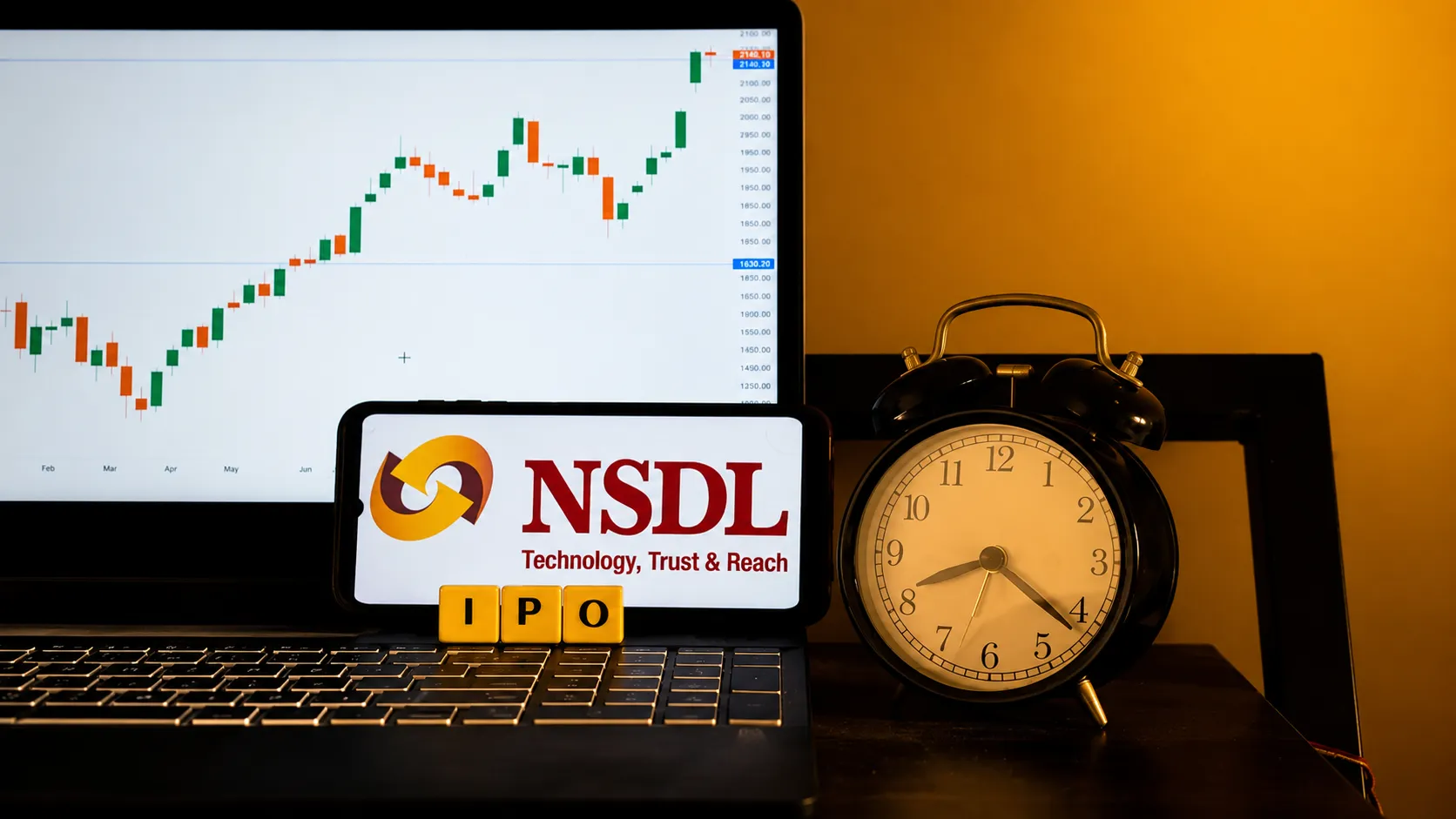
Among the issues drawing the most concentrated investor attention is the initial public offering of National Securities Depository Limited, more commonly known as NSDL, one of India's two principal securities depositories and a company whose listing has been closely anticipated by market participants given its central, structurally important role within India's broader capital markets infrastructure.
The sheer breadth of this particular week's calendar, spanning offerings of varying sizes and sectors alongside the marquee NSDL listing, offers a useful snapshot of just how active India's primary market has remained even as broader secondary market sentiment has, at various points over the past month, been buffeted by a genuinely challenging combination of global and domestic pressures.
Investment bankers tracking the calendar note that the combined ₹7,300 crore fundraising target, while sizeable, reflects a broadly typical week of activity for India's currently robust primary market, rather than representing an unusually large or front-loaded wave of issuance timed opportunistically around any specific market window.
Why The NSDL IPO Matters So Much
NSDL occupies a unique and structurally significant position within India's financial market infrastructure, operating as one of the two depositories through which the vast majority of dematerialised securities — shares, bonds and other financial instruments held electronically rather than in physical certificate form — are recorded and transferred across India's equity and debt markets. This central infrastructure role means NSDL's business model benefits from what analysts describe as a genuinely defensive, largely volume-linked revenue stream that grows in line with overall growth in India's capital markets activity, rather than being tied to the performance of any single asset class or market segment.
Investor interest in the NSDL listing has been further amplified by comparisons to the earlier listing of Central Depository Services Limited, the other major Indian securities depository, whose own public listing several years earlier was met with strong investor demand and has, since listing, delivered substantial returns to early investors, a precedent that has shaped elevated expectations for how the market might similarly value NSDL's comparable, if not identical, business model and market position.
As the larger of India's two depositories by assets held in custody, NSDL's listing is expected to draw participation from a particularly broad cross-section of India's institutional investor base, spanning domestic mutual funds, insurance companies and foreign portfolio investors alike, all of whom have historically shown strong appetite for exposure to India's core capital markets infrastructure providers given their defensive, structurally growing business models.

The Broader IPO Pipeline: Sector Diversity
Beyond NSDL, the current wave of 13 IPOs spans a diverse range of sectors, reflecting the broad-based nature of India's current primary market activity rather than concentration in any single industry theme. This sector diversity has become an increasingly notable feature of India's IPO market in recent years, with companies across financial services, consumer products, industrials, healthcare and technology all finding receptive investor appetite for new listings, a pattern that market participants view as evidence of a genuinely broad and maturing investor base rather than one narrowly focused on a small number of currently fashionable sectors.
This diversification has also been supported by the growing sophistication of India's institutional investor base, including both domestic mutual funds and insurance companies as well as an increasingly active foreign institutional investor community, all of which have developed more specialised sector expertise over recent years, enabling them to evaluate and participate in IPOs across an increasingly wide range of industries with greater analytical rigour than may have been the case in earlier, less mature phases of India's primary market development.
Investor Appetite Amid Broader Market Volatility
The continued robustness of India's IPO pipeline, even as the broader secondary market navigates significant volatility tied to crude oil prices and geopolitical tension, offers an interesting counterpoint to the more cautious sentiment that has characterised much of the recent commentary on Indian equity markets. Investment bankers advising on these offerings note that primary market investor appetite has, in recent years, shown a degree of resilience to short-term secondary market volatility that would not necessarily have been the case in earlier, less mature phases of India's capital market development, reflecting both the growing depth of India's domestic institutional investor base and continued strong retail investor participation in new listings.
That said, market participants caution that sustained or intensifying secondary market volatility could, if it persists for an extended period, eventually begin to weigh on primary market sentiment as well, particularly for more richly valued or speculative offerings that depend more heavily on buoyant broader market conditions to achieve strong listing-day performance, a dynamic that makes the coming weeks' primary market performance a useful additional barometer of overall market health beyond the secondary market indices alone.
The Grey Market Premium Signal
Ahead of formal listing, India's unofficial but closely watched grey market, where shares of soon-to-list companies trade informally before their official stock exchange debut, has continued to provide an early, if imperfect, signal of investor demand for specific upcoming issues. Grey market premiums for several of the more prominent offerings within the current IPO wave, including NSDL, have reportedly remained in positive territory, suggesting continued investor willingness to pay above the issue price even amid the broader market's more cautious overall tone.
Market participants caution that grey market premium levels, while a useful sentiment indicator, are not a fully reliable predictor of actual listing-day performance, given the informal, unregulated nature of this trading activity and its susceptibility to speculative positioning that does not always accurately reflect the more considered views of larger institutional investors who will ultimately play a significant role in determining each stock's actual post-listing trading dynamics.
What This Means For Retail Investors
For retail investors evaluating whether to participate in this current wave of IPOs, financial advisors generally recommend focusing on company-specific fundamentals — business model quality, competitive positioning, financial health and valuation relative to comparable listed peers — rather than being unduly swayed by grey market premium levels or the broader positive sentiment surrounding any single high-profile offering like NSDL, given that IPO investment outcomes can vary considerably even within the same broader market cycle depending on company-specific factors.
Advisors also generally caution retail investors against over-concentrating their overall equity portfolio in IPO allocations, however attractive any specific offering might appear, noting that a disciplined, diversified approach to equity investing generally serves long-term investor interests better than an excessive focus on chasing the latest high-profile primary market opportunity, however compelling its specific investment narrative might be.
The Structural Significance For India's Capital Markets
Beyond the specific investment merits of any individual offering within the current pipeline, the sheer scale and continued frequency of India's IPO activity carries broader structural significance for the country's capital markets development, reflecting both the growing number of India's private companies reaching a scale and maturity level appropriate for public listing, and the deepening pool of both domestic and international capital available to absorb this continued wave of new issuance.
Market historians note that the scale of India's current IPO activity, sustained even through periods of secondary market volatility, would have been difficult to imagine even a decade earlier, when India's primary market was considerably more susceptible to shutting down entirely during periods of broader market stress — a resilience that itself reflects the substantial deepening and maturation of India's overall capital markets ecosystem over the intervening years.
The Role Of Anchor Investors
A significant portion of each IPO's allocation is typically reserved for anchor investors — large institutional investors, both domestic and foreign, who commit to purchasing shares ahead of the broader public offering at a fixed price, providing an important early signal of institutional confidence in the offering. The composition and scale of anchor investor participation across the current wave of 13 IPOs is being closely watched by market participants as an early indicator of institutional appetite, with strong anchor investor commitments generally viewed as a positive signal for the broader public portion of each offering.
For NSDL specifically, anchor investor interest is expected to be particularly closely scrutinised given the offering's high profile and the structural significance of the company's business model, with market participants viewing strong anchor participation as an important validation point ahead of the broader public subscription period.
Regulatory Oversight Of India's IPO Market
India's primary market operates under a comprehensive regulatory framework overseen by the Securities and Exchange Board of India, which has, over recent years, introduced a series of reforms aimed at improving disclosure standards, pricing transparency and overall governance quality across the IPO process. These regulatory improvements have been credited by market participants with contributing to the improved quality and investor confidence that has characterised India's primary market over recent years, even as the sheer volume of new listings has grown substantially.
Continued regulatory vigilance remains an important factor supporting sustained investor confidence in India's IPO market, particularly given the historical experience of some IPO cycles globally where inadequate oversight has, at times, allowed weaker-quality offerings to reach the market during periods of excessive investor enthusiasm, a risk that Indian regulators have generally sought to proactively manage through continued refinement of listing and disclosure requirements.

How Retail Subscription Categories Work
India's IPO allocation framework reserves specific portions of each offering for different investor categories, including qualified institutional buyers, non-institutional or high-net-worth individual investors, and retail individual investors, each subject to distinct subscription and allotment rules designed to ensure broad-based access to new listings rather than allocation dominated exclusively by large institutional players. Retail investors, defined under Indian securities regulations as those applying for shares up to a specified value threshold, benefit from a guaranteed minimum allocation percentage in most offerings, a structural feature that has historically supported strong retail participation in India's IPO market.
This tiered allocation structure has become an increasingly important part of how market participants read the overall subscription data for any given offering, with the specific pattern of subscription across these different investor categories often providing useful signals about the differing risk appetites and conviction levels of institutional versus retail market participants for any specific offering within the current pipeline.
How Investment Bankers Are Advising Issuers On Timing
For companies preparing to go public, investment bankers advising on IPO timing must weigh a complex set of considerations, including prevailing secondary market sentiment, sector-specific investor appetite, and the company's own internal readiness in terms of financial reporting and governance infrastructure required for public listing. The decision by 13 separate companies to proceed with their offerings within the same broad window, even amid the current bout of secondary market volatility, suggests that these companies and their advisors have collectively assessed current conditions as sufficiently favourable to proceed rather than delay to a calmer period.
This collective judgment by multiple, independently advised companies and their investment banking partners offers a useful, if indirect, signal about how India's capital markets professionals are currently assessing the primary market's underlying health, suggesting a degree of confidence that current secondary market volatility, while real, has not reached a level requiring a broad-based pause in new listing activity.
What Comes Next
With the current wave of 13 IPOs set to unfold over the coming week, market participants will be watching closely to see how each offering, and NSDL in particular given its outsized market attention, ultimately performs both in terms of subscription levels during the offer period and actual listing-day trading performance once shares begin trading on the exchanges.
Beyond this specific wave of offerings, investment bankers tracking India's broader IPO pipeline say the calendar for the remainder of the current fiscal year remains robust, with numerous additional companies across a range of sectors reportedly in various stages of preparing for their own eventual public listings, suggesting India's primary market is likely to remain a active and closely watched feature of the broader Indian capital markets landscape well beyond this particular week's concentrated wave of activity.
For investors, the coming week's IPO wave, NSDL chief among them, offers a useful real-time test of exactly how much appetite remains for new equity issuance even amid a secondary market grappling with genuine macro-driven uncertainty — an outcome likely to shape sentiment across India's primary market for the weeks that follow.