If Indian equity markets have felt unusually directionless in recent sessions, that's not a matter of perception — it's borne out in the data. GIFT Nifty futures have been signaling a flat-to-slightly-negative opening for the domestic market on multiple consecutive trading days, continuing a pattern of range-bound, cautious trading that has defined much of the past couple of weeks. Understanding why markets are stuck in this holding pattern requires looking at several converging forces, none of which is individually decisive, but which together have created a genuine tug-of-war between buyers and sellers.
The FII-DII Tug of War
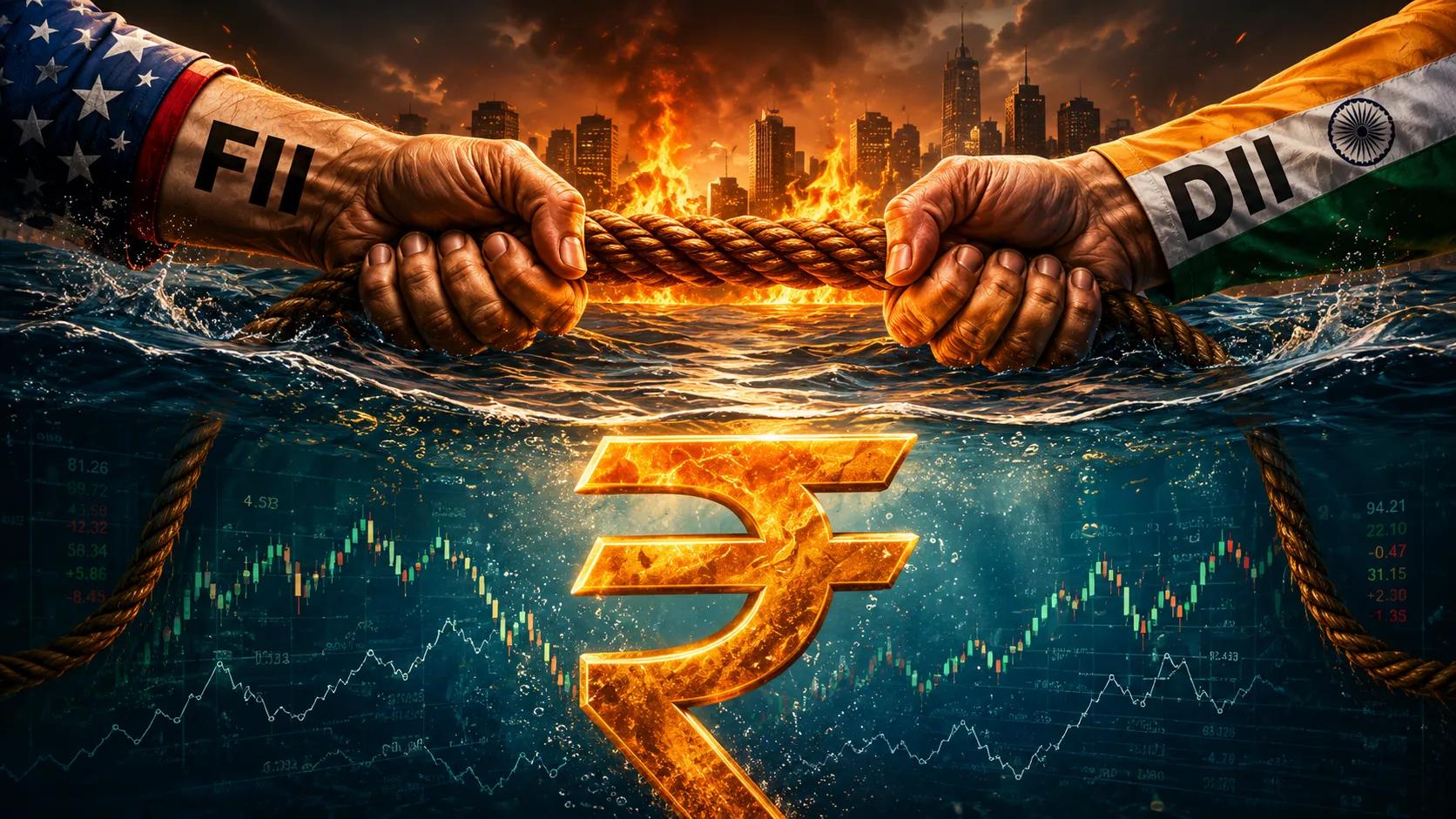
The single most consistently cited factor behind the market's inability to establish a clear directional trend has been the ongoing tension between foreign institutional investor (FII) selling and domestic institutional investor (DII) buying. FIIs — including global mutual funds, hedge funds, sovereign wealth funds, and other overseas institutional players — have been net sellers of Indian equities across a number of recent sessions, a pattern that market commentators have linked to a combination of factors: relatively more attractive valuations or yields available in other global markets, particularly given elevated interest rate environments in developed markets that make fixed-income alternatives more competitive relative to equities; ongoing uncertainty around India's trade relationship with the US, with a tariff deadline looming around July 22-24, 2026; and periodic profit-booking after India's equity markets had, over a longer horizon, delivered strong returns relative to many global peers.
Counterbalancing this FII selling pressure has been steady buying from domestic institutional investors — primarily mutual funds, insurance companies, and pension funds — whose purchasing activity has been supported by continued strong inflows into Indian equity mutual funds from retail investors, a structural trend that has persisted for several years as India's household savings increasingly flow into equity markets through systematic investment plans (SIPs) and other regular mutual fund investment channels. This DII buying has been sufficient to prevent a sharper market decline despite the FII selling pressure, but not strong enough to push the market meaningfully higher, resulting in the kind of range-bound, low-conviction trading pattern that has characterized recent sessions.
The Earnings Season Overhang
Compounding the FII-DII standoff is the fact that Indian markets are currently in the thick of Q1 FY27 earnings season, with a dense cluster of major companies — including Reliance Industries, whose board met today to approve results, alongside HDFC Life, ICICI Lombard, HDB Financial Services, and numerous others — all reporting results within a tight window. During earnings season, broader index-level movement often takes a back seat to stock-specific volatility, as individual companies beating or missing analyst expectations drive sharp moves in their own share prices without necessarily translating into a clear directional signal for the broader market. This dynamic tends to reinforce range-bound index-level trading even when individual stocks are experiencing meaningful volatility beneath the surface.
Global Cues Adding to the Uncertainty
Beyond domestic factors, global market cues have also contributed to the cautious tone. Elevated crude oil prices, driven by ongoing geopolitical tensions, have weighed on sentiment for oil-importing economies like India, given the direct impact on the trade deficit, inflation outlook, and corporate input costs across multiple sectors. Uncertainty around the broader global trade and tariff environment — not limited to India's own trade negotiations with the US, but reflecting a wider pattern of tariff-related friction affecting multiple major economies — has also contributed to a generally risk-averse tone among global investors allocating capital across emerging markets, of which India remains one of the largest and most closely watched.
What Technical Analysts Are Watching
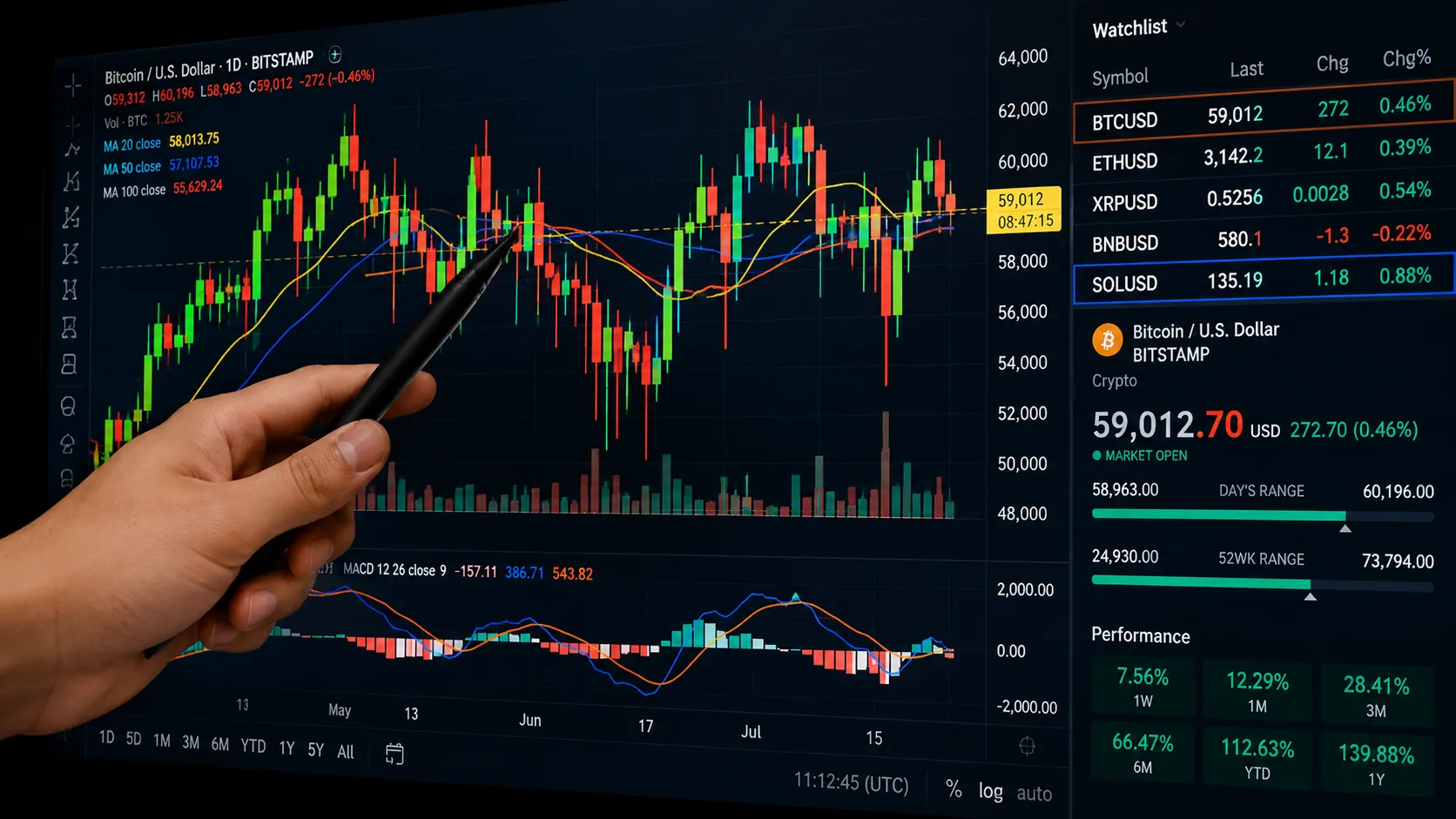
From a technical analysis perspective, market watchers have noted that the Sensex has been trading above its 50-day moving average, but with that 50-DMA itself sitting below the 200-DMA — a configuration that technical analysts often interpret as reflecting a cautious, potentially transitional medium-term trend, neither firmly bullish nor bearish. In such technical setups, markets often require a clear fundamental catalyst — whether a resolution of trade tariff uncertainty, a meaningfully positive earnings season surprise, or a shift in global interest rate expectations — to break decisively out of a range-bound pattern in either direction.
What Could Break the Range
Looking ahead, several potential catalysts could shift Indian markets out of their current holding pattern. A resolution — positive or negative — of the India-US trade tariff negotiations ahead of the July 22-24 deadline could provide meaningful directional clarity, given how much uncertainty currently surrounds India's export competitiveness and corporate earnings exposure to the US market. A strong or weak set of aggregate Q1 FY27 earnings, once the bulk of India's large-cap companies have reported, could similarly provide a clearer read on corporate India's health that moves beyond the current stock-specific volatility pattern. And any meaningful shift in global crude oil prices — up or down — would have a direct, and reasonably quick, impact on India's inflation outlook, trade deficit, and overall market sentiment given the country's heavy dependence on imported energy.