FundingAnalysis9 MIN READ

13 Days to the Cliff: Inside the Last-Minute Scramble to Save the India-US Trade Deal

Negotiators call it the 'last 1 percent.' But with a July 22-24 tariff deadline bearing down, forced-labour clauses and Asian tariff parity are still unresolved. Here's what's actually on the table.

By Shaym Kumar · Author17 July 2026Breaking
13 Days to the Cliff: Inside the Last-Minute Scramble to Save the India-US Trade Deal

For a negotiation that officials on both sides have repeatedly described as being in its "last one percent," the India-US bilateral trade agreement has proven remarkably difficult to actually close. As of today, July 17, 2026, negotiators are racing against a self-imposed deadline of July 22, when a temporary 10% additional duty on Indian goods entering the United States is due to lapse one way or another — either rolling into a signed, mutually beneficial agreement, or reverting to a harsher, unresolved tariff regime that could hit sectors from pharmaceuticals to gems and jewellery. With barely a working week left, the gap between "almost done" and "actually done" has become one of the most consequential open questions in India's economic policy calendar this year.

How We Got Here

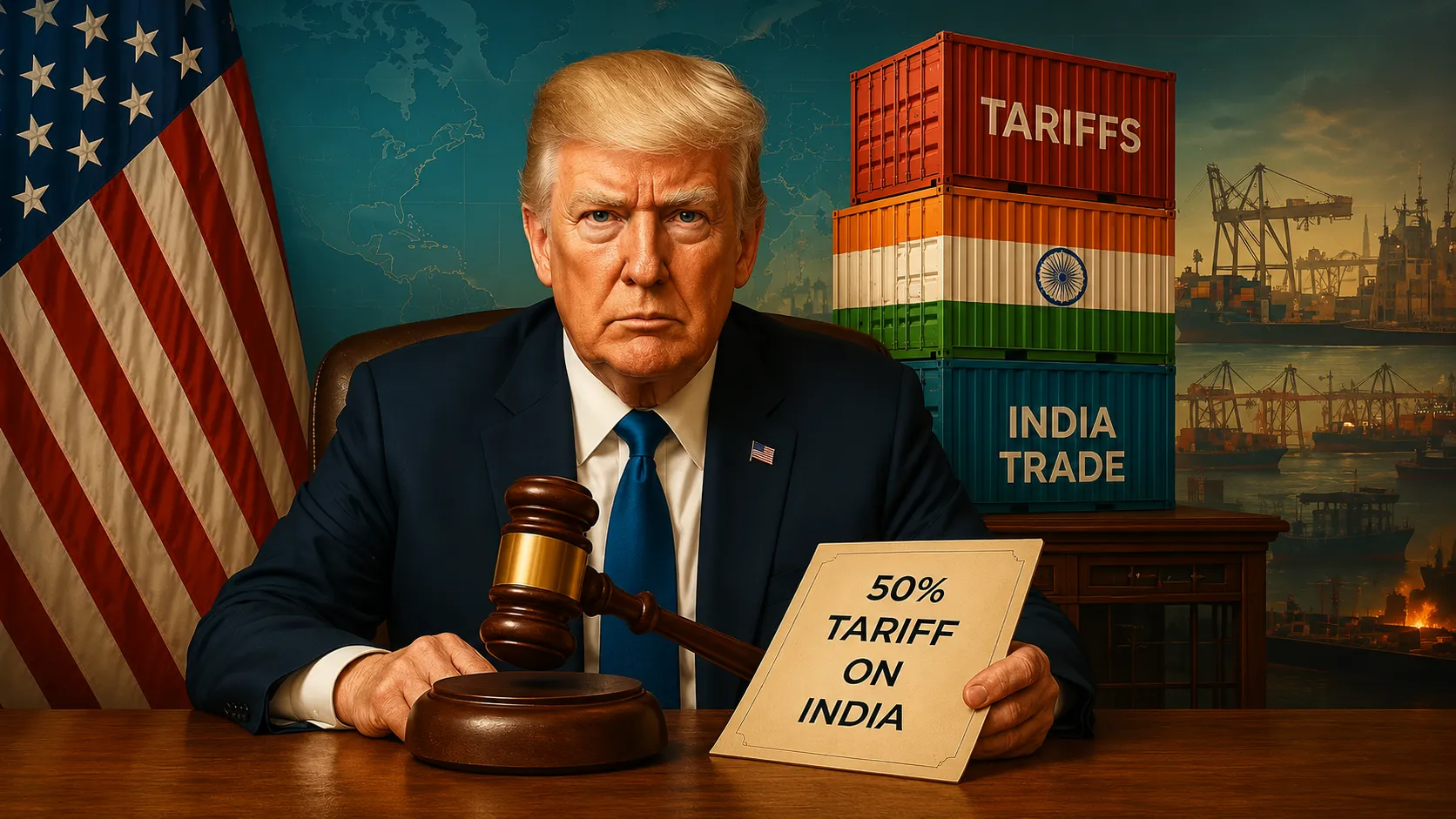
The current standoff traces back to a broader pattern of tariff escalation that has defined much of the US's trade posture toward major partners over the past two years. India has, at various points, faced reciprocal tariffs as high as 50% on categories including textiles, gems, and auto parts — among the steepest levies applied to any major US trading partner. The stated rationale behind the punitive tariff track has shifted over time: initial framing centered on trade imbalances and market access complaints, but the dispute has increasingly become entangled with geopolitics, particularly India's continued purchases of discounted Russian crude oil, its participation in BRICS-linked economic cooperation, and its broader posture of strategic non-alignment on major global conflicts.

A temporary reprieve arrived earlier this year when a joint statement outlined a preliminary framework that would cut India's reciprocal tariff rate substantially — reportedly down to somewhere in the 15-18% range from the punitive 50% level — contingent on finalizing a comprehensive first-tranche agreement. That framework, however, was always described as provisional, pending final legal text, and the temporary 10% additional duty currently in place has been functioning as a kind of holding pattern while negotiators worked out the remaining details.
ChatGPT Image Jul 17, 2026, 01_22_48 PM.png

What's Actually Left to Resolve

According to people familiar with the talks, the substantive architecture of the deal — covering headline tariff rates, market access commitments, and the broad contours of an energy and agriculture package — is largely settled. What remains unresolved falls into a handful of genuinely thorny categories. Forced-labour guarantees are one sticking point: US trade law includes provisions that can restrict imports of goods produced using forced or exploitative labour, and negotiators have reportedly been working through how India can provide credible assurances across its diverse and often informal manufacturing and agricultural supply chains without creating new compliance burdens that would themselves undermine the deal's economic benefits.

Tariff parity with Asian rivals is the other major unresolved thread. India has been pushing hard not just for a lower absolute tariff rate, but for a rate that is genuinely competitive relative to what the US has offered or is negotiating with other major Asian exporters — Vietnam, Indonesia, Bangladesh, and others — who compete directly with India in categories like textiles and apparel. A deal that lowers India's tariffs in absolute terms but leaves India at a relative disadvantage to competing Asian suppliers would, in the view of Indian negotiators, undercut much of the deal's practical value for exporters.

US Ambassador to India Sergio Gor has publicly described the two sides as being "in the final steps on this deal," language that has been echoed by Commerce Minister Piyush Goyal describing talks as "very close." Yet this framing has remained largely unchanged for more than a week, according to trade watchers, raising questions about whether "final steps" genuinely means imminent signature or has become a diplomatic holding phrase while harder issues get worked through behind closed doors.

India continues to negotiate for terms rather than to the calendar, pressing for an edge over Asian competitors rather than a rushed close before the deadline.

The Stakes for Indian Exporters

For India's exporters, the stakes could hardly be higher. The commerce ministry has set an ambitious target of $1 trillion in overall exports for the 2027 financial year, built on an assumption of roughly 17% growth in merchandise shipments — a target that depends heavily on stable, predictable access to the US market, which remains India's largest single-country export destination. Sectors from pharmaceuticals and engineering goods to gems and jewellery have spent the summer recalibrating shipment schedules in anticipation of whatever tariff structure emerges after July 22, with several exporters reporting a rush of front-loaded shipments in June and early July specifically to avoid any interim coverage gap should the temporary arrangement lapse without a signed replacement.

This front-loading pattern itself carries risk: a surge of shipments compressed into a few weeks ahead of a deadline can distort near-term trade data, create logistics bottlenecks at ports, and potentially leave exporters with thinner order books in the months immediately following the deadline, regardless of how favorable the eventual tariff outcome turns out to be.

The Russian Oil Question

One persistent undercurrent in the broader relationship, separate from but related to the trade talks, has been US pressure — explicit and implicit — around India's continued imports of discounted Russian crude oil. Earlier reports around a broader trade discussion suggested India might gradually reduce Russian oil purchases as part of a wider bilateral understanding, alongside potential increases in imports of US energy products, non-GMO corn, and soymeal. Whether and how any such energy-related commitments feature in the current first-tranche agreement — or whether they've been deferred to a later phase of the broader three-phase trade relationship both sides have discussed — remains one of the less publicly detailed aspects of the ongoing talks.

Leadership-Level Signals

Despite the technical-level friction, leader-level intent appears to remain intact. Indian Prime Minister Narendra Modi and US President Donald Trump reportedly directed officials at a June G7-adjacent pull-aside meeting in France to fast-track the negotiations, and Modi's message marking the 250th anniversary of US independence on July 4 was widely read as maintaining a warm diplomatic tone even amid the unresolved trade friction. This top-down pressure to conclude a deal is generally seen as a meaningfully positive signal, even as the working-level technical issues remain genuinely difficult to resolve on paper.

ChatGPT Image Jul 17, 2026, 01_33_30 PM.png

What Happens If July 22 Passes Without a Deal

Should the temporary arrangement lapse without a signed agreement, the most-favored-nation (MFN) tariff structure would presumably reassert itself, though the precise mechanics — whether this means reverting to the higher punitive rates seen earlier this year, or some intermediate arrangement — remain a subject of active speculation among trade analysts. India has signaled it intends to negotiate for substantive terms rather than rush to meet an artificial calendar deadline, a posture that suggests New Delhi may be willing to let the temporary window lapse rather than accept a suboptimal final agreement. For businesses, investors, and policymakers on both sides, the coming days will determine whether months of painstaking negotiation translate into a durable trade framework — or whether the relationship enters another uncertain interim period while talks continue.

TagsIndia US Trade DealTariff DeadlinePiyush GoyalDonald TrumpExport TariffsBilateral Trade AgreementIndian ExportersTrade DeficitUS Tariffs IndiaTrade Negotiations 2026

Reader reviews

Sign in to rate and review this article.
Loading reviews…