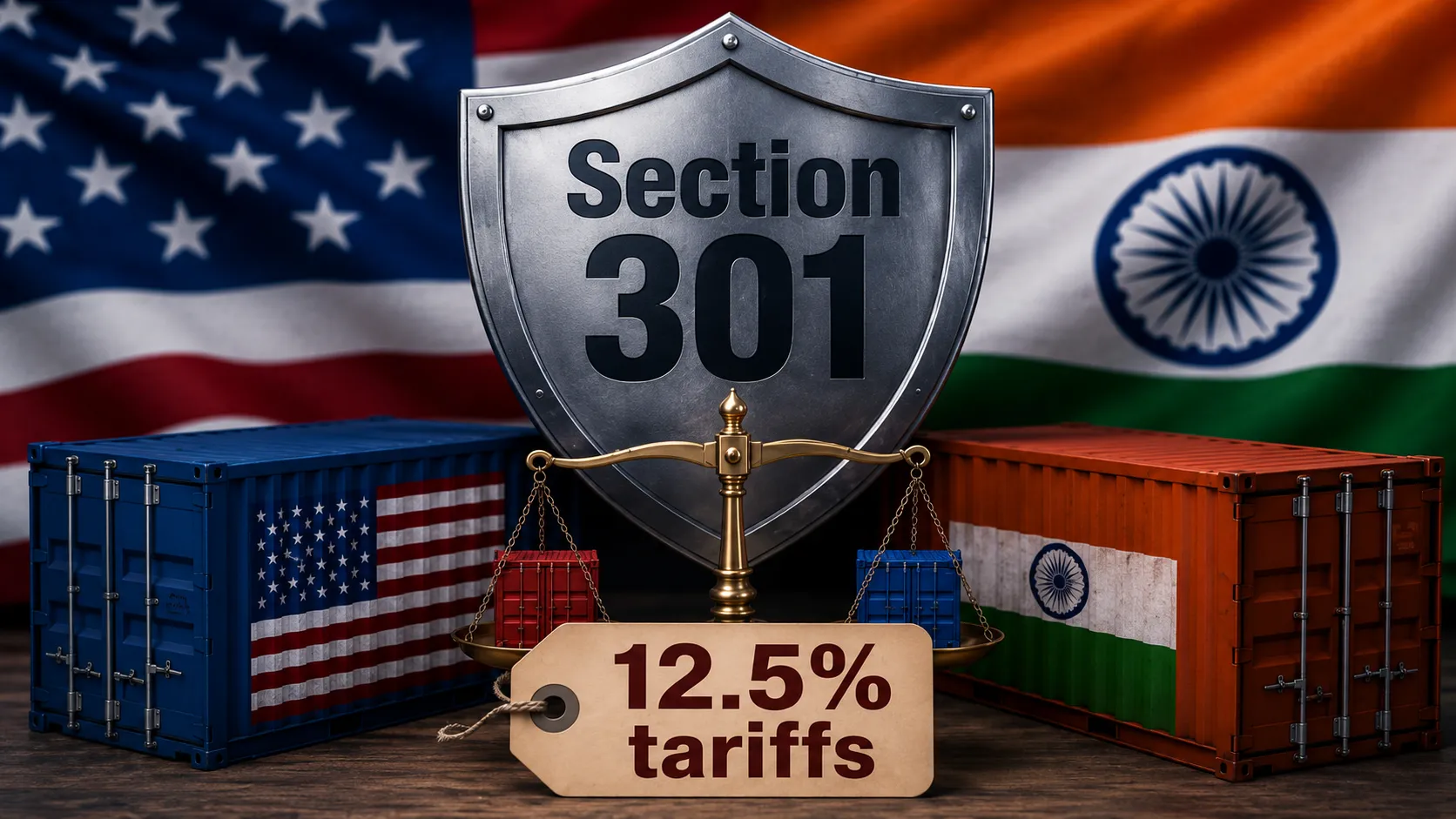
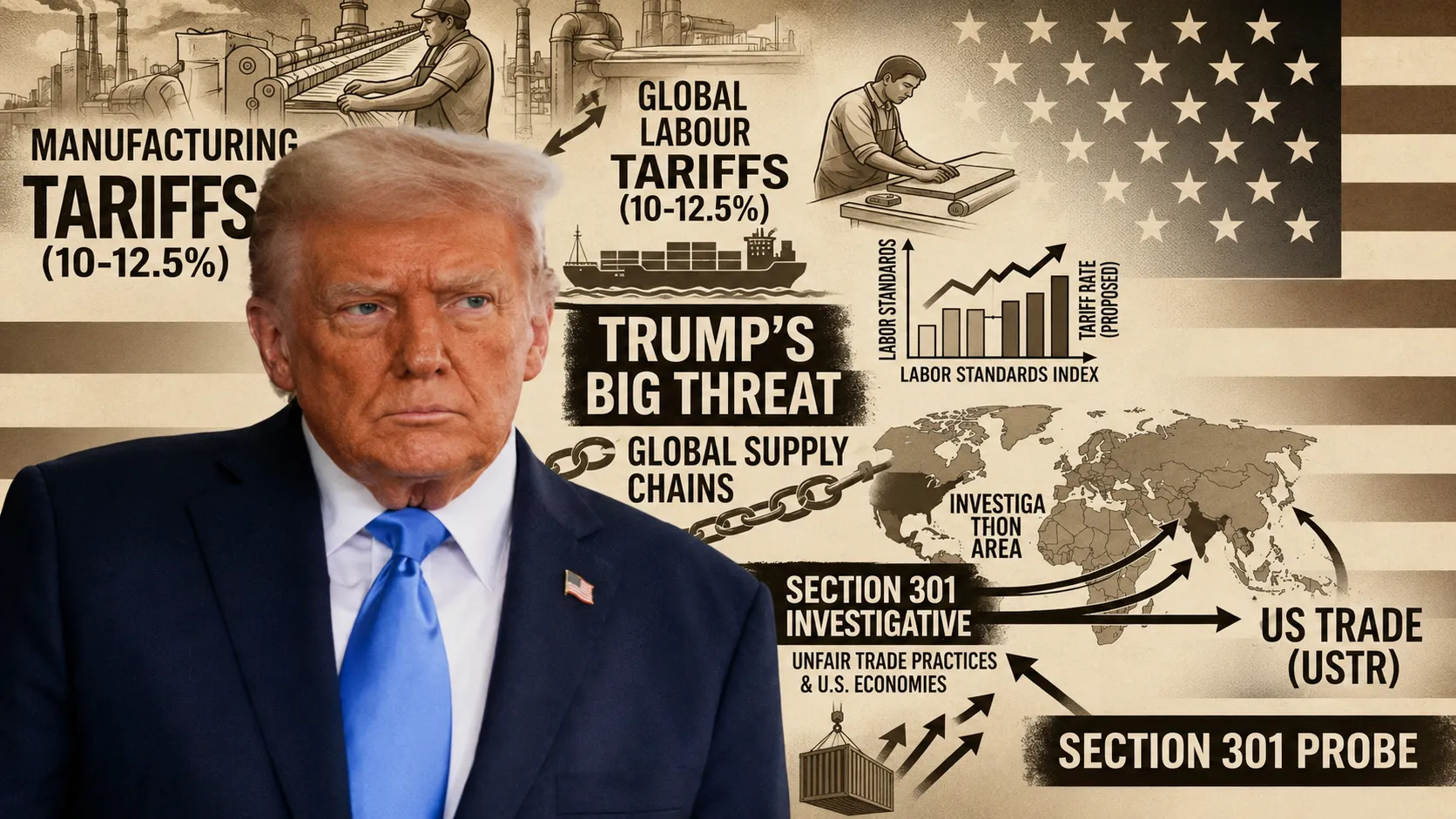
For much of the past year, Indian exporters and trade policymakers alike have lived with a persistent, low-grade anxiety over the trajectory of US trade policy under the Trump administration, an anxiety that reached one of its more consequential resolutions this week with confirmation from the Centre that a substantial 45 per cent of India's exports to the United States will remain entirely outside the ambit of a newly implemented 10 per cent Section 301 duty. The outcome, while still leaving a meaningful share of India's American-bound exports exposed to additional tariff costs, represents a materially better result than exporters and officials had been bracing for earlier in the year, when an initially proposed levy of 12.5 per cent threatened a considerably heavier burden across a broader swathe of India's trade with its largest single-country export market.
To understand the significance of this outcome, it is worth tracing the winding path that brought India to this point. Section 301 of the US Trade Act of 1974 grants the Office of the United States Trade Representative broad authority to investigate and respond to foreign trade practices deemed unfair or harmful to American commercial interests, historically deployed most prominently against China but increasingly used by the Trump administration as a tool for pursuing a considerably more assertive, bilaterally negotiated approach to trade policy across a much wider range of trading partners, India included. The proposed application of Section 301 duties to Indian goods emerged as part of this broader pattern, reflecting the administration's stated concerns around trade imbalances, market access barriers facing American companies in India, and a range of other trade-related grievances that have periodically flared between Washington and New Delhi even as the two countries have simultaneously deepened their strategic and defence cooperation over recent years.
The initial proposed levy of 12.5 per cent, floated earlier in the tariff negotiation process, would have represented a substantial additional cost burden across a wide range of Indian export categories, threatening to erode the competitiveness of Indian goods in the American market relative to alternative sourcing destinations including Vietnam, Bangladesh, and other emerging manufacturing hubs that have, in recent years, positioned themselves as increasingly credible alternatives to both Chinese and Indian manufacturing for American importers seeking to diversify their supply chains. Indian industry bodies, exporters, and government trade negotiators spent months engaged in what by most accounts were intensive, multi-track negotiations aimed at securing a more favourable outcome, engaging both formal USTR channels and broader bilateral diplomatic engagement between the two governments.
The eventual outcome — a reduced 10 per cent duty rate, applied to a considerably narrower base of Indian exports given that 45 per cent of total exports to the US now sit outside the duty's scope entirely — reflects what trade policy observers have generally characterised as a genuinely successful negotiating outcome for India relative to the worse-case scenarios that had seemed plausible earlier in the process. The mechanism by which India secured this outcome involved being placed in what officials have described as a lower tariff tier within the broader Section 301 framework, a classification that appears to reflect some combination of the bilateral negotiations conducted directly between Indian and American trade officials, as well as broader considerations around the strategic relationship between the two countries that may have factored into how aggressively the US chose to apply tariff pressure to Indian goods relative to other trading partners facing their own Section 301 or related tariff actions.
The specific composition of the 45 per cent of exports that remain outside the new duty's scope carries considerable importance for understanding which sectors of the Indian economy have effectively escaped this particular trade policy headwind, and which remain exposed. While the Centre's confirmation of the overall percentage figure did not, in initial disclosures, provide an exhaustive sector-by-sector breakdown, trade policy analysts have generally pointed to categories including pharmaceuticals, certain categories of information technology and services-linked exports, and select other product categories where the US maintains particular reliance on Indian supply or where bilateral negotiations specifically carved out exemptions, as likely beneficiaries of the exclusion. Pharmaceuticals in particular have historically received favourable treatment in US-India trade discussions, reflecting both India's role as a major global supplier of generic medications important to American healthcare cost containment, and the broader public health sensitivities associated with disrupting pharmaceutical supply chains through tariff actions.
For the remaining 55 per cent of Indian exports that do fall within the new 10 per cent duty's scope, the practical impact will vary considerably depending on the specific product category, the price sensitivity of American buyers in that category, and the availability of alternative sourcing options that importers might pursue in response to the added cost. Labour-intensive manufacturing categories including textiles, apparel, and certain categories of engineering goods and consumer products have historically been viewed as more vulnerable to this kind of tariff-driven trade diversion, given that buyers in these categories often have more readily available alternative sourcing options in countries like Vietnam, Bangladesh, or elsewhere that may not face equivalent tariff burdens, making Indian goods in these categories relatively more price-sensitive to added duty costs than, for example, pharmaceutical products where switching suppliers carries greater complexity and risk for American buyers.
The broader context of India-US trade relations adds important nuance to how this outcome should be understood. The two countries have, over the past decade, built an increasingly substantial and multifaceted economic relationship, with the United States now standing as India's single largest export destination by a considerable margin, spanning categories from information technology services and pharmaceuticals to textiles, gems and jewellery, and increasingly, engineering and industrial goods. This deepening economic interdependence has coexisted, somewhat uneasily at times, with periodic trade tensions and disputes, reflecting the genuine, unresolved differences between the two countries on issues ranging from market access and tariff levels to intellectual property protection and digital trade policy, differences that have persisted even as the broader strategic relationship between Washington and New Delhi has strengthened considerably across defence, technology, and geopolitical cooperation dimensions, particularly in the context of both countries' shared strategic interest in balancing China's regional influence.
Commerce Secretary Rajesh Agarwal's public commentary in the wake of this outcome has emphasised the government's broader commitment to what officials describe as an open, transparent, and predictable trade and investment regime — language that serves a dual purpose, both reassuring international trading partners and investors about India's own trade policy posture, and implicitly signalling New Delhi's hope that the current, still-somewhat-unresolved tariff arrangement with the US might eventually give way to a more comprehensive, durable bilateral trade agreement that could provide considerably greater certainty than the current arrangement, which remains subject to further adjustment based on the evolving priorities and negotiating posture of the Trump administration.
That push toward a more comprehensive bilateral trade agreement represents, in many respects, the more consequential and closely watched dimension of the broader India-US trade relationship going forward. Industry bodies on both sides have periodically expressed support for pursuing a full free trade agreement or a more limited but still substantive trade deal that could provide durable, negotiated certainty in place of the current arrangement, which remains vulnerable to further unilateral adjustment by Washington based on shifting political and economic priorities within the Trump administration. Progress on any such comprehensive agreement has, by most accounts, proven slow and difficult, complicated by persistent disagreements over agricultural market access, India's protection of certain domestic industries, digital trade and data localisation policy, and a range of other issues that have historically proven difficult to resolve in US-India trade negotiations.
The broader global context of rising protectionism and tariff-based trade policy under the current US administration also merits consideration in evaluating India's specific outcome. The Trump administration has pursued an unusually assertive, bilaterally negotiated approach to trade policy across a wide range of trading partners simultaneously, applying various forms of tariff pressure to countries ranging from longstanding allies to strategic competitors, in pursuit of what the administration has characterised as more favourable trade terms for American businesses and workers. Within this broader global context, India's outcome — a reduced duty rate applied to a narrower base of exports than initially proposed — appears to compare reasonably favourably to outcomes secured by at least some other trading partners facing their own Section 301 or related tariff actions, though a fully comprehensive comparative assessment would require detailed analysis of the specific terms secured by each affected country.
For Indian exporters directly affected by the portion of trade still subject to the new duty, the practical challenge going forward involves navigating a genuinely uncertain policy environment where further adjustments, in either direction, remain plausible depending on how broader US-India trade negotiations evolve, and depending on the Trump administration's own evolving trade policy priorities, which have at various points shown a willingness to escalate or de-escalate tariff pressure on individual trading partners in response to a wide range of political, economic, and diplomatic considerations that can be difficult for exporters and businesses to predict with confidence.
Currency and pricing strategy considerations add a further layer of complexity for exporters navigating this environment. Companies exposed to the new 10 per cent duty face a range of potential responses, including absorbing some or all of the added cost within their own margins to preserve competitiveness with American buyers, attempting to pass the cost through to buyers via higher prices, a strategy that risks demand destruction if buyers are able to substitute toward alternative, non-tariffed suppliers, or pursuing some blended combination of margin absorption and price adjustment calibrated to the specific competitive dynamics of their particular product category and customer base. How individual companies and sectors navigate this trade-off will likely vary considerably based on factors including the availability of alternative supply sources for their American buyers, the differentiation and brand strength of their specific products, and their own cost structure flexibility.
As India's trade relationship with the United States continues to evolve against this backdrop of partial resolution and ongoing uncertainty, the current 45 per cent exemption outcome stands as an important, if incomplete, milestone in a broader negotiation that shows every sign of continuing to develop over the coming months and years. For now, Indian exporters and policymakers alike appear to have secured a materially better outcome than the worst-case scenarios that seemed plausible earlier in the tariff negotiation process, even as significant portions of India's trade with its most important single export market remain subject to added costs, and even as the prospect of a more comprehensive, durable bilateral trade agreement that could provide lasting certainty remains, for now, more aspiration than concluded reality.
Industry body reactions in the days following the announcement have generally reflected this same mix of relief and residual caution. Trade associations representing sectors both inside and outside the exempted 45 per cent have welcomed the overall direction of the outcome relative to the worse alternative that had been under discussion, while simultaneously continuing to press the government for further negotiated relief covering the remaining exposed export categories, and for greater long-term clarity that could allow businesses to make capital investment and capacity expansion decisions with more confidence than the current, still partially unresolved tariff environment allows.
State-level impacts of this tariff outcome also merit brief consideration, given how unevenly India's export activity is distributed across different states and regional manufacturing clusters. States with a heavier concentration of textile and apparel manufacturing, categories more likely to fall within the tariffed portion of exports, may feel a proportionately greater impact than states with export bases more heavily weighted toward pharmaceuticals or IT-enabled services, categories that appear more likely to have benefited from the exemption. This regional variation adds a further layer of complexity to how the overall national tariff outcome translates into concrete economic impact across India's diverse manufacturing and export landscape.
Looking at the diplomatic calendar ahead, further rounds of bilateral trade discussions between Indian and American officials are widely expected to continue in the coming months, with both governments having signalled at various points an interest in eventually formalising a more comprehensive trade framework. Whether those discussions ultimately produce a durable agreement that supersedes the current, tier-based Section 301 arrangement, or whether the relationship continues to be managed through a series of incremental, periodically renegotiated adjustments of the kind that produced this week's outcome, will shape how much genuine certainty Indian exporters can expect to plan around over the medium term.