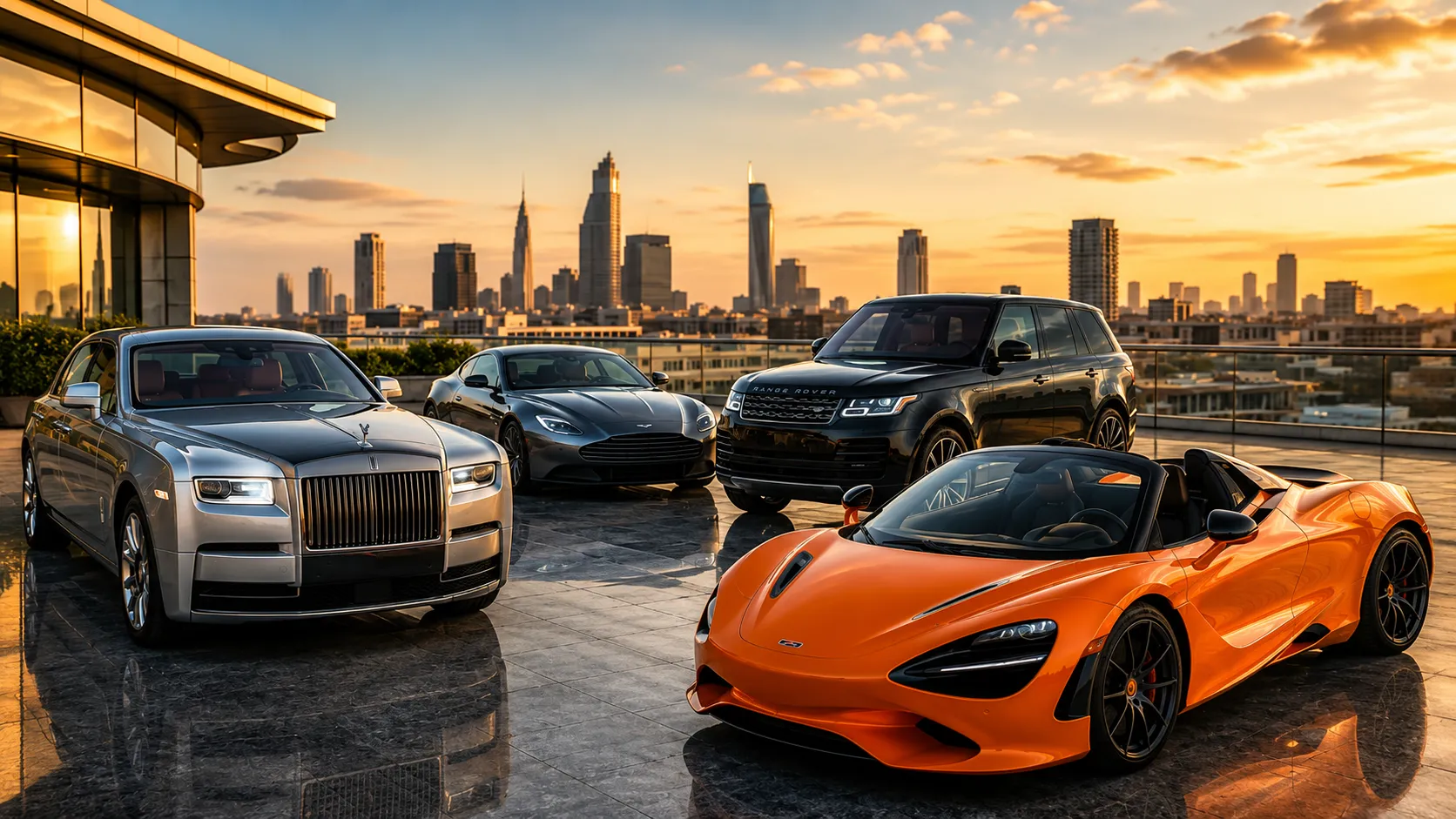
New Delhi: For decades, owning a Rolls-Royce, a flagship Range Rover or a McLaren supercar in India meant paying a price that could run to double or even triple the vehicle's cost in its home market, a consequence of import duties that, for the largest-engined petrol and diesel cars, ran as high as 110 per cent. That era has now come to a definitive end. With the India–United Kingdom free trade agreement formally coming into force on July 15, customs duty on eligible British-made cars has been cut to 30 per cent, and British luxury and performance marques are moving quickly to pass on the savings, with price cuts already running into the crores of rupees on some of their most coveted models.
The mechanics of the deal are straightforward but consequential. Under the India-UK Comprehensive Economic and Trade Agreement, customs duty on large-engined completely built-up passenger vehicles imported from the UK — specifically petrol models above 3000cc and diesel models above 2500cc — has been reduced from 110 per cent to 30 per cent in the agreement's first year. That concessional rate is set to decline further over time, falling in phases to just 10 per cent by the fifth year of the agreement, offering manufacturers and buyers alike a clear multi-year trajectory toward significantly lower effective import costs.
Crucially, this concessional treatment does not apply without limit. The lower duty is governed by a Tariff Rate Quota, which caps the number of vehicles eligible for the reduced rate each year. Different reports have cited figures ranging from 10,000 to 20,000 units in the agreement's first year, with the quota set to expand gradually over a 15-year window as the concessional duty itself steps down toward its eventual 10 per cent floor. Once any given year's quota is exhausted, additional imports revert to the standard, far higher duty rate — meaning that allocation within the quota is likely to become almost as commercially significant to manufacturers as the headline price cuts themselves.
Jaguar Land Rover moved first, becoming the earliest major British manufacturer to translate the new tariff structure into concrete price action. Ahead of the FTA's formal implementation, JLR slashed the price of its flagship Range Rover SV from ₹4.25 crore ex-showroom to ₹3.5 crore, a reduction of ₹75 lakh, while the Range Rover Sport SV saw its price fall from ₹2.75 crore to ₹2.35 crore. Industry observers had anticipated an even larger cut to the flagship Range Rover — earlier estimates from JLR India had suggested the model could become more affordable by over ₹1 crore — though the eventual reduction was somewhat tempered by currency movements, with the British pound having appreciated meaningfully against the rupee over the preceding eighteen months, partially offsetting the tariff-driven savings.
Rolls-Royce, which currently sells four models in the Indian market — the Spectre, Ghost Series II, Phantom and Cullinan Series II, with ex-showroom prices currently ranging from ₹7.62 crore to ₹12.87 crore — is expected to issue a revised price list imminently, with industry estimates suggesting price reductions in the region of 20 per cent once the marque formally responds to the new duty structure. For a marque built almost entirely around bespoke, high-value, low-volume sales, even a partial pass-through of the tariff benefit represents a meaningful shift in the brand's addressable market within India.
McLaren, Britain's homegrown supercar and hypercar manufacturer, has moved with particular speed and specificity in outlining its revised India pricing. The McLaren 750S Coupe, previously priced at ₹7.94 crore, is expected to fall to approximately ₹4.94 crore — a reduction of ₹3 crore, among the largest single price cuts flagged across any British marque operating in India. Its open-top sibling, the 750S Spider, stands to see an even larger reduction of ₹3.32 crore, bringing its price down from ₹8.78 crore to roughly ₹5.46 crore. The McLaren GTS, meanwhile, is expected to see its price fall from ₹6.15 crore to around ₹3.83 crore, a cut of ₹2.32 crore. Notably, McLaren's plug-in hybrid models are treated somewhat differently under the agreement, given that the tariff relief structure does not extend equally to electrified vehicles in its initial years.
Aston Martin, too, stands to benefit substantially. Illustrative calculations circulating in industry coverage suggest a model such as the DBX 707 performance SUV, currently priced in the region of ₹5.5 crore to ₹6.2 crore in India, could see pricing fall to closer to ₹3 crore once the full tariff benefit is reflected — though, as with other marques, the exact final pricing will depend on how much of the theoretical saving manufacturers choose to pass through to customers versus retain as improved margin or reinvest in expanded specification and after-sales support.
Detailed illustrative breakdowns published by industry outlets help explain just how dramatically the maths has shifted. Taking the Rolls-Royce Cullinan SV as an example: in the UK, the car costs roughly £339,175 including VAT. Strip out Britain's 20 per cent VAT and the export price falls to around ₹2.82 crore. Under the new 10 per cent customs duty applicable in later years of the agreement's phase-down, that adds roughly ₹28 lakh, taking the price to approximately ₹3.10 crore. A further countervailing duty and integrated GST layer on top bring the estimated landed price, before dealer margin and insurance, to somewhere in the range of ₹4.76 crore — versus a current ex-showroom tag in India of ₹10.5 crore to ₹12.25 crore. Even accounting for dealer margins and insurance, the eventual on-road price could settle at roughly half of today's levels once the duty structure fully phases in.
For India's broader luxury and premium vehicle market — broadly defined as vehicles priced above ₹1.5 crore, and especially those above ₹2 crore — industry analysts expect the competitive order to shift meaningfully over the coming years. The clearest beneficiaries are UK-manufactured, large-engine, completely built-up vehicles from Range Rover, McLaren, Rolls-Royce, Bentley and Aston Martin, all of which can now use the tariff advantage to lower prices, expand specification levels, or both. Locally assembled luxury vehicles, which form the volume backbone of brands with Indian manufacturing operations, are expected to remain the dominant sales driver for the broader premium segment even as imported models become comparatively more competitive at the very top end.
The scale of the potential shift is particularly notable for McLaren. Given the magnitude of the reported price reductions, several buyers who might previously have gravitated toward Porsche, Ferrari or Lamborghini models at similar price points may now find McLaren's offerings considerably more accessible in relative terms — a dynamic that could meaningfully widen the brand's addressable customer base in India even though its absolute sales volumes are likely to remain modest given the fundamentally niche nature of the supercar segment.
It is worth noting that not every rupee of tariff benefit will necessarily flow through to sticker prices. Manufacturers retain considerable discretion over how they allocate the benefit created by lower import duties — some may choose to pass through the full reduction to remain maximally competitive on price, while others may use part of the saving to improve profit margins, absorb ongoing currency volatility between the pound and the rupee, add additional standard equipment to their India-spec vehicles, or invest further in expanding after-sales service and support infrastructure across the country.
The India-UK CETA extends well beyond automobiles, forming one of India's largest and most comprehensive trade agreements with a developed economy to date. The pact provides duty-free access for the vast majority of Indian exports into the UK market, while simultaneously lowering tariffs on a range of British products entering India, of which automobiles represent one of the most consumer-visible and immediately impactful categories. Government data shows that bilateral trade between India and the UK reached $25.12 billion in FY26, up from $23.13 billion the previous year, with industry bodies such as ASSOCHAM projecting that the broader trade relationship could see bilateral commerce roughly double to around $120 billion by 2030 as the agreement's full range of provisions take effect.
For prospective buyers, the message from the industry is one of cautious optimism rather than immediate, unconditional celebration. While headline price cuts running into the crores are genuinely significant, the annual quota governing eligible imports means that securing a vehicle at the concessional duty rate could, for the most sought-after models and configurations, prove almost as challenging as the purchase decision itself — turning allocation within the Tariff Rate Quota into a new and closely watched variable within India's luxury car market.
As Rolls-Royce, Aston Martin and other marques finalise and formally announce their revised India price lists in the weeks ahead, the coming months are expected to offer the clearest picture yet of just how transformative the India-UK FTA will prove to be for a segment of the Indian auto market that has, for decades, operated under some of the steepest import duty structures anywhere in the world.
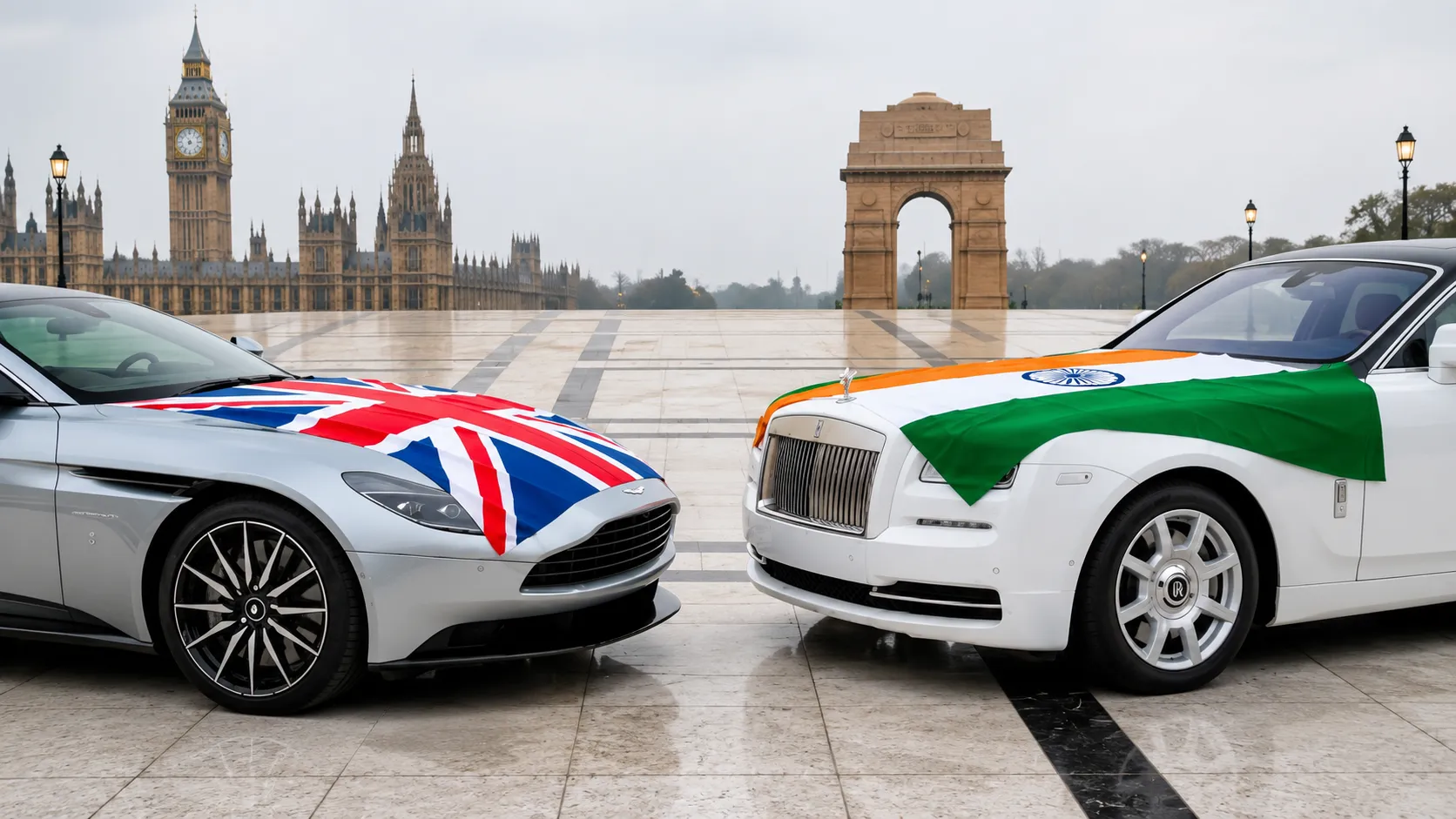
The timing of the agreement also carries a degree of poetic significance for the broader Indo-British trade relationship. The India-UK CETA was originally signed on July 24, 2025, meaning its formal entry into force on July 15, 2026 arrives just over a year after the two governments concluded negotiations — a relatively swift implementation timeline by the standards of major bilateral trade agreements, which frequently take considerably longer to move from signature to operational effect once domestic ratification processes and implementation infrastructure are accounted for on both sides.
For Jaguar Land Rover specifically, the tariff changes arrive at a moment when the company's India strategy already rests on a dual-track approach: a substantial and growing locally assembled product range, including the Range Rover, Range Rover Sport, Velar and Discovery Sport models built domestically to serve volume demand, layered alongside a smaller, higher-margin range of fully imported flagship models that benefit most directly from the new duty structure. Industry executives expect that as affordability improves for imported CBU models under the new tariff regime, imported vehicles could come to represent a meaningfully larger share of JLR's overall India sales mix than they have historically, even as locally assembled models continue to anchor the bulk of unit volumes.
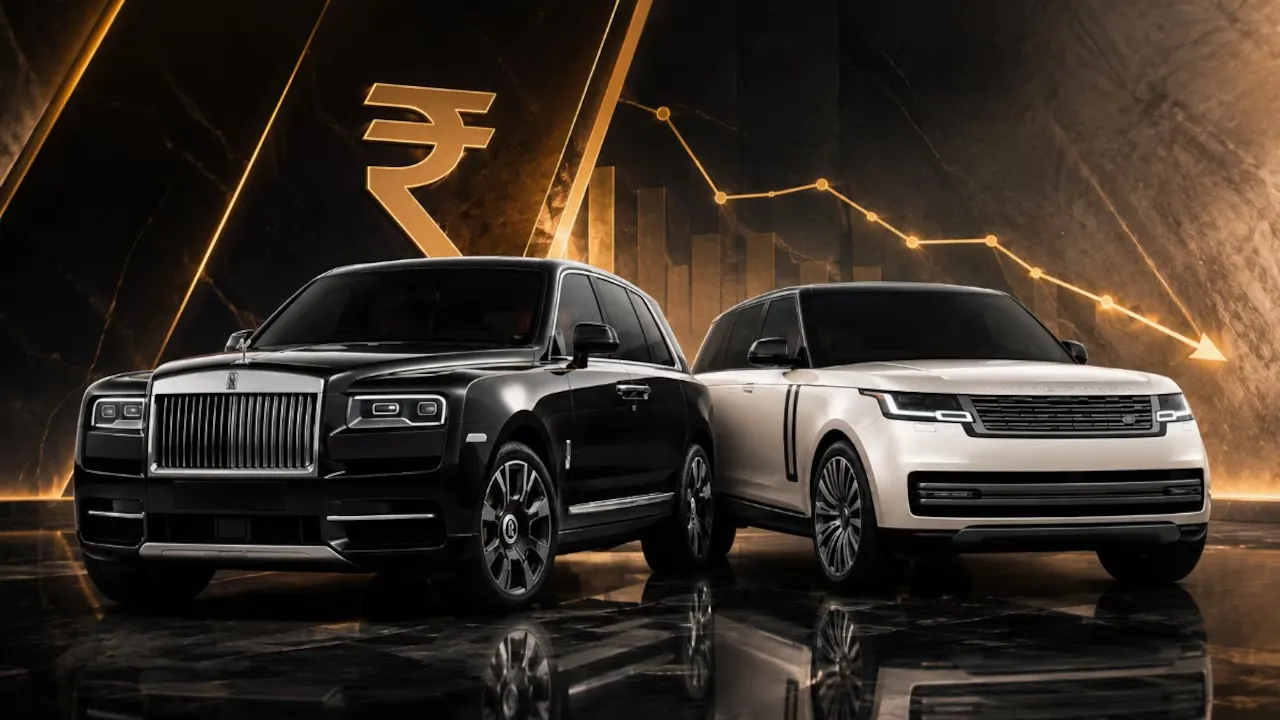
Currency dynamics remain an important, if less headline-grabbing, variable that will continue to shape how much of the theoretical tariff benefit ultimately reaches Indian consumers. The British pound has appreciated meaningfully against the rupee over the roughly eighteen months leading up to the FTA's implementation, moving from around ₹106.72 in January 2025 to approximately ₹124.74 more recently — a shift of roughly 16.9 per cent that has already partially offset the pricing benefit created by the reduced customs duty. Should the pound continue to strengthen against the rupee, manufacturers may find themselves needing to absorb a growing share of that currency pressure internally if they wish to sustain the scale of price cuts already announced, adding a layer of ongoing uncertainty to how durable current pricing commitments prove to be over the multi-year phase-in period of the tariff reductions.
The broader Indian automotive industry has watched the FTA's early implementation with a mixture of interest and, in some quarters, mild competitive concern. Domestic luxury and premium vehicle manufacturers, along with luxury marques manufacturing locally in India through joint ventures or wholly owned subsidiaries, will need to assess how meaningfully the new pricing dynamics for imported British vehicles reshape competitive positioning within India's broader premium vehicle market — particularly at price points above ₹1.5 crore, where the FTA's effects are expected to be most keenly felt, and where buyers have historically had comparatively fewer choices given the prohibitive cost that import duties previously imposed on fully built-up luxury and performance vehicles from any origin market.
Government officials have framed the automotive provisions of the FTA as illustrative of the broader philosophy underpinning the agreement: a calibrated, phased opening of specific sectors to increased British competition, structured through mechanisms like the Tariff Rate Quota to protect against disruptive, unlimited import surges, while still delivering meaningful and tangible benefits to Indian consumers in categories, like ultra-luxury automobiles, where domestic production capacity and consumer choice have historically been most constrained. Industry bodies including ASSOCHAM have pointed to the automotive price cuts as a highly visible, easily understood proof point of the FTA's broader value proposition to ordinary consumers, even though the agreement's most consequential long-term economic effects are expected to materialise across a much wider range of sectors, from textiles and engineering goods on the Indian export side to financial services and technology on the British side of the relationship.