FundingAnalysis10 MIN READ

India-UK Trade Pact Goes Live Today: The Fine Print on Rules of Origin That Every Exporter Must Understand

The Finance Ministry has notified Rules of Origin under the India-UK CETA, effective July 15 — the compliance framework exporters must master to claim duty-free access.

By Shaym Kumar · Author15 July 2026
India-UK Trade Pact Goes Live Today: The Fine Print on Rules of Origin That Every Exporter Must Understand

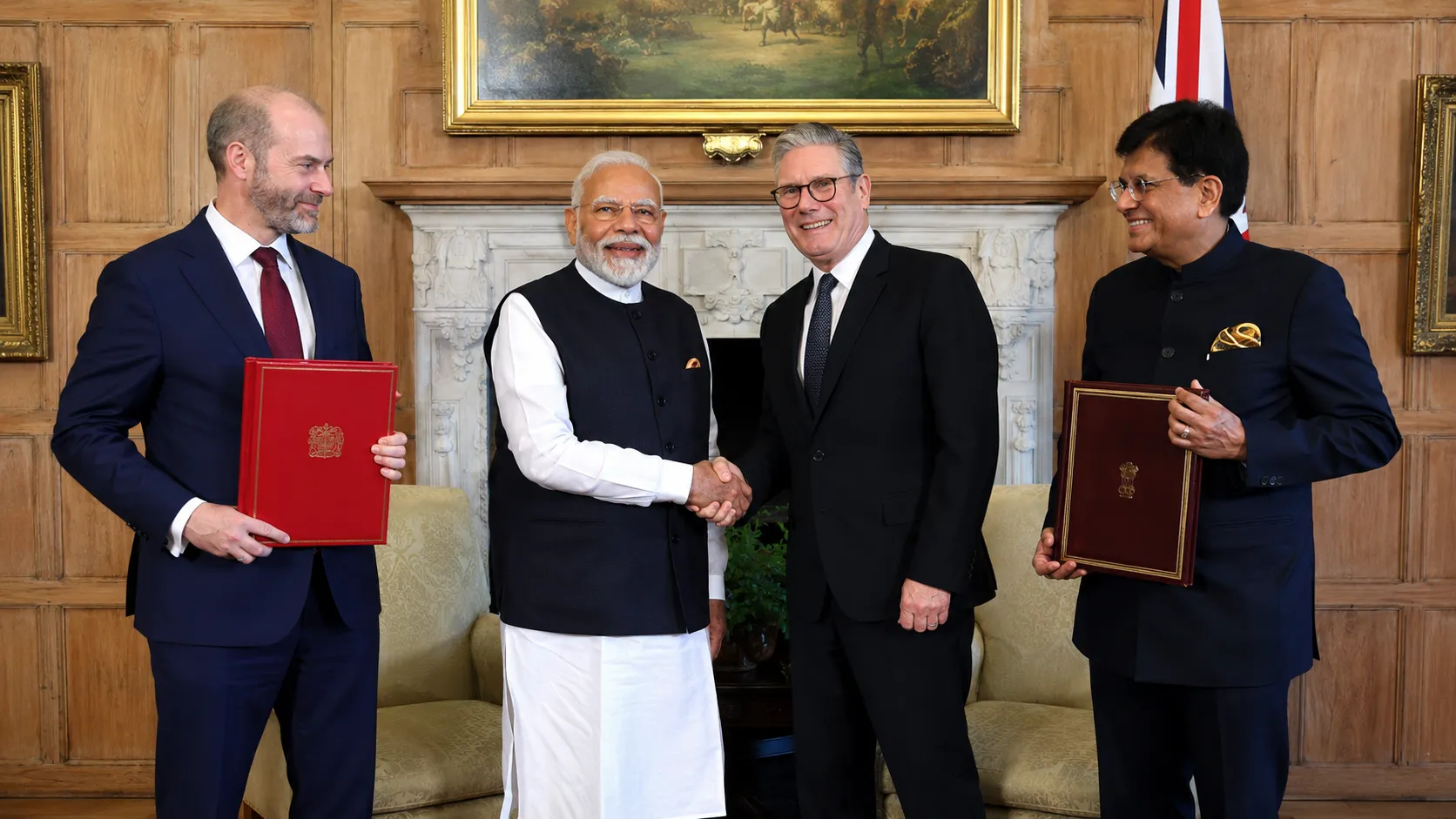
For the better part of three years, the India-UK Comprehensive Economic and Trade Agreement existed largely as a diplomatic achievement — a headline-grabbing pact signed amid considerable fanfare, promising duty-free access for the overwhelming majority of India's exports to Britain. As of July 15, 2026, it is no longer just an agreement on paper. CETA has formally come into force, and with it comes a question that matters more to exporters on the ground than any ministerial press release: how, exactly, does a company prove that its product qualifies for the preferential tariffs the agreement promises?

The answer arrived in the form of a detailed notification from India's Finance Ministry, issued through the Central Board of Indirect Taxes and Customs, setting out what are formally titled the Customs Tariff (Determination of Origin of Goods under Comprehensive Economic and Trade Agreement between India and the United Kingdom of Great Britain and Northern Ireland) Rules, 2026. It is a mouthful of a title for what amounts to one of the most consequential pieces of implementation detail in the entire trade agreement — the rulebook that determines whether a shirt sewn in Tirupur, a diamond cut in Surat, or a machine part manufactured in Coimbatore actually counts as "Indian-made" for the purposes of claiming duty-free treatment in the UK market.

WHY RULES OF ORIGIN MATTER MORE THAN THE HEADLINE TARIFF NUMBERS

It is easy for the public conversation around any free trade agreement to fixate on the big number — in this case, that CETA secures duty-free access for 99 percent of India's exports to the UK, covering nearly the entire trade basket between the two countries. But that headline figure means little without a robust, enforceable mechanism to determine which goods genuinely qualify as originating in India or the UK, as opposed to goods merely passing through one country from a third country seeking to exploit the tariff concession. Without rules of origin, a free trade agreement is effectively unenforceable — any exporter, anywhere in the world, could theoretically route goods through India or the UK to claim benefits never intended for them.

This is precisely the loophole the newly notified rules are designed to close. Under the framework, a product will only qualify as originating in India or the UK under three possible pathways: if it is wholly obtained in either country (think agricultural produce grown and harvested domestically, or minerals extracted from domestic mines); if it is produced entirely from originating materials sourced within the two countries; or — the more complex and commercially significant category — if it is manufactured using non-originating inputs, provided the finished product meets specific, product-by-product origin requirements laid out under the agreement.

That third category is where the real complexity lives, and where exporters will need to invest the most compliance effort. For many manufactured goods, particularly in sectors like engineering, auto components, textiles and electronics, it is common — even standard practice — to source certain raw materials or intermediate components from third countries such as China, given global supply chain realities. The rules of origin framework does not disqualify such products outright; instead, it sets thresholds for how much of a product's value must be added domestically, and prescribes specific transformation or processing criteria that must be met for the finished good to still count as originating in India.
image.png

WHAT THE RULES ACTUALLY REQUIRE

The notification lays out several operational requirements that exporters, customs brokers and compliance teams will need to internalise quickly. First, the framework prescribes methods for calculating what is termed the "qualifying value content" of a good — essentially, a formula for determining how much of a product's value derives from originating materials and processing versus non-originating inputs. Second, it stipulates that the final, substantive production process for a good must take place within the exporting country itself, subject to a limited set of exceptions — a provision designed to prevent superficial finishing touches, like repackaging or basic assembly, from being used to claim origin status for goods that were substantively manufactured elsewhere.

Third, and perhaps most relevant to exporters' day-to-day operations, the rules formalise the certificate of origin as the essential document required to claim preferential tariff treatment. Under the framework, authorised entities in both India and the UK are permitted to issue these certificates within their respective jurisdictions. For Indian exporters, this typically means engaging with designated issuing authorities — a process that adds a compliance step to export documentation but one that is now unavoidable for any company seeking to benefit from the tariff concessions CETA offers.

The notification also addresses a scenario that trade compliance specialists flag as a common source of disputes under any free trade agreement: what happens when goods pass through a third, non-signatory country en route from India to the UK, or vice versa. To prevent misuse, the rules require that any such goods remain under continuous customs supervision while in transit and that they not undergo any processing beyond what is strictly necessary for transportation, storage, preservation or logistical handling. In other words, a shipment cannot be substantively altered or repackaged in a third country and still retain its originating status — a safeguard against exactly the kind of tariff-shopping the rules of origin framework exists to prevent.

Crucially, the framework also grants Indian and UK customs authorities explicit powers to verify origin claims, with the ability to deny preferential tariff treatment to any consignment that fails to meet the prescribed conditions upon inspection. This gives the rules real enforcement teeth, rather than leaving compliance purely as a matter of exporter self-certification. At the same time, the notification builds in a degree of commercial flexibility, allowing importers who fail to claim tariff benefits at the time of import to retroactively claim those benefits later, provided they can substantiate the origin of the goods — a provision that should reduce the administrative burden on smaller exporters who may not have fully streamlined their documentation processes by the July 15 implementation date.

WHICH SECTORS STAND TO GAIN THE MOST

Trade analysts tracking the rollout point to a cluster of labour-intensive industries as the biggest beneficiaries of the newly operationalised tariff framework: textiles and apparel, marine products, leather goods, footwear, sporting goods, toys, and gems and jewellery. These sectors have historically struggled to compete on price against rivals like Vietnam, Bangladesh and China in Western markets, in large part because those competitor nations often enjoy more favourable existing tariff arrangements with the UK and EU. CETA's duty-free access, once fully operationalised through functioning rules of origin, is expected to materially narrow that competitive gap for Indian exporters in these categories.

A certificate of origin is not paperwork — it is the single document standing between an Indian exporter and the tariff advantage the entire trade agreement was built to deliver.
Impactful Global Indian Newsdesk

Beyond the traditional labour-intensive sectors, the agreement is also expected to benefit faster-growing, higher-value segments of India's export basket — engineering goods, auto components and organic chemicals among them — categories that, notably, were also among the standout performers in this quarter's broader export data (as detailed elsewhere in this edition). The overlap is not a coincidence: it reflects a broader structural shift in India's export profile toward more diversified, higher-value manufacturing, one that policymakers hope CETA will accelerate further.

THE BILATERAL TRADE BACKDROP

The scale of the opportunity is underscored by the existing trade relationship between the two countries. Two-way commerce between India and the UK grew 8.62 percent to reach $25.12 billion in the 2025-26 fiscal year, up from $23.13 billion the previous year, with India maintaining a healthy trade surplus of $1.76 billion. Given that this growth occurred even before CETA's tariff concessions took full effect, trade officials and industry bodies on both sides are expressing considerable optimism that the formal rollout of duty-free access — now backed by a clear, enforceable rules-of-origin framework — could meaningfully accelerate that trajectory.

Commerce and Industry Minister Piyush Goyal, speaking ahead of the agreement's implementation, has repeatedly framed CETA as a vehicle for deepening collaboration across trade, investment and innovation between the two nations, urging Indian businesses to move quickly to translate the legal opportunity into tangible commercial outcomes. That urgency is well placed: trade agreements create windows of competitive advantage, but only for exporters who move fast enough, and with sufficiently robust compliance systems, to actually claim the benefits on offer.

THE COMPLIANCE CHALLENGE AHEAD

For all the strategic upside, industry watchers caution that the immediate months following CETA's implementation will likely surface real-world friction as exporters, customs brokers and certifying authorities on both sides work through the practicalities of the new rules. Companies that have not yet mapped their supply chains against the qualifying value content thresholds, or that lack established relationships with authorised certificate-issuing bodies, may find themselves temporarily unable to claim the tariff benefits they are legally entitled to — not because the agreement doesn't cover their products, but because their documentation and compliance processes have not caught up with the legal framework.

Trade compliance advisors are urging exporters, particularly small and medium enterprises without dedicated trade compliance teams, to move quickly on three fronts: auditing their supply chains to understand exactly how much of their product's value derives from originating materials, engaging early with certificate-issuing authorities to avoid documentation bottlenecks, and building internal processes to maintain the kind of verifiable paper trail that customs authorities on both sides are now empowered to scrutinise. For an agreement years in the making, the difference between CETA delivering on its promise and falling short of it may ultimately come down to how quickly Indian exporters master this unglamorous, but decisive, layer of technical compliance.

LESSONS FROM INDIA'S OTHER TRADE AGREEMENTS

India is not implementing rules of origin for the first time with CETA, and the experience of exporters under existing agreements — including arrangements with ASEAN nations, Japan, South Korea and, more recently, the UAE under the India-UAE Comprehensive Economic Partnership Agreement — offers a useful preview of the kinds of friction that tend to emerge in the early months of implementation. In several of those prior agreements, exporters reported early confusion over documentation requirements, delays in obtaining certificates of origin from designated issuing authorities, and disputes over how to classify products that used a mix of domestic and imported inputs. Over time, in each case, the friction eased as exporters, customs brokers and issuing authorities built familiarity with the specific mechanics of each agreement's rules.

What is different this time, according to trade policy specialists, is the sheer scale of the opportunity CETA represents relative to some of India's more recent trade agreements — both in terms of the size of the UK market and the breadth of tariff lines covered by the 99 percent duty-free commitment. That scale raises the stakes for getting implementation right quickly, since any prolonged period of exporter confusion or compliance friction represents a larger opportunity cost in absolute terms than it would under a smaller or more narrowly scoped agreement.

image.png

THE UK SIDE OF THE EQUATION

While much of the domestic conversation around CETA understandably focuses on opportunities for Indian exporters, the agreement is explicitly reciprocal, and UK-based businesses are undergoing a parallel process of familiarising themselves with the same rules of origin framework as they assess opportunities to expand into the Indian market. UK exporters in sectors ranging from Scotch whisky and automobiles to financial and professional services have been closely tracking the CETA rollout, given that many of these sectors have historically faced significant tariff barriers when accessing India's market. The rules of origin framework governs goods flowing in both directions, meaning UK-based manufacturers must undertake the same kind of supply chain mapping and compliance preparation that Indian exporters are now working through, in order to claim preferential access to the Indian market for products meeting the UK-origin criteria.

A TEST CASE FOR FUTURE UK TRADE AGREEMENTS

Industry observers have also noted that how smoothly CETA's implementation unfolds could carry implications well beyond the India-UK relationship itself. The United Kingdom, in the years since its departure from the European Union, has been actively pursuing an expanded network of independent bilateral trade agreements, and CETA represents one of its most significant agreements with a major emerging economy. A smooth, well-executed rollout — one in which exporters on both sides are able to quickly and reliably claim the tariff benefits the agreement promises — would likely be held up as a template for future UK trade negotiations with other large economies. Conversely, prolonged implementation friction could become a cautionary example cited by critics of the UK's post-Brexit trade strategy. For India, meanwhile, a successful CETA rollout adds momentum to its own broader trade diplomacy push, which has included recent agreements with the UAE and ongoing negotiations with the European Union, and reinforces New Delhi's positioning of itself as an increasingly reliable and attractive trading partner at a moment when many global supply chains are actively seeking to diversify away from overconcentration in any single country.

---

TagsIndiaUKCETAFreeTradeAgreementRulesOfOriginCBICIndiaUKTradeExportIndiaPiyushGoyalCustomsIndiaTradePolicyMakeInIndia

Reader reviews

Sign in to rate and review this article.
Loading reviews…

