India Generates 4.1 Million Tonnes of E-Waste Every Year. Most of It Disappears Into an Unorganised System That Recovers Almost Nothing.
Here is what is inside a discarded smartphone: gold, silver, copper, lithium, cobalt, tantalum, indium, tin, and trace amounts of rare earth elements. These are the same materials that India's electric vehicle industry needs for batteries, that its solar sector needs for panels, that its semiconductor ambitions need for chips, and that its defence manufacturing programme needs for advanced systems.
Most of those materials, when the phone ends its useful life, are either lost to landfill or processed through informal channels that recover a fraction of their value and expose workers to toxic conditions in the process.
India is the third-largest generator of e-waste in the world, producing an estimated 4.1 million metric tonnes annually. Global e-waste generation is expected to reach 82 million tonnes by 2030. And the critical minerals embedded in that waste — lithium, cobalt, nickel, manganese, rare earth elements — are simultaneously among the scarcest, most strategically important, and most import-dependent materials in India's industrial future.
The gap between those two facts — the waste that exists and the value that disappears from it — is the business that Pranshu Singhal has been building since 2017.
On June 19, 2026, Karo Sambhav announced it had raised ₹56 crore (approximately $6 million) in a pre-Series A funding round led by Rainmatter by Zerodha.
What Karo Sambhav Actually Operates
Founded in 2017 in Gurugram, Karo Sambhav is a circular economy and recycling company that works across four material streams: e-waste, batteries, glass, and other end-of-life materials. The name itself is instructive — Karo Sambhav means "make it possible" in Hindi. Nine years in, the company has built the operational infrastructure to match the ambition the name implies.
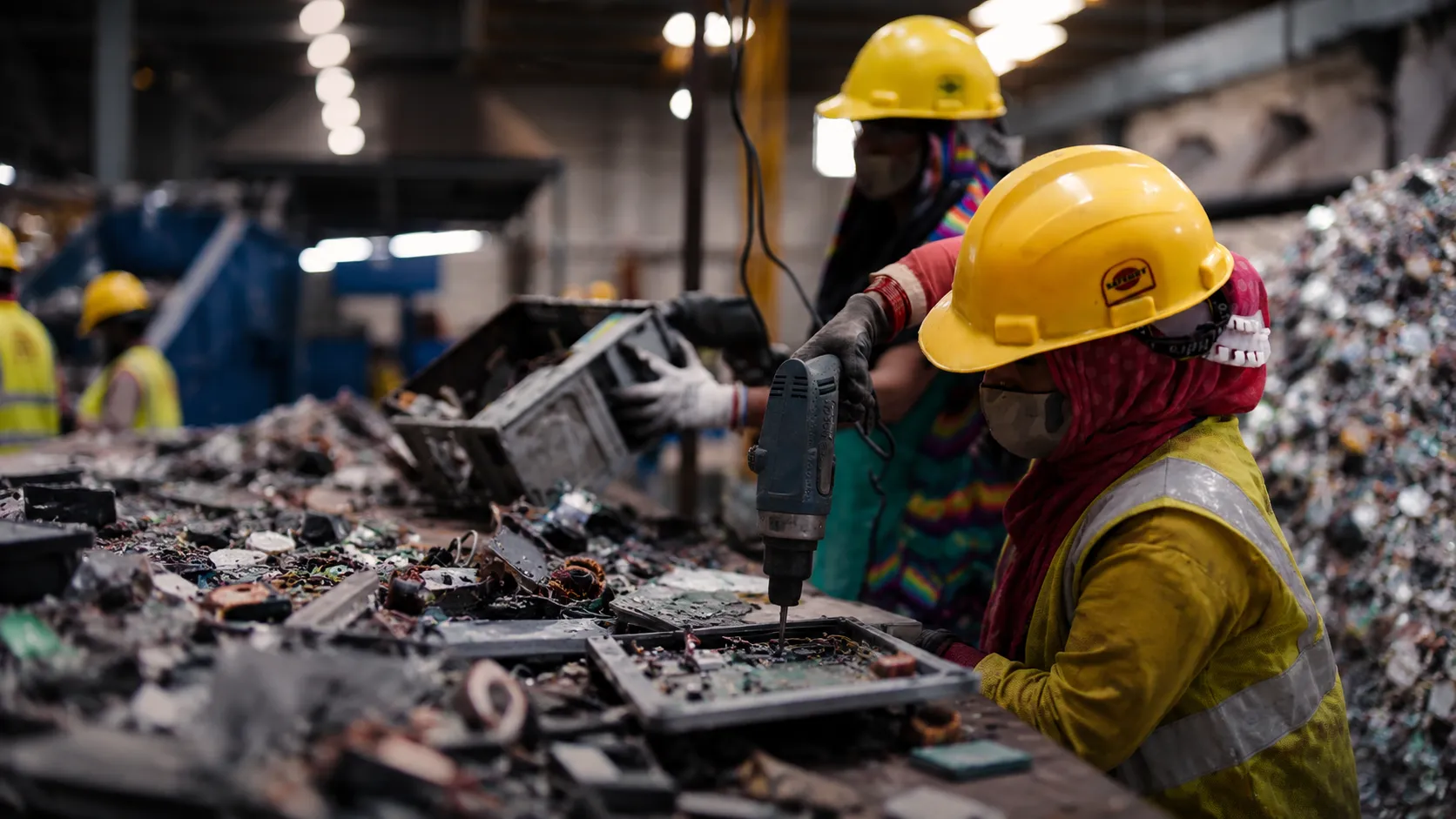
It currently operates two recycling facilities and has established collection channels in more than 50 cities across India. It has channelled over 150,000 metric tonnes of waste into responsible recycling — a number that represents both the scale of what is being collected and the scale of what India is losing in the absence of organised recovery systems.
The corporate client list tells its own story. Karo Sambhav works with more than 50 companies on Extended Producer Responsibility compliance and recycled-content commitments, including global brands Apple, Dell Technologies, Cisco, and Canon. EPR — the regulatory framework under which producers of electronics are responsible for managing the end-of-life disposal of their products — is the structural demand driver for organised recycling businesses in India. Companies that sell electronics in India are legally required to ensure that a proportion of the waste their products generate is responsibly processed. Karo Sambhav is the infrastructure that makes that compliance possible.
The technology layer is what distinguishes the business from a simple recycling logistics operation. Karo Sambhav runs a platform for transparency and traceability — tracking waste from collection point through processing to material recovery, generating the documentation that corporate sustainability teams need to substantiate their EPR compliance claims and recycled-content commitments. As sustainability reporting requirements tighten globally, this traceability layer becomes increasingly valuable.
The Critical Minerals Angle — Why This Is No Longer Just a Sustainability Story
The conversation about e-waste recycling in India changed materially when the government launched the National Critical Minerals Mission and the Incentive Scheme for Promotion of Critical Mineral Recycling, backed by a ₹1,500 crore government outlay.
Karo Sambhav's planned infrastructure has already received Eligibility Status under this scheme — a government validation that the company's recycling capabilities meet the technical requirements for critical mineral recovery incentives. This is not a minor administrative designation. It places Karo Sambhav inside the government's strategic framework for building domestic supply chains for the minerals that India's manufacturing and energy transition programmes require.
The reason this matters at the national level is precise. India imports nearly all of its lithium, cobalt, and rare earth elements — the critical inputs for electric vehicle batteries, clean energy storage, and advanced electronics. As demand for these materials accelerates with EV adoption, solar deployment, and semiconductor manufacturing, India's import dependence creates both economic and strategic vulnerability.
Domestic critical mineral recycling from e-waste is one of the most credible near-term mechanisms for reducing that dependence. The materials already exist, embedded in the 4.1 million metric tonnes of e-waste generated annually. The challenge is building the infrastructure to recover them at scale, with the technical quality required to feed recovered materials back into manufacturing supply chains.
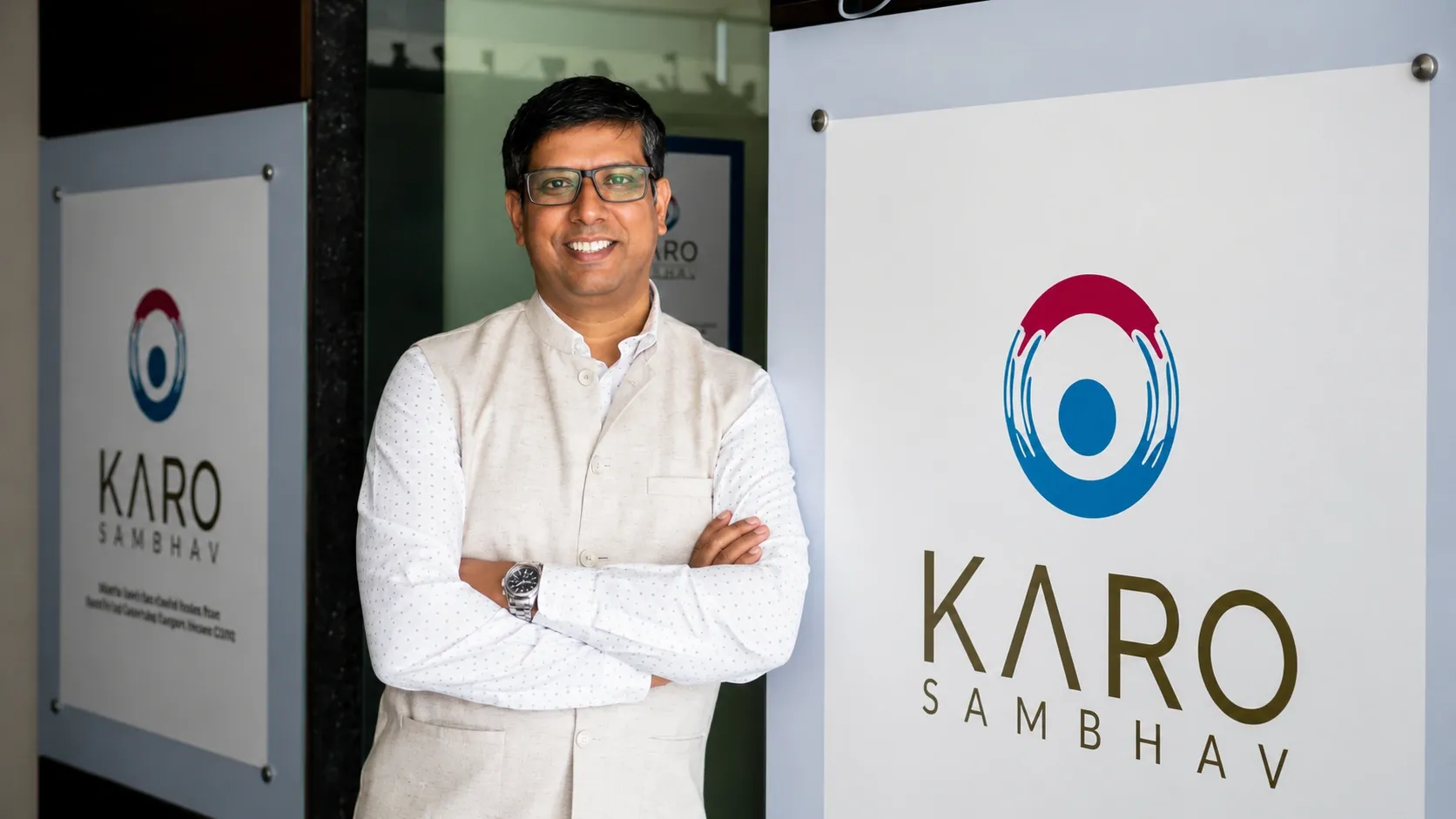
Pranshu Singhal, Founder and CEO, has framed the strategic logic directly:
The phrase "critical raw material recovery" is the key shift in Karo Sambhav's positioning. The company is not primarily a waste management business. It is a domestic supply chain for strategic materials — one that happens to be built on the waste that India's digital economy generates.
Why Rainmatter Backed This — and What the Investment Signals
Rainmatter by Zerodha is the sustainability and climate-focused investment initiative backed by Nithin Kamath's Zerodha. Unlike most venture capital funds, Rainmatter has a specific mandate: backing organisations building long-term solutions for climate resilience, sustainability, and resource efficiency. Its portfolio reflects that mandate — PadCare Labs (sanitary waste recycling), earlier-stage circular economy ventures, and now Karo Sambhav.
Viraj Joshi, VP at Zerodha and Rainmatter, articulated the investment rationale in terms that go beyond the immediate opportunity:
"Patient execution and systems-level impact in a difficult sector." That phrase is worth unpacking. Recycling and circular economy businesses in India are not easy to build. The formal recycling sector competes with a large, entrenched informal sector that operates at lower cost but with significant environmental and labour consequences. Building collection networks across 50 cities, establishing corporate EPR partnerships, operating recycling facilities to technical standards that corporate clients and regulators require, and deploying a traceability platform — all of this requires exactly the patient execution that nine years of operations represents.
The ₹56 crore round sits in a wider ecosystem moment. In recent months, ScrapUncle raised ₹22 crore in a pre-Series A, tyre recycling startup ReGrip raised ₹20.25 crore, and sanitary waste recycler PadCare Labs raised $3 million in a round also led by Rainmatter. The circular economy and recycling sector is attracting increasing investor interest as sustainability and resource security move higher on the government and corporate agenda simultaneously.
What the ₹56 Crore Is For
The capital will be deployed across two strategic priorities.
The first is scaling recycling infrastructure for recovery of critical, precious, and high-value materials. This means expanding the technical capabilities of existing facilities, building new infrastructure for battery and e-waste processing at higher volumes, and improving the material quality of recovered metals to the specifications required for industrial re-use. The difference between recovered copper that goes to smelting and recovered copper that goes directly back into electronics manufacturing is a function of processing quality — and that quality requires capital investment.
The second is expanding the B2B dimension of the business. The EPR compliance and corporate sustainability partnership model is the commercial foundation that makes the infrastructure investment defensible. As India's EPR regulatory framework tightens — particularly under the E-Waste Management Rules and the Battery Waste Management Rules that have come into force — the pool of companies that need organised recycling partners grows. Every new electronic product regulation creates new demand for the compliance infrastructure that Karo Sambhav has built.
The expansion of collection channels into new cities, the deepening of quick commerce and modern trade partnerships for consumer e-waste drop-off, and the continued build-out of the traceability platform that makes recycled content claims auditable — these are the growth levers that the pre-Series A capital will fund.
The Larger Argument
Karo Sambhav's ₹56 crore round is, taken alone, a relatively small number in the context of Indian startup funding. But the argument it represents is considerably larger.
India's manufacturing ambitions — Make in India, the semiconductor mission, the electric vehicle programme, the defence manufacturing push — all depend on access to critical materials. India's climate commitments — net zero by 2070, 500GW of renewable energy by 2030 — depend on materials like lithium, cobalt, and rare earths. And India's digital economy generates, every year, 4.1 million metric tonnes of devices that contain exactly those materials in concentrated form.
The gap between what the waste contains and what the recycling system recovers is not primarily a technology problem. It is an infrastructure problem, a policy problem, and an investment problem. The government's National Critical Minerals Mission is addressing the policy dimension. Rainmatter's investment in Karo Sambhav is addressing the infrastructure and investment dimension.
The combination — nine years of operational infrastructure, government Eligibility Status under the critical minerals incentive scheme, a corporate client base including some of the world's largest technology companies, and now ₹56 crore to scale the recovery capabilities — is the full stack of what it takes to turn India's e-waste crisis into something that the country's manufacturing future can actually use.
India's phones are retiring. The question is whether the materials inside them retire with them — or come back.