A Sector Once Defined By Launches And Missions Is Beginning To Expand Into A Much Larger Economic Story
For decades, India’s space ambitions frequently operated through a relatively familiar framework. Public conversations surrounding the sector often centered around rocket launches, satellite deployments and landmark achievements led by national institutions. Space itself frequently occupied a symbolic position associated with scientific capability, national pride and technological advancement. From lunar missions to interplanetary exploration, India’s space narrative often appeared driven primarily by engineering milestones and government-led achievements. For many years, the broader ecosystem surrounding space remained relatively concentrated because large-scale participation frequently required significant capital, specialized infrastructure and institutional capability beyond the reach of most private participants.
Over recent years, however, another transition increasingly appears unfolding beneath that familiar story. India’s space economy increasingly seems entering a significantly broader phase where private capital, startup ecosystems and commercial opportunities are becoming central parts of the narrative. Companies once operating around launch vehicles and satellite manufacturing alone increasingly appear expanding into broader areas involving earth observation, downstream data services, in-space infrastructure, analytics, mobility systems and software ecosystems connected to space-derived applications. What initially appeared like a narrow scientific environment increasingly resembles a multi-layered economic category capable of supporting businesses across technology, manufacturing and data ecosystems simultaneously.
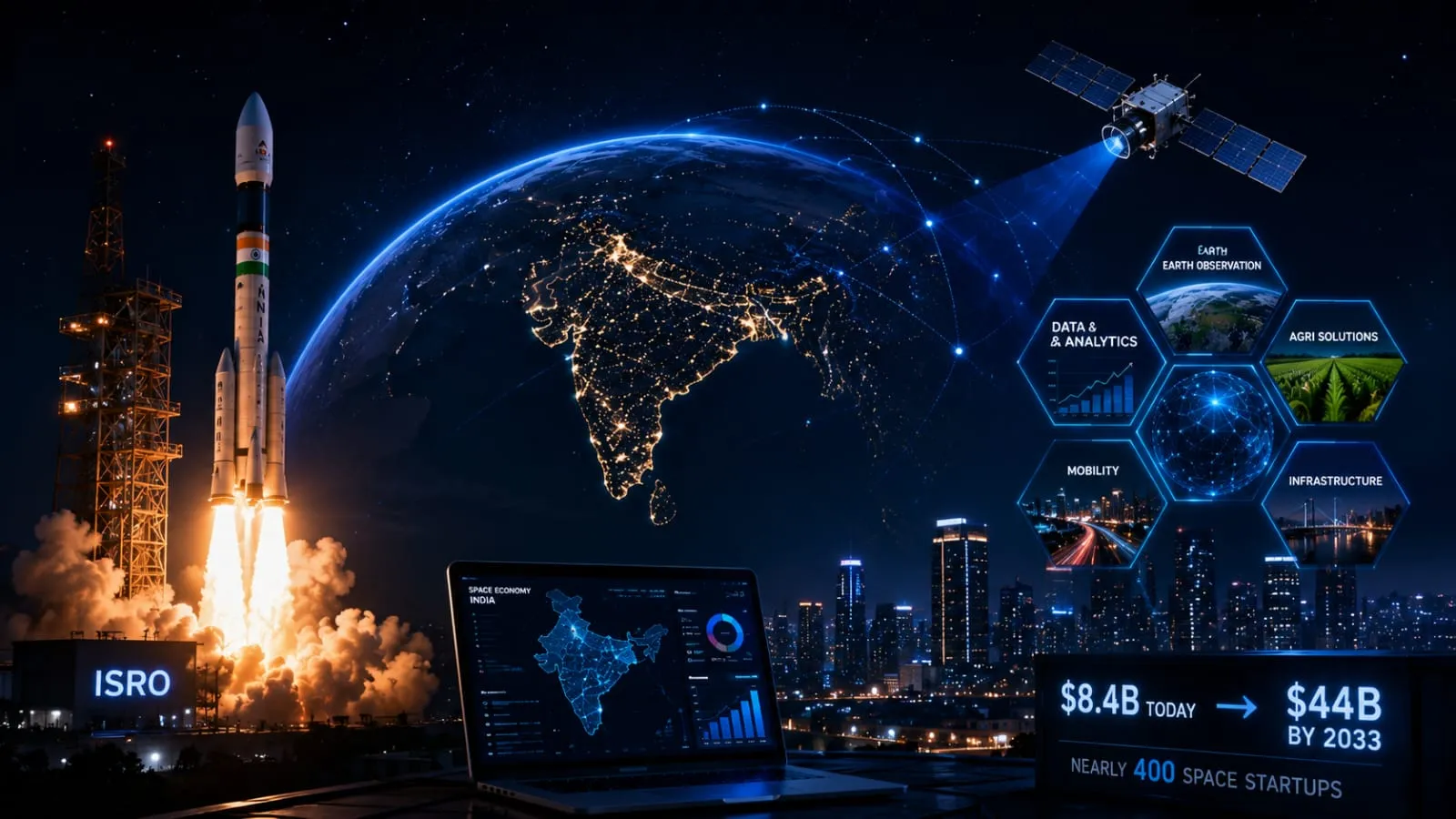
This broader shift increasingly matters because the sector itself appears changing in character. India’s space economy is currently estimated at around $8.4 billion, with policymakers targeting expansion toward nearly $44 billion by 2033 as private participation continues increasing. Simultaneously, India now has nearly 400 active space startups, reflecting a dramatic rise in entrepreneurial activity following regulatory reforms and broader ecosystem support. These developments increasingly suggest that space itself is gradually moving away from functioning solely as a government-led capability and toward operating as an emerging economic ecosystem attracting wider forms of participation and investment.
Viewed independently, these developments may initially appear like another startup expansion cycle driven by optimism surrounding new technologies. Viewed through a broader funding and market lens, however, they increasingly suggest a larger transition involving how space itself is being treated not simply as a scientific environment but as a category capable of supporting long-term commercial ecosystems and broader economic activity.
Capital Increasingly Appears To Be Moving Beyond Core Space Infrastructure
Historically, investment activity surrounding space frequently centered around highly visible technological assets. Rockets, propulsion systems and satellite technologies naturally attracted attention because they represented the most obvious gateways into commercial participation. Building launch capability itself often carried strategic significance because relatively few countries and companies globally possessed the expertise and infrastructure necessary to compete effectively inside those environments. Investors frequently approached the sector cautiously because hardware-intensive industries often demanded substantial timelines and capital before commercial outcomes became visible.
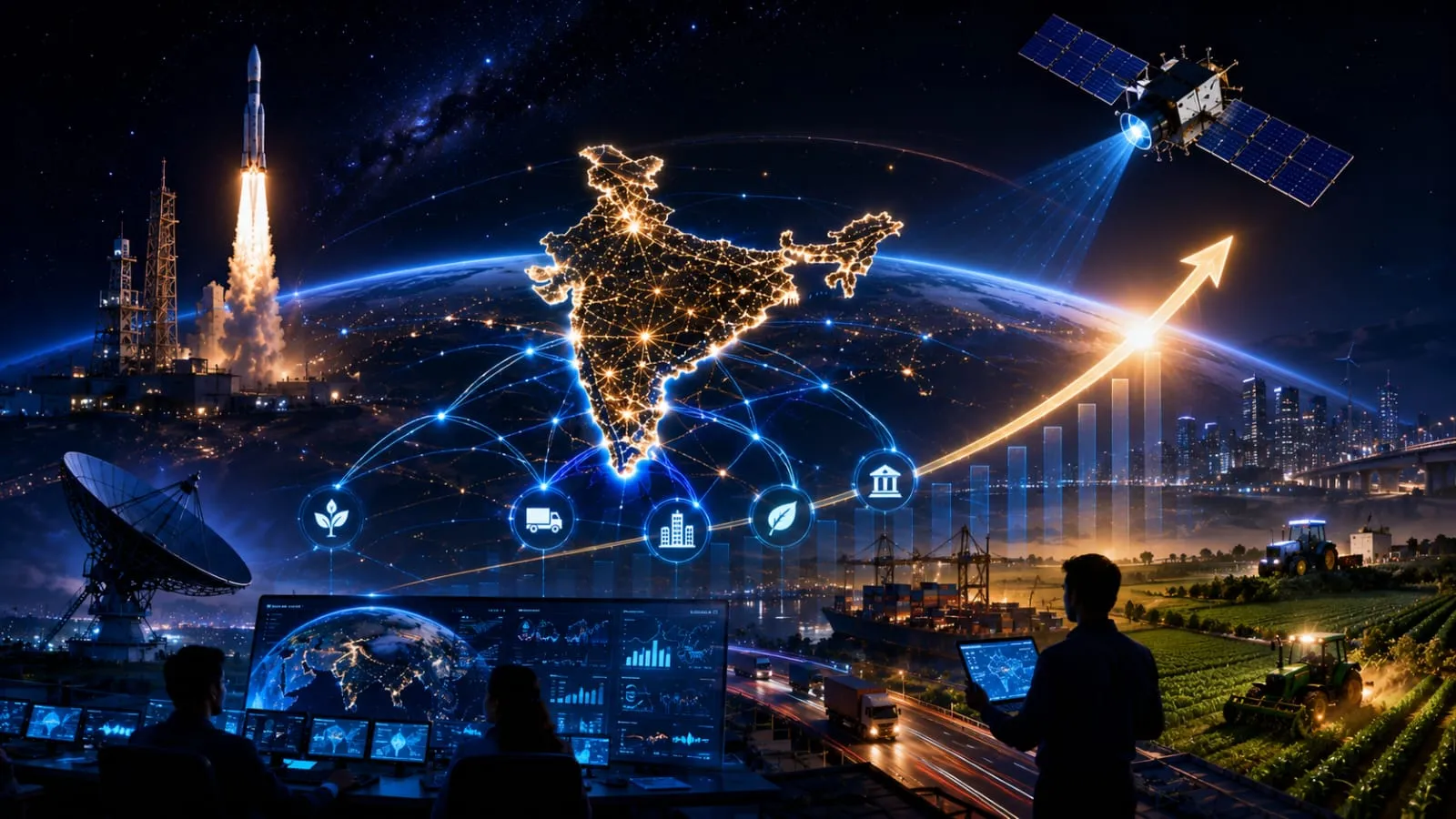
Increasingly, however, investors appear approaching space through significantly wider commercial frameworks. Earth-observation platforms increasingly attract attention because satellite-generated information now supports industries extending far beyond aerospace itself. Space-data businesses increasingly continue emerging around environmental monitoring, agriculture, logistics and urban intelligence. Simultaneously, newer startups increasingly appear focusing on operational software, analytics environments and service layers capable of extracting value from infrastructure already operating in orbit.
This transition increasingly matters because space ecosystems frequently generate value extending beyond hardware alone. Once foundational systems become established, entirely new layers of businesses frequently emerge around applications and services capable of translating technological capability into everyday utility. Historically, some of the world’s largest technology ecosystems evolved similarly. Core infrastructure often appeared first, while larger commercial environments gradually developed around that infrastructure over time.
The broader significance increasingly suggests future space opportunities may not simply belong to companies launching assets into orbit. Increasingly, some of the most valuable opportunities may emerge among businesses capable of extracting economic value from the broader environments satellites and space infrastructure increasingly make possible.
Funding Activity Increasingly Appears To Reflect Long-Term Confidence Around Space Ecosystems
Part of the significance surrounding India’s emerging space momentum increasingly involves what recent funding activity appears signaling about investor confidence itself. Over the last several years, private investors, venture funds and institutions increasingly expanded participation within India’s space ecosystem despite fluctuations affecting broader startup markets. Companies including Skyroot Aerospace, Agnikul Cosmos, Pixxel and multiple emerging players increasingly attracted investment designed around long-term capability building rather than immediate scaling objectives.
Skyroot recently became India’s first space-tech unicorn after securing a $60 million funding round, reaching a valuation exceeding $1 billion while preparing for the country’s first privately developed orbital rocket launch. Industry observers increasingly interpreted the milestone as a signal involving broader confidence around India’s private space environment and its ability to generate globally competitive businesses. Simultaneously, additional startups across manufacturing, launch systems and space-data categories increasingly continue attracting institutional support from investors looking beyond short-term technology cycles.
Policy environments increasingly appear evolving alongside funding ecosystems themselves. Government initiatives involving IN-SPACe and proposed funding support mechanisms increasingly aim to address capital gaps surrounding deep-tech sectors requiring long development cycles. These developments increasingly matter because sectors involving advanced technology frequently require patient capital capable of supporting experimentation and infrastructure development over extended periods before commercial returns become visible.
Viewed through that broader lens, funding itself increasingly appears functioning not simply as financial support but also as a signal involving long-term institutional confidence around the future shape of India’s emerging space economy.
Space Increasingly Appears To Be Becoming A Broader Economic Infrastructure Layer
Another important dimension emerging beneath India’s evolving space story increasingly involves changing assumptions surrounding what space businesses themselves actually do. Historically, public understanding frequently associated space primarily with missions, exploration and technological achievements visible through launches and scientific milestones. Space frequently appeared distant from everyday life because many of its applications operated outside public visibility.
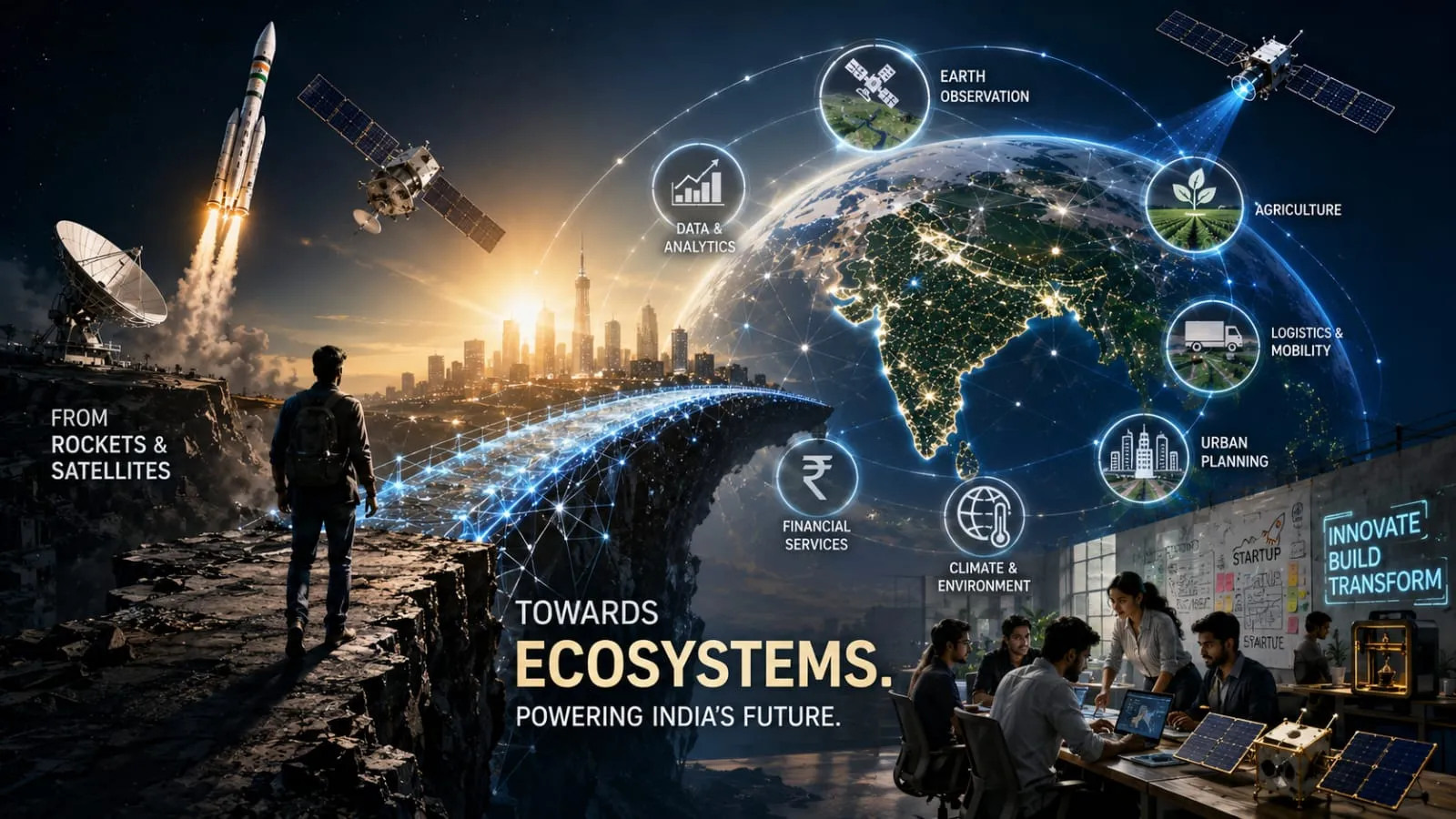
Increasingly, however, broader industries appear interacting with space infrastructure in ways consumers may not immediately recognize. Agriculture increasingly depends upon satellite imagery and geospatial analysis. Logistics systems increasingly use location intelligence. Climate analysis increasingly relies upon observational capabilities. Urban planning increasingly integrates geospatial data environments. Financial systems increasingly incorporate satellite-derived information capable of supporting broader decision-making environments.
This transition increasingly matters because it changes how markets understand value creation inside space ecosystems themselves. Infrastructure once viewed as specialized scientific capability increasingly appears functioning as an invisible operational layer supporting multiple industries simultaneously. As those applications continue expanding, space increasingly resembles foundational infrastructure rather than a narrowly defined technological sector.
The broader significance increasingly suggests that future space economies may derive value not only from exploration or launches themselves but from the wider systems increasingly built around data, connectivity and operational intelligence.
The Larger Story Increasingly Extends Beyond Rockets Alone
The broader significance surrounding India’s expanding space economy may ultimately involve what it reveals regarding how technological sectors evolve over time. Historically, transformative industries frequently began through infrastructure and scientific capability before eventually expanding into broader commercial ecosystems capable of supporting entirely new categories of businesses and participation.
Viewed through that broader lens, India’s emerging space story increasingly resembles more than a narrative involving rockets, missions or scientific achievements. It increasingly appears connected to larger realities involving entrepreneurship, industrial strategy and how future economies increasingly organize around foundational technologies capable of supporting multiple layers of activity.
The larger funding story therefore may not simply involve another startup round or launch announcement. Increasingly, it may involve recognizing that some of the biggest opportunities inside India’s next space chapter may emerge not from reaching orbit itself but from building the businesses, services and ecosystems increasingly made possible because of what space infrastructure enables. As capital continues moving across deeper parts of the value chain, the next phase of India’s space economy may increasingly be defined by what happens around space as much as what happens inside it.