A Category Once Considered Too Complex For Startup Capital Is Beginning To Attract A Different Kind Of Investor Confidence
For years, semiconductor businesses frequently occupied a relatively difficult position within India’s startup ecosystem. Public startup conversations often centered around software platforms, consumer technology and asset-light businesses because those sectors frequently promised faster scaling cycles and clearer paths toward revenue growth. Chip development, by contrast, often appeared associated with long research timelines, high capital requirements and deeply specialized engineering environments. Building semiconductor products frequently required patience, infrastructure and technical capabilities extending beyond what many investors traditionally associated with early-stage startup environments.
Over recent years, however, another transition increasingly appears unfolding beneath India’s broader deep-tech landscape. Semiconductor design startups increasingly seem attracting stronger investor participation as artificial intelligence, edge computing and next-generation hardware environments reshape broader technology ecosystems. Importantly, newer startups increasingly appear building around fabless models, where companies focus on chip architecture and product design while relying on external manufacturing ecosystems rather than operating fabrication facilities themselves. What initially looked like isolated semiconductor funding activity increasingly resembles a broader shift involving how investors increasingly understand India’s role inside global technology supply chains.
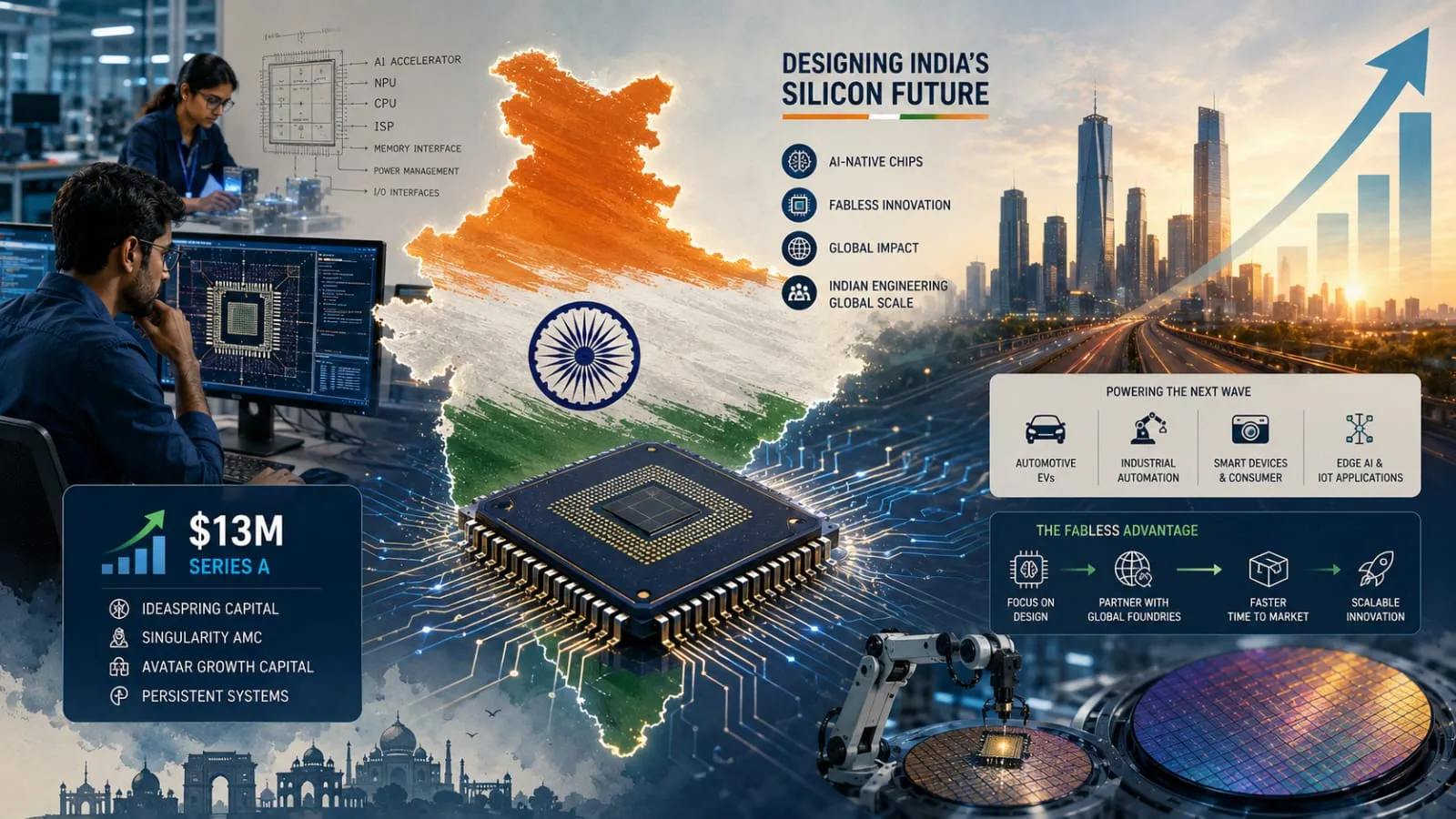
This broader transition recently gained stronger visibility after Bengaluru-based HrdWyr, a fabless semiconductor company building AI-native System-on-Chip products, raised $13 million in a Series A funding round led by Ideaspring Capital, with participation from Singularity AMC, Avatar Growth Capital and Persistent Systems. Founded in 2023 by Ramamurthy Sivakumar, the company develops AI-native chips designed for edge computing and what it describes as the next phase of “Physical AI” environments. The fresh capital will reportedly support product development and broader expansion across international markets.
Viewed independently, HrdWyr’s raise may initially appear like another deep-tech funding announcement. Viewed through a broader funding and market lens, however, it increasingly resembles a larger story involving how investor confidence itself may be evolving around semiconductor design and India’s long-term hardware ambitions.
Investor Interest Increasingly Appears To Be Moving Beyond Software And Toward Foundational Technologies
Historically, startup ecosystems frequently rewarded businesses capable of scaling quickly with relatively limited infrastructure intensity. Software environments naturally attracted capital because products frequently moved from development toward market adoption faster than hardware businesses requiring extended engineering cycles.
Increasingly, however, investor priorities appear evolving alongside broader technological changes. Artificial intelligence increasingly creates demand not simply for software capability but also for specialized hardware capable of supporting real-time computing, energy efficiency and edge intelligence. Simultaneously, global discussions surrounding supply-chain diversification and semiconductor independence increasingly continue influencing how investors evaluate strategic sectors.
This transition increasingly matters because foundational technologies frequently create broader economic ecosystems extending beyond immediate products themselves. Semiconductor businesses often influence industrial capability, research environments and future technology infrastructure simultaneously. As artificial intelligence increasingly expands into mobility systems, appliances, industrial environments and connected devices, investors increasingly appear recognizing that hardware itself may become one of the next major growth environments.
The broader significance increasingly suggests future startup ecosystems may increasingly depend not only on applications people use but also on the technologies quietly operating beneath them.
Fabless Models Increasingly Appear To Be Changing India’s Semiconductor Story
Part of the significance surrounding HrdWyr’s funding story increasingly involves broader shifts occurring around how semiconductor businesses themselves are built. Historically, semiconductor development frequently depended upon highly capital-intensive manufacturing environments requiring enormous investment before products reached commercial markets.
Increasingly, however, fabless structures appear creating different possibilities.
Companies increasingly focus on design.
External foundries increasingly handle manufacturing.
Engineering teams increasingly prioritize architecture and specialization.
Capital increasingly appears moving toward intellectual capability rather than physical infrastructure alone.
As a result, startups increasingly gain opportunities to participate within semiconductor ecosystems without carrying the full operational burden traditionally associated with fabrication environments. HrdWyr itself reportedly positions around end-to-end semiconductor products rather than licensing models, with AI-native chips designed for applications involving EVs, consumer products and industrial environments.
This transition increasingly matters because it potentially changes who can participate inside semiconductor ecosystems and how startup environments themselves evolve.
India’s Semiconductor Ambitions Increasingly Appear To Be Entering A Different Phase
Another important dimension emerging beneath stories such as HrdWyr increasingly involves larger changes occurring across India’s technology landscape itself. Historically, India frequently built global recognition around software capability and technology services. Semiconductor conversations often remained comparatively limited because larger manufacturing ecosystems historically concentrated elsewhere.
Increasingly, however, broader policy environments, design incentives and startup ecosystems increasingly continue creating momentum around semiconductor capability itself. Multiple startups across chip design, AI infrastructure and deep-tech categories increasingly continue attracting attention as investors expand participation within long-cycle technology environments.
This broader transition increasingly matters because semiconductor ecosystems frequently evolve gradually before larger commercial outcomes become visible. Funding environments often represent early indicators involving confidence around sectors expected to play larger roles over time. The broader significance increasingly suggests India’s technology story may increasingly expand beyond software and toward infrastructure technologies shaping future computing itself.
The Larger Story Increasingly Extends Beyond One Funding Round Alone
The broader significance surrounding HrdWyr may ultimately involve what it reveals regarding how startup ecosystems increasingly evolve. Historically, investors frequently concentrated around visible categories where product-market fit and scaling trajectories appeared familiar.
Viewed through a broader lens, however, HrdWyr’s funding round increasingly resembles more than a semiconductor investment story. It increasingly appears connected to larger realities involving artificial intelligence, industrial capability and how countries increasingly position themselves around foundational technologies shaping future economies.
The larger funding story therefore may not simply involve another $13 million Series A or another semiconductor startup attracting capital. Increasingly, it may involve recognizing that some of India’s next major startup opportunities may emerge not only from software people interact with directly, but from the silicon infrastructure quietly powering everything around it.