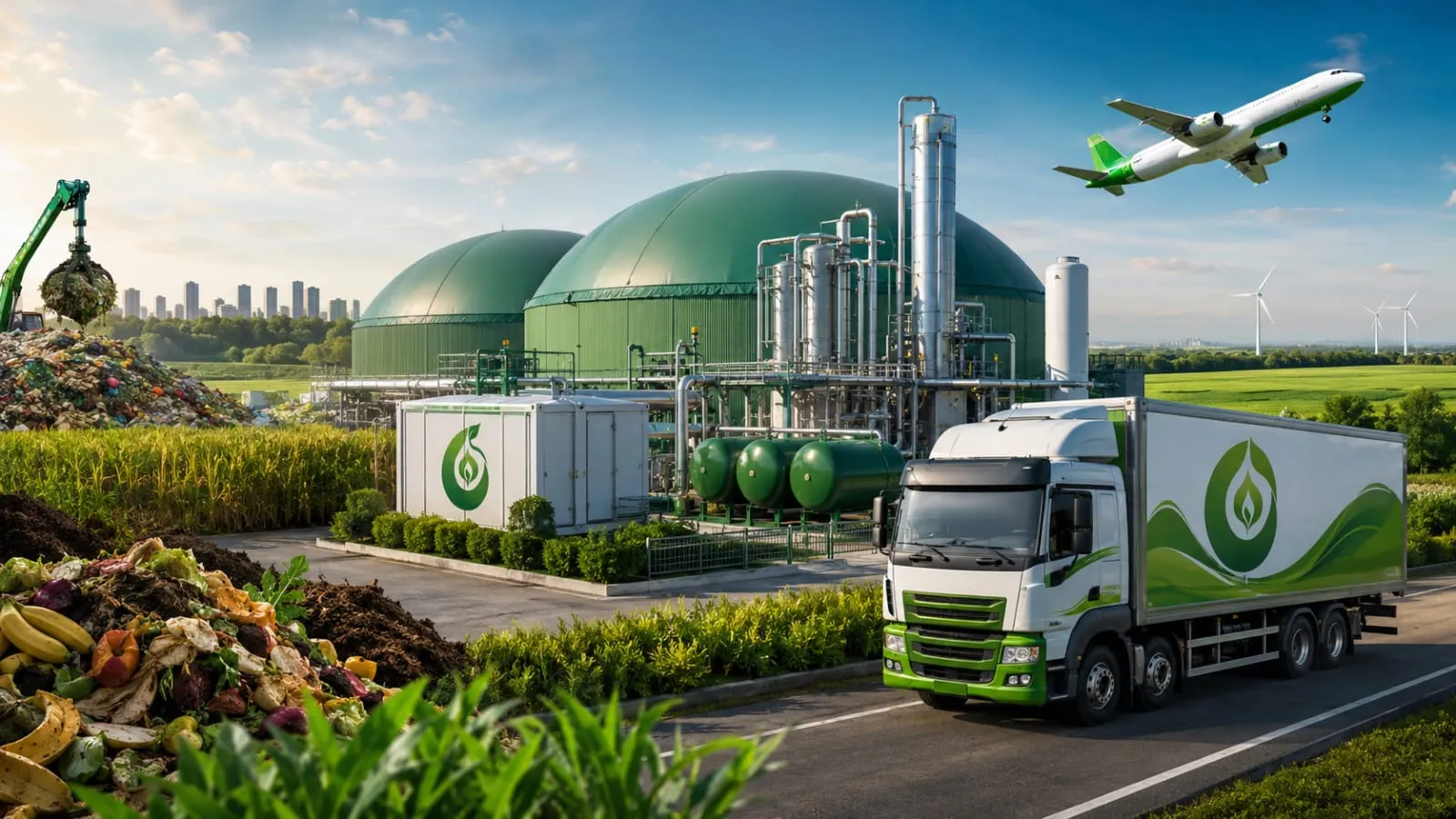
From Garbage to Gas: The Quietly Brilliant Indian Company Turning Waste Into a ₹3,500 Crore Clean Energy Empire
Most clean energy stories are about what's new — the latest solar panel, the newest battery chemistry, the freshest EV startup. GPS Renewables is doing something different. It's taking something very old — organic waste — and turning it into something the world urgently needs: clean, affordable, locally produced fuel.
And on June 8, 2026, the market delivered its verdict on that idea in the form of ₹635 crore.
What Is Compressed Biogas — And Why Does It Matter?
Biogas is produced when organic matter — agricultural residue, food waste, municipal solid waste, sewage sludge — decomposes in the absence of oxygen. The resulting gas is primarily methane, the same molecule that makes natural gas valuable as a fuel. Compressed Biogas, or CBG, is biogas that has been purified and compressed to a standard that makes it usable as a drop-in replacement for Compressed Natural Gas in vehicles, industrial processes, and cooking.
India produces an estimated 600 million tonnes of agricultural residue every year. Hundreds of millions of tonnes of municipal solid waste. Vast quantities of industrial organic waste. Most of it is burned, dumped, or left to decompose in ways that generate methane emissions — contributing to climate change while wasting an enormous energy resource.
CBG turns that problem into an opportunity. Every tonne of waste that becomes biogas is a tonne that isn't burned in a field or rotting in a landfill — and it displaces fossil natural gas imports at the same time. For India, which imports over 40% of its natural gas needs, that's not just an environmental win. It's an energy security win.
GPS Renewables — A Decade in the Making
Founded in 2012 by Mainak Chakraborty and Sreekrishna Sankar, GPS Renewables has spent over a decade quietly building something no one else in India has: a full-stack bioenergy company with capabilities across technology development, software, design and engineering, EPC — Engineering Procurement Construction — operations, maintenance, and project development.
This isn't a company that designs biogas systems and outsources the rest. GPS Renewables builds the technology, engineers the plant, constructs the facility, and then operates it — end to end. That full-stack ownership is what gives the company its cost advantages, its quality control, and its ability to guarantee performance in ways that asset-light competitors simply cannot.
Today, the company is an 800-member organisation with annual revenues of approximately ₹1,000 crore and 30 to 40 operational or near-complete large-scale CBG facilities across India. Its completed projects include a municipal solid waste-based CBG plant in Indore — one of India's cleanest cities — and a CBG facility in Barabanki in Uttar Pradesh.
And now, with ₹635 crore in fresh capital, it's about to do all of that at a scale India has never seen before.
The ₹635 Crore Round — A Uniquely Structured Deal
This isn't a simple venture round. GPS Renewables has engineered one of the most sophisticated capital structures in India's cleantech ecosystem — designed specifically to maximise growth while minimising equity dilution at the parent level.
The round comprises three distinct components. First: ₹125 crore in equity led by PixelSky Capital at the parent technology and EPC platform level, with participation from Spectrum Impact Family Office and other investors. Second: ₹200 crore in equity committed to GPSR Arya — the company's dedicated asset-holding vehicle — from a leading Korean conglomerate. Third: ₹310 crore through a previously announced partnership with Sojitz Corporation, the Japanese trading and investment giant, in collaboration with Indian Oil Corporation.
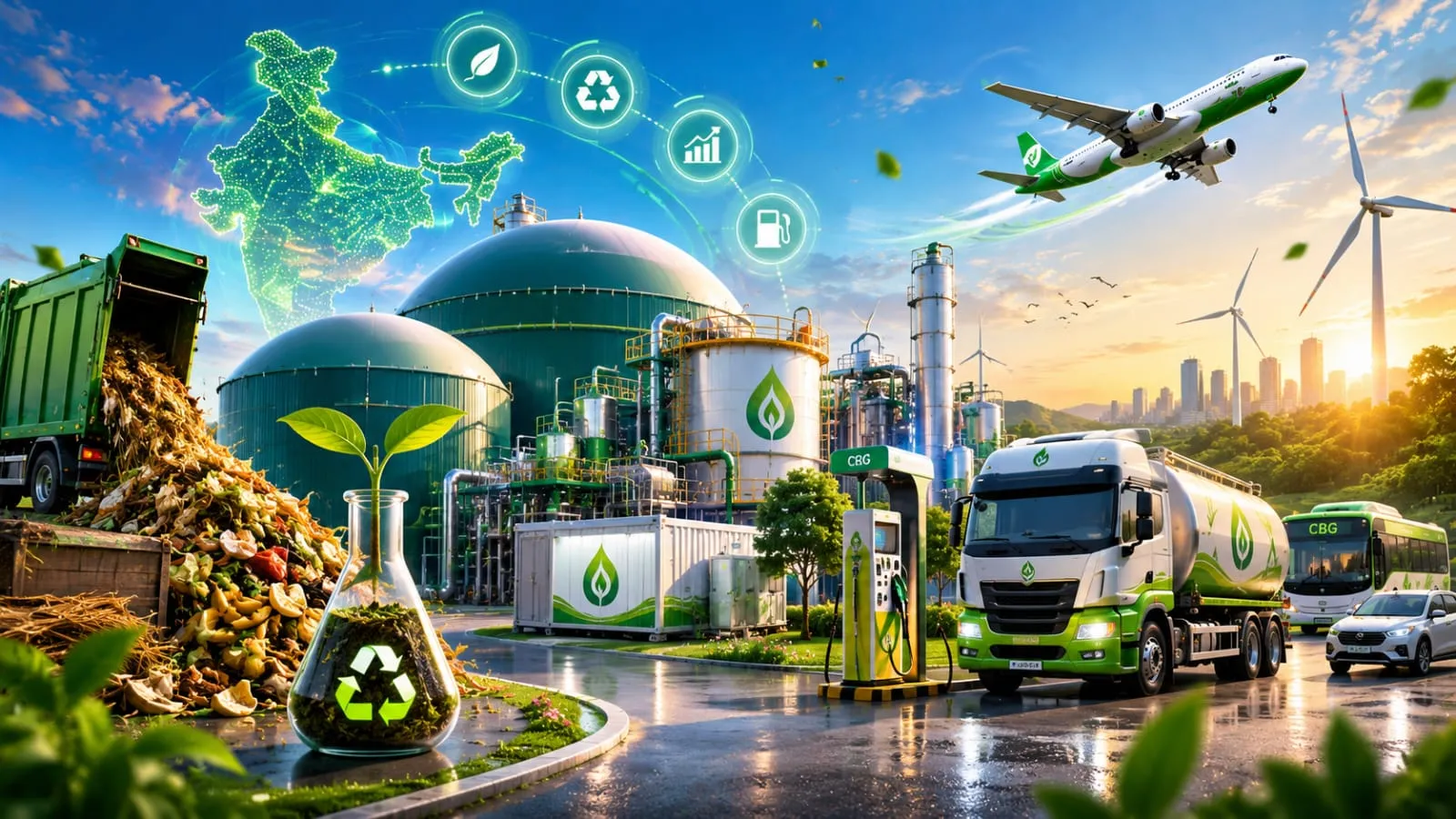
The involvement of Indian Oil Corporation — India's largest oil company — as a strategic partner at the asset level is particularly significant. IOC's distribution network, fuel retail infrastructure, and institutional relationships make it the ideal partner for a company trying to build a national CBG supply chain. When India's biggest oil company decides to back a biogas startup, it signals something profound about the direction of India's energy transition.
Zerin Rahman, Managing Partner at PixelSky Capital, was direct about the conviction: GPS Renewables has consistently shown a highly disciplined approach towards scaling bioenergy infrastructure in India. Their proven track record of consistently delivering and being profitable since inception gave us a lot of confidence.
Profitable since inception. In India's startup ecosystem, that's a rare and powerful thing to be able to say.
The Road to 100 Plants and ₹3,500 Crore
The fresh capital unlocks an extraordinary growth ambition. GPS Renewables is targeting an expansion from its current 30 to 40 facilities to 100 operational CBG plants — a 2.5x to 3x increase in its physical footprint. Each industrial-scale CBG plant requires approximately ₹120 to 125 crore in capital expenditure, meaning the company is managing a total project capex pool of $1.2 to 1.3 billion as it scales toward its target.
To achieve this, the company will follow a disciplined 70:30 debt-to-equity structure at the project level — using the asset platform GPSR Arya as the vehicle for project-level financing, keeping equity dilution at the parent level minimal and preserving shareholder value as the company scales.
The revenue target is equally ambitious: from approximately ₹1,000 crore today to at least ₹3,500 crore by FY28 — a 3.5x growth in two years. That trajectory is the runway for GPS Renewables' planned parent-level IPO, targeted for post-FY28.
Sustainable Aviation Fuel — The Next Frontier
Perhaps the most exciting element of GPS Renewables' story is where it's heading beyond CBG. The company is actively building capabilities in Sustainable Aviation Fuel — SAF — the clean fuel that the global aviation industry needs to decarbonise its operations.
Aviation is one of the hardest sectors to electrify. Jet engines need liquid fuel with high energy density — and for the foreseeable future, biofuels derived from organic waste are one of the only credible pathways to clean aviation. GPS Renewables' expertise in converting organic waste into clean fuel positions it perfectly to move up the value chain into SAF — a market that global airlines, airports, and regulators are actively trying to develop at scale.
Akshay Panth of Neev Funds described GPS Renewables' SAF potential as positioning the company to deliver large-scale decarbonisation impact to solve India's energy transition and security challenges. For a country that imports nearly all of its aviation fuel, a domestic SAF industry would be transformative.
The Bigger Picture
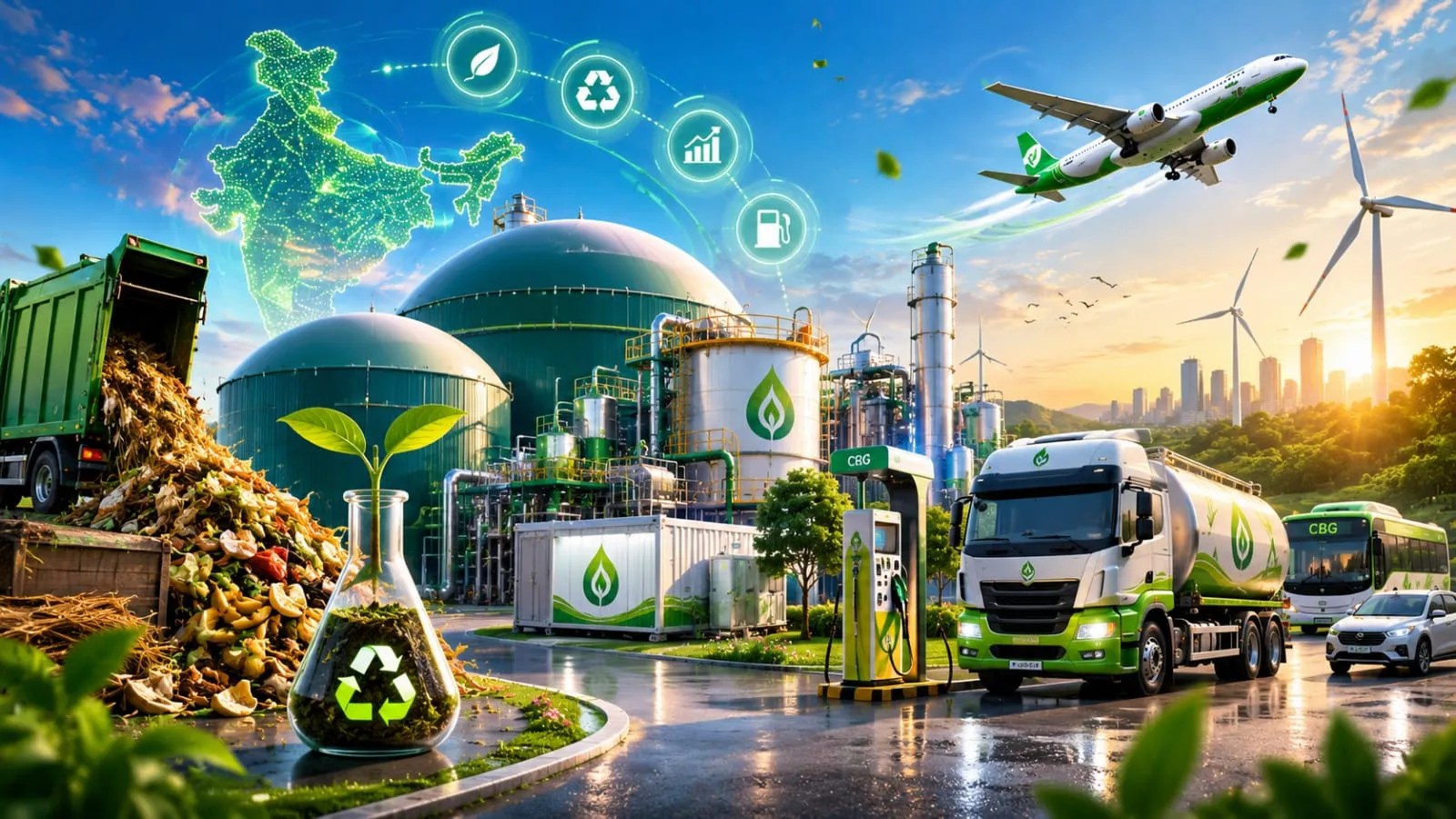
India's National Bioenergy Programme has set ambitious targets for CBG production — and the government's SATAT scheme is pushing oil marketing companies to procure CBG from domestic producers. Policy tailwinds, strategic partners like IOC and Sojitz, and a decade of operational experience give GPS Renewables an almost unassailable position in the market it has helped create.
Turning India's waste into India's fuel. Building 100 plants. Targeting SAF. Planning an IPO. And doing all of it profitably, since day one.
That's not a startup story. That's a nation-building story