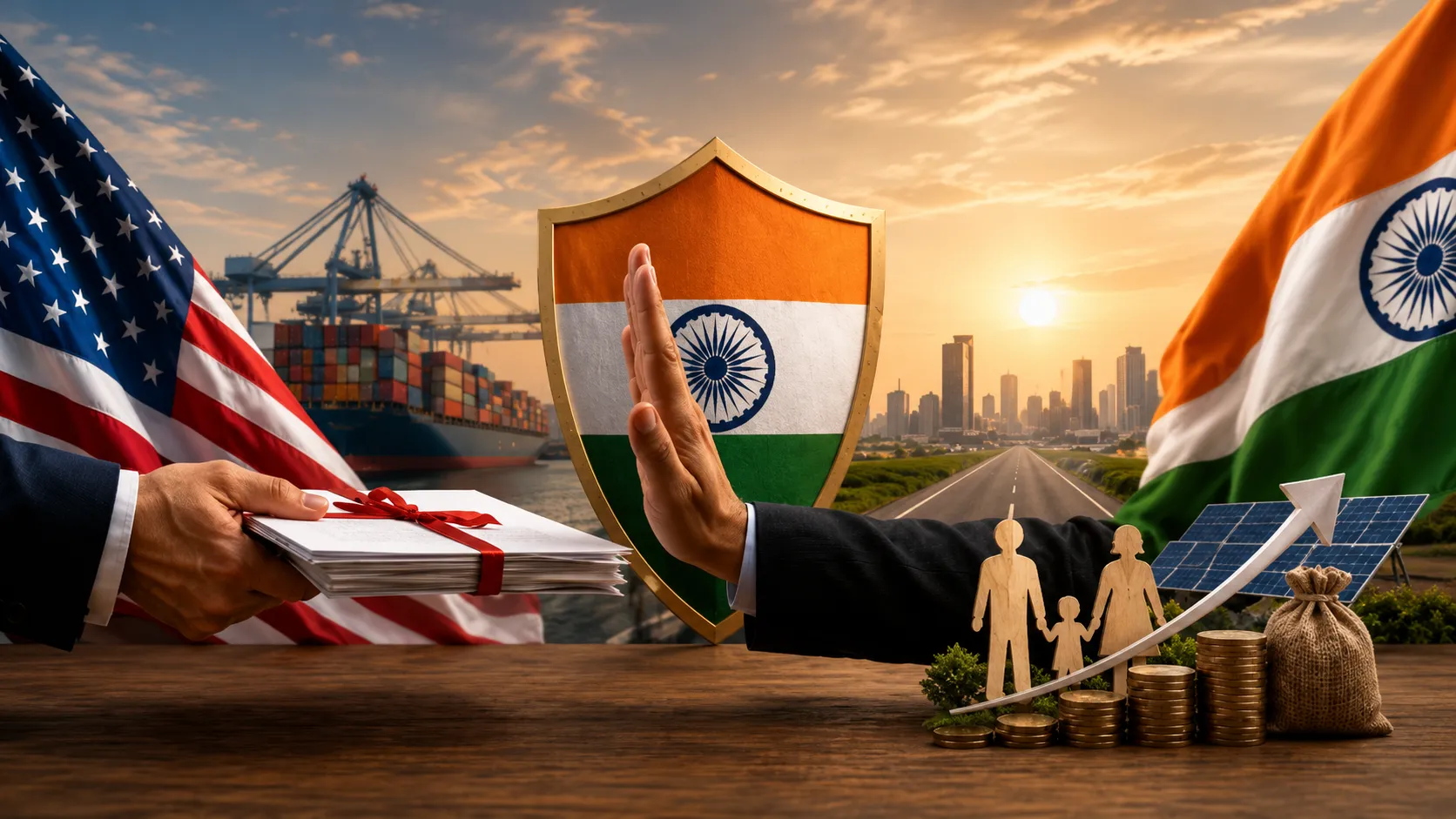
A Reuters analysis published on July 13 has set off a small diplomatic storm over the state of trade negotiations between India and the United States, reporting that New Delhi rejected the opportunity for a quick, interim trade agreement during recent talks and is instead deliberately holding out for more favourable terms — a strategic posture the news agency's sources attributed to Prime Minister Narendra Modi's growing confidence, drawn from new trading partnerships, an improving domestic economic outlook, and recent political wins at home. The report has since drawn a pointed public rebuttal from India's Commerce and Industry Minister Piyush Goyal, who took to social media to call the characterisation "completely false, baseless and misleading," insisting that negotiations between the two countries remain active and constructive.
The dispute over how to characterise the state of talks matters because it sits atop a substantive and consequential set of unresolved questions in the India-US trade relationship — questions that carry real implications for exporters, investors and the broader trajectory of one of the world's most closely watched bilateral economic relationships. Whatever the correct characterisation of New Delhi's tone in the negotiating room, the underlying facts reported by Reuters, several of which are corroborated by public statements from officials on both sides, paint a picture of a negotiation that has, at minimum, not concluded on the timeline both sides had once hoped for.
WHAT ACTUALLY HAPPENED, ACCORDING TO THE REPORTING
According to the Reuters account, which cited officials and trade analysts on both sides, the two countries failed to finalise an interim trade agreement during a visit to New Delhi last month by US Trade Representative Jamieson Greer, despite what both sides had reportedly expected would be a limited deal within reach at the time of his visit. The reported sticking point was not a single dramatic disagreement but rather Washington's unwillingness, from India's perspective, to offer assurances on two of New Delhi's key negotiating demands: a tariff advantage relative to competing exporters such as China, and a guarantee against new US tariffs being imposed on Indian goods after any agreement is signed.
An unnamed Indian government official quoted in the Reuters report framed New Delhi's position in blunt terms: the country does not intend to rush into an agreement that lacks favourable terms, nor is it willing to compromise on what the official termed "red lines," specifically citing agricultural market access as an area where India is not prepared to make concessions. That framing around agriculture is significant given the political sensitivity of the sector in India, where hundreds of millions of livelihoods remain tied to farming, and where opening domestic markets to foreign agricultural imports has historically been one of the most politically fraught concessions any Indian government can make in a trade negotiation.
The Reuters report also noted that Washington's own position throughout the talks has been that India needs to "earn" preferential trade treatment through its own concessions, and that while the White House has continued to express confidence that an agreement will eventually be reached, no firm timeline has been offered. White House spokesman Kush Desai, responding to Reuters' questions about the state of the talks, said the Trump administration "continues to productively engage with Indian officials to finalise a historic trade deal that puts Americans and America First" — a statement that, notably, neither confirms nor denies the specific characterisation of India walking away from a quick deal, but does confirm that negotiations remain ongoing rather than collapsed entirely.
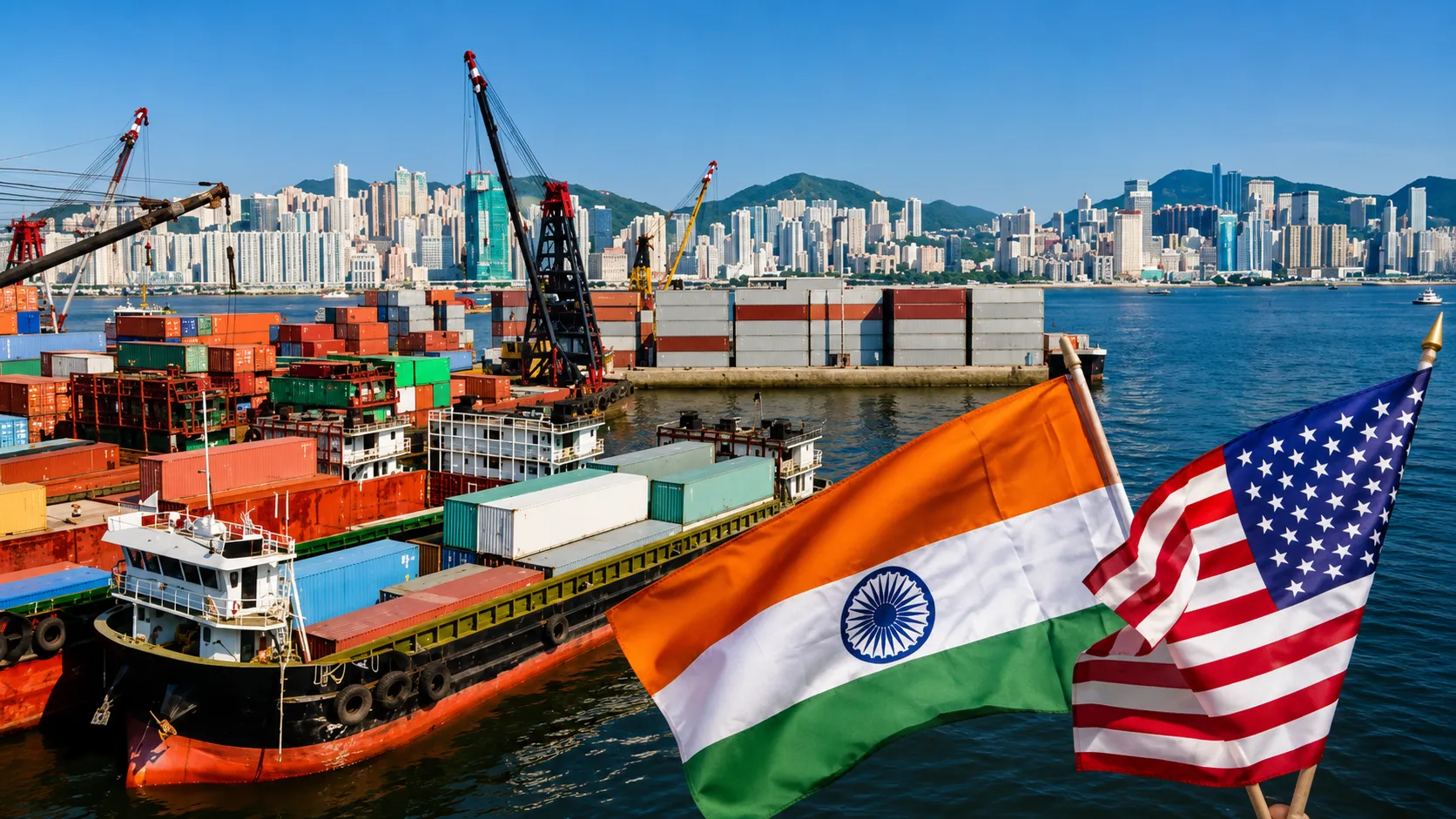
WHY INDIA MAY FEEL IT CAN AFFORD TO WAIT
The more analytically interesting part of the Reuters report lies not in the disputed characterisation of New Delhi's negotiating posture, but in the specific factors the report cites as having strengthened India's hand and, by extension, its willingness to walk away from a hastily concluded deal. Chief among these is India's export performance, which the report notes rose approximately 15 percent year-on-year in the April-June quarter despite disruptions tied to the broader US-Iran conflict — a figure that aligns closely with the record $232.73 billion total export data released by India's Commerce Ministry this month, covered in detail elsewhere in this edition. Trade analysts quoted in the Reuters piece specifically pointed to this export resilience, alongside newly concluded or expanding trade relationships with other partners — most notably the India-UK Comprehensive Economic and Trade Agreement, which took effect on July 15, and continued engagement with the European Union — as evidence that India's economy is not as dependent on securing quick US tariff relief as it might have appeared just a year earlier.
Ajay Srivastava, founder of the Global Trade Research Initiative and a former Indian trade negotiator, offered a particularly candid assessment in the Reuters report, arguing that India has calculated that delaying, or even ultimately abandoning, a rushed deal may prove more prudent than locking into obligations whose long-term costs could exceed whatever temporary tariff relief a hasty agreement might deliver. That framing reflects a broader strategic recalibration reportedly underway within India's trade policy establishment: rather than treating a US trade deal as an urgent necessity to be secured at nearly any cost, New Delhi appears increasingly willing to treat it as one option among several, to be pursued only on terms it judges genuinely favourable.
Separately, the report cited an assessment from Goldman Sachs economist Santanu Sengupta, who noted that the interim US-Iran peace arrangement reached earlier this year had improved India's broader economic outlook by easing oil prices for a period, prompting the bank to raise its 2026 India growth forecast to 6.8 percent while lowering its inflation and current-account deficit projections — an improved macroeconomic starting position that, in Sengupta's assessment, gives New Delhi additional room to hold out for better trade terms without incurring significant near-term economic cost. It is worth noting that this improved oil-price backdrop has itself proven fragile, given the renewed Middle East tensions and crude oil spike documented elsewhere in this week's news, a reminder of how quickly the underlying economic conditions shaping India's negotiating leverage can shift.
THE LEGAL AND POLITICAL WILDCARDS
Beyond economic fundamentals, the Reuters report also flagged a less commonly discussed factor potentially shaping India's calculus: legal uncertainty surrounding the Trump administration's own tariff authority. The report noted that a group of 22 Democratic state attorneys general in the United States have filed formal objections to tariffs the administration has proposed in connection with forced labour probes, suggesting that some of the trade measures the US has been using as leverage in negotiations with trading partners, including India, could face legal or political setbacks of their own. An unnamed Indian official cited in the report suggested that New Delhi is factoring precisely this kind of legal uncertainty into its own negotiating timeline, calculating that some of Washington's proposed measures may not survive legal challenge regardless of how the bilateral talks conclude.
On the domestic political side, the Reuters analysis pointed to Modi's Bharatiya Janata Party having notched recent state election victories, which trade analysts say have bolstered the government's political capital and, by extension, its willingness to resist external pressure to conclude a trade agreement seen as unfavourable to politically sensitive constituencies like farmers and small businesses. Senior BJP leaders have publicly argued, according to the report, that any eventual trade agreement with the US must adequately protect Indian farmers and small enterprises — a position that aligns closely with the "red lines" the unnamed Indian official referenced regarding agricultural market access.
THE CURRENT STATE OF PLAY AND WHAT HAPPENS NEXT
Most Indian exports currently face a 10 percent tariff under existing US trade measures, and the Trump administration is reportedly preparing to introduce steeper tariffs later this month, following the conclusion of probes into what it has characterised as excess industrial capacity in certain sectors — a characterisation India has publicly denied applies to its own industries. Commerce Minister Goyal, notwithstanding his rejection of the specific Reuters characterisation of India "walking away," has himself previously stated publicly that any eventual India-US trade deal would not be implemented unless it delivers a clear tariff advantage for India, a position broadly consistent with the substance, if not the tone, of what the Reuters report describes.
That alignment between Goyal's own public statements and the substantive negotiating position described in the disputed report suggests the disagreement may be less about the underlying facts of the standoff and more about how those facts are being framed for a domestic and international audience — a distinction that matters diplomatically but changes little for exporters and businesses on both sides who continue to operate under uncertainty about when, or on what terms, a final agreement might eventually be reached. For India's trading partners, exporters and investors tracking this relationship, the practical takeaway from this week's exchange is that a swift resolution to the India-US trade impasse remains unlikely in the immediate term, regardless of which side's characterisation of the standoff proves more accurate in hindsight.
WHAT INDIAN EXPORTERS ARE WATCHING FOR
For the businesses most directly exposed to the outcome of these negotiations — textile and apparel manufacturers, gems and jewellery exporters, auto component makers and IT services firms among them — the practical stakes of this standoff are considerable. Many of these sectors currently operate under the 10 percent baseline tariff applied to most Indian goods entering the US market, a rate that, while manageable, leaves Indian exporters at a competitive disadvantage relative to countries that have already secured more favourable tariff arrangements with Washington. Industry bodies representing these sectors have generally stayed publicly measured on the state of the negotiations, wary of being seen to publicly second-guess the government's negotiating strategy, but privately, several exporter associations have voiced concern that prolonged uncertainty makes it difficult for businesses to commit to the kind of capacity expansion and long-term client relationships that a durable, favourable trade agreement would otherwise support.
A NEGOTIATION PLAYING OUT AGAINST A SHIFTING BACKDROP
What makes this particular round of India-US trade brinkmanship different from earlier standoffs in the relationship is the sheer number of parallel developments shaping the broader context in which it is unfolding. India's CETA agreement with the United Kingdom came into force this week, giving New Delhi a concrete, tangible example of a completed trade agreement to point to as evidence that it can secure favourable terms through patient negotiation rather than rushed concessions. Simultaneously, the same Middle East tensions rattling India's equity and bond markets this week have also reintroduced volatility into the oil price backdrop that had briefly improved India's macroeconomic position earlier this year, a reminder that the "eased economic risks" cited in the Reuters report as bolstering India's negotiating confidence are themselves subject to rapid reversal depending on how the geopolitical situation in the Gulf evolves. Whether India's calculated patience in the US talks continues to look like prudent strategy or increasingly costly delay may depend as much on how these parallel, fast-moving global developments unfold as on anything said across the negotiating table itself.
HOW THIS COMPARES WITH OTHER COUNTRIES' US TRADE TALKS
India's posture in these negotiations is worth situating alongside how other major US trading partners have approached similar talks with the Trump administration over the past year. Several economies, facing the prospect of steep reciprocal tariffs, moved relatively quickly to conclude framework agreements with Washington, judging that securing even partial, imperfect tariff relief sooner was preferable to prolonged uncertainty for their exporters. India's apparent willingness to take a slower, more deliberate approach sets it apart from that pattern, and trade analysts are divided on whether this reflects genuine strategic confidence, as the Reuters report suggests, or simply a higher tolerance for prolonged uncertainty given the relatively modest direct share of India's overall economy that US-bound exports represent compared to some other trading partners more heavily dependent on the American market. Either way, the outcome of India's approach, once it eventually becomes clear, is likely to be studied closely by other mid-sized economies navigating similar negotiations with Washington, as a test case for whether patience in trade diplomacy pays off or simply defers the same difficult concessions to a later, potentially less favourable, date.
---