The Woman Who Built India's Biotech Industry Just Did It Again
Kiran Mazumdar-Shaw has a habit of building things India was told it couldn't build. In 1978, she founded Biocon in a garage in Bengaluru — at a time when the idea of an Indian woman leading a biopharmaceutical company was considered almost absurd. Biocon went on to become one of Asia's largest biotech companies, employing thousands and making life-saving medicines accessible to millions.
In 2018, she did it again. Immuneel Therapeutics — co-founded by Mazumdar-Shaw alongside oncology luminaries Kush M Parmar and Siddhartha Mukherjee — was built on a single, audacious belief: that the most advanced cancer therapies in the world should not remain the exclusive privilege of patients wealthy enough to afford them in Western hospitals.
On June 8, 2026, that belief just attracted ₹100 crore in fresh capital.
What Is CAR-T Therapy — And Why Does Affordability Matter So Much?
To understand why Immuneel's work is genuinely significant, you need to understand what CAR-T therapy is — and why it has remained out of reach for the vast majority of cancer patients globally.
CAR-T stands for Chimeric Antigen Receptor T-cell therapy. The treatment works like this: a patient's own immune T-cells are extracted from their blood, taken to a laboratory, and genetically reprogrammed to recognise and destroy specific cancer cells. Those engineered cells are then reintroduced into the patient's body — where they hunt down and eliminate the cancer with extraordinary precision.
For blood cancers like Non-Hodgkin Lymphoma and certain leukemias, CAR-T therapy has delivered results that were previously unimaginable. Patients who had exhausted every other treatment option have gone into remission. It is, in many ways, the most exciting frontier in oncology today.
But in the United States, a single course of CAR-T therapy can cost anywhere from $300,000 to $500,000. In Europe, the numbers are similarly prohibitive. The result: a life-saving treatment exists, works, and is approved — but 95% of the patients who need it in the developing world simply cannot access it.
That is the problem Immuneel was built to solve.
Qartemi — India's First and a World First in Affordability
Immuneel's flagship product is Qartemi — India's first domestically developed, regulatory-approved CAR-T therapy for Non-Hodgkin Lymphoma. Qartemi was commercially launched in 2025, making Immuneel one of only a handful of companies globally to have taken a CAR-T therapy from the lab all the way to commercial availability.
And here is the number that changes the entire conversation: Immuneel delivers Qartemi at a fraction of Western costs. CEO Amit Mookim said it directly — Qartemi's commercialisation proved the company can deliver world-class CAR-T outcomes at a fraction of what Western providers charge.
This is not a compromise product. This is not a cheaper version of something inferior. This is the same science, the same precision genetic engineering, the same mechanism of action — built on India's manufacturing strengths, delivered through an internationally certified Good Manufacturing Practice facility in Bengaluru, and priced for the real world rather than the wealthy world.
The ₹100 Crore Round — Who's Backing It
The Series B financing was led by new investors Singularity AMC and Rainmatter by Zerodha — two of India's most respected investment platforms, both making a meaningful bet on advanced oncology. Existing investors including Kiran Mazumdar-Shaw herself, Eight Roads Ventures, and F-Prime Capital — one of the most prestigious life sciences investors in the world — all doubled down by participating in the new round.
The combination of new institutional capital from Singularity and Rainmatter alongside continued conviction from Eight Roads and F-Prime signals something important: this isn't a round where early investors are looking for an exit. This is a round where everyone in the room believes the biggest chapter is still ahead.
Where the Capital Goes
The fresh ₹100 crore will be deployed across four clear priorities — each one a building block in Immuneel's plan to become a globally competitive CAR-T platform built from India.
First: scaling Good Manufacturing Practice manufacturing capacity. GMP is the internationally recognised standard for pharmaceutical manufacturing — and building GMP-certified CAR-T manufacturing capacity in India is one of the most technically demanding and capital-intensive things a biotech startup can do. It's also one of the most valuable, because it means Immuneel can produce therapies that meet the regulatory standards of every major market in the world.
Second: advancing the next-generation deep-tech cell and gene therapy pipeline toward clinical milestones. Qartemi is the first product — but it won't be the last. Immuneel is building a pipeline of cell and gene therapies that will expand beyond Non-Hodgkin Lymphoma into other blood cancers and potentially solid tumours.
Third: supporting the continued commercialisation of Qartemi — deepening its reach across India's hospital network and making it available to more of the patients who need it.
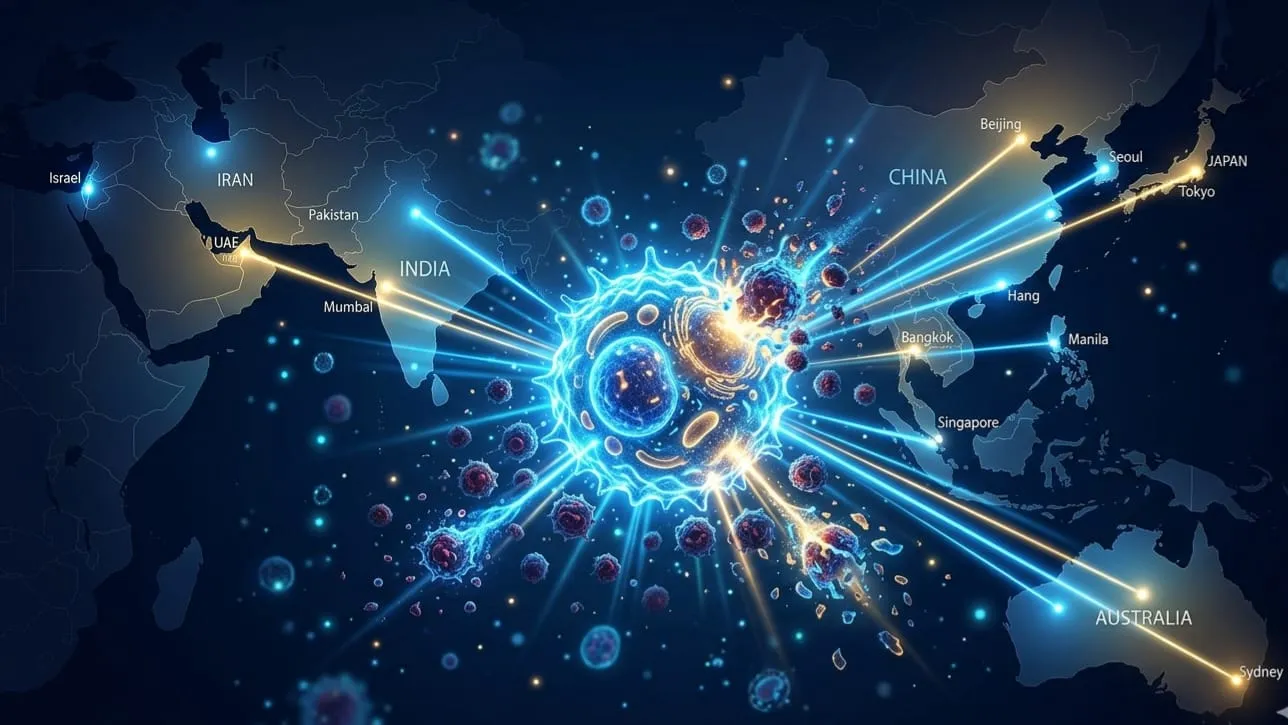
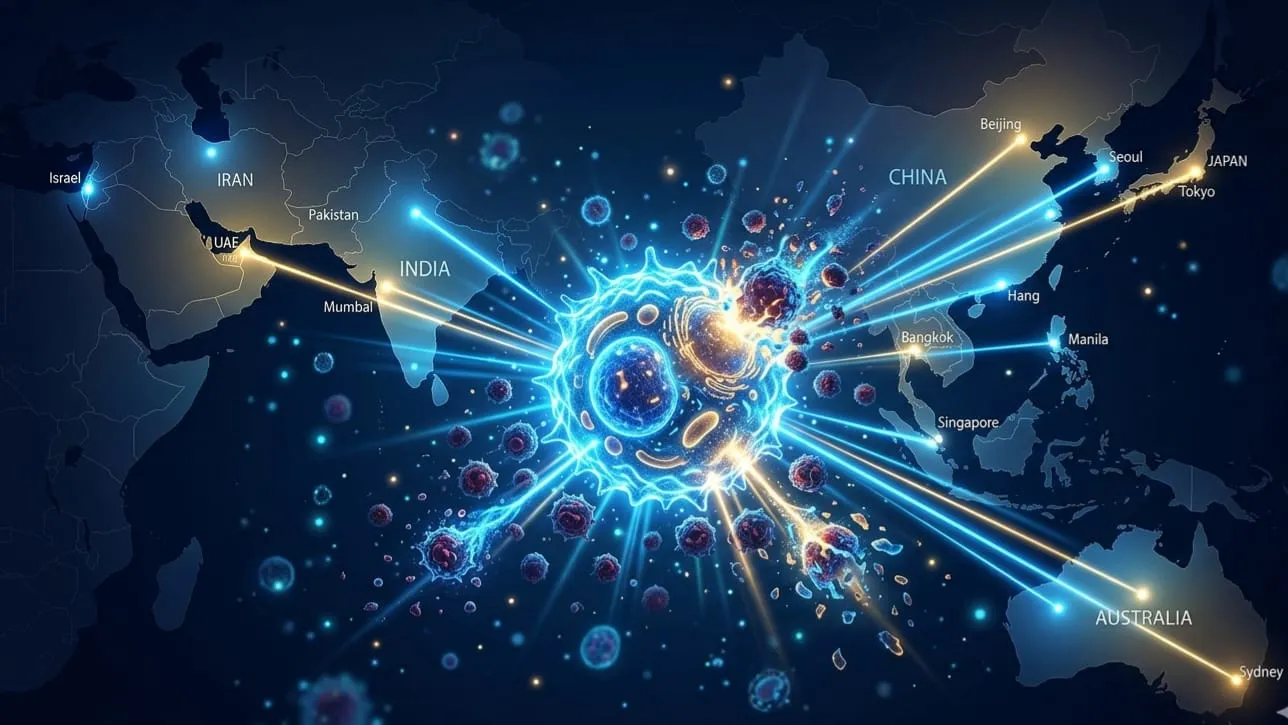
Fourth — and most excitingly: accelerating international market entry across Asia Pacific and the Middle East. Immuneel has already begun progressing clinical co-development partnerships in Australia and Southeast Asia. The ₹100 crore raise is the fuel for that global push.
The Bigger Vision — India as a Cell Therapy Powerhouse
Kiran Mazumdar-Shaw's words at the announcement capture the ambition perfectly: "This company was founded with the belief that advanced cell therapies should not remain confined to a small segment of patients or a handful of geographies. This fundraise strengthens our ability to build a globally competitive CAR-T platform from India, combining deep science, scalable manufacturing, and significantly improved affordability. We believe India can play a meaningful role in shaping the future of cell and gene therapy for the world."
That is not a modest goal. That is a declaration that India — the country that made generic medicines affordable for the developing world — is now going to do the same for the most cutting-edge personalised cancer therapies on the planet.
The West has the science. But India is building the scale, the affordability, and the access. And when a woman who built a biotech empire from a Bengaluru garage says she believes India can shape the future of cell therapy — the smart money is paying attention