India's 2026 initial public offering cohort has delivered a broadly encouraging performance track record through the first seven months of the year, with 21 of the 29 companies that have listed on Indian exchanges currently trading above their original offer prices, delivering average listing-day gains of approximately 30 per cent. Leading this year's crop of strong performers is Omnitech Engineering, whose shares have surged an eye-catching 147.51 per cent above their offer price, making it one of the standout success stories among this year's new market entrants and a frequently cited reference point in discussions about the current strength of India's primary market environment.
This performance data carries meaningful significance for how India's broader IPO ecosystem functions, since listing-day and subsequent trading performance directly shapes investor appetite for participating in future offerings. When a clear majority of new listings deliver positive returns relative to their offer price — as has been the case for roughly 72 per cent of this year's cohort — it reinforces retail and institutional confidence in the IPO process more broadly, encouraging continued strong subscription levels for subsequent offerings and, in turn, giving companies preparing to go public greater confidence in their ability to price offerings attractively while still delivering value to the investors who participate at the IPO stage.
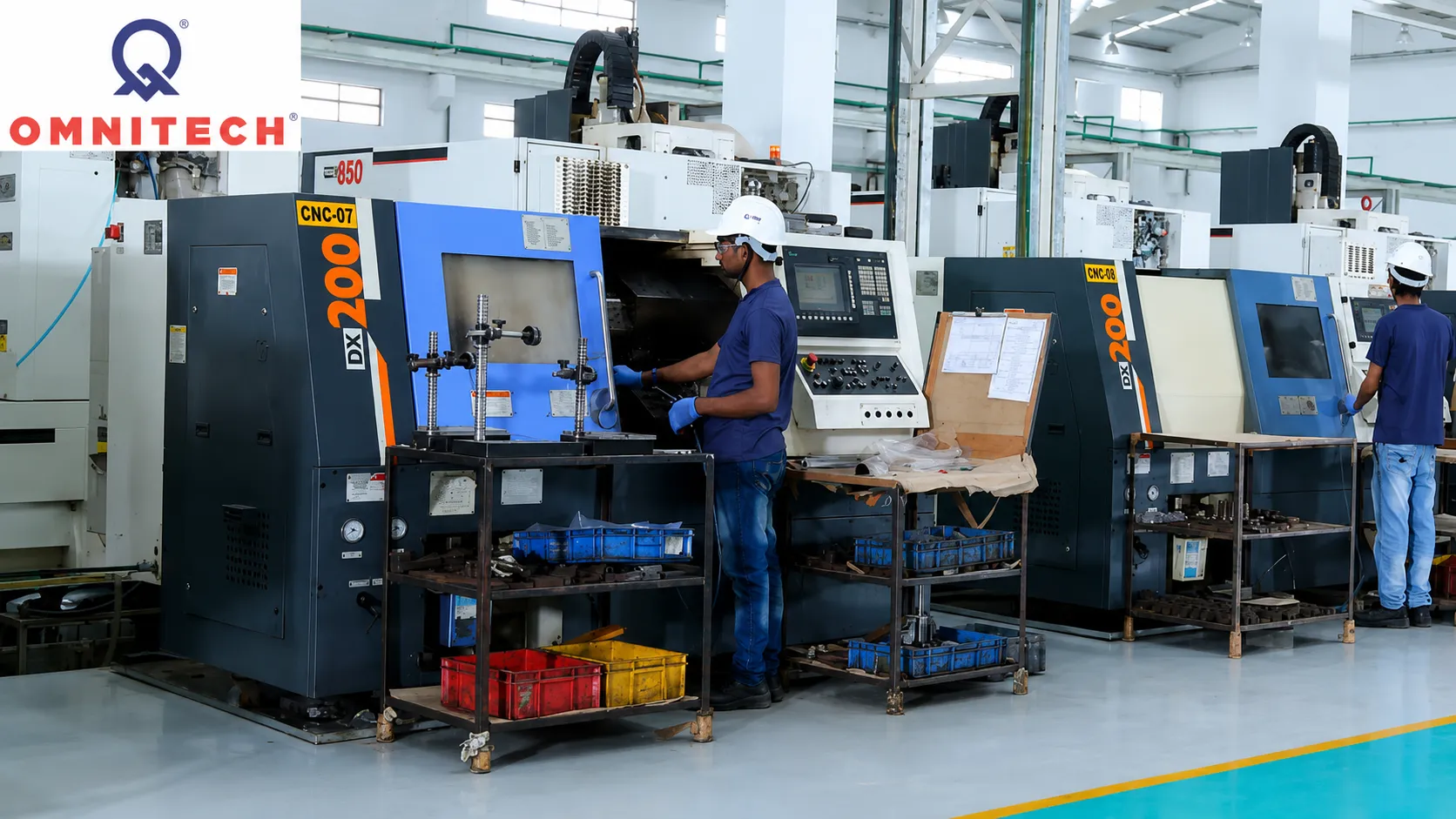
Omnitech Engineering's standout performance deserves particular examination as a case study in what has driven some of this year's strongest listing gains. While the company operates in a considerably more specialised, smaller-capitalisation segment of the market relative to the large, headline-grabbing offerings from companies like SBI Funds Management, its dramatic post-listing surge illustrates a recurring pattern in India's current IPO market: smaller, sector-specific companies with clear, focused business models have, in a number of cases this year, delivered considerably more dramatic percentage gains than larger, more widely covered offerings, reflecting both the narrower analyst and investor attention such companies typically receive ahead of listing — which can lead to more significant price discovery once trading begins — and the generally higher volatility characteristic of smaller-capitalisation stocks more broadly.
The breadth of positive performance across this year's IPO cohort, rather than strength concentrated in just one or two standout names, is arguably the more significant story embedded within this data. A pattern where the substantial majority of new listings deliver positive returns suggests that current IPO pricing discipline across India's investment banking and merchant banker community has generally succeeded in avoiding the kind of aggressive, unsustainable offer price levels that can lead to disappointing listing-day performance and, over time, erode broader investor confidence in the IPO process. This pricing discipline has become an increasingly important consideration for merchant bankers managing IPO processes, particularly as the sheer volume of offerings moving through India's primary market this year — a record ₹1.8 lakh crore raised through IPOs in FY26 alone — has required maintaining consistent quality and pricing standards across a considerably larger number of simultaneous transactions than in previous, quieter years for India's primary market.
For retail investors specifically, this year's strong aggregate listing performance data has reinforced participation in IPO subscription processes as an increasingly popular avenue for generating near-term returns, even as financial advisors continue to caution that historical listing-day performance across a cohort of companies does not guarantee similar outcomes for any individual future offering. The roughly 28 per cent of this year's listed companies currently trading below their offer prices serves as an important reminder that IPO investing, notwithstanding this year's broadly favourable aggregate performance, continues to carry genuine company-specific risk that requires careful individual assessment rather than blanket participation based purely on broader market sentiment or aggregate listing-gain statistics.
Sector-wise analysis of this year's IPO performance reveals a reasonably broad distribution of strong performers across different industries, rather than gains concentrated within any single hot sector — a pattern consistent with the broader diversity that has characterised India's 2026 primary market activity more generally, spanning asset management, healthcare, specialty retail, industrial engineering, and technology-enabled businesses. This sectoral breadth has been read by market analysts as a healthy sign for India's IPO ecosystem, suggesting that current investor enthusiasm reflects genuine confidence in India's broader economic growth trajectory across multiple industries, rather than speculative excess concentrated within a single narrow theme that might prove more vulnerable to a sharp sentiment reversal.
Looking ahead, the sustainability of this strong listing performance track record will face its next significant test as the considerable wave of large offerings currently moving through India's primary market pipeline — including SBI Funds Management's ₹9,813.9 crore IPO and several other sizeable transactions expected to complete before the end of July — come to market and begin trading. Given the substantial scale of some of these forthcoming offerings relative to the smaller, more specialised companies that have driven some of this year's most dramatic percentage gains, market participants will be watching closely to see whether India's broader IPO ecosystem can maintain its current strong aggregate performance track record even as transaction sizes and market capitalisations trend meaningfully larger through the remainder of the year.
For India's capital markets more broadly, this year's strong IPO listing performance data serves as a meaningful validation of the broader primary market recovery that has unfolded through 2026, reinforcing the record 244 SEBI-registered merchant bankers now operating in the market, the record ₹1.8 lakh crore raised through IPOs in FY26, and the steady stream of companies across sectors continuing to view public listing as an attractive and achievable growth milestone. Whether this combination of strong fundraising volumes and encouraging listing performance can be sustained through the remainder of the year will likely depend substantially on broader secondary market conditions holding up, but for now, India's 2026 IPO cohort stands as one of the clearest data points supporting the broader narrative of a genuinely robust, structurally deepening Indian capital market.
A closer look at the timing pattern of this year's strongest-performing listings reveals a further useful insight for market participants tracking India's IPO cycle. Several of the standout gainers, including Omnitech Engineering, listed during periods when broader secondary market sentiment was already running strong, suggesting that individual company fundamentals, however compelling, have generally needed to be complemented by supportive overall market conditions to produce the kind of dramatic listing-day gains seen this year. This interplay between company-specific quality and broader market timing has long been recognised by experienced IPO investors as a critical, if sometimes underappreciated, determinant of listing-day performance, reinforcing why merchant bankers devote considerable attention to selecting favourable listing windows when advising client companies on the optimal timing for their public market debut.
Valuation discipline among this year's issuers has also drawn favourable commentary from market analysts assessing why such a high proportion of 2026's IPO cohort has delivered positive returns. Unlike some previous IPO cycles in Indian market history, where aggressive pre-listing valuations occasionally left little room for post-listing appreciation, this year's offerings have, on average, been priced with what analysts describe as a more considered approach, leaving meaningful upside for investors who participated at the IPO stage rather than extracting maximum possible value for existing shareholders and pre-IPO investors at the point of listing. This more balanced pricing approach, while potentially leaving some money on the table from the perspective of selling shareholders, has arguably contributed directly to the strong aggregate listing performance that has, in turn, sustained robust investor demand for the continued wave of offerings moving through India's primary market pipeline.
For companies still weighing whether and when to pursue their own public listings, this year's strong aggregate performance data offers an encouraging signal, even as prudent management teams and their advisors continue to emphasise that individual company fundamentals, sector positioning, and broader market timing will each remain decisive factors in determining any specific future offering's ultimate success, regardless of how favourably the overall 2026 cohort has performed in aggregate.
Retail investor behaviour patterns tracked through this year's IPO cycle have also offered useful insight into how India's rapidly expanding base of first-time and experienced retail investors alike are approaching primary market opportunities. Data on retail subscription levels across this year's offerings suggests a discernible pattern of retail investors applying more selectively and in greater volume for offerings from well-established, profitable businesses with clear growth narratives, while showing somewhat more measured enthusiasm for offerings from earlier-stage or less immediately profitable companies — a pattern that financial advisors have broadly welcomed as evidence of a maturing, more discerning retail investor base compared to earlier periods in India's market history when retail IPO participation was sometimes driven more by general market euphoria than by considered assessment of individual company fundamentals.
Analysts covering India's broader capital markets have also drawn attention to the multiplier effect that strong IPO performance tends to generate across the wider financial services ecosystem, from increased trading volumes on newly listed stocks benefiting stock exchanges and brokerages, to expanded assets under management for mutual funds and portfolio management services that participate in successful offerings, to the broader wealth effect that strong listing gains generate among the millions of retail investors who have participated in this year's primary market activity. This multiplier effect, while difficult to quantify precisely, is widely viewed by market economists as a meaningful, if underappreciated, contributor to the broader financial services sector growth that has accompanied India's current IPO boom.
As 2026 progresses, market participants will continue tracking this listing performance data as one of the more reliable, real-time barometers of overall investor sentiment toward India's primary markets, alongside the more headline-grabbing figures around total capital raised and the sheer number of companies going public. Should the current pattern of broadly positive listing gains persist through the remainder of the year, it would further reinforce India's standing as one of the more consistently rewarding major IPO markets globally for investors willing to participate at the primary market stage.

For now, the numbers speak clearly: 21 of 29 companies trading above offer price, average gains near 30 per cent, and a standout performer in Omnitech Engineering surging past 147 per cent — a scorecard that few major global IPO markets can currently match, and one that continues to draw fresh capital, fresh issuers, and fresh investor attention to India's rapidly maturing primary market.
As more companies across a widening range of sectors weigh public listings in the months ahead, this year's performance track record will likely serve as a persistent point of reference — both a reassurance to prospective issuers about the receptiveness of India's current primary market conditions, and a benchmark against which the next wave of offerings will inevitably be measured by an increasingly experienced and discerning investor base. Whatever the specific outcomes for individual companies still to list this year, the broader trajectory is now unmistakable: India's IPO market in 2026 has delivered both scale and quality simultaneously, a combination that has rarely been achieved so consistently across a comparably large cohort of offerings in the country's capital markets history.
International investors benchmarking India's IPO market performance against other major global exchanges have increasingly cited this combination of scale and quality as a distinguishing feature that sets the current Indian primary market cycle apart from comparable periods of IPO activity in other emerging markets, several of which have historically struggled to sustain positive aggregate listing performance once issuance volumes scaled up substantially. That India has, so far in 2026, managed to grow both the volume and the quality of its IPO activity simultaneously stands as a genuinely notable achievement, one that reinforces the country's growing standing among the world's most closely watched primary capital markets destinations, and one likely to keep drawing fresh global capital toward India's exchanges well into 2027, cementing this year's cohort of listings as a genuine turning point in how the world's institutional investors view India's public markets today and in the years just ahead, a shift years in the making now finally reflected in the hard numbers, and one that India's primary market ecosystem, from issuers to merchant bankers to retail investors, can rightly claim credit for delivering.