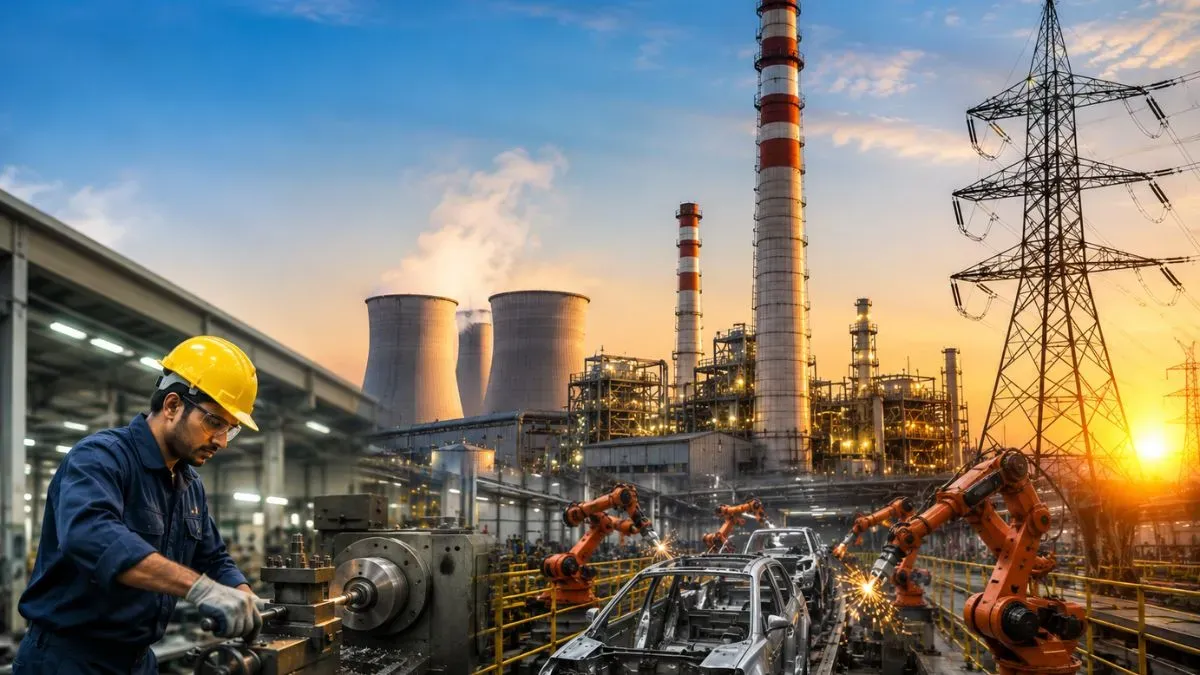
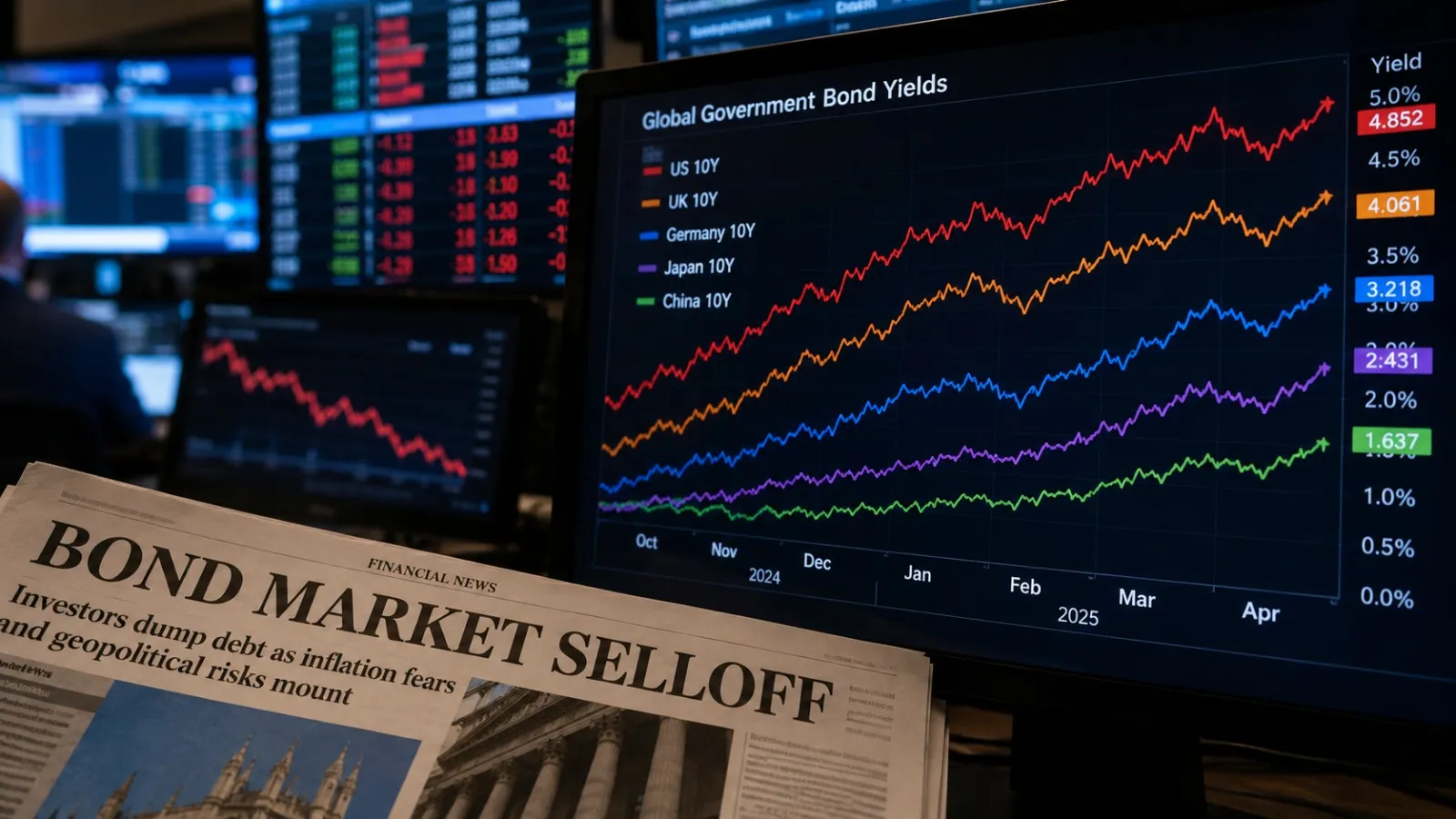
Behind the headline GDP growth figures and stock market rallies that typically dominate coverage of the Indian economy, a quieter but equally consequential story has been unfolding on the country's factory floors: a broad-based industrial expansion powered substantially by three interconnected sectors — electrical equipment, automobiles, and capital goods. Recent industrial output data has highlighted this trio as the primary drivers of India's current manufacturing upturn, even as analysts have simultaneously flagged monsoon-related agricultural risks and ongoing global trade uncertainty as potential headwinds that could complicate the picture in the quarters ahead.
The electrical equipment sector's contribution to this growth story reflects several converging demand drivers that have collectively created an unusually favourable operating environment for manufacturers across the category. India's continued build-out of renewable energy generation capacity, spanning both utility-scale solar and wind installations, requires extensive electrical infrastructure investment, from transformers and switchgear to the cables and wiring systems needed to connect generation capacity to the broader grid. Simultaneously, the government's substantial ongoing investment in strengthening and modernising India's transmission and distribution infrastructure has created sustained institutional demand for electrical equipment, even independent of the renewable energy build-out specifically. The explosive growth of data centre construction across India, driven by both domestic and international technology companies racing to build out artificial intelligence and cloud computing infrastructure, has added a further, increasingly significant demand vector for electrical equipment, given the enormous power infrastructure requirements associated with modern data centre facilities.
This confluence of demand drivers within the electrical equipment sector has been vividly illustrated by the extraordinary results recently reported by companies operating within adjacent segments of the same broader value chain, including cables and wires manufacturer R R Kabel, whose quarterly profit surged roughly 128 per cent on the back of exactly these kinds of infrastructure, real estate, and renewable energy-linked demand tailwinds. While R R Kabel's specific results reflect one company's particular market positioning and execution, the scale of growth reported offers a useful, concrete illustration of just how powerfully the broader electrical equipment demand environment has been running through the first half of calendar year 2026.
The automobile sector's contribution to India's industrial expansion tells a somewhat more nuanced story, reflecting distinct dynamics across different vehicle segments rather than uniform strength across the entire category. Premium and mid-segment motorcycles, exemplified by Eicher Motors's Royal Enfield brand, have shown particular resilience, benefiting from rising disposable incomes among India's growing base of upper-middle-class consumers and the brand's success in cultivating strong customer loyalty around its distinctive, heritage-styled motorcycle offerings. Commercial vehicles have similarly benefited from the broader industrial and infrastructure investment cycle, given the close linkage between commercial vehicle demand and overall logistics, construction, and industrial activity levels across the economy. Passenger vehicles have shown a more mixed picture, with premium and SUV segments generally outperforming more price-sensitive entry-level categories, mirroring broader patterns of income-driven demand bifurcation visible across several Indian consumer categories.
India's position within global automotive supply chains has also evolved meaningfully in ways that support the sector's current growth trajectory. The country has increasingly positioned itself not merely as a manufacturing base for domestic consumption but as a genuine export hub for both complete vehicles and automotive components, benefiting from the same broader global supply chain diversification trends that have supported growth across multiple Indian manufacturing sectors, as international automakers and component suppliers have sought to reduce their dependence on any single manufacturing geography, particularly China, in favour of a more diversified, resilient global supply chain footprint.
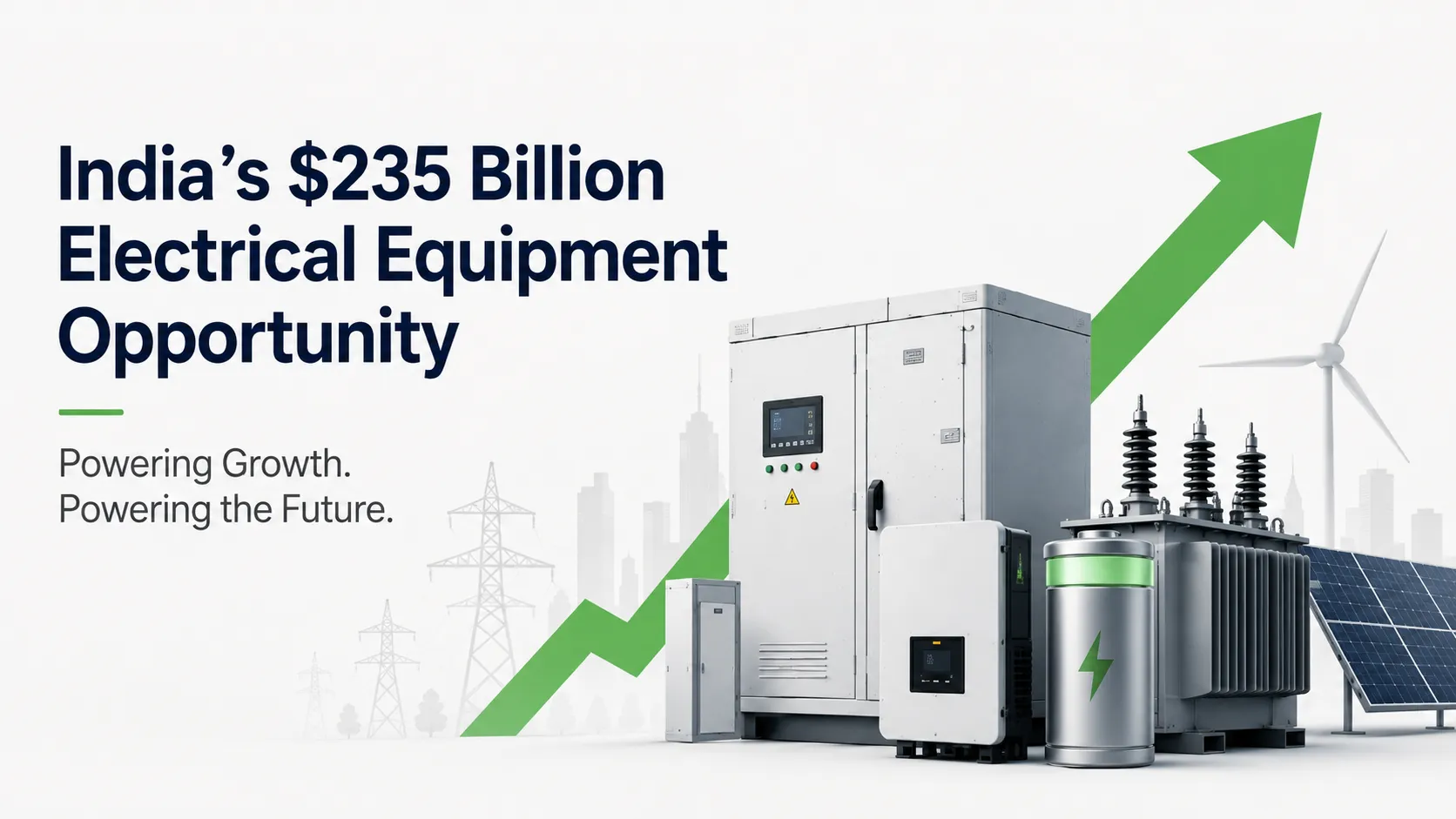
Capital goods, the third pillar of this industrial growth story, encompasses a broad category of machinery and equipment used in the production of other goods — everything from industrial machinery and construction equipment to specialised manufacturing tooling and infrastructure equipment. Growth in capital goods production and sales typically serves as a particularly meaningful leading indicator for broader industrial and economic activity, since businesses generally only invest in new capital equipment when they have genuine confidence in future demand growth sufficient to justify that capital expenditure. Sustained capital goods sector growth, therefore, offers a meaningfully forward-looking signal about business confidence and expected future industrial activity, distinct from the more backward-looking signal offered by current consumption or output data alone.
The interlinkages between these three sectors — electrical equipment, automobiles, and capital goods — help explain why their simultaneous acceleration carries particular significance for assessing the health and durability of India's current industrial upturn. Automobile manufacturing itself represents a major end-use market for both electrical equipment, given the growing electrical and electronic content within modern vehicles including the accelerating shift toward electric and hybrid powertrains, and capital goods, given the substantial machinery and equipment investment required to build and expand automotive manufacturing capacity. Similarly, capital goods manufacturers themselves represent meaningful customers for electrical equipment used within their own production processes and within the machinery and equipment they in turn manufacture and sell to other industrial customers. This interconnected demand structure means that genuine, sustained strength across all three sectors simultaneously is considerably more indicative of a genuinely broad-based industrial upturn than would be the case if strength were concentrated in only one of these three interlinked categories.
Despite this generally encouraging picture, analysts have been careful to flag several risks that could complicate the industrial growth trajectory in the quarters ahead. Monsoon-related risks represent perhaps the most immediately relevant near-term concern, given the outsized importance of a healthy monsoon season for India's broader agricultural output, rural income levels, and, by extension, rural consumption demand that feeds through into demand for various industrial and consumer products, including automobiles, appliances, and other goods with meaningful rural market exposure. An unfavourable monsoon outcome, whether through deficient rainfall, poorly distributed rainfall across key agricultural regions, or excessive rainfall causing flooding and crop damage, could weigh on rural demand in ways that would partially offset the industrial growth momentum currently visible in electrical equipment, automobiles, and capital goods.
Global trade and geopolitical risks represent a second major category of concern flagged by analysts assessing the sustainability of India's current industrial growth trajectory. The ongoing evolution of India's trade relationship with the United States, including the recently clarified but still not fully resolved Section 301 tariff arrangement, alongside broader global trade tensions and the periodic volatility in crude oil and other commodity markets tied to geopolitical developments in regions like West Asia, all represent sources of potential disruption that could weigh on India's export-oriented manufacturing sectors, including segments of the automobile and capital goods industries that have increasingly positioned themselves around export growth alongside domestic demand.
The policy backdrop supporting India's current industrial growth trajectory also deserves mention, given the role government initiatives have played in cultivating the conditions for this kind of broad-based manufacturing expansion. Production-linked incentive schemes across multiple sectors, including electronics, automobiles, and renewable energy equipment manufacturing, have provided meaningful financial incentives for both domestic and international manufacturers to expand production capacity within India, complementing the underlying demand tailwinds discussed above with genuine supply-side policy support aimed at building India's manufacturing competitiveness and self-reliance across strategically important industrial categories.
Regional variation in industrial growth also merits brief consideration, since India's manufacturing expansion has not been uniformly distributed across the country but has instead concentrated disproportionately in certain established and emerging industrial clusters, from the automotive manufacturing hubs of Tamil Nadu, Gujarat, and Maharashtra to the electronics and electrical equipment manufacturing clusters that have developed around cities including Bengaluru, Chennai, and various locations across Uttar Pradesh and other states that have actively courted manufacturing investment through dedicated industrial policy initiatives and infrastructure development.
Looking ahead, the sustainability of the current industrial growth trajectory across electrical equipment, automobiles, and capital goods will likely depend on a combination of factors including the actual outcome of the ongoing monsoon season, the evolution of India's various bilateral trade relationships and tariff arrangements, particularly with the United States, and the continued pace of both public infrastructure investment and private capital expenditure across the broader economy. For now, the simultaneous strength visible across these three interconnected sectors offers a genuinely encouraging signal about the underlying health and momentum of India's manufacturing economy, even as the various risks flagged by analysts serve as a useful reminder that this growth trajectory, however encouraging in its current form, remains subject to meaningful external and domestic uncertainties that could shape its path through the remainder of the fiscal year.
For investors and businesses tracking India's broader industrial and manufacturing sector trajectory, the current data offers a useful reminder that genuinely durable, broad-based economic growth cycles typically manifest not through strength concentrated in a single sector or company, but through the kind of simultaneous, interlinked acceleration across multiple, economically interconnected industrial categories that current data suggests is currently underway across India's electrical equipment, automobile, and capital goods sectors.
Employment implications of this industrial expansion also deserve consideration, given the persistent national conversation around India's job creation challenges discussed extensively in the context of the country's broader 35-year liberalisation retrospective. Manufacturing sectors including automobiles, electrical equipment, and capital goods tend to generate meaningful direct employment on factory floors, alongside considerably larger indirect employment across their extended supplier and ancillary service networks, meaning sustained growth across these three categories carries potential job creation benefits that extend well beyond the immediate manufacturing workforce employed by the largest, most visible companies in each sector.
Small and medium enterprise participation within these growing industrial value chains represents a further dimension worth examining. Large original equipment manufacturers across automobiles, electrical equipment, and capital goods typically rely on extensive networks of smaller component suppliers and ancillary manufacturers, meaning sustained growth at the level of large, listed companies in these sectors generally corresponds with parallel growth opportunities for the thousands of smaller suppliers that feed into these larger value chains — precisely the kind of broad-based, MSME-inclusive growth that policymakers and business leaders including Infosys co-founder Narayana Murthy have argued India's economy needs more of if liberalisation-era growth is to translate into genuinely widespread prosperity and job creation.
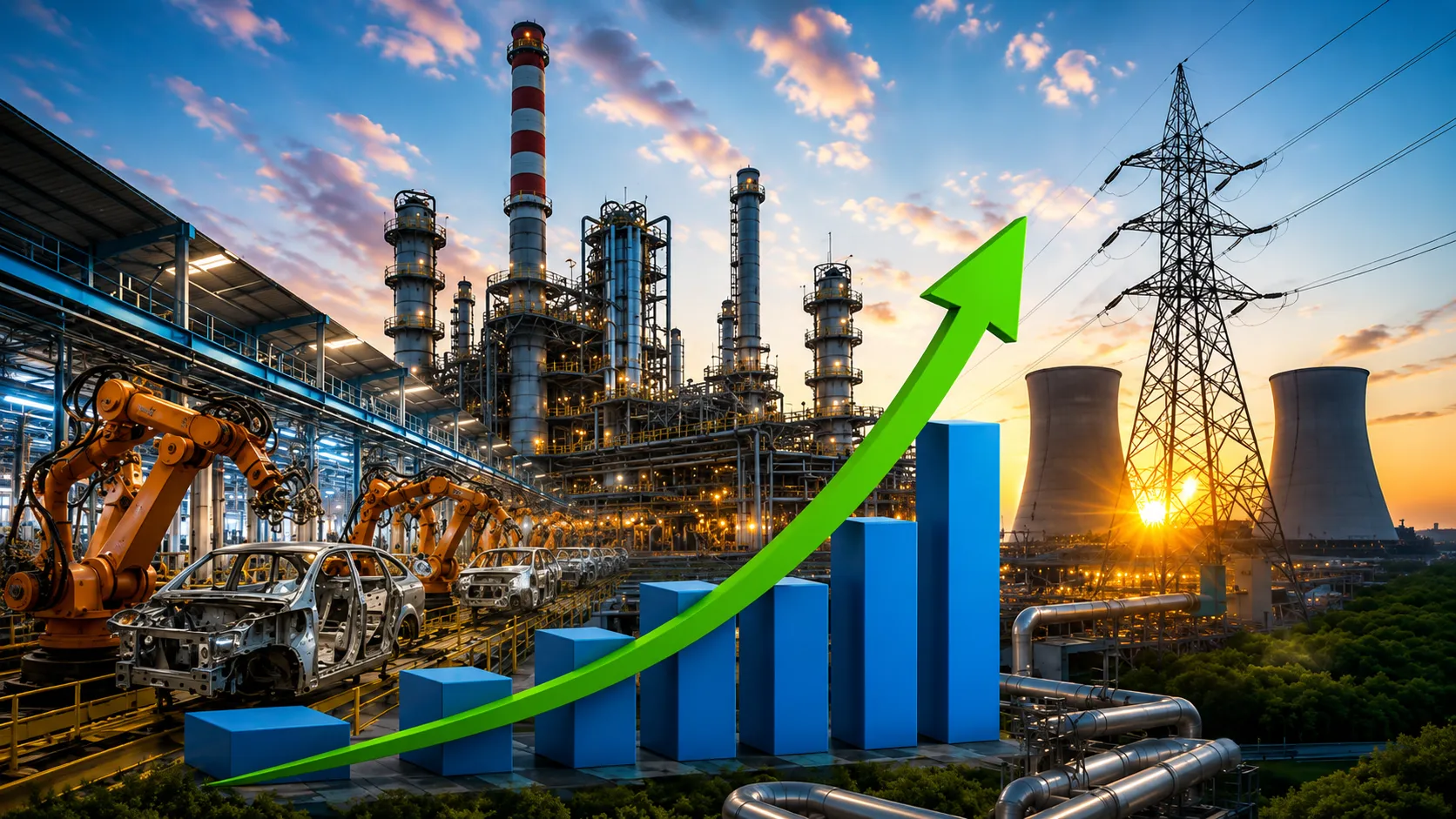
State-level industrial policy competition has also intensified as a contributing factor to this growth story, with numerous Indian states actively competing to attract manufacturing investment across these growing sectors through dedicated industrial parks, streamlined regulatory clearances, and various fiscal incentives. This competitive dynamic among states, while occasionally criticised for potentially triggering a race to the bottom on tax incentives, has nonetheless contributed to a generally more investment-friendly environment for manufacturers considering where to locate new capacity within India, complementing central government policy initiatives like production-linked incentive schemes with additional, state-level support mechanisms.
Export competitiveness within these three sectors adds a further dimension worth tracking as India's industrial growth story continues to unfold. As global manufacturers continue to diversify supply chains away from concentrated reliance on any single country, India's electrical equipment, automobile component, and capital goods manufacturers have increasingly positioned themselves to capture a growing share of this diversification-driven investment and order flow, a trend that, if sustained, could provide an additional, export-oriented growth engine layered on top of the already robust domestic demand tailwinds currently driving the sector's expansion.
Credit availability for capital expenditure across these three sectors has also improved meaningfully in recent quarters, a dynamic closely linked to the broader turnaround in India's banking sector discussed in the context of public sector banks' recent aggregate business milestone. As banks and non-banking financial companies have expanded lending to both large corporates and MSMEs within these industrial value chains, manufacturers across electrical equipment, automobiles, and capital goods have found it comparatively easier to finance the capacity expansion and working capital needs associated with meeting the currently robust demand environment, creating a mutually reinforcing dynamic between India's improving credit conditions and its accelerating industrial output.
Taken together, the electrical equipment, automobile, and capital goods growth story offers one of the more encouraging, broad-based signals available to observers trying to assess the underlying health of the Indian economy beyond the headline GDP and stock market figures that typically dominate coverage. Genuine, simultaneous strength across three deeply interconnected manufacturing categories, sustained over multiple quarters rather than appearing as a single-quarter anomaly, offers meaningfully more confidence in the durability of India's current industrial expansion than any single sector's results, however impressive, could provide on their own.