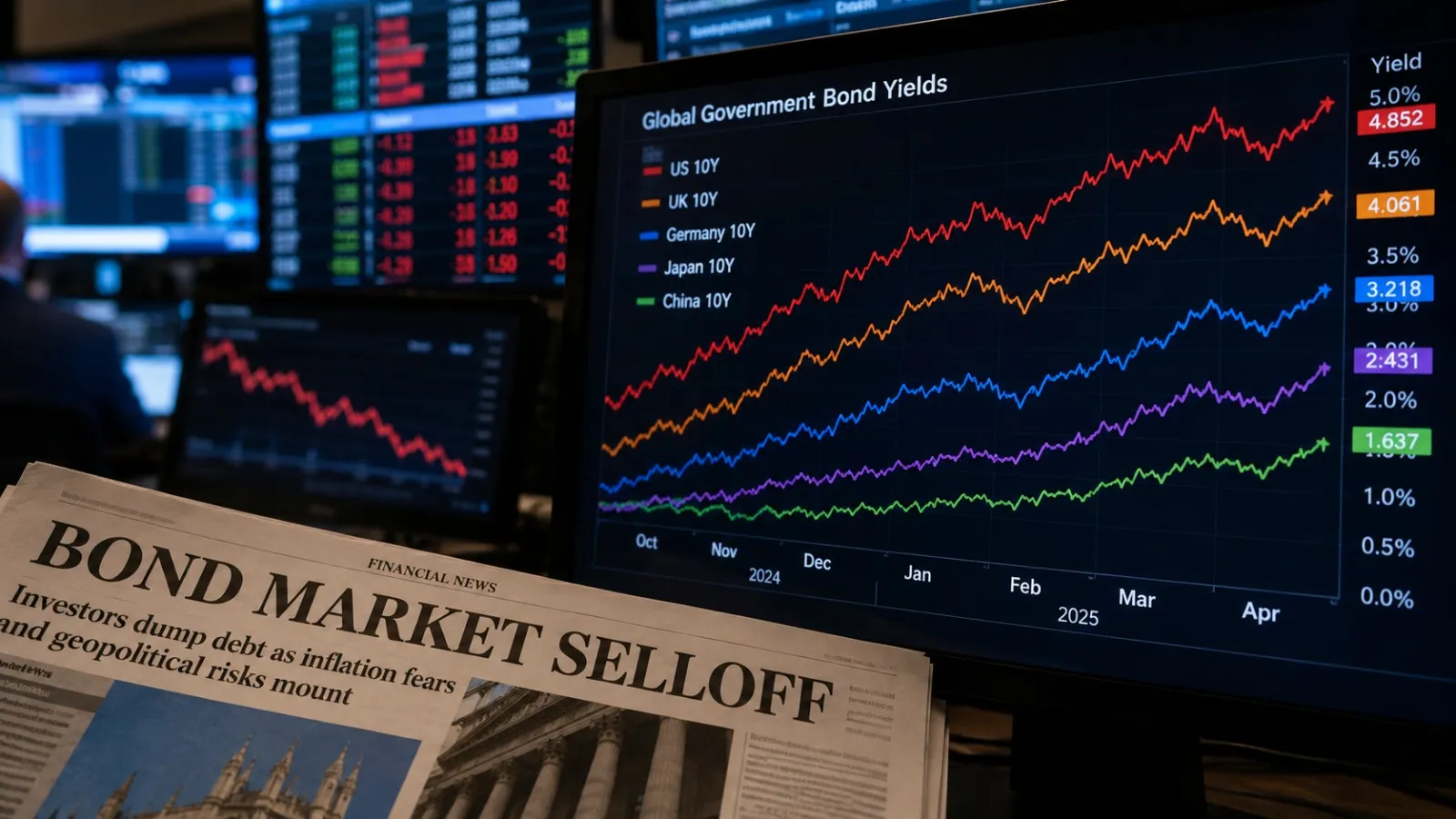
While much of the commentary around the escalating tensions in West Asia has focused on the pain they are inflicting on global energy consumers, a very different story has been quietly playing out inside India's refining sector — one of unexpected windfall rather than hardship. India's fuel exports have climbed to their highest level in nearly ten months, according to industry data reviewed by financial media this week, as war-driven shortages ripple through global shipping routes and tighten the supply of refined petroleum products across key international markets, from Europe to Southeast Asia. For India's large, export-oriented refining complexes, that global tightness has translated directly into fatter refining margins — the crucial spread between the cost of crude oil input and the price fetched for refined products like diesel, petrol, jet fuel, and naphtha. To understand why this is happening, it is worth tracing the chain of events that has been unfolding across the Strait of Hormuz and the wider Persian Gulf shipping corridor through recent months. Escalating military tensions between the United States and Iran, compounded by Houthi-linked disruptions to shipping routes through the Red Sea and the Bab-el-Mandeb strait, have made global energy markets acutely sensitive to any signal of supply risk. Brent crude prices have been pushed toward multi-week highs, hovering close to the 95-dollar-a-barrel mark, as traders price in the persistent possibility of further disruption to tanker traffic through some of the world's most strategically vital, and now most contested, maritime chokepoints. For energy-importing nations, that translates into higher input costs. But for a handful of countries with large, sophisticated refining capacity and the flexibility to source crude from multiple suppliers — India chief among them — elevated global uncertainty has created an unusual arbitrage opportunity. India's refining sector has spent the better part of the past three years building exactly the kind of flexibility that pays off in moments like this. Indian refiners, both public-sector majors and private-sector giants, have significantly ramped up their purchases of discounted Russian crude oil since the geopolitical realignment that followed sanctions on Moscow in the earlier part of this decade, taking advantage of price differentials that Western buyers have largely been unable or unwilling to access. That access to cheaper feedstock, combined with India's substantial refining capacity — among the largest in the world on a per-country basis — has positioned Indian refiners to process crude at a meaningfully lower input cost than many of their international competitors, even as global refined-product prices have been pushed higher by the West Asia-driven supply squeeze. The result is a widening spread between what Indian refiners pay for crude and what they can earn selling refined products into markets desperate for supply, a dynamic that shows up directly in stronger export volumes and healthier refining margins. The practical effect has been a surge in India's outbound shipments of refined fuel products. Diesel, in particular, has been in high demand internationally as European buyers, who have historically relied heavily on refined product imports from Russia before sanctions reshaped those trade flows, continue to look to alternative suppliers to plug gaps in their domestic fuel markets. Indian refiners, with spare processing capacity and access to competitively priced crude, have stepped into that gap, exporting diesel, petrol, and other refined products at volumes that industry trackers now describe as the highest seen in roughly ten months. Jet fuel exports have also benefited from a broader recovery in global aviation demand, compounding the tailwind for Indian refining margins across multiple product categories simultaneously.
For India's major refining and oil marketing companies — a list that includes some of the largest and most closely watched stocks on Indian exchanges — the implications are directly visible on the bottom line. Stronger export volumes at wider margins support healthier quarterly earnings, a dynamic that becomes especially significant during the current Q1 FY27 earnings season, when investors are parsing every available data point for signs of which sectors are genuinely benefiting from the current geopolitical turbulence, as opposed to merely surviving it. Refining and energy stocks have, accordingly, drawn heightened attention from analysts and portfolio managers this week, with several flagging the sector as a relative bright spot amid an otherwise cautious and volatile broader market, one where realty, banking, and consumer-facing sectors have generally struggled under the weight of rising input costs and cautious consumer sentiment. There is, however, a more complicated and less celebratory side to this story — one that matters directly to ordinary Indian households and businesses. The same geopolitical tensions and elevated crude prices that are boosting refiners' export margins are also pushing up domestic fuel costs. Petrol and diesel prices at the pump, along with cooking gas costs, have been trending upward in recent weeks as the broader crude price environment stays elevated, squeezing household budgets and adding to inflationary pressure at a moment when the Reserve Bank of India is already navigating a delicate balancing act between supporting growth and containing price pressures. In effect, India finds itself in the somewhat paradoxical position of being simultaneously a beneficiary and a victim of the same global energy shock — corporate refiners capturing outsized margins on the export side, even as consumers absorb higher costs on the domestic side. This tension is not new to India's energy policy conversation, but the current episode brings it into unusually sharp relief. Successive Indian governments have long grappled with the question of how aggressively to allow refiners to prioritise lucrative export markets over ensuring ample, competitively priced domestic fuel supply, particularly during periods when global refined-product prices diverge sharply from what the domestic market can bear. Policymakers have, in the past, intervened with export curbs or windfall taxes on refiners during periods of extreme margin expansion, arguing that domestic energy security and consumer affordability should take precedence over export profitability during global supply crunches. Whether similar measures re-enter the policy conversation if the current export boom and associated margin expansion continue to widen will be a key issue to watch in the weeks ahead, particularly if domestic fuel price inflation becomes a more politically sensitive issue. For India's broader trade and current-account position, though, the near-term picture from this development is unambiguously positive. Higher-value refined fuel exports help offset India's substantial and persistent import bill for crude oil itself, providing a partial cushion for the trade deficit at a moment when a weakening rupee and elevated import costs across multiple commodity categories have been weighing on the country's external accounts. Energy economists tracking India's trade data have noted that periods of strong refined-product export performance, like the one currently underway, can meaningfully narrow the net energy trade deficit even when headline crude import costs are rising, because the value captured on the refining and export side partially offsets the higher cost of the crude being imported in the first place.
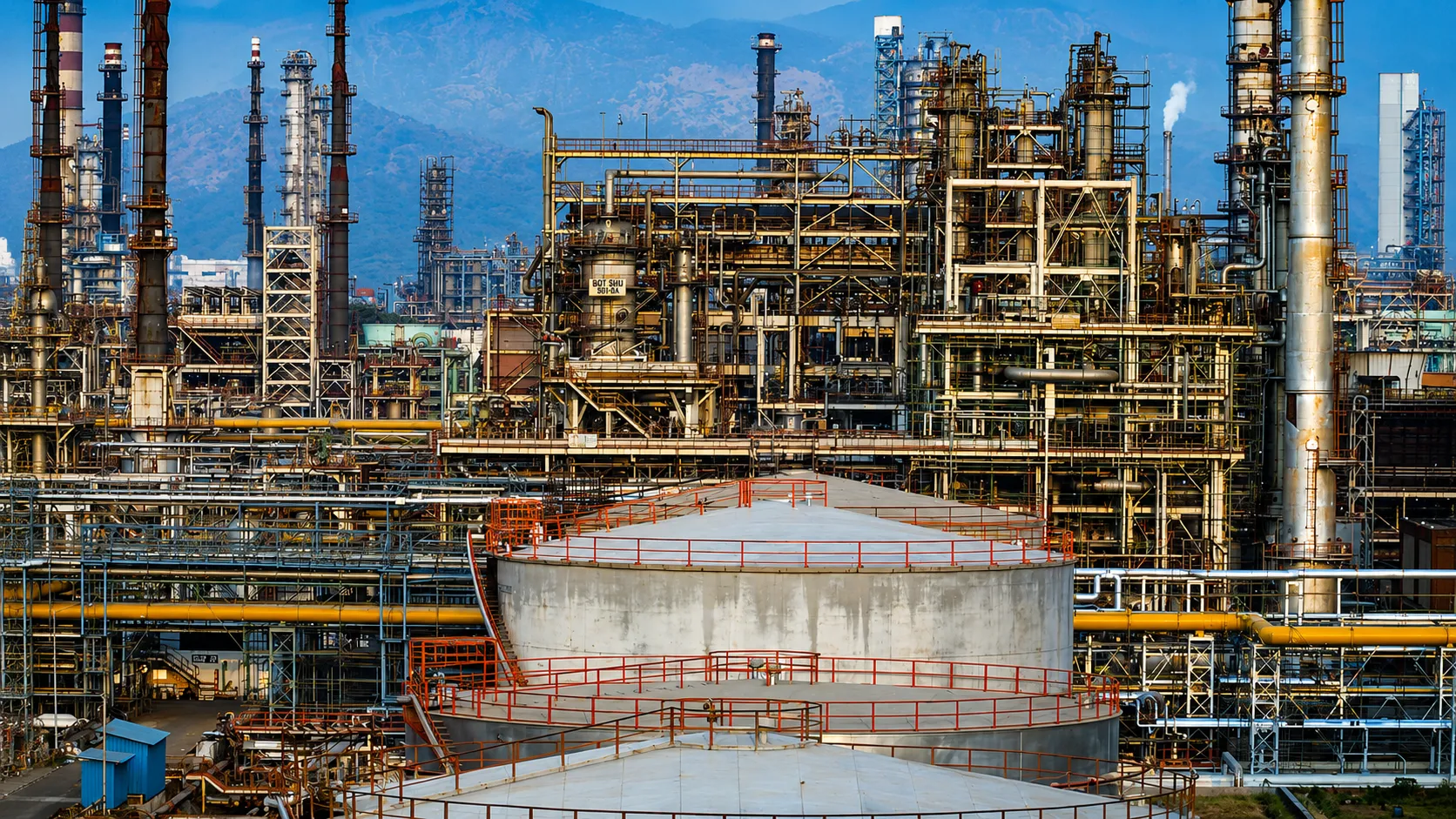
Shipping and logistics dynamics have also played a role in shaping how this opportunity has materialised for Indian exporters. With Houthi-linked disruptions continuing to complicate transit through the Red Sea corridor, and with renewed uncertainty around the Strait of Hormuz following recent escalations, global shippers have been forced to reroute and reprice vessel capacity across the wider Indian Ocean and Gulf shipping network. Indian ports and refining hubs, geographically well positioned relative to both Gulf crude sources and key Asian and European demand centres, have found themselves unusually well placed to capture incremental shipping and trading activity as global logistics networks recalibrate around the disrupted routes. Industry watchers note that this positional advantage — as much geographic as it is economic — has been a quieter but meaningful contributor to the export surge alongside the more headline-grabbing margin story. Looking ahead, much will depend on how long the underlying geopolitical tensions persist, and whether they escalate further or begin to ease. A prolonged period of elevated risk around the Strait of Hormuz and the Red Sea corridor would likely continue to support strong refined-product export economics for Indian refiners, but would also keep upward pressure on domestic fuel prices and broader inflation, testing the government's tolerance for allowing export-led corporate windfalls to continue unchecked. Conversely, any meaningful de-escalation — whether through diplomatic intervention or a reduction in shipping-route disruptions — could just as quickly compress the current margin advantage, underscoring how tightly the fortunes of India's refining sector remain tethered to a geopolitical situation thousands of miles from its shores, but with direct and immediate consequences for both corporate earnings and household budgets across the country. For now, though, the numbers tell an unambiguous short-term story: India's refiners are having one of their strongest export runs in nearly a year, turning a global energy crisis into a genuine competitive advantage, even as that same crisis complicates life at the domestic petrol pump. Investors tracking India's energy sector through the current Q1 FY27 earnings season have been paying particularly close attention to the gross refining margin, or GRM, figures disclosed by major refiners as they report quarterly results, treating this metric as the single clearest window into how much of the current global tightness is actually flowing through to corporate profitability rather than being absorbed by higher crude acquisition costs, freight expenses, or currency-related headwinds. Early data points from this earnings season suggest that GRMs have indeed expanded meaningfully compared to the same period a year earlier, lending empirical support to the broader export-boom narrative rather than leaving it as a purely anecdotal, shipping-data-driven story. Brokerages covering the energy sector have, in several cases, moved to revise their near-term earnings estimates upward for refining-heavy companies, while flagging the obvious caveat that the durability of this margin expansion remains entirely contingent on how the underlying West Asia conflict trajectory evolves over the coming weeks and months.

The state-run oil marketing companies occupy a particularly interesting position within this story, given their dual role as both refiners with export exposure and as the primary retailers responsible for setting, and periodically absorbing pressure to hold steady, domestic petrol and diesel prices for Indian consumers. Historically, during periods of sharply rising global crude and refined-product prices, these companies have faced political and regulatory pressure to delay passing through the full extent of cost increases to retail consumers, a dynamic that can compress their domestic marketing margins even as their refining margins on the export side expand. Whether that familiar pattern reasserts itself in the current cycle — with refining profits effectively cross-subsidising restrained pump-price increases — will be an important dynamic for investors and consumers alike to watch as the situation develops through the rest of the current fiscal year. There is also a strategic reserves and energy-security angle to this story that has drawn commentary from policy analysts. India has, over the past several years, been steadily building out its strategic petroleum reserve capacity and diversifying its crude sourcing relationships precisely to build resilience against exactly this kind of supply-shock scenario. The current episode is, in some ways, an early real-world test of how effectively those diversification efforts — spanning discounted Russian crude purchases, deepened relationships with Gulf suppliers, and growing engagement with US and West African crude sources — are functioning to insulate India's energy security from geopolitical shocks centred on traditional Middle Eastern supply corridors. The fact that Indian refiners have been able to capitalise on the current disruption rather than simply being squeezed by it is being read by some energy security analysts as early validation of that multi-year diversification strategy, even as they caution that a prolonged or significantly worsened conflict scenario could still test the limits of that resilience. Global buyers of Indian refined products, meanwhile, have their own set of considerations shaping this trade flow. European refiners and fuel distributors, still adjusting to a post-sanctions trading environment that has permanently altered traditional supply relationships with Russia, have increasingly come to view Indian refining capacity as a dependable, large-scale alternative source of diesel and other middle distillates, a relationship that industry watchers suggest could deepen into longer-term supply contracts rather than remaining purely opportunistic spot-market purchases tied to the current crisis. Should that shift toward more durable, contract-based trading relationships materialise, it would represent a structurally positive development for Indian refiners well beyond the current episode of acute West Asia-driven volatility, embedding India more permanently into global refined-product supply chains rather than leaving its export volumes to fluctuate purely with short-term geopolitical shocks.