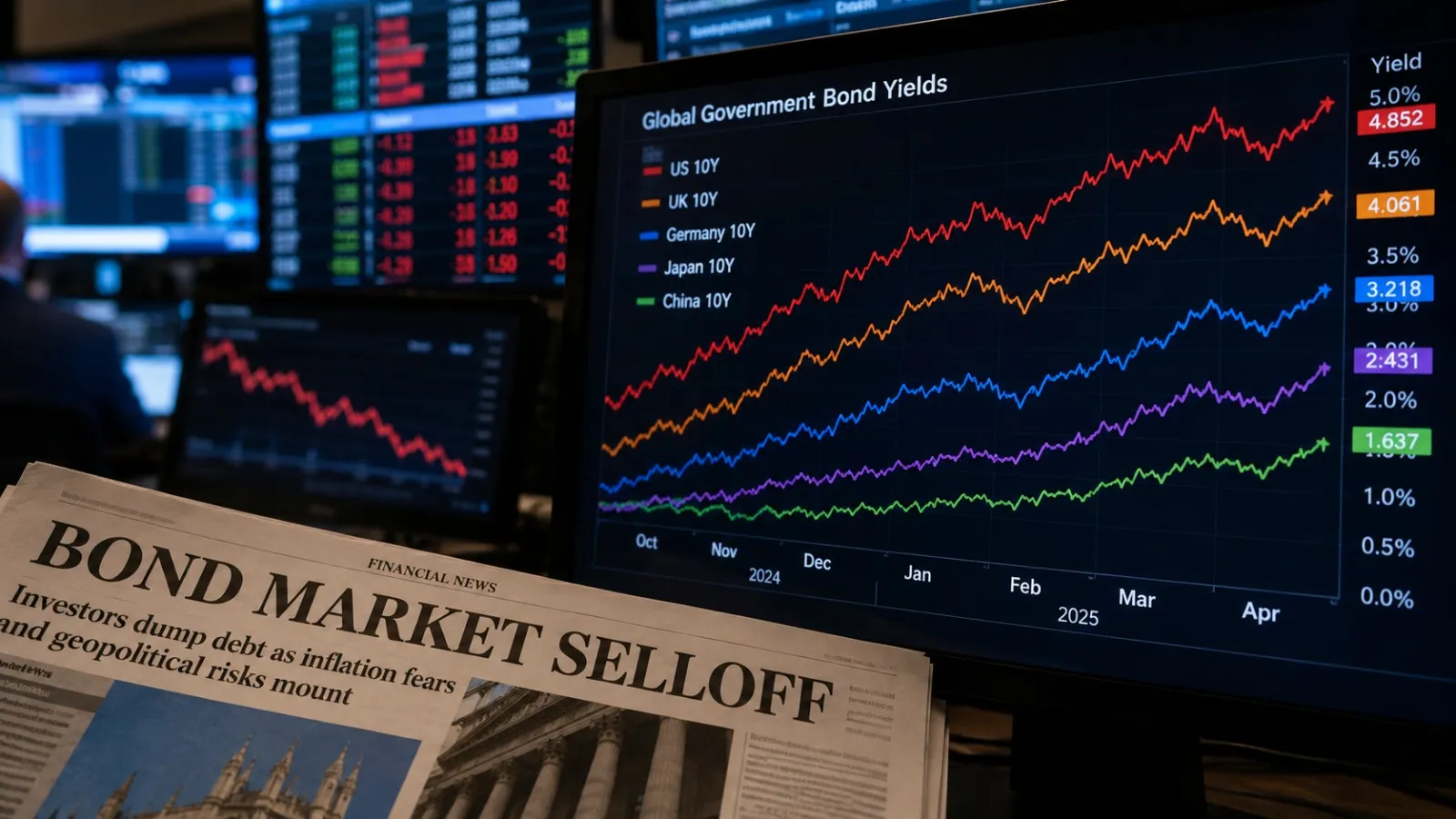
Mumbai, July 31, 2026 — In the noisy churn of daily market headlines — tariff deadlines, IPO delays, quarterly earnings beats and misses — one number tends to move without much fanfare, yet quietly underwrites much of the confidence international investors place in the Indian economy: the country's foreign exchange reserves. In the week ended July 17, 2026, that number moved in a reassuring direction, with India's forex reserves rising by $1.08 billion, according to the latest data released by the Reserve Bank of India. The increase, while modest in percentage terms against reserves that run into several hundred billion dollars, is notable for what it reveals about the underlying composition of India's external cushion during a period when global gold prices have been unusually volatile. According to the RBI's weekly statistical supplement, the overall increase in reserves was driven by gains in foreign currency assets (FCA) — the largest component of India's reserve basket, typically comprising holdings in US dollars as well as other major reserve currencies — even as the value of the country's gold reserves declined over the same week.
Reading the composition: FCA gains offset gold declines
This composition detail matters more than it might initially appear. India's forex reserves are not a single monolithic pool of dollars; they are a diversified basket that includes foreign currency assets, gold holdings, Special Drawing Rights (SDRs) allocated by the International Monetary Fund, and India's reserve tranche position with the IMF. Because gold is valued in the reserves at prevailing international market prices, swings in global bullion prices — which have been considerable through much of 2026 — can materially move the headline reserves number even when the RBI has not bought or sold a single ounce of gold that week.
In the week under review, global gold markets were themselves in a state of flux. Bullion had rallied sharply during the third week of July before surrendering much of those gains in the sessions that followed, reflecting a combination of shifting expectations around US Federal Reserve policy, a divided vote by the Fed to hold interest rates steady, and softer-than-expected US GDP data for the second quarter that fed into broader dollar weakness even as gold itself gave back some of its earlier gains. Against that volatile gold backdrop, the fact that India's overall reserves still posted a net weekly increase — powered by foreign currency asset gains — points to underlying strength in the non-gold component of the reserve basket, likely reflecting a combination of valuation gains on dollar and other major-currency holdings alongside any net RBI market operations during the week.
Why reserves matter more than ever right now
The timing of this reserve accretion carries particular significance given the broader macro-economic and trade backdrop India finds itself navigating in mid-2026. With the India-US bilateral trade agreement still unresolved and fresh American tariffs having taken effect on a range of Indian exports, and with global crude oil prices climbing back above $90 a barrel — a level that directly pressures India's import bill given the country's heavy reliance on energy imports — a robust reserves cushion provides the RBI and the broader Indian economy with critical shock-absorption capacity.
Foreign exchange reserves serve several interlocking functions for an economy like India's. They provide a buffer against sudden capital flight or balance-of-payments stress, they underpin the RBI's ability to intervene in currency markets to smooth excessive rupee volatility without depleting the country's external cushion to dangerously low levels, and they serve as a broad signal to international rating agencies and foreign portfolio investors about the resilience of India's external accounts. At a moment when the rupee has been trading in a relatively wide band against the dollar — hovering in the mid-90s per dollar through much of July, a level that reflects both global dollar strength and India-specific factors including the trade uncertainty — reserve strength offers reassurance that the RBI retains ample firepower to manage disorderly currency moves if the need arises.
The gold question: a double-edged sword
India's substantial gold holdings within its reserve basket have been the subject of increasing market attention over the past two years, as the RBI, like several other major central banks globally, has steadily added to its gold reserves as part of a broader diversification strategy away from concentrated exposure to any single reserve currency, particularly the US dollar, amid a more geopolitically fragmented global financial system. That strategic accumulation has generally paid off handsomely in valuation terms given gold's strong multi-year rally, but it has also introduced a new source of week-to-week volatility into the headline reserves figure — as this week's numbers themselves illustrate, with gold's decline partially offsetting, though not fully negating, the gains from foreign currency assets.
Market economists tracking the RBI's reserve management strategy note that this trade-off is, on balance, one the central bank appears comfortable making. Gold offers a hedge against dollar-denominated asset risk and geopolitical shocks that foreign currency assets alone cannot fully replicate, even if it introduces additional volatility to the headline number in any given week. The RBI's own communications over the past several policy cycles have consistently signalled comfort with a gradually rising gold allocation as part of a considered, long-term reserve diversification strategy rather than a reactive or short-term trading posture.
Comparing India's position globally
In global terms, India continues to rank among the larger holders of foreign exchange reserves worldwide, a position that has provided meaningful credibility to the country's macroeconomic management narrative even through periods of elevated global uncertainty, including the current unresolved US tariff situation. That reserve strength has been repeatedly cited by rating agencies and multilateral institutions as a key pillar supporting India's sovereign credit profile, alongside the country's relatively contained current account deficit and consistently strong services exports, particularly from the IT and business process outsourcing sectors that continue to generate substantial net dollar inflows regardless of goods-trade tariff friction.
This reserve resilience also matters in the specific context of India's ongoing engagement with the US on trade. A country negotiating from a position of external financial strength — ample reserves, a manageable current account position, and a currency that, while under some pressure, has not experienced disorderly depreciation — arguably has more room to hold firm on negotiating positions, such as India's stated preference for better tariff terms than regional competitors, without facing the kind of market-driven pressure that might force a more hurried concession. Trade negotiators on both sides are certainly aware of this dynamic, even if it rarely features explicitly in public statements.
What to watch next
Looking ahead, several factors will shape the trajectory of India's reserves in the coming weeks and months. Continued volatility in global gold prices will remain a wildcard for the headline reserves number, given the scale of India's gold holdings within the overall basket. Crude oil prices sustained above $90 a barrel would, if maintained, gradually increase pressure on India's import bill and current account position, a dynamic that could eventually show up as headwinds to reserve accretion if sustained over a longer period. And the eventual resolution — or continued absence of resolution — of the India-US trade negotiation will have knock-on effects for both portfolio capital flows into Indian markets and the broader dollar-rupee dynamic that ultimately feeds into how reserves are valued and managed week to week.
For now, though, the July 17 data offers a reassuring, if quietly delivered, message: even amid a genuinely turbulent macro and trade backdrop, India's external balance sheet continues to strengthen rather than erode — a fact that, while unlikely to dominate headlines the way a tariff announcement or a blockbuster IPO pause might, matters enormously to the country's underlying economic resilience.
Understanding the mechanics of India's reserve reporting
For readers less familiar with how these numbers are compiled, the RBI publishes its foreign exchange reserves data on a weekly basis through its Weekly Statistical Supplement, offering one of the more frequent and transparent windows into any major emerging economy's external financial position. Each week's figure reflects the combined dollar value of the four core reserve components — foreign currency assets, gold, SDRs, and India's reserve tranche position with the IMF — with valuation changes in each component driven by a mix of the RBI's own market operations (buying or selling foreign currency or gold) and pure valuation effects arising from exchange rate and gold price movements between reporting weeks, even absent any RBI transaction activity at all.
This valuation-effect dynamic is precisely why headline reserve figures can occasionally seem to move in ways that appear disconnected from a country's underlying balance-of-payments performance in a given week. A sharp global gold price swing, for instance, can move India's total reserves by billions of dollars purely through revaluation, without any change whatsoever in the physical quantity of gold India holds. Sophisticated market watchers have learned to look past the single headline number and examine the underlying component breakdown — precisely the exercise that reveals, in this week's data, that the overall gain was driven by foreign currency asset strength even as gold valuations moved in the opposite direction.
How India's reserves compare through recent history
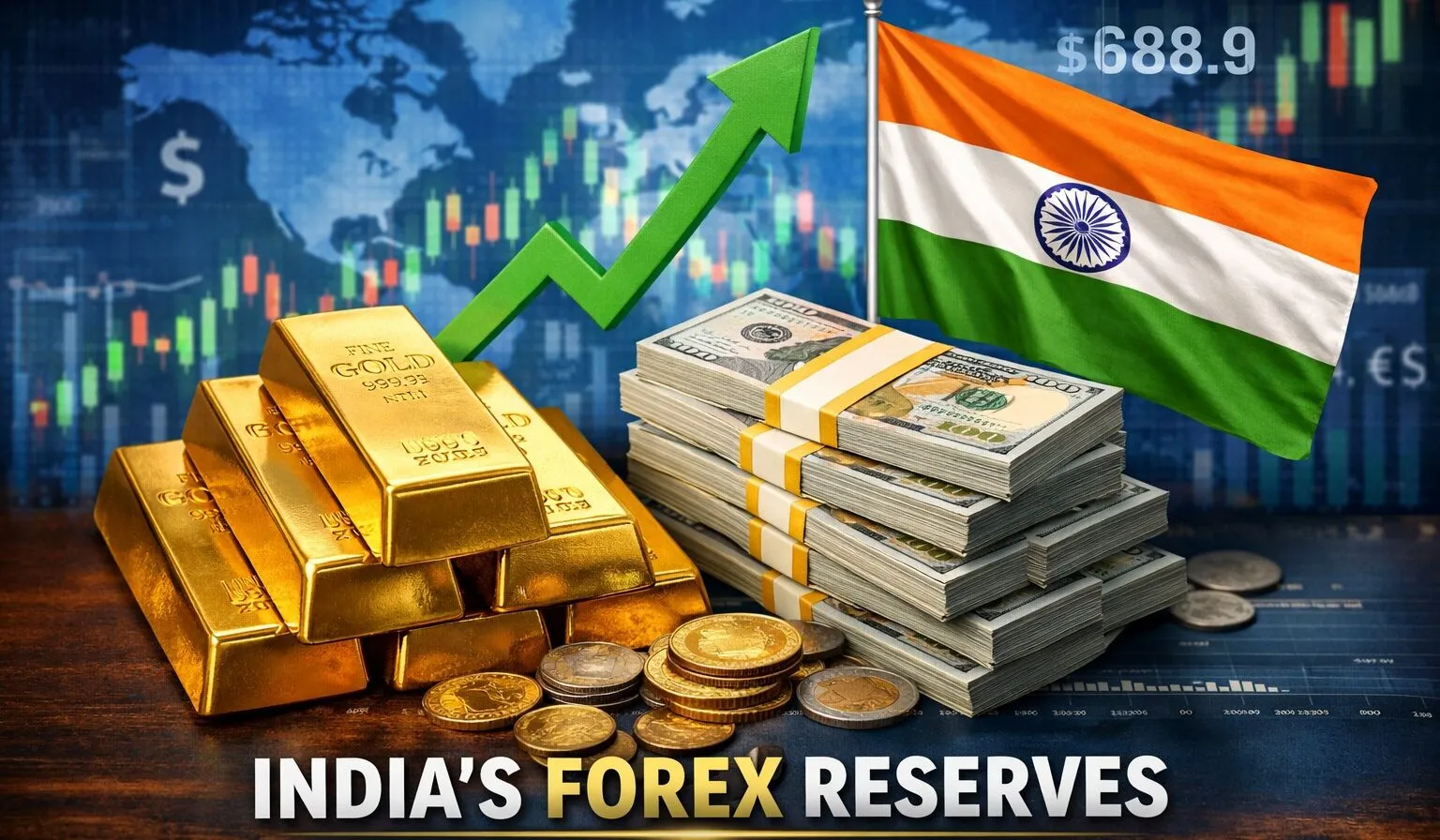
India's foreign exchange reserves have followed a broadly upward long-term trajectory over the past two decades, punctuated by periodic drawdowns during periods of acute market stress — most notably during the 2013 "taper tantrum" episode, when reserves came under significant pressure as global capital rapidly exited emerging markets in response to signals of tighter US monetary policy, and again during various bouts of global risk-off sentiment tied to geopolitical shocks and pandemic-era market disruption. Each of those episodes tested the RBI's reserve management framework and, in the view of most independent economists, ultimately validated the central bank's consistently conservative approach to reserve accumulation during calmer periods precisely so that adequate buffers would be available when storms arrived. The current environment, while certainly not free of uncertainty given the unresolved US tariff situation, has not to date produced anything resembling the kind of acute capital flight that characterised those earlier stress episodes. Reserves continuing to grow, even modestly, during a period of active trade-policy uncertainty is itself a meaningful data point suggesting that foreign portfolio investors have not, at least so far, responded to the tariff impasse with the kind of broad-based capital withdrawal that might be feared in a more fragile emerging-market context.
The RBI's broader currency management posture
Beyond the pure reserves accounting, this week's data also offers an indirect window into the RBI's broader currency management posture through a period of rupee weakness. With the rupee trading in the mid-90s per dollar through much of July — a level that reflects a combination of global dollar strength, the unresolved trade situation, and elevated crude oil prices weighing on India's import bill — the RBI has historically preferred to smooth excessive volatility in the currency rather than defend any particular exchange rate level outright, a philosophy generally described as "managed float" rather than a hard currency peg.
Ample reserves give the central bank the flexibility to pursue this smoothing approach without excessive risk to its own balance sheet, intervening selectively to calm disorderly market moves while otherwise allowing the rupee to find its own level based on underlying economic fundamentals and capital flows. This week's reserve increase, however modest, reinforces the RBI's capacity to continue that measured approach through what remains a genuinely uncertain period for India's external accounts.
Why ordinary Indians should care about a number that sounds abstract
It is easy to dismiss a weekly $1.08 billion movement in foreign exchange reserves as a matter of interest only to economists, bond traders and central bankers. But the health of India's reserves filters down into everyday economic life in ways that are easy to overlook. A well-cushioned reserve position helps keep the rupee from experiencing the kind of sharp, disorderly depreciation that would make imported goods — from crude oil and cooking gas to electronics and edible oils — meaningfully more expensive for Indian households almost overnight. It also supports the kind of macroeconomic stability that underpins investor confidence, which in turn affects everything from the interest rates Indian companies pay to borrow money, to the pace at which foreign companies are willing to invest in Indian manufacturing and infrastructure projects that ultimately create jobs.
In that sense, this week's reserves data, however technical it may sound, forms part of the same broader economic story as the RBI's bulk deposit reforms, the ongoing India-US trade negotiations, and the performance of India's largest companies this earnings season — different chapters of the same underlying narrative about how resilient, and how well-managed, India's macroeconomic foundations remain even as the country navigates one of its more complex external environments in recent years. For policymakers, investors and ordinary citizens alike, a steadily strengthening reserves position remains one of the quieter, but most important, indicators to watch through the remainder of 2026.