FundingLatest Deals10 MIN READ

Hero MotoCorp Deepens Ather Energy Bet With ₹960-Crore Warrant Investment as EV Maker Locks In ₹1,200-Crore War Chest

Ather Energy's board has approved a ₹1,200 crore fundraise led by Hero MotoCorp and the India-Japan Fund to fund its Factory 3.0 expansion.

By Shaym Kumar · Author18 July 2026Trending
Hero MotoCorp Deepens Ather Energy Bet With ₹960-Crore Warrant Investment as EV Maker Locks In ₹1,200-Crore War Chest

India's electric two-wheeler race just got a fresh injection of capital, and unsurprisingly, it is Ather Energy — the Bengaluru-headquartered pioneer that essentially created the premium electric scooter category in India — that has moved first. On Wednesday, July 15, 2026, Ather Energy's board formally approved a preferential fundraise of up to ₹1,200 crore, a decision that sent the company's shares surging roughly 8 percent in intraday trade to touch ₹1,292 apiece, underscoring just how closely the market has been watching the company's next capital move.

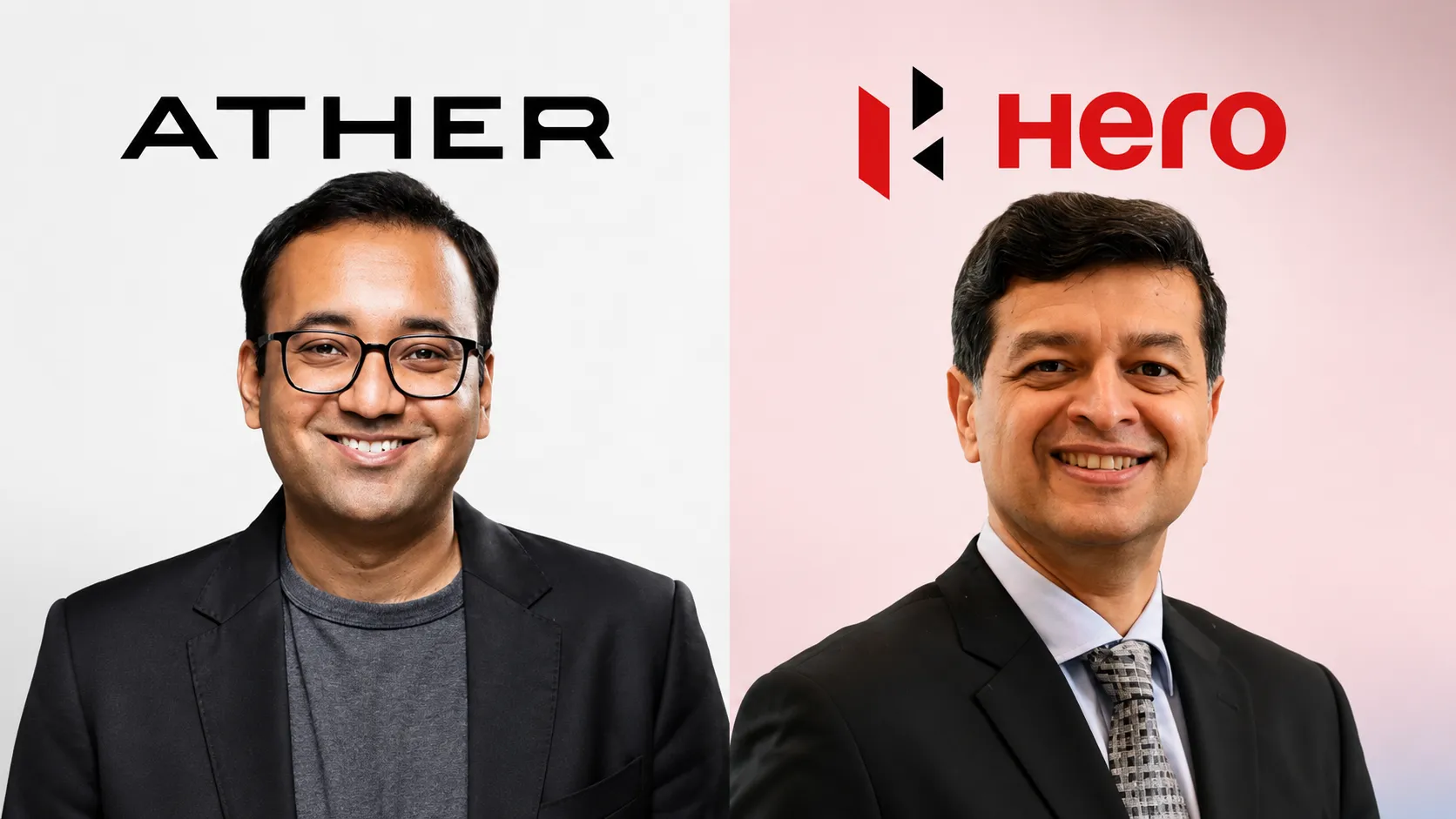
At the heart of this raise sits Hero MotoCorp, the world's largest manufacturer of motorcycles and scooters by volume, and Ather's largest and longest-standing strategic shareholder. Under the structure approved by the board, Hero MotoCorp will invest ₹960 crore through the issuance of convertible warrants — a substantial commitment that reflects not just continued confidence in Ather's technology and brand positioning, but a clear strategic imperative to consolidate its stake in a company it has backed since Ather's earliest days as a scrappy IIT Madras-incubated startup.

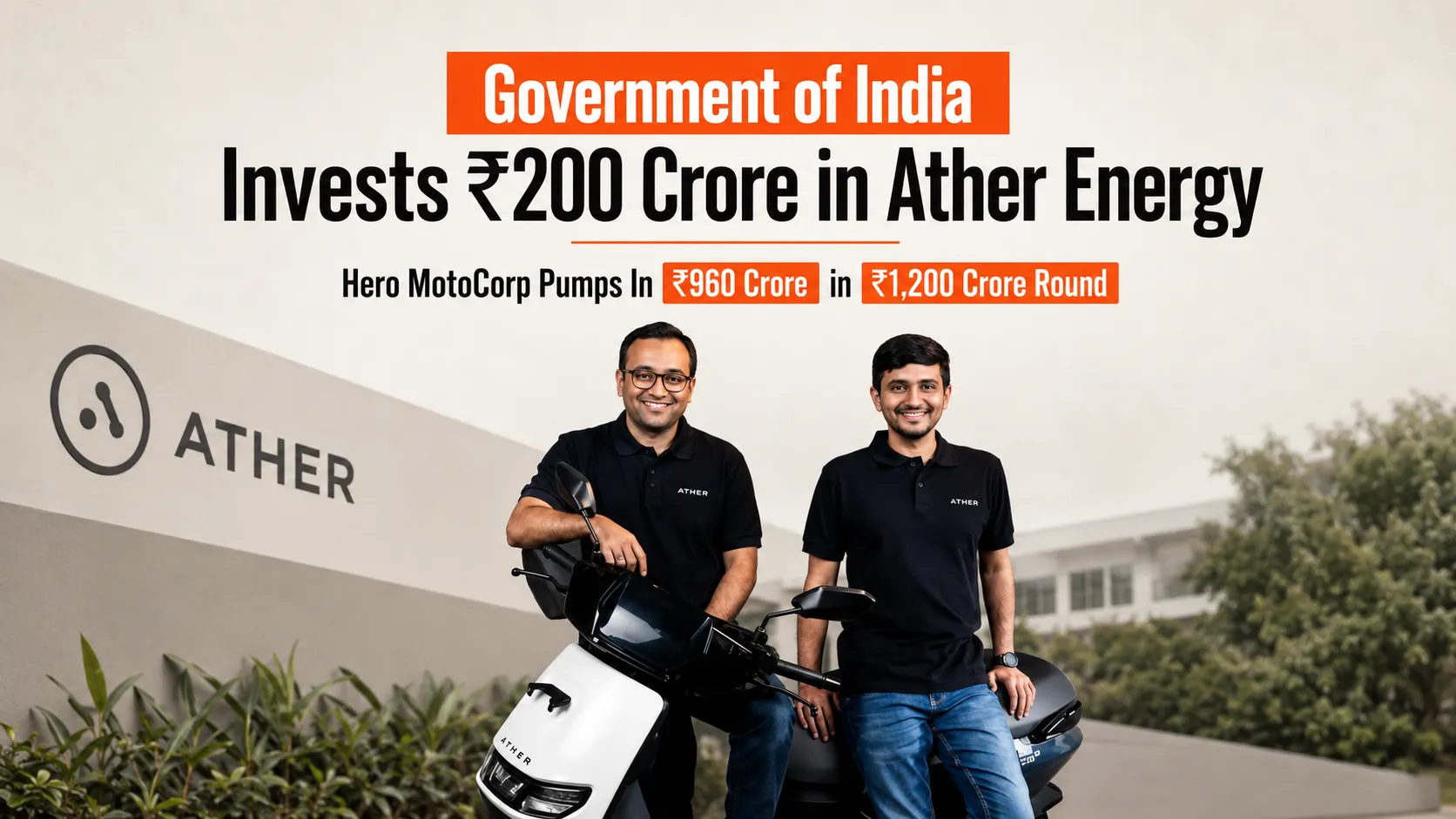
The fundraise is structured with notable precision. Ather will issue approximately 16.26 lakh equity shares to the India-Japan Fund — a bilateral, government-backed investment vehicle jointly supported by the governments of India and Japan and managed by the National Investment and Infrastructure Fund (NIIF) — at a price of ₹1,230 per share, translating to roughly ₹200 crore of fresh capital from that single investor. Separately, close to 79.4 lakh warrants have been earmarked at ₹1,260 apiece, with Hero MotoCorp accounting for the lion's share of that allocation through its ₹960 crore commitment. Ather's own co-founders, Tarun Sanjay Mehta and Swapnil Babanlal Jain — the IIT Madras graduates who founded the company back in 2013 — are also participating in the round, each investing ₹20 crore through warrants of their own, a gesture that signals founder-level conviction in the company's next growth chapter even as competitive intensity in the electric two-wheeler segment continues to rise.
ChatGPT Image Jul 18, 2026, 02_49_50 PM.png

The mechanics of ownership dilution and consolidation that follow this transaction are instructive for anyone tracking the shifting balance of control within Ather's cap table. Following the full conversion of warrants, Hero MotoCorp's stake in Ather is projected to rise from its current 29.48 percent to approximately 30.68 percent on a fully diluted basis — a modest but meaningful increase that further entrenches Hero's position as Ather's dominant institutional shareholder. The India-Japan Fund's holding, meanwhile, is expected to climb from 5.75 percent to just over 6 percent. Interestingly, the co-founders' proportional stake is expected to remain broadly stable at around 4.85 percent each, even as fresh capital flows into the business — a reflection of how the warrant structure has been carefully calibrated to avoid disproportionately diluting founder control at this stage of the company's public-market journey.

This latest tranche of ₹1,200 crore is explicitly described by the company as the first phase of a considerably larger, board-approved capital programme targeting up to ₹2,500 crore in total funding. That broader mandate is aimed squarely at some of the most capital-intensive priorities facing any electric vehicle manufacturer scaling in India today: expanding manufacturing capacity, accelerating research and development on battery technology and vehicle platforms, funding new product development, and covering general corporate purposes including debt repayment.

Chief among the projects this capital is expected to underwrite is Ather's much-discussed "Factory 3.0" initiative, currently under development in Chhatrapati Sambhajinagar, Maharashtra. Once operational, this new manufacturing facility is expected to lift Ather's total installed production capacity to an ambitious 1.42 million units annually — a scale that would place the company firmly among the largest dedicated electric two-wheeler manufacturing operations in the country, and one that reflects just how aggressively Ather is positioning itself to capture demand in a market segment analysts widely expect to see continued double-digit growth through the remainder of this decade.

To understand why this fundraise matters beyond Ather's own balance sheet, it helps to zoom out to the broader competitive landscape reshaping India's two-wheeler industry. The electric two-wheeler segment has moved decisively from a niche, early-adopter category into a genuine mass-market battleground over the past several years, with legacy internal-combustion giants such as Bajaj Auto, TVS Motor, and Hero MotoCorp's own in-house EV efforts now competing directly against pure-play electric specialists like Ather and Ola Electric. In that context, capital access and manufacturing scale have emerged as two of the clearest differentiators separating companies that can sustain aggressive growth from those that risk being squeezed on both cost and volume. Ather's decision to lean on its existing strategic backers — rather than seek an entirely new set of investors — suggests a preference for continuity and speed of execution over the added complexity that can come with onboarding fresh institutional capital, particularly at a moment when broader market sentiment toward growth-stage and recently listed companies has been mixed amid currency volatility and elevated interest rate uncertainty.

The relationship between Ather and Hero MotoCorp has deep roots and offers useful context for understanding the strategic logic behind this latest capital infusion. Hero MotoCorp's association with Ather dates back years, evolving from an early strategic investment into what has become one of the most consequential inter-company partnerships in Indian mobility. That relationship reached a significant milestone in 2025 when Ather completed its own initial public offering, a listing that Hero MotoCorp has publicly credited as contributing a meaningful one-time gain to its own consolidated earnings — a dynamic that illustrates just how intertwined the fortunes of the two companies have become, and why Hero's continued willingness to inject fresh capital into Ather should be read as more than a passive financial position. It is, by most market interpretations, an active bet on Ather remaining central to Hero's broader electrification strategy going forward.

For India's electric two-wheeler ecosystem more broadly, transactions like this one carry signalling value that extends well beyond Ather's own operations. Capital markets have, at various points over the past two years, expressed scepticism about the near-term profitability path for pure-play EV manufacturers navigating high input costs, intense price competition, and the capital intensity of building out charging and service infrastructure at scale. A ₹1,200 crore vote of confidence from a combination of a legacy two-wheeler giant, a sovereign-backed investment fund, and the company's own founders offers a useful counter-narrative — one that suggests sophisticated, long-horizon capital continues to see a credible path toward scaled profitability in India's electric mobility transition, even amid short-term margin pressure across the sector.

A ₹1,200 crore vote of confidence from a legacy two-wheeler giant, a sovereign-backed investment fund, and the company's own founders offers a credible counter-narrative to scepticism about EV profitability in India.
The Impactful Global Indian Editorial Desk

Analysts tracking the electric vehicle space have also pointed to the strategic value of vertical integration and in-house battery and software development — areas where Ather has historically differentiated itself from competitors that rely more heavily on outsourced components. The fresh capital earmarked for R&D is expected to accelerate work on next-generation battery chemistry, software-defined vehicle features, and connected mobility services, all of which have become increasingly important battlegrounds as Indian consumers grow more discerning about range, charging convenience, and the overall ownership experience of electric two-wheelers.

It is worth noting that this fundraising round arrives at a moment of broader macroeconomic churn for Indian markets. The rupee has faced sustained depreciation pressure this year, driven in large part by elevated crude oil prices linked to the prolonged closure of the Strait of Hormuz, and foreign portfolio investors have pulled meaningful capital out of Indian equities over the preceding months. Against that backdrop, a domestically-anchored fundraise — drawing on an Indian two-wheeler giant, a bilateral government-backed fund, and the founders themselves, rather than relying on volatile foreign risk capital — offers Ather a degree of insulation from the kind of currency and sentiment swings that have complicated fundraising for other Indian growth companies this year.

Looking ahead, market participants will be watching closely for two things: first, how quickly Ather moves to draw down the remainder of its approved ₹2,500 crore capital programme, and second, whether the Factory 3.0 facility in Chhatrapati Sambhajinagar stays on track to deliver its targeted 1.42 million unit annual capacity. Execution on both fronts will likely determine whether this latest fundraise is remembered as a routine capital top-up or as the inflection point that allowed Ather to decisively pull ahead in India's increasingly crowded electric two-wheeler race. Shareholder and regulatory approvals remain outstanding before the transaction is finalised, but with its largest backer doubling down and its founders putting fresh personal capital behind the company's next chapter, Ather Energy has, at least for now, sent an unmistakable signal of confidence to a market that has been closely scrutinising the economics of India's electric vehicle transition.

**Market reaction and what it signals**

The near 8 percent intraday jump in Ather's share price on the day the board approved the fundraise is itself worth unpacking. In many markets, a fresh issuance of shares — even a preferential one restricted to existing investors — can trigger investor anxiety over dilution, since new shares entering the register mathematically reduce each existing shareholder's proportional claim on future earnings. That Ather's stock rallied rather than retreated on the news suggests the market read the transaction not through the lens of dilution risk, but through the lens of validated conviction: when a company's largest strategic shareholder voluntarily commits close to a thousand crore rupees of fresh capital at a defined price, it functions as a de facto valuation benchmark set by an investor with more intimate knowledge of the business than almost any outside analyst could hope to match. The pricing of the preferential allotment — ₹1,230 per share for the India-Japan Fund's equity tranche and ₹1,260 for the warrants — effectively anchors a floor valuation that the broader market appears to have interpreted as a vote of confidence rather than a signal of distress-driven capital raising.

**Sector-wide implications for India's EV supply chain**

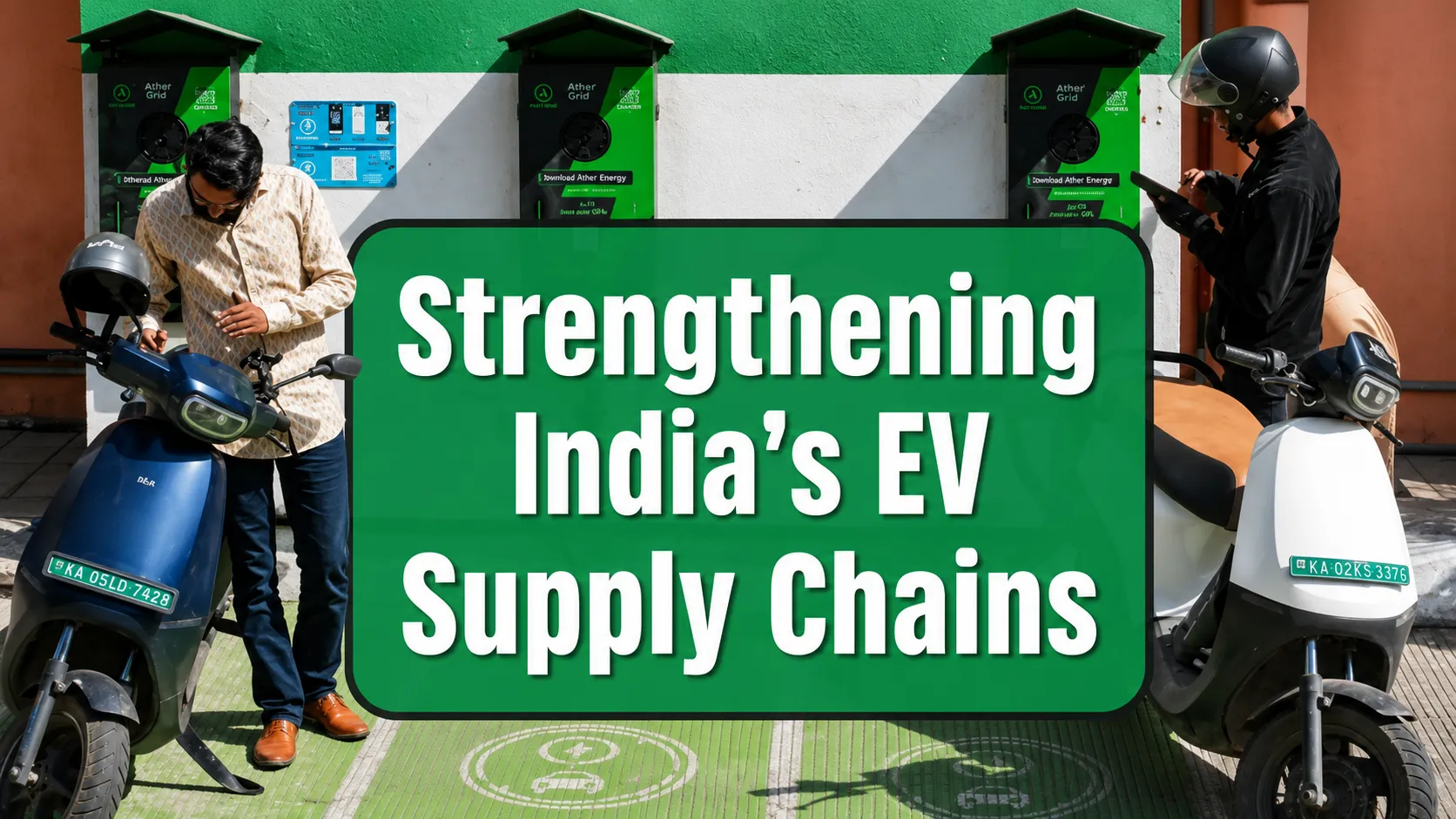
This fundraise also arrives at a moment when India's broader electric vehicle supply chain — spanning battery cell manufacturing, power electronics, motor design, and vehicle assembly — is undergoing its own parallel scaling exercise, often with direct government support through production-linked incentive schemes targeting advanced battery chemistry and automotive component manufacturing. Ather's Factory 3.0 expansion in Chhatrapati Sambhajinagar is expected to have ripple effects well beyond the company's own balance sheet, potentially catalysing further investment in the surrounding component supplier ecosystem as the facility ramps toward its targeted 1.42 million unit annual capacity — a scale that would require a correspondingly large and reliable network of component suppliers, from battery pack assemblers to motor controller manufacturers, many of whom are themselves scaling up domestic manufacturing capabilities in tandem with the growth of India's largest EV makers.

ChatGPT Image Jul 18, 2026, 02_50_19 PM.png

Industry analysts tracking the broader two-wheeler electrification curve in India note that capacity expansion of this scale also carries strategic implications for pricing. As manufacturing scale increases, unit economics for electric two-wheelers typically improve through better component sourcing leverage, reduced per-unit fixed cost allocation, and accumulated manufacturing learning curve efficiencies — dynamics that could, over time, help narrow the price gap between electric and traditional internal-combustion two-wheelers that remains one of the primary barriers to faster mass-market EV adoption among India's famously price-sensitive two-wheeler buyer base, particularly outside the country's wealthier metro markets where EV adoption has so far been concentrated.

**A founder-backed vote of confidence**

Perhaps the most understated but strategically meaningful element of this transaction is the participation of Ather's own co-founders, Tarun Mehta and Swapnil Jain, who have each committed ₹20 crore of personal capital through the warrant structure. For a company navigating the well-documented margin pressures facing India's electric two-wheeler sector — including intense price competition, elevated raw material costs for battery components, and the capital intensity of building out charging and service infrastructure — founder participation of this kind sends a distinct signal to the broader investor community. It suggests that the individuals with the deepest, most granular understanding of Ather's operational trajectory and competitive positioning remain willing to put further personal capital behind the company's next growth phase, rather than simply relying on external institutional backers to fund the road ahead. Combined with Hero MotoCorp's continued escalation of its own stake, the transaction as a whole reads less like a defensive capital raise and more like a coordinated, multi-party bet on Ather's ability to convert its current manufacturing expansion into durable market leadership over the coming several years.

TagsAther EnergyHero MotoCorpEVElectric VehiclesFundingIndia-Japan FundStartupsSustainable Mobility

Reader reviews

Sign in to rate and review this article.
Loading reviews…