For years, the global venture capital industry largely revolved around a familiar set of players. Silicon Valley firms, large institutional investors and technology-focused funds shaped where startup capital flowed and which sectors attracted the strongest investor attention. But beneath the surface of global venture markets, another force has been steadily expanding its influence. Increasingly, some of the most consequential capital shaping startup ecosystems today is coming not from traditional venture firms, but from sovereign wealth institutions across the Gulf.
What was once viewed primarily as state-managed oil wealth is gradually transforming into something far more influential. Institutions including Saudi Arabia’s Public Investment Fund (PIF), Mubadala, Abu Dhabi Investment Authority (ADIA), Qatar Investment Authority (QIA) and Kuwait Investment Authority (KIA) have evolved into major global investment engines with expanding influence across private markets, technology and venture ecosystems. Collectively, Gulf sovereign funds manage trillions of dollars in assets, placing them among the largest pools of capital anywhere in the world. Their scale alone has positioned them as increasingly important players within global investment conversations.
Historically, many sovereign wealth institutions operated quietly in the background. Their participation often came through indirect exposure as limited partners in large venture or private equity funds. Capital would enter ecosystems through established firms while sovereign investors remained several layers removed from direct startup activity. That approach increasingly appears to be changing. Across global markets, sovereign funds are becoming more active participants in how capital is deployed, where investment ecosystems develop and which sectors receive long-term strategic support.
The shift is visible not only through the size of investments but through the way those investments are being structured. Rather than backing isolated startups or purely financial opportunities, sovereign institutions increasingly appear focused on shaping entire ecosystems. They are funding venture platforms, anchoring investment vehicles, supporting infrastructure projects and participating directly in strategic technology sectors viewed as important for future competitiveness.
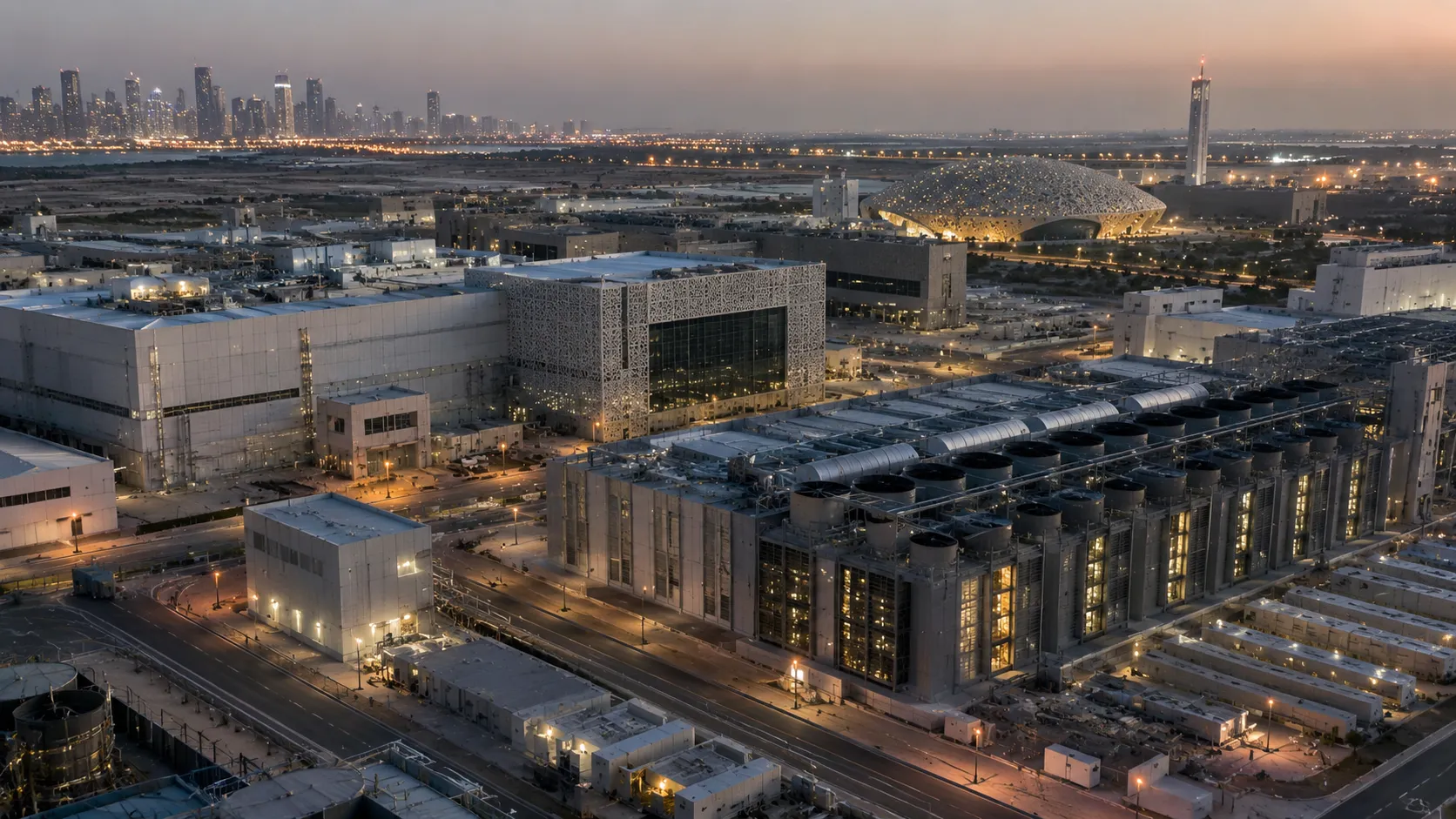
Artificial intelligence has become one of the clearest examples of that transition. Around the world, AI has rapidly shifted from a technology trend into a broader infrastructure race involving chips, data centers, cloud systems and research capabilities. Across several of these areas, sovereign capital from the Gulf has become increasingly visible. Industry participants note that artificial intelligence is increasingly being viewed not simply as a sector generating returns, but as an asset class carrying long-term strategic importance.
Abu Dhabi has emerged as one of the most active centers in this transformation. Recent initiatives involving large-scale infrastructure investments and partnerships with global institutions including BlackRock and Temasek illustrate a broader push toward positioning the region as an important participant in next-generation technology systems. Investment activity increasingly extends beyond diversification strategies and appears tied more closely to future economic positioning.
The activity is not limited to infrastructure alone. Earlier this year, Qatar Investment Authority expanded its venture ambitions through plans to back additional investment vehicles under its $3 billion Fund of Funds programme, an initiative designed to attract founders, investors and startup ecosystems into the region itself. The approach reflects a noticeable strategic shift. Rather than simply exporting capital internationally, sovereign institutions increasingly appear focused on building domestic innovation ecosystems capable of generating long-term economic value.
That distinction may prove increasingly important for venture markets. Traditional venture capital often operates around relatively shorter return cycles and financial outcomes. Sovereign funds, however, frequently invest through a different lens. Their priorities increasingly intersect with national strategies linked to economic diversification, technology leadership, industrial development and geopolitical competitiveness. Capital deployment therefore becomes tied not only to returns but also to broader long-term objectives.
This evolving investment philosophy is increasingly influencing where funding moves globally. Areas including artificial intelligence, semiconductors, advanced manufacturing, logistics systems, defense technologies and climate infrastructure are receiving stronger attention because they align with future economic priorities. Investors across the Gulf appear increasingly willing to commit long-duration capital into sectors where outcomes may take years rather than quarters to emerge.
The broader economic transformation taking place across Gulf economies also helps explain this shift. Countries across the region have spent years attempting to reduce reliance on hydrocarbon revenues and create more diversified economic structures. Initiatives such as Saudi Vision 2030 and multiple UAE technology strategies increasingly position investment activity as a tool capable of accelerating broader national transformation efforts.
Private-market activity increasingly reflects the scale of that influence. Industry data suggests sovereign institutions across the Gulf have become among the largest allocators into global private markets and strategic technology investments. Their role now extends beyond backing venture firms. Increasingly, they are participating directly in conversations shaping how startup ecosystems evolve.
Some industry observers believe the next phase of global venture investing may look fundamentally different because of this transition. Venture markets historically concentrated around a relatively small number of geographies and institutions. The rise of sovereign capital introduces a different dynamic one characterized by scale, patience and strategic ambition. Unlike traditional investors responding primarily to market cycles, sovereign institutions often operate with longer horizons and broader objectives.
Even broader geopolitical uncertainty has done little to alter that trajectory. While regional tensions and changing economic conditions occasionally influence investment priorities, sovereign institutions continue to be viewed as some of the world’s most stable long-term investors. Their ability to maintain patient capital strategies gives them influence extending well beyond individual market cycles.
For founders, investors and startup ecosystems globally, the implications are becoming increasingly difficult to ignore. Venture capital is no longer being shaped exclusively by traditional investment firms or technology-focused institutions. Increasingly, some of the largest decisions around startup funding and ecosystem development may be influenced by sovereign capital operating far beyond Silicon Valley.

As global competition increasingly centers around artificial intelligence, infrastructure and strategic technologies, Gulf sovereign institutions are no longer simply participating in venture capital. Quietly, they may be redefining it.