FundingMarket Data Women10 MIN READ

Gold Holds Near Record Highs as Cooling Oil Prices and a Softer Dollar Reshape India's Commodity Landscape

Gold holds near ₹13,219/gram (22K) and silver at ₹2,34,900/kg as crude oil trades under $85/barrel and the rupee stays near 95.37/USD, following a week of dramatic West Asia-driven commodity swings.

By Nisha Omkumar · Author4 August 2026
Gold Holds Near Record Highs as Cooling Oil Prices and a Softer Dollar Reshape India's Commodity Landscape

Walk into any jewellery showroom in Mumbai, Delhi or Chennai this week, and you'll find shoppers doing quiet mental arithmetic against a backdrop of commodity markets that have spent the past several days lurching through some of the sharpest moves seen all year. As of the morning of August 4, 2026, 22-karat gold in India was trading at ₹13,219 per gram, 24-karat at ₹14,421 per gram, and silver at ₹2,34,900 per kilogram — figures that, taken in isolation, might look like unremarkable data points on a daily price ticker, but that in fact sit downstream of a genuinely dramatic week in global energy and geopolitical news.

The proximate cause of the volatility is not hard to identify: crude oil. On Monday, August 3, oil prices crashed by as much as 5-6% after US President Donald Trump signalled that peace talks with Iran would resume, easing fears of an imminent military escalation in West Asia that had, in the preceding weeks, kept energy markets on edge. Brent crude tumbled below $84 a barrel, while US WTI crude plunged nearly 6% to trade below $80 a barrel — moves large enough to ripple through currency markets, bullion pricing, equity indices and, ultimately, household budgets across India, a country that imports the overwhelming majority of both its crude oil and its gold.
ChatGPT Image Aug 4, 2026, 02_22_24 PM.png

By Tuesday morning, crude had stabilised somewhat, with benchmark prices hovering around $84.02 to $84.29 a barrel according to different trackers — still meaningfully below the highs seen earlier in the West Asia conflict, but no longer in freefall. That relative stability, layered on top of the dramatic Monday decline, has left Indian markets in an unusual position: genuinely relieved that the worst-case escalation scenario appears to have been avoided, at least for now, while remaining watchful for any signs that the ceasefire-adjacent diplomatic momentum could reverse just as quickly as it emerged.

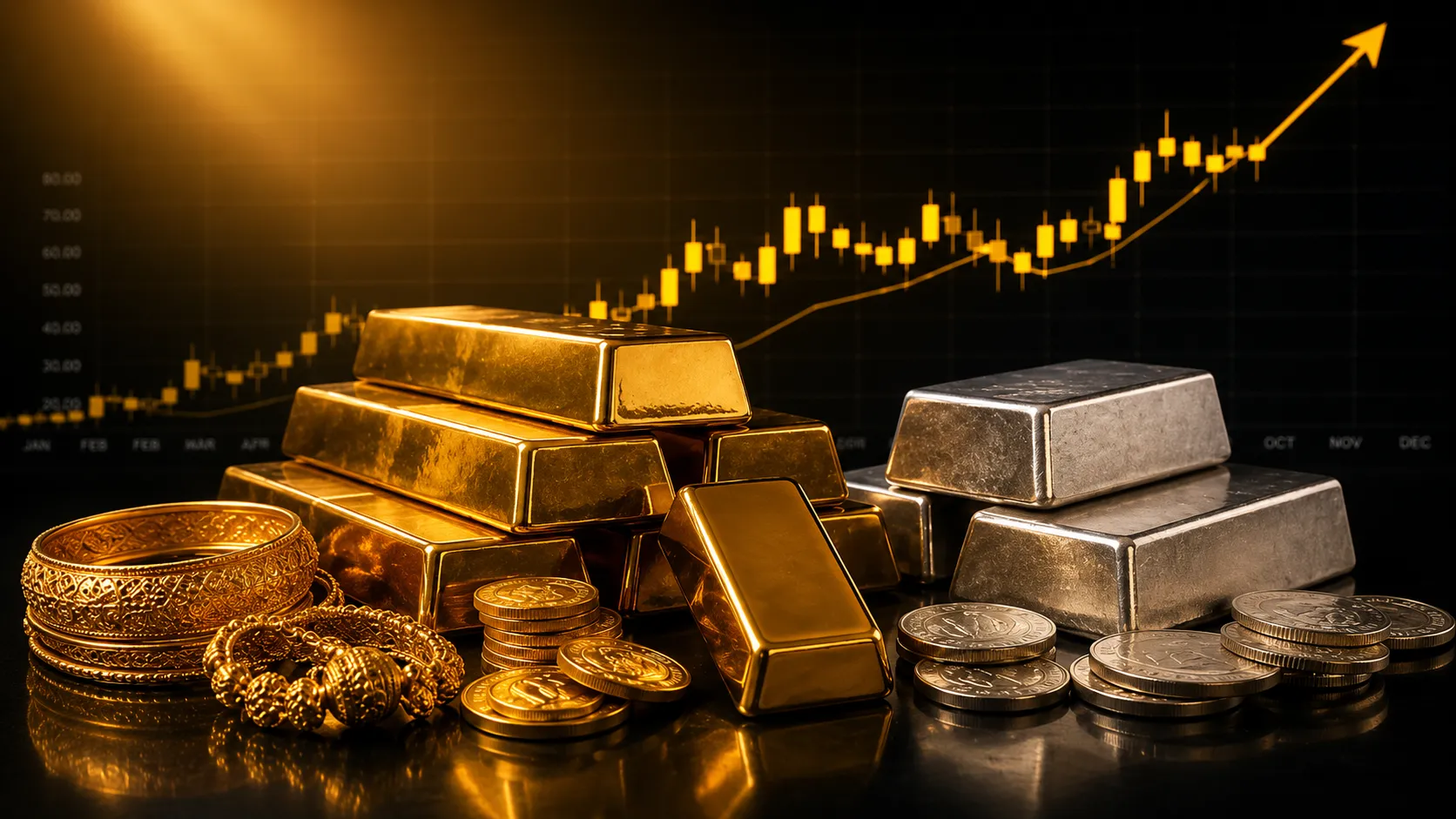
Gold's reaction to falling oil prices might, at first glance, seem counterintuitive — the two commodities don't typically move in lockstep. But the transmission mechanism here runs through the US dollar and through broader risk sentiment rather than through any direct commodity linkage. Lower oil prices ease global inflation concerns, which in turn reduces pressure on the US Federal Reserve to maintain an aggressively tight monetary policy stance; a softer dollar and lower expected interest rates both tend to make gold, which pays no interest itself, comparatively more attractive to hold. On Monday, August 3, that dynamic played out clearly: spot gold rose roughly 0.6% to trade above $4,060 an ounce internationally, while MCX gold on India's Multi Commodity Exchange gained to trade above ₹1,43,500 per 10 grams, and MCX silver jumped more than 1% to close above ₹2,18,000 per kilogram, with an intraday high of ₹2,19,399 per kilogram.

By Tuesday, however, domestic gold prices had eased back modestly from those Monday highs. According to GoodReturns' tracking, 24-karat gold slipped by ₹1 to ₹14,421 per gram, 22-karat fell ₹1 to ₹13,219 per gram, and 18-karat declined ₹1 to ₹10,815 per gram, with prices updated around 8:00 am IST — a genuinely marginal pullback that market commentators characterised as domestic bullion prices remaining largely steady despite mixed global cues, rather than any meaningful reversal of the broader bullish trend. Silver similarly eased, priced at ₹234.90 per gram and ₹2,34,900 per kilogram, down roughly ₹100 per kilogram from the previous session — again, a modest retracement rather than a trend reversal.

On the futures side, MCX gold for August contracts was trading around ₹1,41,210 per 10 grams on Tuesday morning, up a modest ₹115 or 0.08%, while MCX silver futures for September contracts stood at ₹2,16,506 per kilogram, down ₹240 or 0.11% — futures pricing that broadly mirrors the spot market's pattern of consolidation after Monday's sharper moves, with traders apparently content to digest recent gains rather than push prices meaningfully higher or lower in either direction.

The rupee, meanwhile, has played its own quietly important role in this week's commodity price dynamics — a role that often goes underappreciated by consumers focused primarily on headline gold and oil prices. As of Tuesday, the US dollar was trading at approximately ₹95.33 to ₹95.37, with reports noting the Indian rupee had appreciated against the dollar to some extent in recent sessions. Because India imports the vast majority of its gold, the rupee-dollar exchange rate functions as a direct multiplier on domestic gold prices: even when international gold prices in dollar terms remain completely unchanged, any depreciation of the rupee mechanically raises the cost of importing gold and, in turn, pushes up domestic prices — and conversely, rupee appreciation provides a modest offsetting tailwind that has, in recent sessions, helped keep domestic gold price increases somewhat more contained than the raw international dollar-denominated price moves might otherwise suggest.

For ordinary Indian consumers, these commodity movements translate into very concrete, very immediate decisions. India remains the world's second-largest consumer of gold, and jewellery purchases — for weddings, festivals and as a traditional store of value — represent a significant and culturally embedded category of household spending that responds directly and often quite quickly to price signals. GoodReturns, one of the most widely referenced Indian gold-price trackers, explicitly recommends that consumers factor in GST and making charges on top of quoted per-gram rates when budgeting for actual jewellery purchases, and increasingly suggests digital gold or sovereign gold bonds as alternative ways to gain gold exposure without the making-charge premium associated with physical jewellery — advice that reflects a broader, gradual shift in how Indian households are choosing to hold gold as an asset class, even as physical jewellery purchases remain culturally dominant, particularly around the wedding and festive seasons.

Beyond precious metals, the retail fuel price picture in India has remained comparatively stable even amid the underlying crude oil volatility, with petrol quoted around ₹111.18 per litre and diesel around ₹97.83 per litre according to Tuesday's tracked figures — a reminder that India's administered fuel pricing mechanism, run through public sector oil marketing companies, tends to smooth out much of the day-to-day volatility seen in international crude benchmarks before it reaches consumers at the pump, even as that same insulation mechanism means retail fuel prices can lag, sometimes by weeks or months, both sharp increases and sharp decreases in global crude prices.
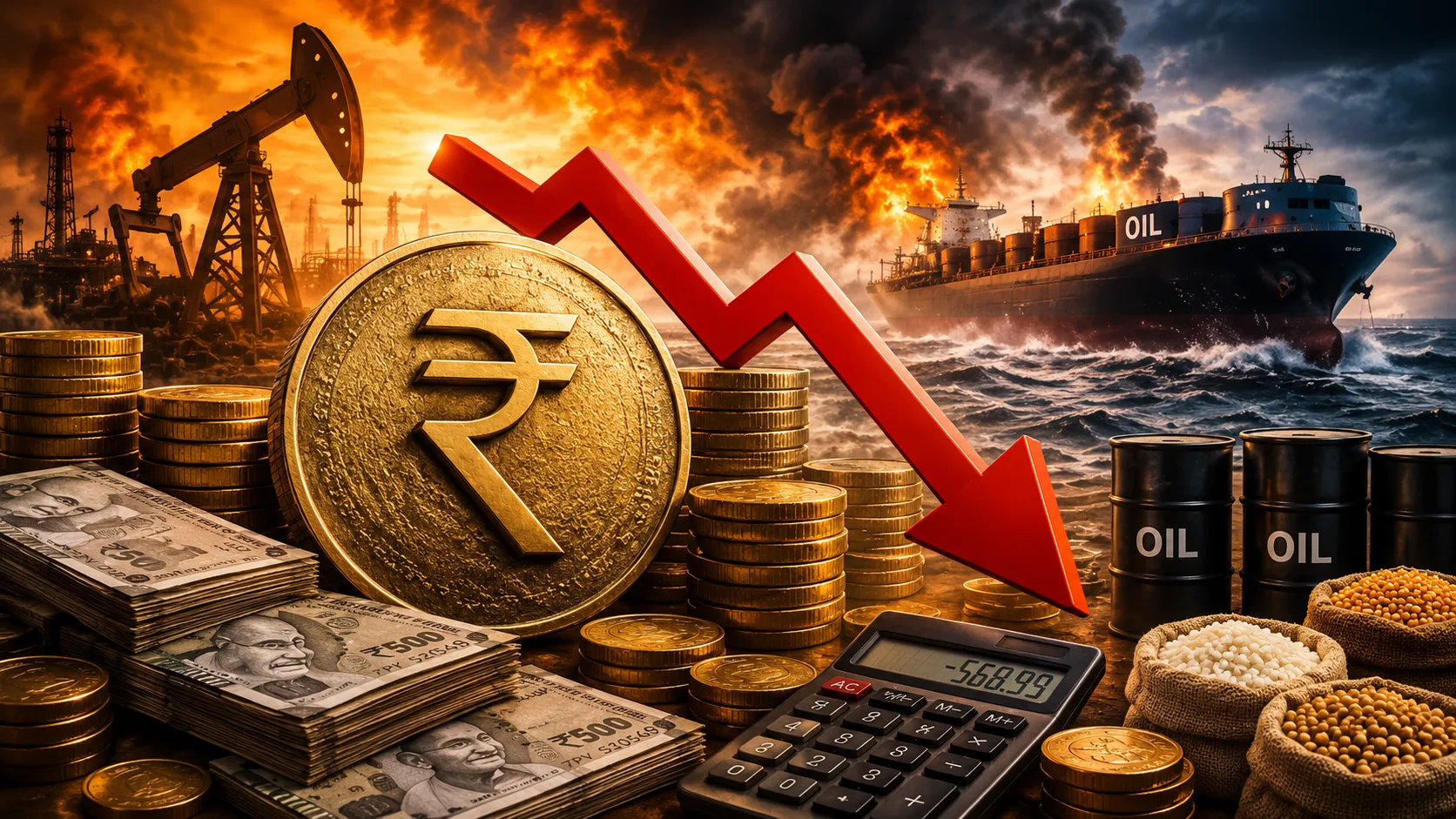

Gold is supported by a weaker US dollar, lower crude oil prices, geopolitical developments and continued demand for safe-haven assets.
Market commentary, Sunday Guardian Live

The broader macroeconomic stakes of this week's commodity moves extend well beyond individual gold purchases or fuel fill-ups. As reported elsewhere this week, the Reserve Bank of India's Monetary Policy Committee has been closely tracking crude oil price volatility as a central input into its own inflation forecasting, having already raised its FY27 retail inflation projection to 5.1% earlier this year, citing higher input costs tied to the pass-through of elevated global energy prices into domestic petrol and diesel rates. A sustained decline in crude oil prices, of the kind witnessed over the past several trading sessions, would — if it holds — provide the RBI with genuine relief on that inflation front, potentially easing some of the upward pressure on retail prices that has been complicating the central bank's rate-setting calculus throughout the current fiscal year.

Equity markets have taken their own cues from this week's commodity moves, with India's benchmark Sensex and Nifty indices both posting solid gains, up roughly 0.88% and 0.91% respectively as of Tuesday morning, extending a rally that has now stretched across four consecutive trading sessions and pushed the Sensex to its highest level since April 21. That rally has been explicitly linked by market commentators to easing crude oil prices and the accompanying reduction in near-term inflation and geopolitical risk — evidence of just how tightly interconnected India's equity, currency, commodity and fixed-income markets have become around this single overarching narrative of West Asia-driven volatility and its gradual, still-fragile de-escalation.

Investors and analysts covering precious metals markets have also flagged a parallel storyline unfolding in the United States that bears directly on where gold prices head from here: markets have been pricing in a meaningful probability — reported at one point as high as 68% — of a 25 basis point interest rate cut from the US Federal Reserve, with investors closely awaiting key US labour market data due later this week, including job openings figures, the ADP employment report, initial jobless claims and the closely watched non-farm payrolls release. Any of these data points, particularly a weaker-than-expected payrolls number, could reinforce market expectations of Fed easing and provide further tailwind support for gold prices, given the well-established inverse relationship between US interest rate expectations and the appeal of non-yielding assets like bullion.

For now, the overall picture emerging from India's commodity markets this week is one of cautious consolidation after a period of genuinely dramatic volatility: gold and silver holding comfortably near recent highs rather than retreating sharply, crude oil stabilising well below its recent peaks without collapsing further, and the rupee showing modest resilience against the dollar even as global uncertainty around the durability of the Iran ceasefire talks remains far from fully resolved. Whether this week's relative calm proves to be a genuine turning point or merely a pause before the next round of volatility will likely depend on developments in West Asia over the coming days — developments that, as this week has demonstrated with unusual clarity, can move gold, oil, currency and equity markets in India within hours of breaking news thousands of kilometres away.

Jewellers and bullion traders across India's major markets have described the current pricing environment as one that continues to support steady festive and wedding-season buying interest, even at elevated absolute price levels, given that Indian gold demand has historically shown itself to be considerably more resilient to high prices than many international commentators initially expect — a pattern rooted in gold's deep cultural embedding as both a wedding necessity and a multi-generational store of family wealth, factors that tend to sustain demand even through periods of rapid price appreciation that might, in other consumer markets, trigger more significant demand destruction.

Commodity analysts have also pointed to the specific window of upcoming US economic data releases as a critical near-term catalyst that could determine whether gold's current consolidation near record levels gives way to a fresh leg higher or a more meaningful pullback. With markets already pricing in a majority probability of Fed easing later this year, any data surprise — in either direction — on the jobs and inflation front over the coming days carries the potential to move gold prices by hundreds of rupees per gram within a single trading session, underscoring just how tightly linked India's domestic bullion market has become to macroeconomic developments unfolding thousands of kilometres away in Washington.

ChatGPT Image Aug 4, 2026, 02_24_15 PM.png

For India's broader import bill, the interplay between gold and crude oil prices carries particular significance given that these two commodities together represent by far the largest components of the country's overall import basket. A sustained period of softer crude oil prices, even if gold prices remain elevated, would provide meaningful relief to India's current account position, potentially easing pressure on the rupee from the trade-deficit side of the ledger even as continued strong gold demand works in the opposite direction. Economists tracking India's external balances have noted that the net effect of this week's commodity moves — cheaper oil imports partially offset by continued strong gold buying — is likely to prove modestly positive for the country's overall trade arithmetic, provided the current crude oil price weakness persists beyond just this week's news-driven volatility.

State-run oil marketing companies, whose margins are directly affected by the gap between international crude prices and administered domestic retail fuel rates, are also likely to be closely watching whether this week's crude price decline proves durable enough to justify any adjustment to retail petrol and diesel pricing in the weeks ahead — a decision that carries its own political sensitivity given how closely fuel prices are watched as a barometer of cost-of-living pressures across Indian households, particularly outside the country's largest metropolitan centres where transportation costs represent a proportionally larger share of household budgets.

This report is based on price data and market commentary from GoodReturns, India TV News, NewsX and Sunday Guardian Live, tracking gold, silver, crude oil and currency movements as of August 3-4, 2026.

TagsGold Price TodaySilver PriceCrude Oil PriceRupee DollarMCX GoldBullion MarketCommodity PricesIndian EconomyInflation WatchMarkets

Reader reviews

Sign in to rate and review this article.
Loading reviews…