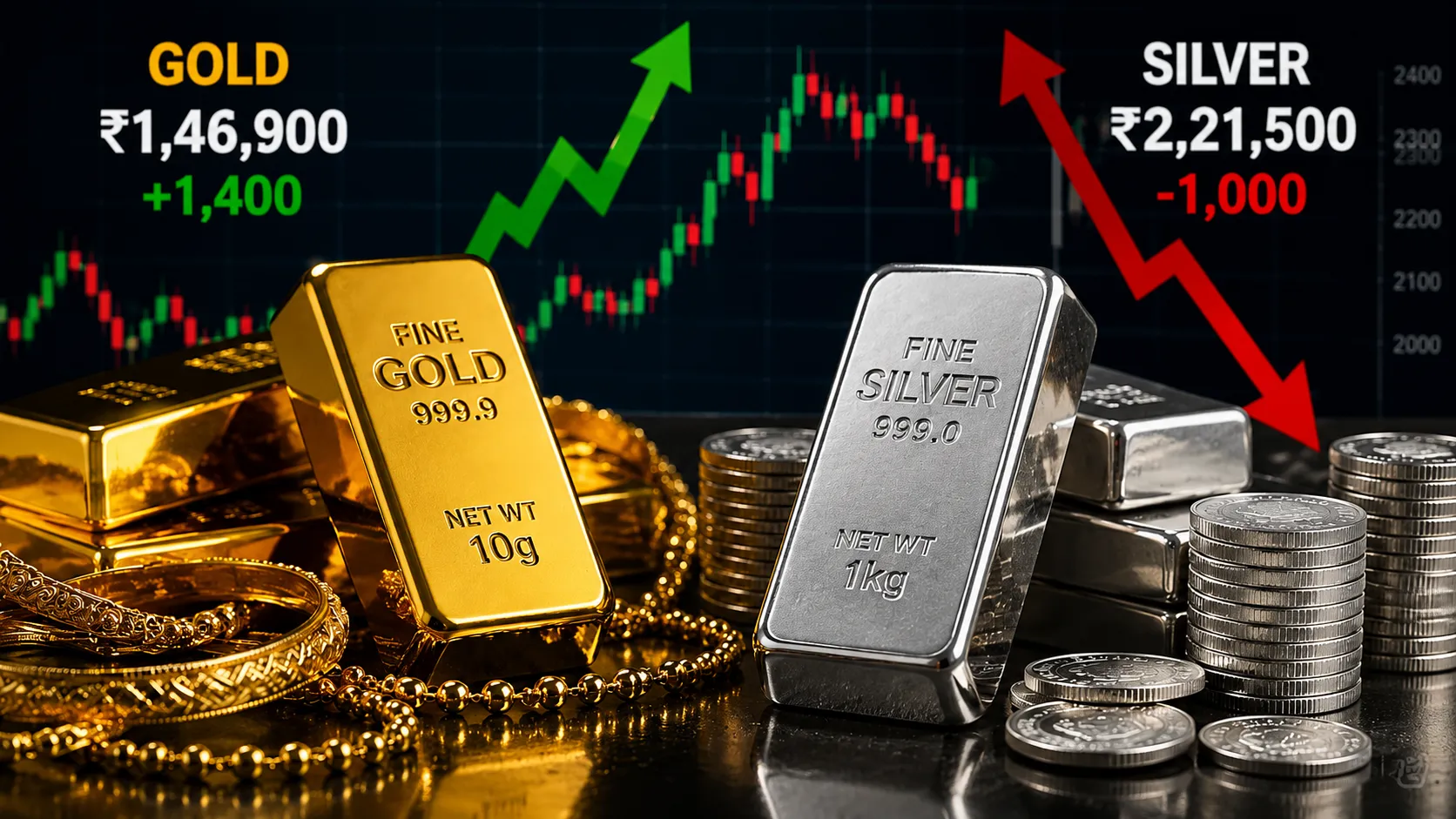
Gold is trading at approximately ₹13,400 per gram for 22-karat purity as of July 24, 2026, while silver holds near ₹2,40,000 per kilogram, according to the latest reference pricing from India's precious metals markets — levels that reflect a sustained period of elevated demand for both metals as investors across the country navigate a genuinely turbulent stretch for nearly every other major asset class. With Indian equity markets extending a losing streak into a fourth consecutive session, the rupee sliding toward record-low territory against the US dollar, and crude oil prices spiking on the back of an escalating West Asia crisis, gold and silver are once again playing their time-tested role in Indian portfolios and household savings strategies: a hedge against precisely the kind of macro uncertainty currently gripping financial markets.
To understand why gold prices in India are behaving the way they are right now, it helps to unpack the several distinct forces simultaneously pushing on the metal's price from different directions. Globally, gold has historically functioned as a safe-haven asset that investors flock to during periods of geopolitical tension, financial market volatility, and currency instability — and the current environment offers no shortage of any of those three ingredients. The escalating conflict in West Asia, which has been the primary driver behind this week's crude oil price surge, has simultaneously been fuelling gold demand internationally, as investors globally seek to hedge portfolios against the kind of tail-risk scenarios that an unresolved, potentially widening Middle East conflict could produce for broader financial markets.
For Indian gold buyers and investors specifically, there is an additional, distinctly domestic dynamic layered on top of that global safe-haven narrative: the rupee's own depreciation. Because gold is internationally priced in US dollars, a weakening rupee mechanically pushes up the domestic, rupee-denominated price of gold even when the underlying dollar price of the metal remains unchanged — meaning Indian gold prices can rise for two entirely independent reasons simultaneously, a global dollar-price increase and a domestic currency depreciation, both of which happen to be occurring at the same time this week. With the rupee having closed at 96.73 against the dollar on Thursday, edging toward the record-low levels touched earlier this year, that currency-driven component of gold's rupee price has been a meaningful contributor to the metal's current elevated levels.
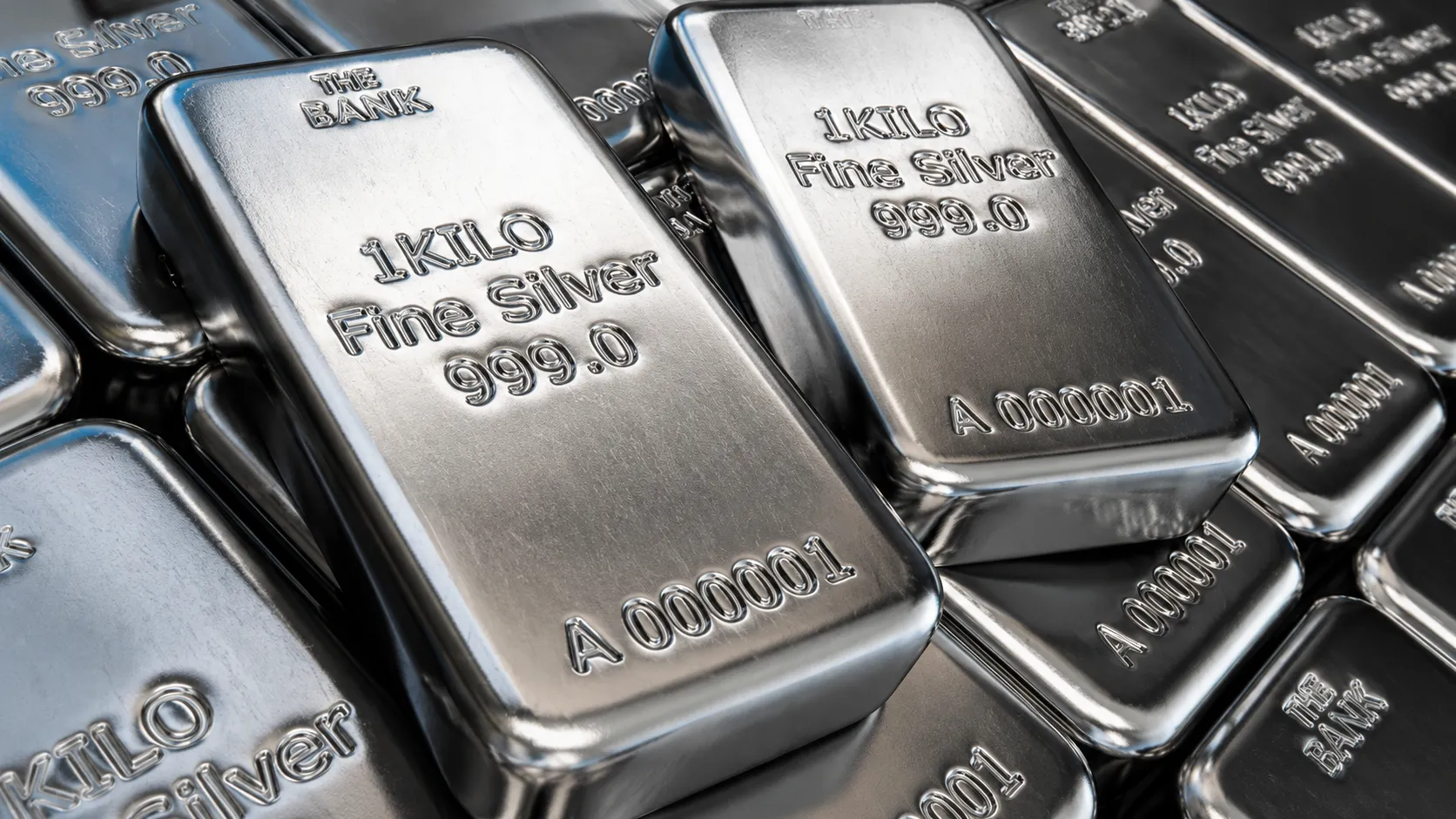
Silver's price action, while broadly tracking gold's overall direction, has its own distinct set of demand drivers worth understanding separately. Unlike gold, which functions almost purely as a monetary and store-of-value asset in most contexts, silver carries substantial industrial demand alongside its investment and jewellery-related uses, spanning applications from electronics manufacturing and solar panel production to a range of other industrial processes. That dual nature means silver prices can, at times, diverge from gold's pure safe-haven price action depending on the relative strength of industrial demand trends globally — though in the current environment, with both metals trading at elevated levels simultaneously, the broader macro uncertainty appears to be dominating over any industrial-demand-specific divergence between the two metals' price trajectories.
India's cultural and economic relationship with gold specifically deserves particular attention when discussing precious metals price movements in the country, given that India remains one of the largest gold-consuming markets globally, driven by deeply embedded cultural traditions around gold jewellery purchases tied to weddings, festivals, and other significant life events, alongside gold's long-standing role as a preferred savings and wealth-preservation vehicle across Indian households, particularly in rural and semi-urban areas where formal financial-sector penetration has historically been lower than in urban centres. That structural, culturally embedded demand base means Indian gold prices carry a somewhat different demand dynamic compared to markets where gold functions more purely as an institutional or professional investment asset class.
The current elevated gold-price environment does carry some genuine trade-offs for different categories of market participants. For gold jewellery buyers planning purchases around upcoming festival and wedding seasons, elevated prices translate directly into higher costs for the same quantity of gold, a dynamic that jewellery retailers have historically found tends to shift consumer purchasing behaviour toward lighter-weight jewellery designs or a greater emphasis on gold coins and bars as more purely investment-oriented purchases rather than ornamental ones. For existing gold holders and investors, conversely, the current price environment represents a favourable mark-to-market position, reinforcing gold's historical reputation among Indian households as a reliable long-term store of value that tends to perform well precisely during the kind of macro stress episodes the broader economy is currently navigating.
From an investment-portfolio perspective, financial advisors have long recommended some allocation to gold as a diversification tool specifically because of its tendency to perform differently from equities and bonds during periods of macro stress — a dynamic playing out fairly clearly in the current environment, where Indian equity markets have posted four consecutive losing sessions even as gold has held firm near multi-week highs. That inverse or at least uncorrelated relationship between gold and equity performance during stress periods is precisely the portfolio-construction rationale that has kept gold a staple allocation recommendation across both traditional Indian household savings patterns and more formal, professionally managed investment portfolios alike.
Beyond physical gold and silver, India's precious metals investment landscape has, over recent years, expanded considerably to include a range of more formal financial instruments offering gold exposure without the storage and purity-verification concerns associated with physical bullion or jewellery — including gold exchange-traded funds, sovereign gold bonds issued periodically by the government, and digital gold platforms offered through various fintech and brokerage applications. That expanding menu of gold-investment vehicles has made it considerably easier for a broader range of Indian investors to gain gold exposure as part of a diversified portfolio strategy, rather than relying solely on physical gold purchases, a shift that has likely amplified the speed and scale at which investment-driven demand can respond to exactly the kind of macro uncertainty currently playing out across crude markets, currency markets, and equity markets simultaneously.
Looking ahead, the trajectory of both gold and silver prices in the coming weeks will likely remain closely tied to how the underlying macro drivers evolve — specifically, whether the West Asia crisis shows any signs of de-escalation that might ease crude-oil-driven inflation concerns and reduce the broader risk-off sentiment currently supporting safe-haven demand, and whether the rupee's slide toward record-low territory stabilises or continues, given the direct mechanical impact currency movements have on domestic gold pricing. Global central bank policy decisions, particularly any signals from the US Federal Reserve regarding the future path of interest rates, will also factor meaningfully into gold's international dollar price, given the well-established inverse relationship between gold prices and prevailing real interest rates in major reserve currencies.
For now, though, India's gold and silver markets are doing precisely what they have done for generations during periods of heightened uncertainty — drawing renewed attention from both seasoned investors looking to hedge broader portfolio risk and everyday households evaluating the timing of upcoming jewellery purchases, all against a backdrop of currency volatility, geopolitical tension, and equity-market turbulence that shows few signs of resolving in the immediate term.
India's gold import policy and its broader implications for the domestic price of the metal also warrant attention when discussing current price levels. As one of the world's largest gold-importing nations, India's precious metals market remains directly influenced by government import duty policy, which has historically been adjusted periodically to help manage the country's current account deficit, given that gold imports represent a meaningful, non-productive drain on foreign exchange reserves during periods when the metal is imported purely for investment or ornamental purposes rather than any productive industrial use. Any shifts in import duty policy, whether upward to curb demand during periods of currency stress or downward to support the domestic jewellery and gems trade, can meaningfully influence the domestic price premium or discount relative to international gold prices, adding yet another variable that domestic gold-price watchers must factor into their analysis beyond the pure international-dollar-price and rupee-exchange-rate dynamics already discussed.
The jewellery retail industry itself has been closely monitoring the current price environment, with organised jewellery retailers — an increasingly important and rapidly consolidating segment of India's gold trade compared to the historically fragmented, unorganised local jeweller model — adjusting their inventory strategies and promotional calendars in response to elevated gold prices. Industry commentary has periodically noted that sustained periods of high gold prices tend to accelerate the ongoing structural shift in Indian jewellery buying patterns toward lighter-weight, more design-intensive pieces and studded jewellery incorporating gemstones alongside gold, a trend that allows consumers to manage overall purchase costs even as the underlying per-gram gold price continues climbing, while also supporting higher-margin categories for organised retailers navigating the current pricing environment.
Silver's industrial demand dimension deserves a somewhat deeper look given its growing relevance to India's own renewable-energy and electronics manufacturing ambitions. As India continues to scale up domestic solar panel manufacturing capacity as part of its broader energy-transition and manufacturing self-reliance policy push, silver — a critical input in photovoltaic cell production — has seen its domestic industrial demand base expand meaningfully over recent years, adding a structural, policy-linked demand driver to the metal's price dynamics that operates somewhat independently of the safe-haven and jewellery-related demand factors that more heavily influence gold. That growing industrial demand base for silver, layered on top of the metal's traditional investment and ornamental uses, has contributed to what several commodity analysts have described as an increasingly structurally supported long-term demand outlook for the metal, distinct from its more purely cyclical, safe-haven-driven price swings during acute market-stress episodes like the one currently playing out.
For retail investors evaluating whether to increase gold or silver exposure at current elevated price levels, financial advisors typically caution against attempting to precisely time entry points based on short-term macro catalysts like the current West Asia crisis or rupee volatility, instead recommending a more disciplined, systematic approach to precious metals allocation — similar to the systematic investment approach increasingly popular for equity mutual fund investing — that averages purchase prices over time rather than attempting to concentrate purchases around any single perceived market bottom or top. That kind of disciplined approach, financial planners argue, tends to serve long-term portfolio diversification objectives more reliably than reactive, headline-driven purchase timing, particularly for an asset class like gold whose primary portfolio role is generally understood to be risk mitigation and diversification rather than aggressive, short-term capital appreciation. Whatever direction gold and silver prices take from here, this week has offered a timely reminder of precisely why Indian households and institutional investors alike have, for generations, kept a place for precious metals in their broader financial planning. As festive and wedding season purchasing decisions loom later in the year, today's prices will likely serve as an important reference point for how households across the country plan their gold-buying calendars in the months ahead, particularly if the current combination of rupee weakness and geopolitical uncertainty persists into the traditionally gold-heavy festive stretch later this year. Jewellers, investors, and everyday buyers alike will all be watching the same set of macro signals — crude prices, the rupee, and the broader geopolitical temperature — for clues on where prices head next, in what has become one of the more closely intertwined relationships between global geopolitics and the Indian household gold-buying calendar in recent memory. It is a relationship that, however unusual it might sound to describe a wedding-season jewellery budget in the same breath as a Middle Eastern shipping lane, has become an entirely routine part of how millions of Indian families now think about the timing of one of their most significant annual purchases. In that sense, today's prices are not just a market data point but a genuinely useful planning input for households across the country weighing exactly when, in the months ahead, to make their next gold purchase — a decision that, this year more than most, comes tangled up with considerations that would once have felt entirely disconnected from a simple trip to the local jeweller.