The Joke Is Finally Over
For most of the last seventy years, nuclear fusion came with a punchline that physicists told on themselves: fusion is the energy source of the future, and always will be.
The logic behind the joke was real. Fusion — the process that powers the sun, fusing light atoms together under extreme heat and pressure to release enormous amounts of energy, with no carbon emissions and no long-lived radioactive waste — had been tantalisingly close and consistently elusive for decades. Every time a milestone was reached, the next one pushed commercial viability further into the future. "Thirty years away" became the running estimate, repeated so many times it became a metaphor for technological ambition that never arrived.
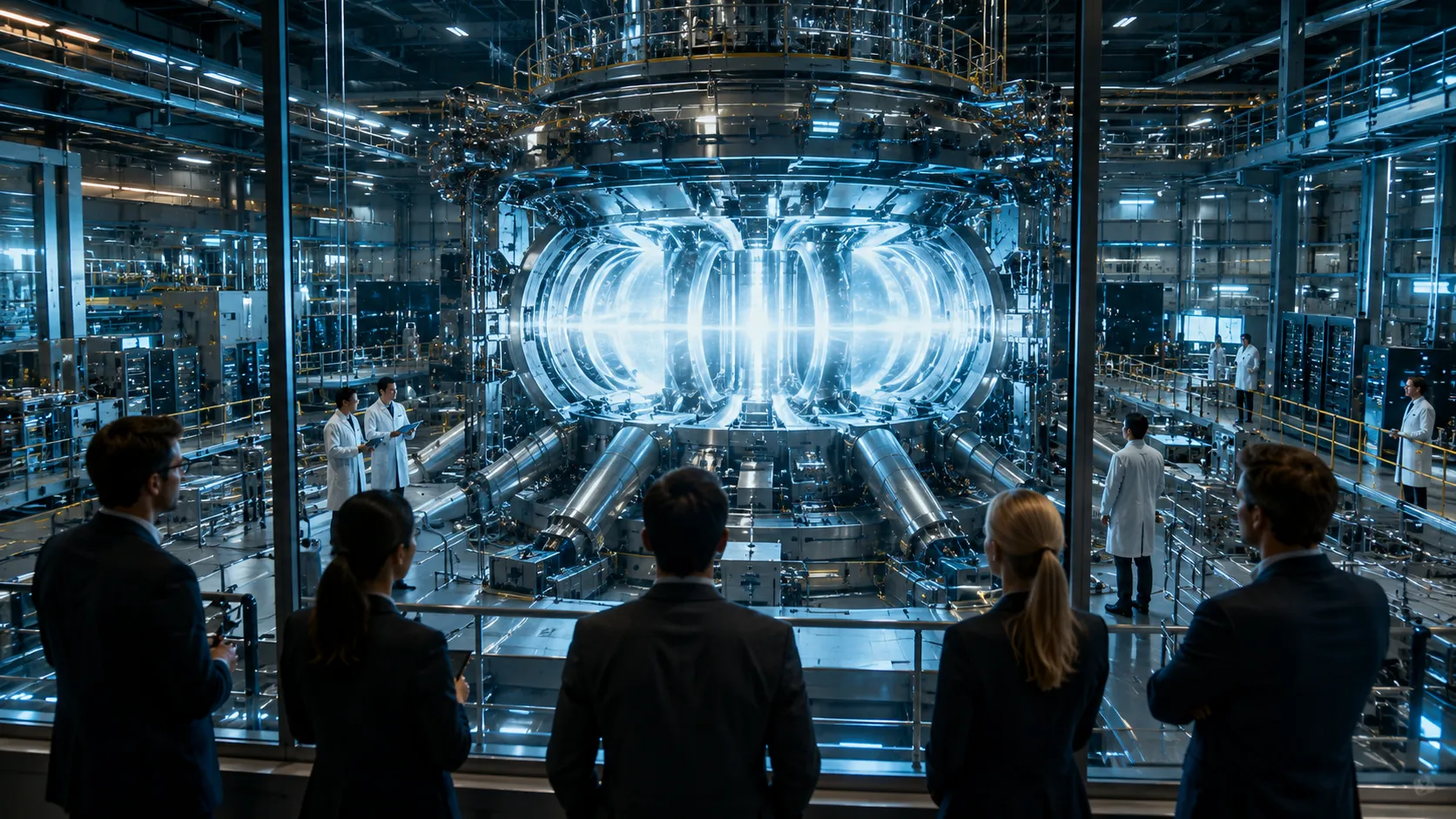
Then, on December 5, 2022, scientists at the National Ignition Facility at Lawrence Livermore National Laboratory in California did something that fundamentally changed the conversation. For the first time in history, a controlled fusion reaction released more energy than was delivered to the fuel that triggered it. It was not a grid-ready power plant. It was not commercially viable. But it was proof — verified by the United States Department of Energy — that the underlying physics of fusion ignition was real, achievable, and reproducible.
The money noticed.
In a single week in late May and early June 2026, fusion startups raised over $340 million: Thea Energy closed a $100 million Series B on May 27, and Focused Energy announced a $240 million Series A — the largest fully secured Series A in the global fusion industry's history — on June 2. These were not isolated events. They arrived inside a year that had already seen Inertia Enterprises raise $450 million in February, Type One Energy close in on a $250 million Series B in January, and Commonwealth Fusion Systems accumulate nearly $3 billion in total private capital across its fundraising history.
The fusion sector, which private investors had spent decades treating as a science project with no foreseeable commercial return, has now attracted more than $10 billion in private investment. And the reason it is happening now — the reason 2026 looks categorically different from 2016 or even 2021 — is not one thing. It is three things converging simultaneously.
What Actually Changed: Three Forces at Once
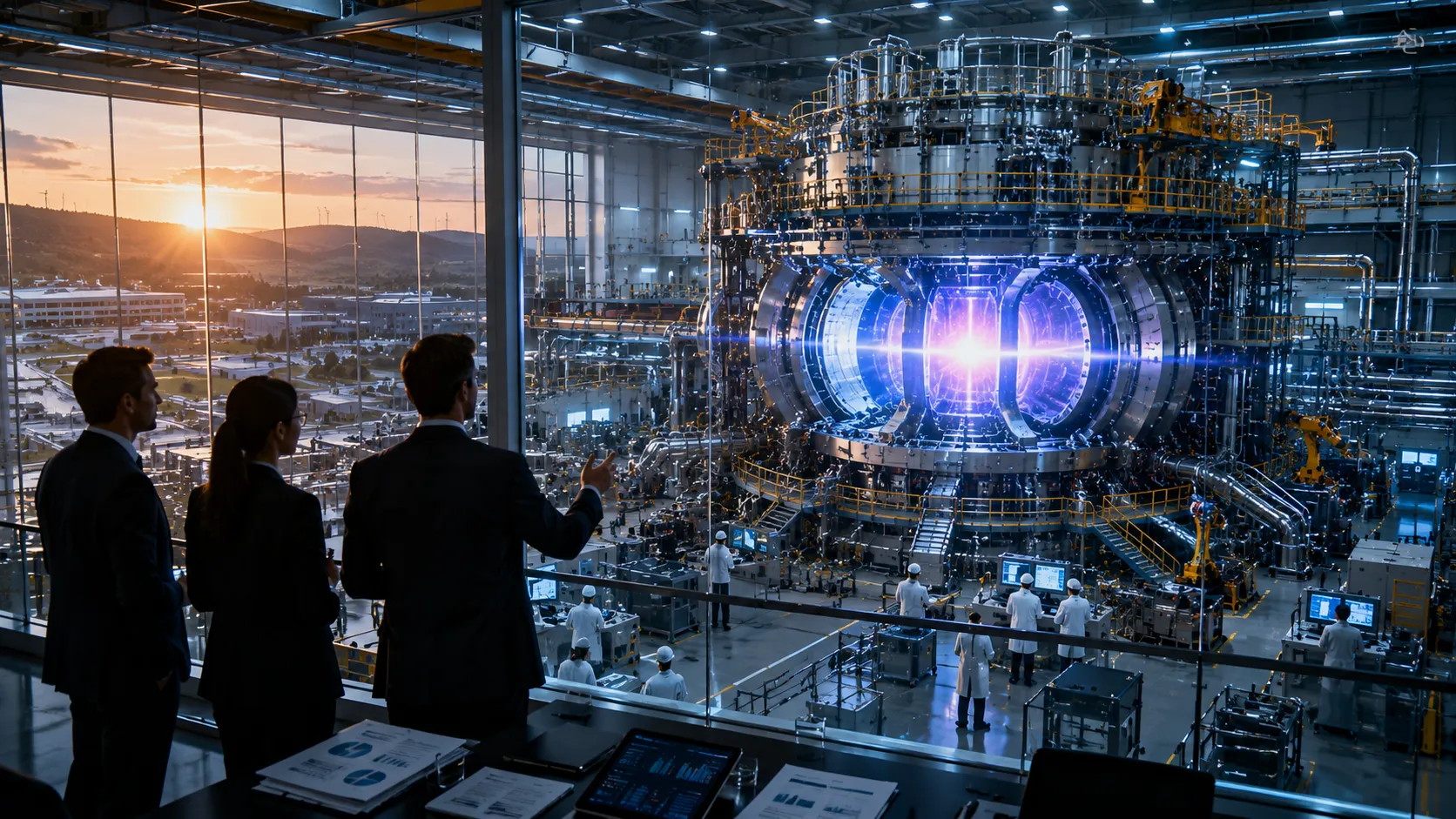
The first force is physics. The NIF result in December 2022 was not incremental progress. It was a categorical proof of concept. "This wasn't incremental progress," Bessemer Venture Partners wrote when leading Inertia Enterprises' $450 million raise. "It was proof that the physics worked." Before that experiment, private investors were being asked to fund a technology that had never demonstrated net energy gain under controlled conditions. After it, they were being asked to fund the engineering challenge of turning a proven physical phenomenon into a commercial product. That is a fundamentally different investment proposition.
The second force is demand — specifically, the electricity demand crisis being driven by artificial intelligence. Data centres already consume roughly 4 per cent of total US electricity use, approximately 183 terawatt-hours annually, and projections indicate that demand could more than double within the next five years. Tech companies need enormous amounts of electricity, and they need it to be clean, consistent, and ideally not dependent on a grid that is already strained. Baseload power — electricity that is available continuously, not intermittently like wind or solar — is exactly what AI infrastructure requires. Fusion, if it works at commercial scale, would be the cleanest and most abundant source of baseload power ever created.
This is not a theoretical demand signal. Google has already signed an agreement to purchase half the output of Commonwealth Fusion Systems' commercial Arc power plant when it comes online near Richmond, Virginia — a power purchase agreement that is the most direct possible expression of corporate conviction in the timeline. Microsoft has signed a similar agreement with Helion Energy, which is building a plant in Washington state targeting 50 megawatts of output to Microsoft data centres by 2028.
The third force is government. In September 2025, the US Department of Energy expanded its Milestone-Based Fusion Development Program with $134 million in new funding, adding to the $46 million it had previously committed to eight startups that had collectively attracted $350 million in private capital. Recipients include Commonwealth Fusion Systems, Focused Energy, Thea Energy, Realta Fusion, Tokamak Energy, Type One Energy, Xcimer Energy, and Zap Energy. In Europe, Focused Energy's $240 million Series A included direct participation from Germany's Federal Agency for Breakthrough Innovation, SPRIND, and the European Innovation Council Fund — government bodies writing cheques alongside private investors into the same round.
The combination of physics proof, commercial electricity demand, and government co-investment is what makes 2026 structurally different from every prior wave of clean energy enthusiasm. This is not capital chasing a narrative. It is capital responding to a convergence of real signals that were not all simultaneously present at any earlier moment.
Who Is Raising — and What They Are Building
The fusion sector is not monolithic. There are at least three distinct technical approaches attracting capital simultaneously, and understanding the differences matters for understanding who is likely to deliver commercial power first.
Inertial confinement fusion — using lasers to compress and ignite a fuel target, the approach validated at the NIF — is being commercialised by Focused Energy and Inertia Enterprises, among others. Focused Energy, a Darmstadt-based startup that includes among its team Debbie Callahan, one of the scientists who helped design the fuel target used in the historic NIF experiment, raised $240 million in a Series A led by energy giant RWE, with the specific plan of building a commercial power plant at a former nuclear site in Biblis, Germany. Using existing nuclear-grade infrastructure reduces both cost and timeline by a meaningful factor. "Germany and Europe are entering a new era of energy sovereignty," said Thomas Forner, co-founder and CEO of Focused Energy.
Inertia Enterprises, based in Livermore, California — the same city as the NIF facility — raised $450 million in February 2026 in a round led by Bessemer Venture Partners, with plans to build a commercial power plant starting construction in 2030. Bessemer's framing was explicit: "America is facing an unprecedented energy challenge. Meeting that demand requires not just more power, but fundamentally better power."
Magnetic confinement fusion — using powerful magnetic fields to contain and heat plasma until fusion occurs — is the approach pursued by Commonwealth Fusion Systems (CFS), the MIT spinout that has raised nearly $3 billion and is building its Sparc demonstration reactor in Massachusetts, targeting operation in late 2026 or early 2027. Its commercial Arc power plant, which would generate 400 megawatts of electricity and sell half its output to Google, is planned for the early 2030s. CFS has raised approximately one third of all private capital invested in fusion companies to date.
Stellarator designs — a more stable but more complex magnetic confinement geometry — are being commercialised by Thea Energy, the Princeton-spinout based in Kearny, New Jersey, which raised $100 million in May 2026 in a Series B that included Japanese energy company Idemitsu Kosan among its backers. Thea's approach uses "pixel-inspired" planar magnets that, if successful, would provide a manufacturing advantage over competitors whose reactors require massive assembly halls for reactor-scale components. The company is targeting a demonstration reactor, Eos, by 2030 and a commercial version, Helios, by 2034.
What Makes This Wave Different From the Last One
Clean energy investment has boomed and crashed before. The 2007 to 2012 cleantech boom attracted enormous capital on the thesis that renewable energy was the next transformative technology platform. Most of those bets failed — not because renewable energy was a bad idea, but because the cost curves, technology maturity, and market demand were not where investors assumed they would be. Solar and wind eventually did transform the energy sector, but on a timeline that wiped out a generation of early investors.
The 2026 fusion wave has several features that distinguish it from that prior cycle. The first is the physics proof. Unlike the cleantech boom, which was funded before any technology had demonstrated commercial viability, the current fusion wave is happening after the NIF experiment established that ignition is physically achievable. This does not guarantee commercial success — the distance between a lab demonstration and a grid-ready power plant is enormous, and the NIF achieved net energy measured against the fuel target, not against the total energy consumed by the laser system, which is orders of magnitude larger. But it removes the most fundamental uncertainty from the investment thesis.
The second differentiating feature is who is buying the output. Google, Microsoft, and other hyperscalers signing power purchase agreements with fusion companies before the plants exist is categorically different from the cleantech boom, where demand signals were speculative. These are real commitments from real buyers with real electricity needs that are growing faster than any existing source can meet.
The third differentiating feature is the capital structure. Government grants alongside private venture rounds, strategic investors like RWE writing $60 million cheques, and energy utilities participating directly in fusion financing rounds means the capital stack is more diversified and less dependent on any single investor's conviction than the prior cleantech cycle was.
None of this guarantees that any specific fusion company delivers commercial power on its stated timeline. Commonwealth Fusion's Sparc has slipped from its original targets. Helion's Microsoft deal depends on a 2028 delivery that has not yet been demonstrated. The honest picture of fusion in 2026 is that no commercial plant has produced electricity for the grid, and the question is not whether net-energy fusion is physically possible — it is whether the engineering and economics can be made to work on a timeline that matters.
Why This Matters Beyond Energy
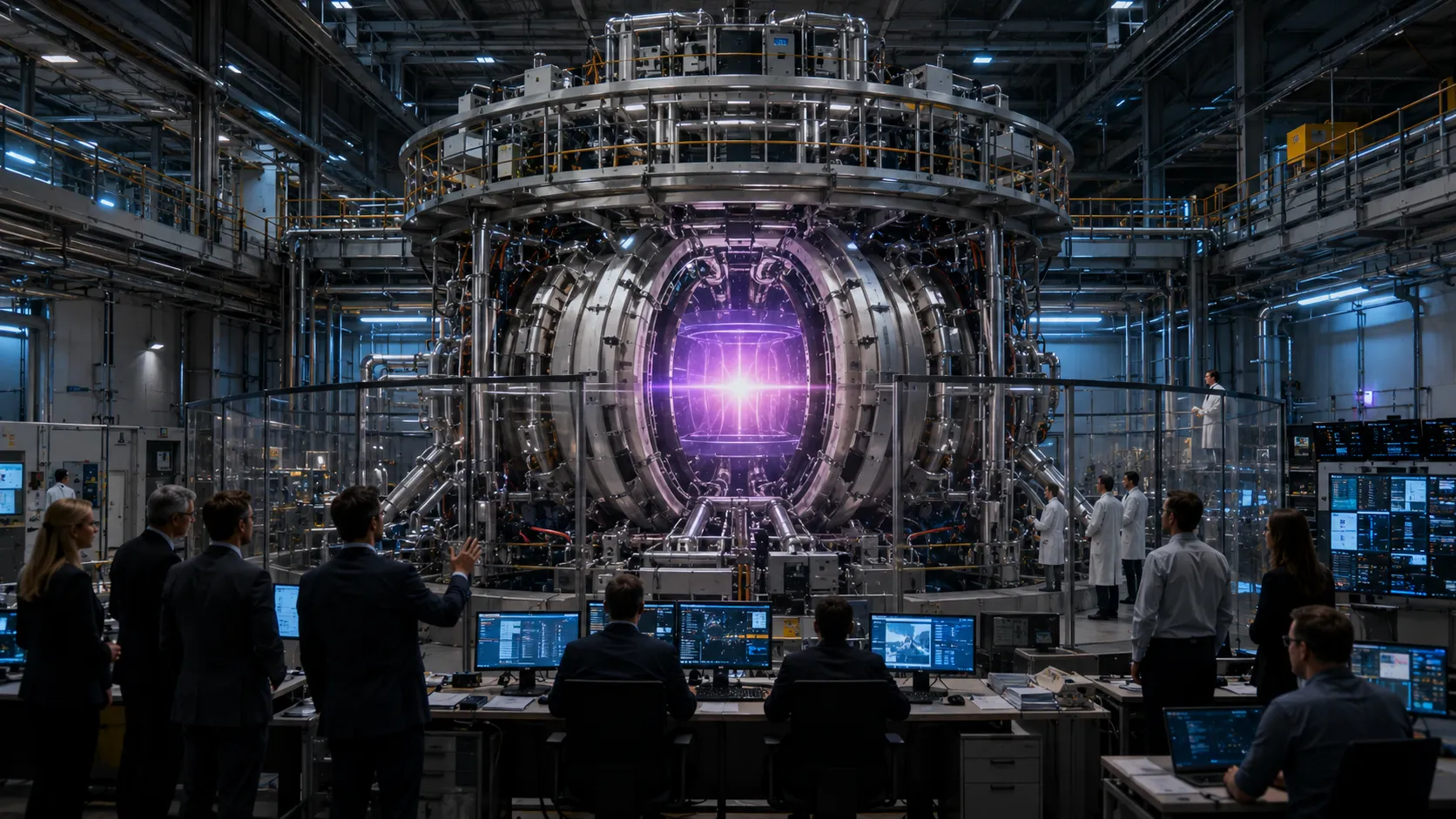
The fusion funding surge of 2026 is not only a story about energy. It is a story about the relationship between scientific proof and private capital — and about what happens when a category that was dismissed for decades suddenly generates the combination of verified physics, commercial demand, and government support that changes the investment calculus overnight.
The investors writing the largest cheques into fusion right now are not doing so because they have become more optimistic about technology in general. They are doing so because the specific conditions that had previously made fusion uninvestable — no proof of ignition, no clear commercial buyer, no government framework — have been systematically resolved one by one over the past four years.
That pattern is worth internalising for any founder building in a category that the market currently treats as too early, too speculative, or too capital-intensive to take seriously. The fusion sector spent seventy years being dismissed by private capital. It took a single physics result, a convergent demand crisis, and the right policy framework to transform it from a punchline into one of the most actively funded sectors in the 2026 venture landscape.
The capital does not move first. The conditions change first, and then the capital floods in behind them. The founders and investors who were already there — who built during the dismissal period, who accumulated the scientific credibility and early government relationships and technical proof before the money arrived — are the ones who will define what the sector looks like when it finally does arrive at commercial scale.
Clean energy investment is back. And the founders who understood the physics before the investors did are the ones who will be running the companies when the lights come on.