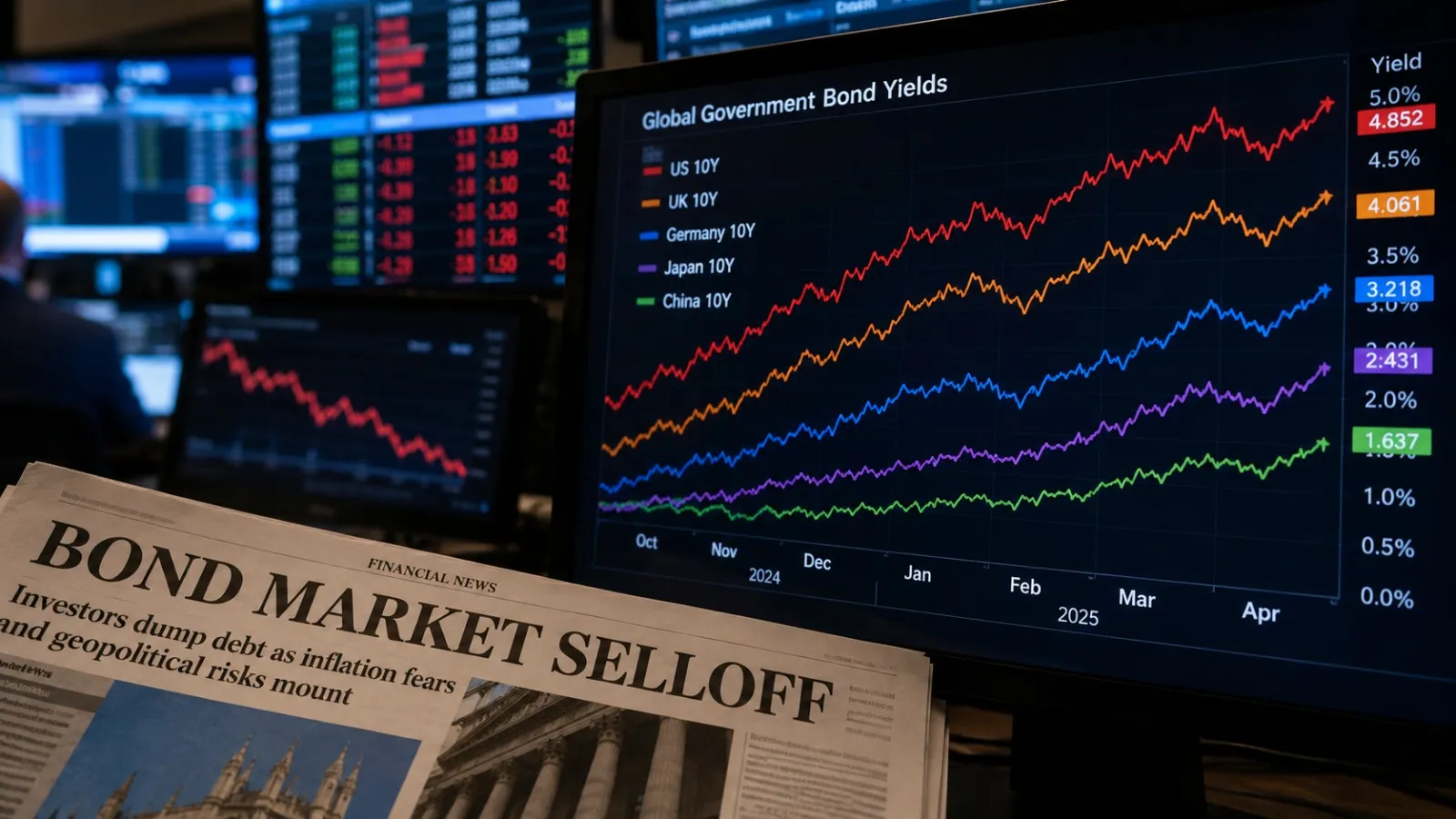
Petrol is retailing at ₹111.21 per litre and diesel at ₹97.83 per litre as of today, July 24, 2026, according to the latest reference pricing from India's fuel-retail network, with domestic LPG cylinder prices holding at ₹941.50. On the surface, these numbers might read as simply another routine daily fuel-price update, the kind published every morning across hundreds of Indian news outlets and price-comparison platforms. But this particular update lands at a moment of genuine tension in global energy markets, with Brent crude — the international benchmark that ultimately drives the economics of everything India puts in its fuel tanks and cooking-gas cylinders — trading near $98.68 a barrel, close to its highest level in roughly six weeks, driven by an escalating crisis in West Asia that shows few signs of near-term resolution.
To understand why today's seemingly stable fuel prices are, in fact, a story worth paying close attention to, it is worth revisiting how India's fuel-pricing mechanism actually works. Unlike many economies where retail fuel prices adjust in near-real-time or on short lags to global crude movements, India's state-run oil marketing companies — Indian Oil, Bharat Petroleum, and Hindustan Petroleum chief among them — have, for an extended stretch, followed a pattern of holding retail pump prices largely stable even as underlying crude costs fluctuate, absorbing some of that volatility onto their own margins rather than passing every crude-price swing directly through to consumers. That approach has effectively meant Indian pump prices have moved far less dramatically in recent years than the swings seen in international crude benchmarks, a pattern that offers consumers welcome predictability but comes at a real cost to the oil marketing companies' own profitability during periods of crude-price spikes like the one currently underway.
The current spike is being driven by what has become one of the year's defining geopolitical storylines: escalating tension in the Strait of Hormuz region, the narrow waterway through which a substantial share of the world's crude oil and liquefied natural gas is transported en route to major importing economies, India prominent among them. Fresh military exchanges between the United States and Iran through the first half of 2026 have repeatedly rattled energy markets, pushing Brent crude sharply higher on multiple occasions this year as traders price in the risk — sometimes realised, sometimes averted at the last moment — of significant disruption to tanker traffic through the strait. With Brent now trading close to $98-99 a barrel and some market strategists warning of scenarios where prices could climb meaningfully higher should the crisis deepen further, the pressure on India's energy-import bill has become one of the most closely watched macro variables of the year.
The stakes for India are considerable given the country's heavy reliance on imported crude, with roughly nine in every ten barrels of oil India consumes sourced from overseas. That dependence means crude-price spikes translate fairly directly into pressure on India's current account and, ultimately, on the rupee's exchange rate — a dynamic that has been playing out visibly in recent sessions, with the rupee sliding to 96.73 against the US dollar on Thursday, near record-low territory, with traders and strategists explicitly citing the surge in crude prices tied to the West Asia crisis as one of the principal drivers behind the currency's weakness. India has, over recent years, worked to diversify its crude sourcing, with discounted Russian oil now accounting for a substantially larger share of the country's import basket than it did just a few years ago — a shift that has provided some cushion against the full brunt of global price spikes, but not full insulation, since Indian crude import costs still tend to move broadly in step with global benchmark prices even accounting for the Russian-crude discount.
For now, the government and oil marketing companies appear to be holding the line on retail pricing, keeping petrol, diesel, and LPG rates broadly stable despite the crude spike — a decision that likely reflects a combination of factors, including the political sensitivity of fuel-price increases, the desire to avoid adding further inflationary pressure to a consumer economy already grappling with a weaker currency, and potentially some cushioning from excise-duty or margin adjustments that allow the state-run companies to absorb a portion of the crude-cost increase without passing it through immediately to consumers at the pump. Whether that stability can be maintained if crude prices continue climbing — with some energy analysts flagging scenarios of Brent moving well beyond the $100 mark should the Strait of Hormuz situation deteriorate further — remains one of the more consequential open questions hanging over India's near-term inflation and fiscal outlook.
The cooking-gas dimension of today's pricing update carries its own significance. LPG holds a particular place in India's energy-policy calculus given both its role in household budgets across income levels and its political sensitivity as a consumer staple that directly touches hundreds of millions of Indian households through government cooking-gas subsidy schemes. Any sustained upward pressure on LPG pricing tends to draw immediate political and public attention in a way that, for instance, industrial fuel-oil pricing rarely does, which means the government's calculus around whether and how much of any crude-driven cost increase gets passed through to LPG cylinder prices tends to be even more cautious than its approach to petrol and diesel pricing.
Market watchers tracking the broader energy-sector implications of the current crisis have been parsing which categories of Indian businesses stand to be hurt versus helped by the crude spike. Oil marketing and refining companies, somewhat counter-intuitively, can see mixed effects — refining margins sometimes benefit from crude volatility even as retail-pricing discipline squeezes marketing margins, while companies with significant fuel-cost exposure in their own operations, from airlines to logistics firms to certain manufacturing sectors, face a more straightforwardly negative impact from sustained high crude prices. Sectors more insulated from direct crude exposure, or those that benefit from a weaker rupee through export-oriented revenue streams, have been more resilient through this period of energy-market turbulence.
Looking at the household-level impact, even with today's fuel prices holding steady, the broader inflationary pass-through from a sustained period of elevated crude prices and a weaker rupee tends to work its way through the economy with a lag — showing up eventually in transportation costs, in the pricing of goods that rely on fuel-intensive logistics and manufacturing processes, and in the broader cost-of-living calculus that the Reserve Bank of India factors into its own monetary-policy deliberations. That inflationary pass-through risk is precisely why economists and RBI watchers have flagged the current crude-price environment as a genuine complicating factor for the central bank's policy calculus in the months ahead, even independent of the currency-stability considerations already weighing on the RBI's interventions in the forex market.
For now, Indian consumers filling up at the pump or booking their next cooking-gas cylinder refill are, at least for today, insulated from the sharpest edges of the global crude-price spike playing out thousands of kilometres away in the Persian Gulf and the Strait of Hormuz. But that insulation, as this year has repeatedly demonstrated, is a policy choice rather than an economic inevitability — one that state-run oil marketing companies and the government can sustain only for so long if crude prices continue climbing and the broader fiscal and current-account pressures associated with elevated import costs continue to build. Whether today's stable pump prices hold through the coming weeks will depend, in large part, on how the West Asia crisis evolves from here — a geopolitical variable that remains, as ever, genuinely difficult to forecast with any confidence.
As things stand, the ₹111.21 petrol price and ₹97.83 diesel price recorded today serve as both a snapshot of the present and a marker against which future price movements will inevitably be measured, should the current bout of crude-market volatility persist or intensify in the weeks ahead.
City-wise variations in fuel pricing across India remain a fixture of the country's retail fuel market, driven primarily by differences in state-level value-added tax rates rather than any difference in the underlying base price set by oil marketing companies, which is broadly uniform across the country before local taxes are applied. States with historically higher fuel VAT rates — a category that has periodically included some of India's larger consuming states — tend to see meaningfully higher pump prices than states that have opted for more moderate tax structures, a dynamic that has periodically become a point of political contention between state governments and the central government, particularly during periods of sustained crude-price pressure when calls for coordinated tax relief on fuel tend to intensify from opposition-ruled states and consumer advocacy groups alike.
The airline and logistics sectors, both intensely fuel-cost-sensitive by nature, are among the business categories watching the current crude spike most anxiously. Aviation turbine fuel pricing, which follows its own distinct benchmark and adjustment cycle separate from petrol and diesel, has historically been one of the most direct pass-through points for crude-oil volatility in the Indian economy, given that fuel typically constitutes one of the largest single cost line items for airlines operating in India. Sustained elevated crude prices, should they persist through the coming months, are likely to pressure airline operating margins and could eventually feed through into airfare pricing, an outcome that would add yet another channel through which the West Asia crisis makes its presence felt in the pocketbooks of ordinary Indian consumers, well beyond the immediate petrol-pump and cooking-gas price points.
From a fiscal-policy standpoint, the government's calculus around fuel taxation during periods of crude-price volatility involves balancing several competing considerations simultaneously: the revenue implications of excise duty on petroleum products, which has historically been a significant contributor to central government tax collections; the inflationary consequences of allowing crude-cost increases to pass through fully to retail consumers; and the financial health of the state-run oil marketing companies, which need adequate marketing margins to sustain their own capital investment programmes, including the retail network expansion and alternative-fuel infrastructure investments — from compressed natural gas stations to electric-vehicle charging infrastructure — that these companies have increasingly been undertaking as part of India's broader energy-transition strategy.
India's longer-term energy strategy also forms an important backdrop to how today's crude-driven pressure is being managed. Over the past several years, the country has been steadily investing in reducing its structural exposure to crude-price volatility over the long run — through accelerated renewable-energy capacity additions, expanded ethanol-blending programmes for petrol, growing electric-vehicle adoption in select urban markets, and continued efforts to diversify crude-sourcing geographies beyond traditional West Asian suppliers. None of those longer-term structural shifts offer meaningful near-term relief from a crude-price spike unfolding over weeks rather than years, but they do shape the broader trajectory of how exposed India's economy will be to episodes like the current West Asia crisis a decade from now, even as the country continues to navigate the more immediate pricing and inflation pressures such episodes create today.
Ultimately, today's fuel-price snapshot is best understood not as a static data point but as a live readout of an ongoing, dynamic balancing act being conducted by policymakers and oil marketing companies alike — one being tested in real time by a geopolitical crisis thousands of kilometres away that nonetheless has very direct, very tangible implications for the price Indian consumers pay every time they visit a fuel station or book a cooking-gas refill. Readers are advised to track official oil marketing company updates for city-specific rates, since local taxation can shift the pump price meaningfully from the national reference figures cited here. Consumers planning any near-term fuel-dependent expenditure — from a long road trip to a bulk cooking-gas booking — may find it prudent to keep half an eye on how the West Asia situation develops over the coming days, given how directly that geopolitical thread now runs to the numbers on the fuel pump display. theimpactfulglobalindian.com will continue to track and update these figures as the situation evolves, and readers can expect follow-up coverage the moment either the pump price or the geopolitical backdrop driving it takes its next meaningful turn.