While Indo-MIM's ₹3,811-crore mainboard listing has dominated this week's IPO headlines, a quieter but equally telling story has been playing out in parallel on India's SME exchanges. Three small and mid-sized enterprise IPOs — spanning a Kerala theme park operator, a Rajkot forging manufacturer, and a Mumbai exhibition-stall specialist — finalised their share allotments within a single 48-hour window between July 29 and July 30, 2026, offering a useful cross-section of the kind of business India's booming SME primary market is currently bringing to public investors, for better and for worse.
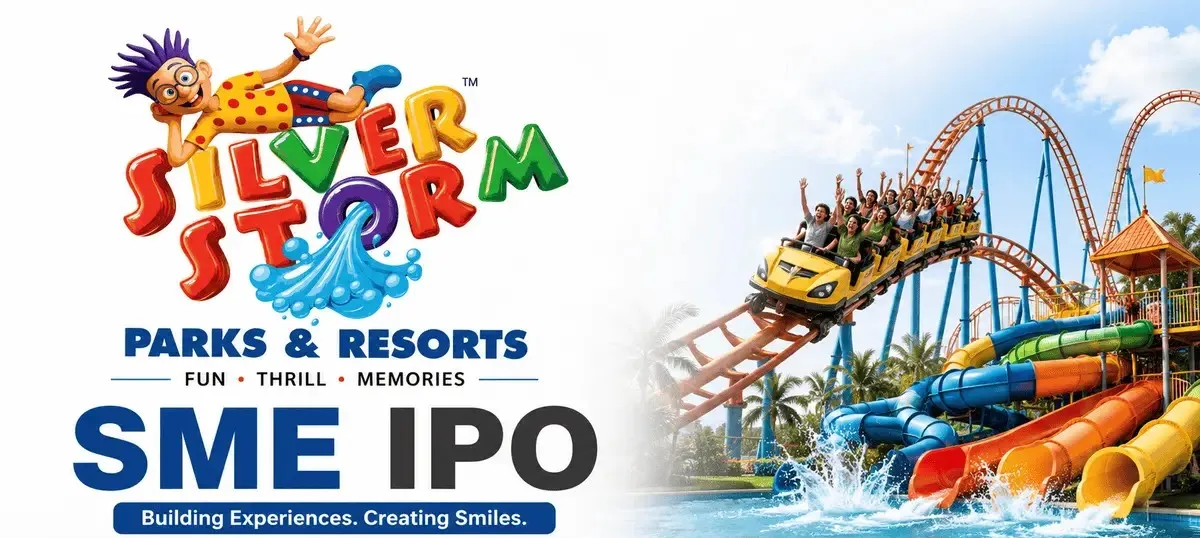
Silverstorm Parks & Resorts Limited, the most consumer-facing of the trio, priced its ₹82.43-crore book-built IPO at a band of ₹123 to ₹133 per share, with the issue opening on July 24 and closing on July 28, and allotment finalised on July 29. Incorporated in 1998, the Kerala-based company operates an integrated amusement and tourism destination centred on its flagship Silver Storm Theme Park near the Athirappilly waterfalls in Thrissur district — a roughly 17.38-acre complex combining an amusement park, a water park, and Snow Storm, billed as Kerala's first indoor snow park, alongside an integrated resort and a planned aerial cable car project. The company has also begun expanding beyond its single-location roots, having already launched a mall-based snow park format in Jamshedpur and earmarking a portion of its IPO proceeds for a similar Lucknow Snow Park and Family Entertainment Centre, alongside broader debt reduction. Financially, the company reported revenue of ₹44.85 crore for the year, up from ₹31.64 crore the year before, with profit rising to ₹19.10 crore from ₹9.71 crore — genuinely strong percentage growth, even if the absolute scale remains modest by mainboard standards. The issue's reception, however, was notably tepid relative to some of the blockbuster subscription numbers seen elsewhere in July's IPO calendar: reported subscription levels sat below full coverage through parts of the bidding window, and the grey market premium sat at roughly ₹0 as of late July, suggesting the market was pricing the issue essentially at par rather than anticipating a meaningful listing pop when shares debut on the BSE SME platform on July 31.
Advance Technoforge Limited offers a study in contrast — a business-to-business industrial manufacturer entirely absent from consumer headlines but solidly embedded in India's automotive and industrial supply chains. The Rajkot-based company, which has been manufacturing forged and precision-machined components since 2013, makes closed-die steel forgings, upset forgings and ring-rolling forgings serving customers across automotive, oil and gas, railways, earthmoving equipment, agriculture, power transmission, valves and pumps — a genuinely diversified industrial customer base that reduces the company's dependence on any single end-market's cyclicality. Its ₹24.03-crore issue, structured as a BSE SME fixed-price offering at ₹95 per share with no offer-for-sale component — meaning the entirety of the proceeds flow directly into the company's own balance sheet rather than to selling shareholders — opened on July 27 and closed on July 29, with allotment finalised July 30 and listing tentatively scheduled for August 3. With more than two decades of manufacturing experience and an integrated capability spanning forging, precision machining, heat treatment, surface treatment and testing and validation, the company has positioned itself to capture more of the value chain per component than a pure forging shop typically would, a structural advantage several SME-focused analysts have pointed to as the more durable part of its investment case. Grey market activity ahead of listing showed a modest positive premium, generally tracked in the ₹5 to ₹9 range against the ₹95 issue price — a single-digit indicative premium that analysts characterised as reflecting reasonable, rather than exuberant, investor interest.
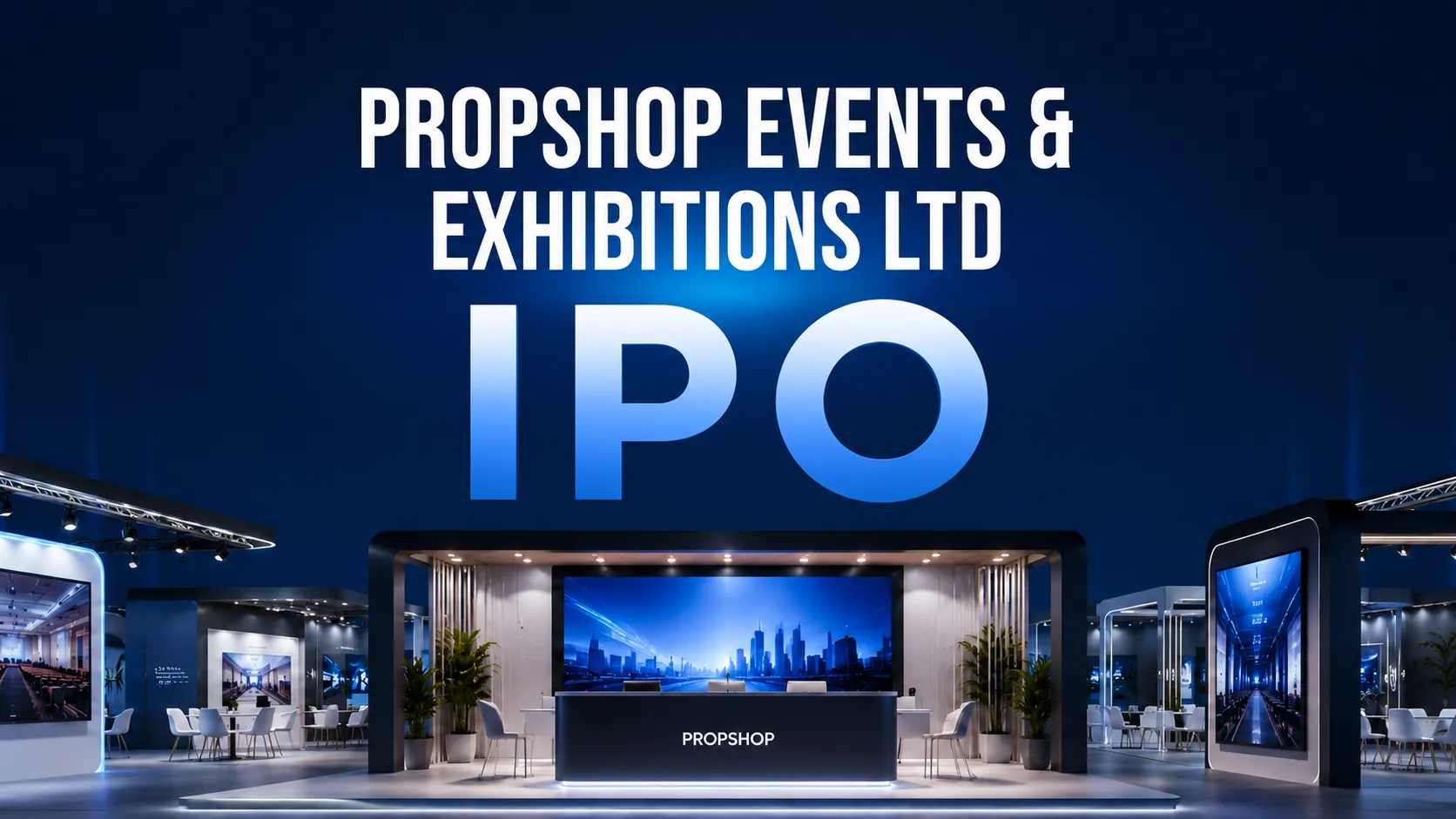
Propshop Events & Exhibitions Limited rounds out the trio with perhaps the most unusual business model of the three: a Mumbai-based company that designs, fabricates and manages custom and modular exhibition booths for corporate clients participating in domestic and international trade shows. The company's ₹28.57-crore book-built issue, comprising a fresh issue of ₹23.05 crore alongside a smaller offer-for-sale component, priced its band at ₹65 to ₹69 per share, opened for subscription on July 27 and closed July 29, with allotment finalised July 30 ahead of a planned NSE SME listing on August 3. The business itself sits in a genuinely fragmented but resilient corner of India's events and marketing services economy: the company has executed more than 5,000 booths for over 1,100 clients spanning industrial machinery, building materials, healthcare, chemicals, media, food and beverages, and consumer goods sectors — a sector diversification that helps smooth out demand volatility, since exhibition and trade-show spending in any one industry can swing sharply with that sector's own business cycle. Financially, the company reported revenue growth from ₹30.57 crore to ₹51.59 crore year-on-year, with profit more than doubling from ₹2.19 crore to ₹6.32 crore — genuinely strong growth, though grey market activity ahead of listing showed no meaningful premium, with trackers reporting essentially flat unofficial pricing, suggesting the market has not yet built in expectations of a strong listing-day pop for this particular issue.
Taken together, the three IPOs illustrate both the appeal and the risk profile that has come to define India's SME exchange ecosystem through 2026. All three represent genuinely operating, profitable businesses with multi-year track records — a meaningfully different profile from the pre-revenue or loss-making startups that dominated headlines during India's earlier venture-capital-fuelled IPO booms. All three also, notably, carry the structural characteristics that distinguish SME-platform listings from their mainboard counterparts: significantly smaller issue sizes, minimum application amounts running into lakhs of rupees rather than the more modest thousands typical of mainboard retail lots, and materially thinner post-listing trading liquidity — a combination that has historically made SME IPOs considerably more volatile, and considerably less forgiving of company-specific bad news, than their larger mainboard cousins.
Investor advisories accompanying coverage of all three issues consistently flagged the same core caution: SME IPOs of this scale should be approached by investors comfortable with genuine business-fundamentals analysis — footfall trends and project execution risk for Silverstorm, order-book visibility and raw-material cost pass-through for Advance Technoforge, client-concentration risk for Propshop Events — rather than by those simply chasing listing-day gains, precisely because grey market signals for all three issues pointed to modest-to-negligible anticipated premiums rather than the eye-catching 30-40 percent pops that mainboard issues like Indo-MIM commanded in the same week. For Silverstorm Parks & Resorts specifically, additional risk factors flagged by analysts include monsoon-season seasonality inherent to an outdoor amusement-park business model, and execution risk tied to the company's ambitious multi-city expansion plans funded substantially by IPO proceeds rather than already-proven internal cash generation.
The broader significance of three SME allotments clearing in the same 48-hour window extends beyond the individual companies themselves. India's SME IPO platforms — operated as dedicated segments of both the BSE and NSE with lighter listing requirements than the mainboard — have become an increasingly important funding channel for small and mid-sized Indian businesses that would, a decade ago, have had little realistic path to public capital markets at all. The sheer volume of SME issues moving through allotment and listing in a single week in late July 2026 — alongside the much larger mainboard Indo-MIM offering — reflects a primary market that remains, despite the macro uncertainty dominating large-cap headlines around tariffs and foreign capital flows, genuinely open and active for smaller Indian businesses seeking to raise growth capital, a dynamic that stands in useful contrast to some of the caution characterising foreign investor sentiment toward India's large-cap equities through much of 2026.
For retail investors who participated in any of the three issues, the coming days bring the practical culmination of the process: shares credited to demat accounts following the allotment finalisation, refunds processed for unsuccessful applicants, and — for those who received allotments — the first genuine market test of how each business is actually valued once its shares begin trading freely, rather than being priced through the comparatively opaque and unregulated grey market channels that had offered only a rough, informal guide through the subscription period. Whether any of the three delivers the kind of listing-day enthusiasm Indo-MIM's investors are hoping for this same week, or settles into the more modest, fundamentals-driven trading pattern the tepid grey market signals suggest, will become clear within days — but for a market that has, through 2026, increasingly rewarded genuine operating businesses over speculative pre-revenue stories, all three companies at minimum arrive on the exchange with real revenue, real profit, and real customers already in hand.
The registrar and lead-manager infrastructure behind all three issues also reflects how professionalised India's SME IPO ecosystem has become over the past several years. Silverstorm Parks & Resorts engaged Vivro Financial Services as book-running lead manager alongside MUFG Intime India as registrar; Advance Technoforge used Kfin Technologies as its registrar; and each issue proceeded through a now well-established SME listing process involving SEBI-mandated disclosure norms, minimum public shareholding requirements, and market-making arrangements designed to provide at least a baseline level of post-listing liquidity — safeguards that, while lighter-touch than full mainboard requirements, represent a considerably more regulated environment than existed when India's SME exchange platforms were first launched over a decade ago. That maturing regulatory infrastructure is itself part of why a growing number of genuinely profitable, multi-decade-old family businesses — as opposed to purely early-stage ventures — have increasingly chosen the SME route as a credible, faster path to public capital markets than the more demanding mainboard listing process.
For investors specifically evaluating whether to hold shares allotted in any of the three issues post-listing, rather than exit quickly for whatever gain or loss materialises on debut, the underlying business trajectories offer somewhat different multi-year theses. Silverstorm's expansion into mall-based snow park formats beyond its original Kerala location represents a genuine attempt at geographic diversification and format replication that, if executed well, could meaningfully de-risk the business from its historical dependence on a single flagship property and the seasonal, weather-dependent footfall patterns that come with it. Advance Technoforge's diversified industrial customer base across automotive, energy, rail and general engineering applications provides a natural hedge against any single sector's downturn, while its fully fresh-issue structure means the capital raised flows directly into capacity expansion rather than being diluted by promoter or investor exits. Propshop Events, finally, offers exposure to India's broader exhibitions and trade-show economy — a sector closely tied to overall corporate marketing spend and business confidence, and one that tends to expand during periods of economic optimism and contract during downturns, making it a genuinely cyclical rather than defensive addition to an SME-focused portfolio.
The timing of all three allotments — clustered within the same week as the much larger Indo-MIM mainboard listing and a broader flurry of primary-market activity spanning Lohia Corp, Xtranet Technologies and several other SME issues — also illustrates a practical challenge facing retail investors trying to participate meaningfully across India's crowded 2026 IPO calendar. With minimum application amounts for SME issues typically running from roughly ₹1.3 lakh to ₹4 lakh depending on the specific issue's lot size and price band, retail investors face genuine capital-allocation trade-offs when multiple attractive SME opportunities open and close within the same narrow window, a dynamic that likely contributed to the comparatively modest subscription levels seen in issues like Silverstorm Parks & Resorts and Propshop Events, even as investor capital concentrated more heavily on marquee mainboard names like Indo-MIM during the same stretch of trading days. For advisors guiding retail clients through an increasingly crowded SME calendar, the sensible takeaway is one of selectivity: treating each issue on its individual fundamentals rather than applying blanket enthusiasm or blanket caution to the SME segment as a whole, given how meaningfully the three businesses profiled here differ in sector, growth trajectory and risk profile despite sharing the same broad SME-exchange listing mechanics. As India's SME IPO pipeline shows little sign of slowing through the rest of 2026, that same discipline — reading each issue on its own operating merits rather than treating the segment as a single, undifferentiated category — is likely to serve investors considerably better than chasing grey-market chatter alone.