The MIT Side Project That Became a $60 Billion Empire
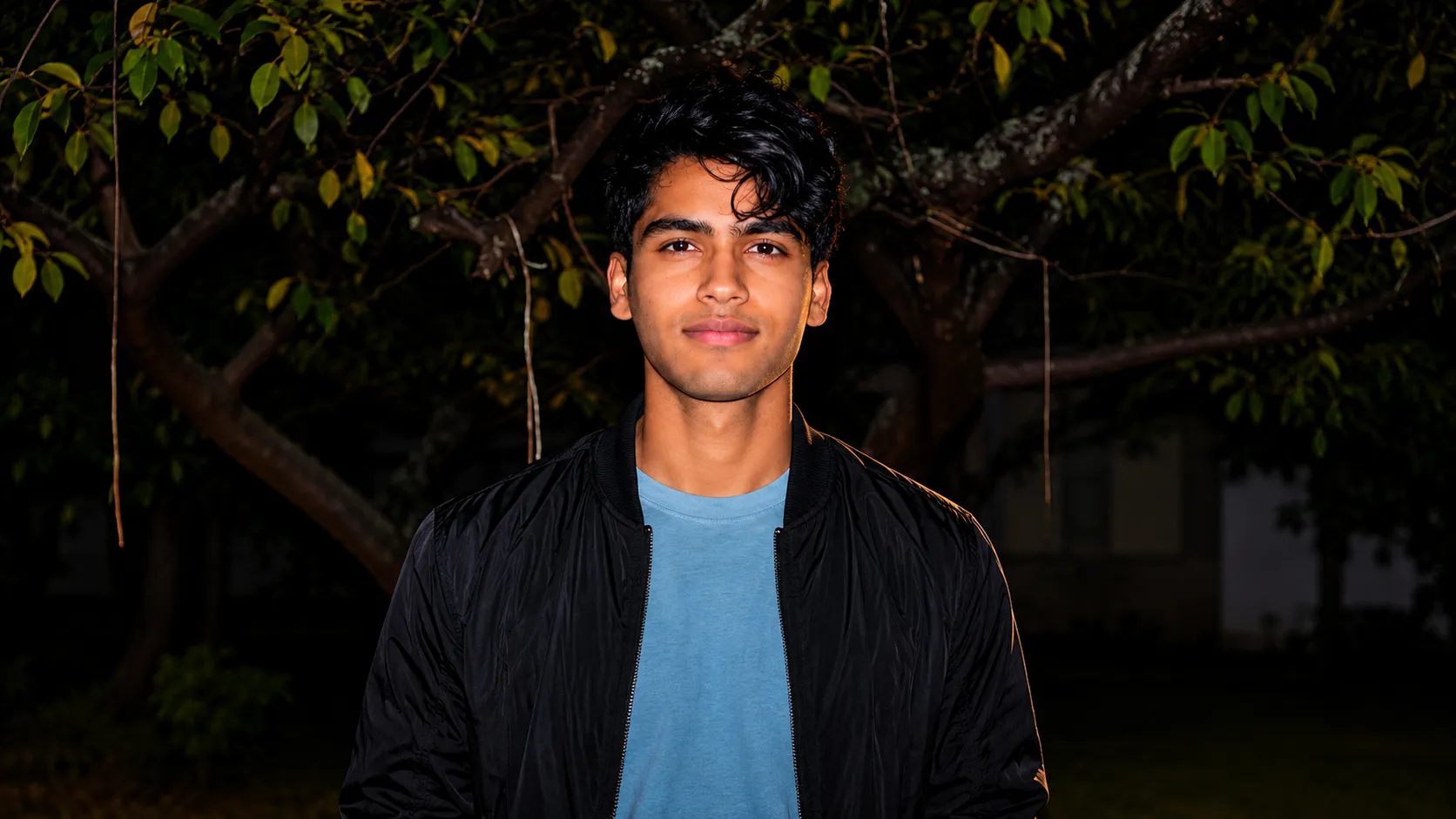
Aman Sanger was 14 when he wrote his first lines of code . A decade later, he and his three MIT classmates turned a side project into one of the biggest AI deals in history. On June 15, 2026, Elon Musk's SpaceX announced it would acquire Anysphere, the company behind Cursor, in an all-stock deal valued at $60 billion .
The acquisition came just days after SpaceX's record-breaking IPO on the Nasdaq, which raised $85.7 billion and valued the company at over $2 trillion . With its stock surging nearly 50% from its offer price, Musk's company exercised an option it had secured in an April partnership agreement to buy Cursor outright .
The deal is expected to close in the third quarter of 2026 . If consummated, it will rank among the largest private acquisitions in the AI field this year . For the four young founders—all under 30—it represents a journey from dorm room to Silicon Valley legend.
The Journey
Sanger grew up in the United States to Indian immigrant parents. His father, Arvind Sanger, is an IIT Bombay alumnus who built a career in the hedge fund industry; his mother, Shilpa Sanger, is an orthodontist and entrepreneur, and a board member of Pratham USA . By age 14, Sanger was already fascinated by technology, teaching himself to code and experimenting with projects .
In 2018, Sanger enrolled at MIT to study Computer Science. While there, he interned at Google and Bridgewater Associates, and even launched a small AI consultancy . At MIT, he met three classmates—Michael Truell, Sualeh Asif, and Arvid Lunnemark—who shared his conviction that artificial intelligence could fundamentally change the way software was built .
In 2022, the four friends dropped out of MIT to found Anysphere .
Building Cursor: The Google Docs for Programmers
Their first idea was to build AI tools for mechanical engineers. It failed, because they lacked deep expertise in that field. So they turned to what they knew best: software engineering .
They built Cursor as an AI-powered coding assistant, which CEO Michael Truell described as a "Google Docs for programmers" . The platform was built on the foundations of Microsoft's VS Code editor but designed from the ground up for the AI era. Instead of manually writing every line of code, developers could describe what they wanted in plain language and let AI generate, edit, and debug the software .
Cursor took off. It became one of the fastest-growing software products in history, serving millions of users and generating hundreds of millions of lines of code daily . Unlike typical coding assistants, Cursor can analyze and reason over entire codebases, enabling it to handle tasks sophisticated enough to require genuine programming expertise . Its "Agent Mode" can handle large coding tasks involving multiple files simultaneously, and its "Composer" tool helps developers create, edit, and organize software projects .
The platform also helped spark a trend called "vibe coding"—where engineers build software through natural language prompts while AI manages large-scale code generation and debugging .
The Meteoric Rise
Cursor quickly became one of the hottest tools in the AI era. The company grew largely through word-of-mouth, not expensive marketing . In 2023, Anysphere raised an $8 million seed round led by the OpenAI Startup Fund . During 2024 and 2025, it completed multiple funding rounds that pushed its valuation higher and higher .
By early 2025, Cursor had reached $100 million in annual recurring revenue . Its Series B funding round valued the company at around $2.6 billion. Then came a Series C round that raised $900 million at a $9.9 billion valuation .
In November 2025, Anysphere announced a massive $2.3 billion Series D funding round co-led by Accel and Coatue. The deal valued the company at $29.3 billion . Major investors included Nvidia, Google, and several other technology giants. By that point, annual recurring revenue had crossed $1 billion, and the company employed more than 300 people .
By early 2026, Cursor's annual recurring revenue had reportedly climbed to between $2 billion and $3 billion, with some investors discussing valuations as high as $50 billion in private funding talks .
The SpaceX Connection
The $60 billion acquisition was not a sudden event. In April 2026, SpaceX and Cursor had already announced a partnership, with SpaceX securing the option to either buy the company for $60 billion or pay $10 billion for their collaboration .
The rationale was clear. In an April blog post, Cursor admitted that its growth had been "bottlenecked by compute"—a lack of computing power for training its AI models . The partnership with SpaceX would give Cursor access to xAI's Colossus infrastructure in Memphis, Tennessee, one of the world's largest AI training supercomputers .
For SpaceX, the deal was about vertical integration. As the company stated in its IPO prospectus: "The depth of Cursor's integration with a high-frequency coding workflow generates valuable developer interaction data… We expect that access to this data will enhance our model training and inference, including with respect to Grok" .
The acquisition helps SpaceX catch up to rivals like OpenAI and Anthropic in the AI coding space . SpaceX's prospectus noted that its total addressable market is $28.5 trillion, with $26.5 trillion of that coming from AI—including AI enterprise applications ($22.7 trillion), AI infrastructure ($2.4 trillion), AI consumer subscriptions ($760 billion), and AI digital advertising ($600 billion) .
The Billionaire at 25
The funding rounds transformed Sanger into a billionaire. With an estimated ownership stake of around 4% to 5%, Forbes valued his net worth at roughly $1.3 billion after the Series D round . Following the $60 billion SpaceX acquisition, his net worth has been estimated as high as $5.5 billion .
Cursor is now used by more than 50,000 enterprise teams, including engineering organizations at Nvidia, Adobe, Uber, Shopify, and PayPal. Its tools are used across 64% of Fortune 500 firms . Nvidia CEO Jensen Huang has described Cursor as his "favorite enterprise AI service" .
The Bottom Line
Aman Sanger is not the first Indian-American to make it big in Silicon Valley. But his journey is remarkable: from learning to code at 14, to dropping out of MIT, to building one of the fastest-growing software products in history, to closing a $60 billion deal with Elon Musk. The Cursor acquisition is not just a personal milestone. It is a signal that the AI arms race has moved from chatbots to the tools that build the software that runs the world.