The Insurance Distribution Startup That's About to Become a Public Company
Insurance is one of those products everyone needs and almost no one enjoys buying. It's confusing, the paperwork is endless, and most people genuinely don't understand what they're signing up for. Turtlemint built an entire business around fixing that problem — not by selling insurance directly to consumers, but by empowering the agents who do.
Eleven years later, that business is about to go public. And the institutional money has already placed its bet.
On June 18, 2026, Turtlemint Fintech Solutions Limited raised ₹397.20 crore from anchor investors — at the upper end of its IPO price band of ₹144 to ₹152 per share — just one day before its public issue opens for subscription on June 19.
Who's Buying In — And Why It Matters
The anchor book wasn't a quiet, low-conviction placement. It attracted 32 institutional investors, allotted 2.61 crore equity shares, and pulled in genuinely heavyweight names from across India's financial system. ICICI Prudential Equity & Debt Fund took the largest single allocation. Mirae Asset, Bandhan Bank, Bank of India, and several other domestic mutual funds participated across 12 different schemes — together accounting for 42.5% of the total anchor allocation.
Beyond domestic mutual funds, the round drew in foreign portfolio investors and global institutions including BNP Paribas Financial Markets, Societe Generale, Amansa Holdings, Susquehanna Pacific, and Citi Group — alongside major Indian insurers like Bajaj Life Insurance, ICICI Prudential Life Insurance, and Axis Max Life Insurance.
That last detail is worth sitting with. Some of India's biggest life insurance companies — businesses that compete in the very industry Turtlemint sells distribution technology for — chose to become anchor investors in its IPO. That's not just financial speculation. That's an industry insider's vote of confidence.
What Turtlemint Actually Does
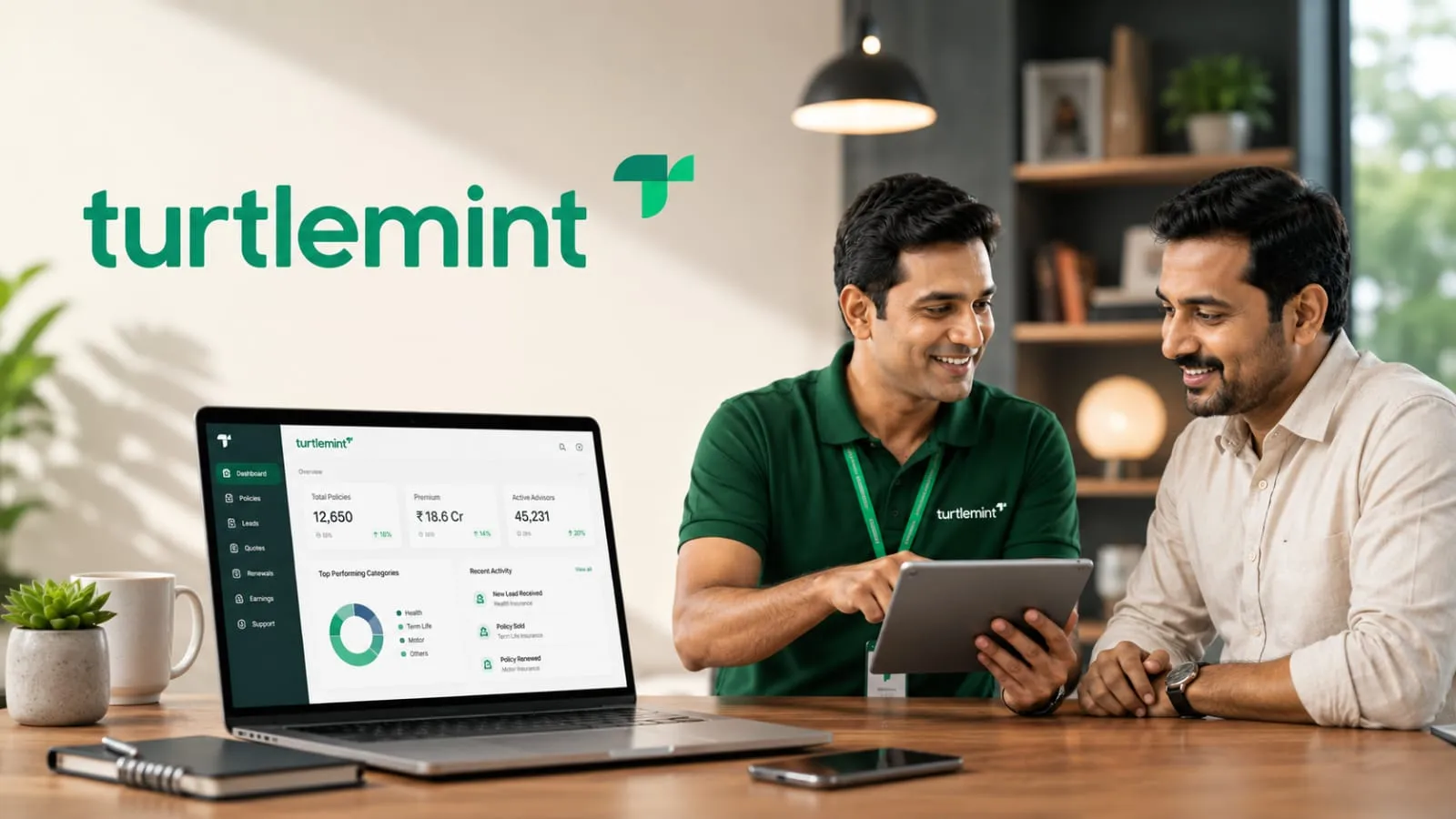
Founded in 2015 by Dhirendra Mahyavanshi and Anand Prabhudesai, Turtlemint doesn't manufacture insurance products. It doesn't compete with insurers. Instead, it operates a "phygital" distribution platform — combining a digital technology backbone with a vast network of on-ground insurance advisors — that helps agents compare, sell, and manage insurance policies from multiple providers, all through one unified platform.
For India's enormous and historically fragmented network of independent insurance agents, this is genuinely transformative. Instead of being tied to a single insurer's product line and paperwork systems, an agent using Turtlemint can offer their customers a broader range of products, manage policy renewals more efficiently, and run their advisory business with far better technology than they could ever build or afford on their own.
Over the past decade, Turtlemint has expanded this model across nearly the entire country — building one of India's largest insurance distribution networks at a moment when the country's insurance penetration remains stubbornly low compared to global peers, leaving enormous room for growth.
Breaking Down the IPO
The full public issue is structured to raise ₹883 crore in total — comprising a fresh issue of shares worth ₹660.72 crore and an offer-for-sale component of approximately ₹221.95 crore, through which existing shareholders, including marquee venture investors Nexus Venture Partners and Peak XV Partners, will sell a portion of their holdings.
At the upper end of the price band, the IPO values Turtlemint at approximately ₹4,513 crore — nearly $475 million. The issue opened for public subscription on June 19 and closes on June 23, with the company expected to make its market debut on both the BSE and NSE on June 29.
The allocation structure reserves roughly 30% of shares for Qualified Institutional Buyers, 15% for Non-Institutional Investors, and 10% for retail investors — with the remaining 45% already placed with anchor investors. The minimum investment for retail participants works out to approximately ₹14,896, based on the upper price band and the 98-share lot size.
Where the Fresh Capital Will Go
Unlike many startup IPOs, where the offer-for-sale component dominates and existing investors use the listing primarily as an exit opportunity, Turtlemint's IPO leans more heavily toward the fresh issue — meaning the bulk of the capital raised goes directly into the company rather than out to early backers. That ₹660.72 crore fresh issue will be deployed toward technology infrastructure, product development, marketing, working capital requirements, and inorganic growth opportunities such as acquisitions.
For an insurtech platform competing in an industry where trust, technology reliability, and agent network depth are everything, that capital allocation makes strategic sense. Strengthening the technology stack and expanding the agent network through acquisitions are exactly the levers that determine whether Turtlemint can defend and grow its market position once it's operating under the scrutiny of public markets.
What Comes Next
Going public changes everything about how a company operates — and Turtlemint is entering a particularly demanding spotlight. As a regulated financial services business, it will now face continuous public market scrutiny around growth rates, profitability trajectory, customer acquisition costs, regulatory compliance, and the durability of its renewal revenue — the recurring income generated when customers renew insurance policies year after year.
The insurtech sector globally has had a mixed track record on public markets, with several high-profile listings struggling to translate strong growth narratives into sustained profitability once the costs of customer acquisition and regulatory compliance are fully priced in by public investors. Turtlemint's challenge will be proving that its phygital, agent-empowerment model can scale profitably and responsibly under that lens.
But the early signal is strong. Thirty-two anchor investors, ₹397 crore committed before the public even got a chance to bid, and some of India's largest insurers backing a company that helps distribute their own products — that's about as strong a vote of institutional confidence as an Indian startup IPO can hope to receive heading into listing week.
India's insurance penetration story is still being written. Turtlemint just bought itself a much bigger stage to write the next chapter on.