Europe Is Tired of Watching Its Best Companies Leave. France Built a Machine to Stop It.
Picture the pattern that has defined European tech for thirty years. A French engineer starts a company. A German researcher spins out a deeptech startup. A Dutch team builds a platform product that competes with Silicon Valley. They grow, they fundraise, they attract attention — and then, when the time comes to raise a serious growth round of €100 million or more, the European capital simply is not there at scale. An American VC writes the cheque. The headquarters moves to Delaware. The talent follows. Europe contributed the founder and got back a subsidiary.
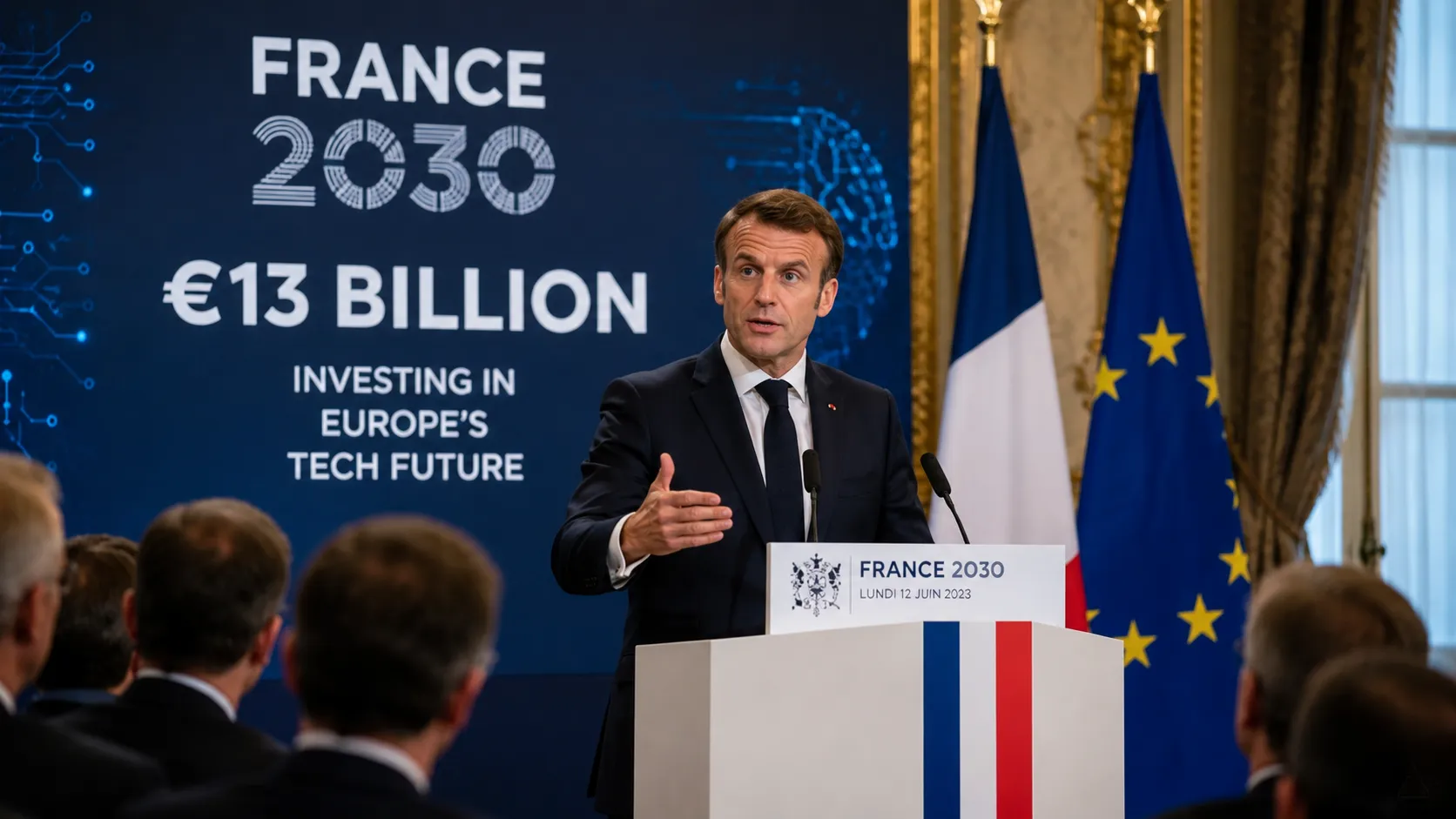
France has spent the better part of six years trying to break that cycle. On June 19, 2026, at the VivaTech conference in Paris, its Finance Ministry announced the latest and most ambitious iteration of that effort: Phase 3 of the Tibi initiative, mobilising €13 billion in new institutional investor funding for French and European technology companies. The total raised under Tibi since its launch in 2020 now stands at nearly €31 billion. The target for Phase 3 is €15 billion by 2030. Half of all new investments under this phase are earmarked specifically for deeptech.
And the most striking thing about it — the thing that distinguishes Tibi from virtually every other government tech programme on the continent — is that it barely costs the French state anything.
What Tibi Actually Is — and Why the Structure Is the Story
Most government technology investment programmes work in one of two ways. Either the state creates a sovereign fund and deploys public money directly into companies, or it offers subsidies and grants that reduce the private sector's risk. Both approaches require the government to put its own capital at risk, subject to political scrutiny and constrained by fiscal limits.
Tibi is neither of those things.
Conceived by Philippe Tibi, a professor of economics at the École Polytechnique, the initiative was designed to solve a structural problem that a 2019 report had identified with precision: French institutional investors — insurers, pension funds, large asset managers — were systematically underinvested in technology and venture capital. They held vast pools of long-term capital and were deploying almost none of it into the growth-stage tech companies that France was producing.
The reason was not lack of interest. It was habit, risk frameworks, and a market structure that had not yet normalised tech as an institutional asset class. Tibi's solution was elegantly simple: create a government-recognised label for qualifying venture and growth equity funds, persuade major institutional investors to commit to allocating a portion of their assets to labelled funds, and let the label itself become the credibility mechanism that moves capital.
The government does not write cheques. It sets standards, provides the political signal, and convenes the room. The institutional investors write the cheques — with their own money, into privately managed funds, at returns they expect to earn commercially.
Phase 1, running from 2020 to 2022, set a target of €6 billion. Investors exceeded it, committing €6.4 billion. Phase 2, running from 2023 to 2026, beat its target more than a year early. A government audit found that Tibi nearly tripled annual French tech investment over its first five years. The companies that received capital from Tibi-labelled funds include Doctolib — France's digital health platform, now one of the country's most valuable tech companies — logistics robot maker Exotec, and BlaBlaCar, the ride-sharing platform that became one of Europe's more quietly successful unicorns.
Phase 3, announced at VivaTech on June 19, targets €15 billion by 2030 and brings in a cohort of new participants that tells its own story about where European tech investment is heading.
The New Investors — and What Their Presence Means
The first two phases of Tibi were built primarily on private insurers: AXA, Crédit Agricole Assurances, and Groupama were among the early backers. That base has not gone anywhere. But Phase 3 expands the investor base in ways that are strategically significant.
Joining the programme for the first time are: Carac, a mutual insurer; SNCF, France's national rail operator; RATP, the Paris public transport authority; Naval Group and MBDA, two defence companies; and Eutelsat, the satellite operator.
The last bit matters. Institutional investors have long steered clear of defence tech. Bringing them in marks a real shift.
The inclusion of SNCF and RATP — state-linked industrial companies that run critical national infrastructure — represents a deliberate broadening of the programme's mandate. These are not financial institutions looking for yield. They are organisations with long-term strategic horizons, national responsibilities, and a vested interest in the industrial and technological competitiveness of France. Their participation signals that Tibi has moved from a finance ministry initiative into something that functions more like a national alignment instrument — bringing together insurance capital, pension capital, industrial capital, and defence capital around a single thesis.
That thesis is tech sovereignty. The belief that Europe cannot remain competitively dependent on American cloud infrastructure, American AI models, and American capital for its most important technological companies, and that changing that dependency requires not just policy rhetoric but the systematic redirection of institutional capital toward European alternatives.
The Deeptech Mandate — and Why It Is Different From What Came Before
Every government technology fund says it is focused on the future. Phase 3 of Tibi has put a specific, verifiable commitment on that claim: 50 per cent of all new investments must go to deeptech companies.
Deeptech means something precise in this context. It means companies building in artificial intelligence, advanced manufacturing, aerospace, cybersecurity, quantum computing, biotechnology, and other research-intensive sectors where the product is not software-as-a-service but a fundamental capability — a new material, a new algorithm, a new hardware architecture — that takes years and significant capital to bring from lab to market.
These are precisely the companies that traditional venture capital finds most difficult to fund. The timelines are long. The technical risk is high. The returns, when they come, are often enormous — but the patience required to wait for them is not a feature of most institutional investment frameworks.
Tibi Phase 3's deeptech mandate is, in effect, a structural response to this gap. By requiring that half of all Tibi-labelled fund investment goes to deeptech, France is forcing institutional capital — with its long time horizons and multi-decade liability matching requirements — into the asset class that most needs patient money and that has historically been most underserved by it.
This is not a small thing. France's deeptech ecosystem has produced companies that have attracted global attention: Mistral AI, which raised €1.2 billion and has become the most prominent European challenger to American large language models; Exotec, the warehouse robotics company; Quandela, the quantum computing player; and Biomérieux, the diagnostic equipment manufacturer. The argument that France has the talent and the research base for world-class deeptech is not a stretch. The argument was always about the capital. Phase 3 is an attempt to resolve that.
The European Ambition — Bigger Than France
The most structurally significant change in Phase 3 is geographic. The first two phases stayed mostly inside France. Phase three is built to back pan-European funds that can write bigger cheques across several countries.
This is the evolution that makes Tibi interesting to policymakers well beyond France. The programme is now explicitly designed to support pan-European funds — investment vehicles that can deploy capital into German deeptech, Dutch climate tech, Swedish fintech, and Polish AI startups, not only French ones.
The strategic rationale is clear. Europe's problem is not that individual countries lack interesting companies. It is that the European capital market remains fragmented by national boundaries in ways that prevent the formation of the large growth-stage funds that can compete with Sequoia, Andreessen Horowitz, and Tiger Global in terms of cheque size and platform support. A French deeptech company that needs €200 million in a growth round should not have to call a San Francisco firm to get it — but that has been the reality for too many of the continent's best companies.
Philippe Tibi, the economist whose name the initiative bears, has argued that European institutional investors would need to allocate roughly one per cent of their assets — approximately €150 billion — to venture capital in order to compete with the United States and China on late-stage tech funding. Tibi Phase 3 is not €150 billion. But it is a €13 billion step in a direction that, if continued and replicated across other European markets, could change the structural dynamics of European late-stage venture capital within a decade.
Several European governments are watching. The model's elegance — mobilising private capital without public expenditure through a standard-setting and convening mechanism — is exactly the kind of approach that fiscally constrained European governments can plausibly replicate without adding to national debt.
The Proof of Concept — What Six Years of Tibi Has Delivered
The announcement of Phase 3 at VivaTech did not arrive in a vacuum. It arrived with a track record.
The French government audit that reviewed Tibi found that the programme had nearly tripled annual French tech investment over its first five years. The companies that have benefited from Tibi-labelled funds have become household names in the French and European startup ecosystem. The second phase beat its target ahead of schedule, suggesting that the mechanism works — that institutional investors, once persuaded to commit, do commit, and that the commitment produces real capital flows into real companies.
France has a competitive edge in AI, quantum, and space helped by a vibrant ecosystem of startups, spearheaded by Mistral AI, Hugging Face, and Dataiku. These companies did not emerge from nothing. They emerged from an ecosystem that includes world-class engineering schools, a research infrastructure built over decades, and — increasingly — a capital environment that Tibi has been deliberately constructing.
Europe's technology spending in 2026 is projected to exceed €1.5 trillion for the first time, growing at 6.3 per cent. Sovereignty has become a defining theme — not a long-term ambition but an immediate commercial and political requirement. Most of Europe's cloud services still run on US infrastructure. The GDPR created legal constraints but not technical independence. The AI conversation has raised the stakes on who owns the foundational models, who controls the compute, and who holds the data.
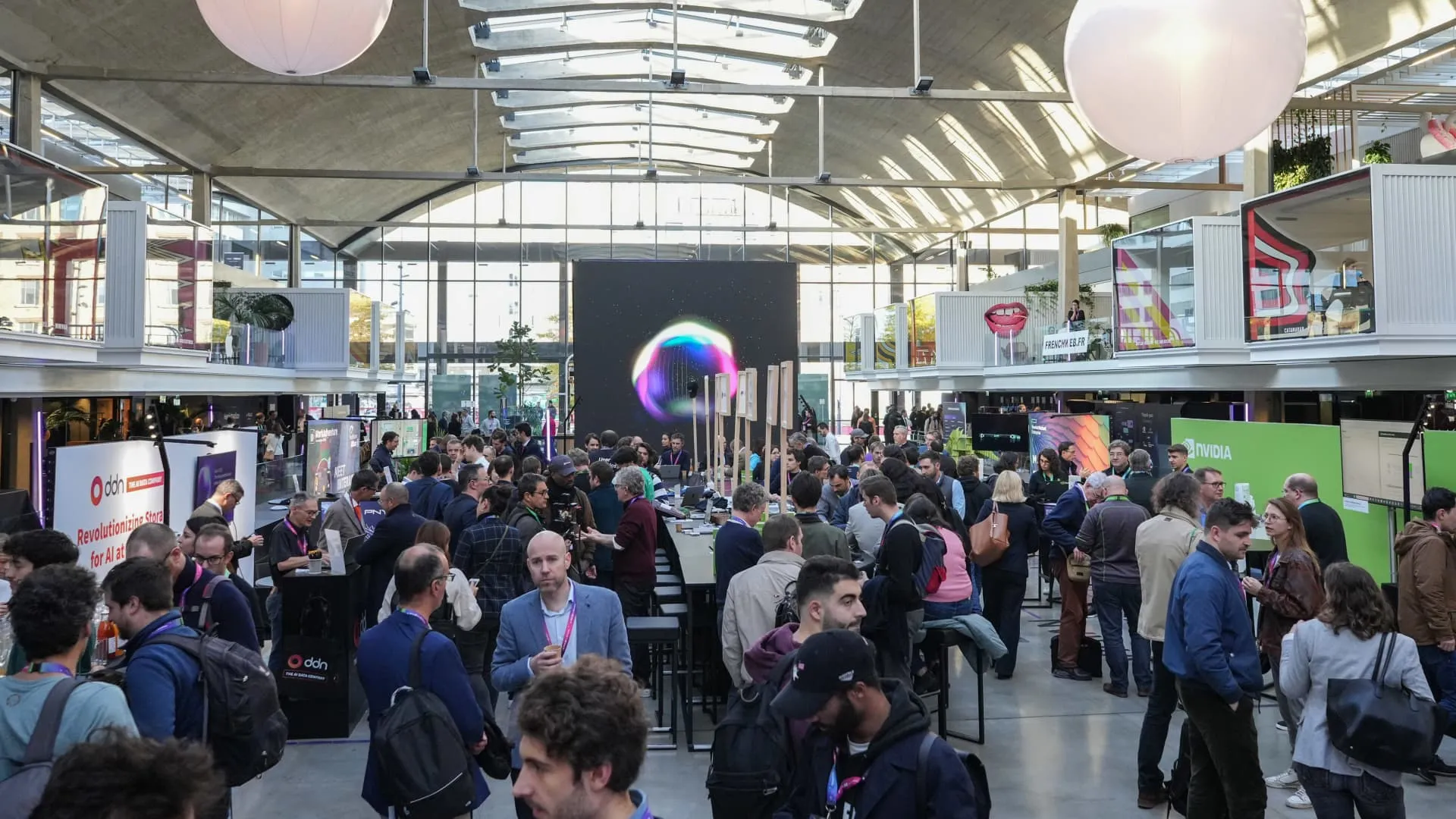
France has a position in that conversation. Mistral AI is the most prominent example — a company that has built competitive large language models and has positioned itself explicitly as a European alternative to OpenAI and Anthropic. The sovereign cloud stack being built by OVHcloud, the quantum computing work at institutions like Institut Quantique, and the AI infrastructure agreements France has pursued — including a €10 billion supercomputing agreement with Fluidstack targeting 500,000 GPUs and 1 gigawatt of compute capacity — all form part of the same strategic picture.
Tibi Phase 3 is the capital mechanism that is supposed to ensure those companies can scale to the size where they become genuinely competitive, rather than becoming acqui-hire targets for American platforms before they get there.
What This Means for the Rest of Europe — and for Founders Anywhere
The Tibi announcement is a France story. But its implications extend significantly beyond France.
For European founders, the most important signal is that the institutional capital environment in Europe is changing — not through regulatory mandate or government grants, but through the systematic redirection of existing institutional pools toward tech. Tibi's model, if it is replicated in Germany, the Netherlands, Italy, and the Nordic countries, would represent a fundamental shift in the available growth capital for European companies.
For policymakers in other markets, the lesson is structural: the most effective tech capital programmes are not the ones that require governments to take on risk, but the ones that redesign the incentives and frameworks that govern how existing private capital allocates itself. France did not spend €13 billion. It convinced entities that already had €13 billion to point it differently.
For investors globally, the question is whether Phase 3 creates a sufficiently deep and liquid pool of European growth capital to change the competitive dynamics of late-stage European tech — to make it plausible for a European founder raising a €200 million round to build that round from European institutional investors rather than flying to San Francisco to close it.
That outcome is not guaranteed. Europe is good at starting companies, then loses them when they need serious growth capital. Tibi is designed to intervene at exactly that moment. Whether €15 billion by 2030 is enough to change a pattern that has persisted for thirty years is the question that Phase 3 will answer — one investment at a time.
What is not in question is that France, at least, has stopped waiting for the answer. It built a machine, ran it for six years, proved it worked, and is now running it at greater scale, across more sectors, and across the whole of Europe.
Silicon Valley's most effective competitive advantage has never been talent or ideas. It has been patient, institutional capital that arrives at scale at exactly the moment a company needs it. France just decided to build the European version of that. And the clock is running.