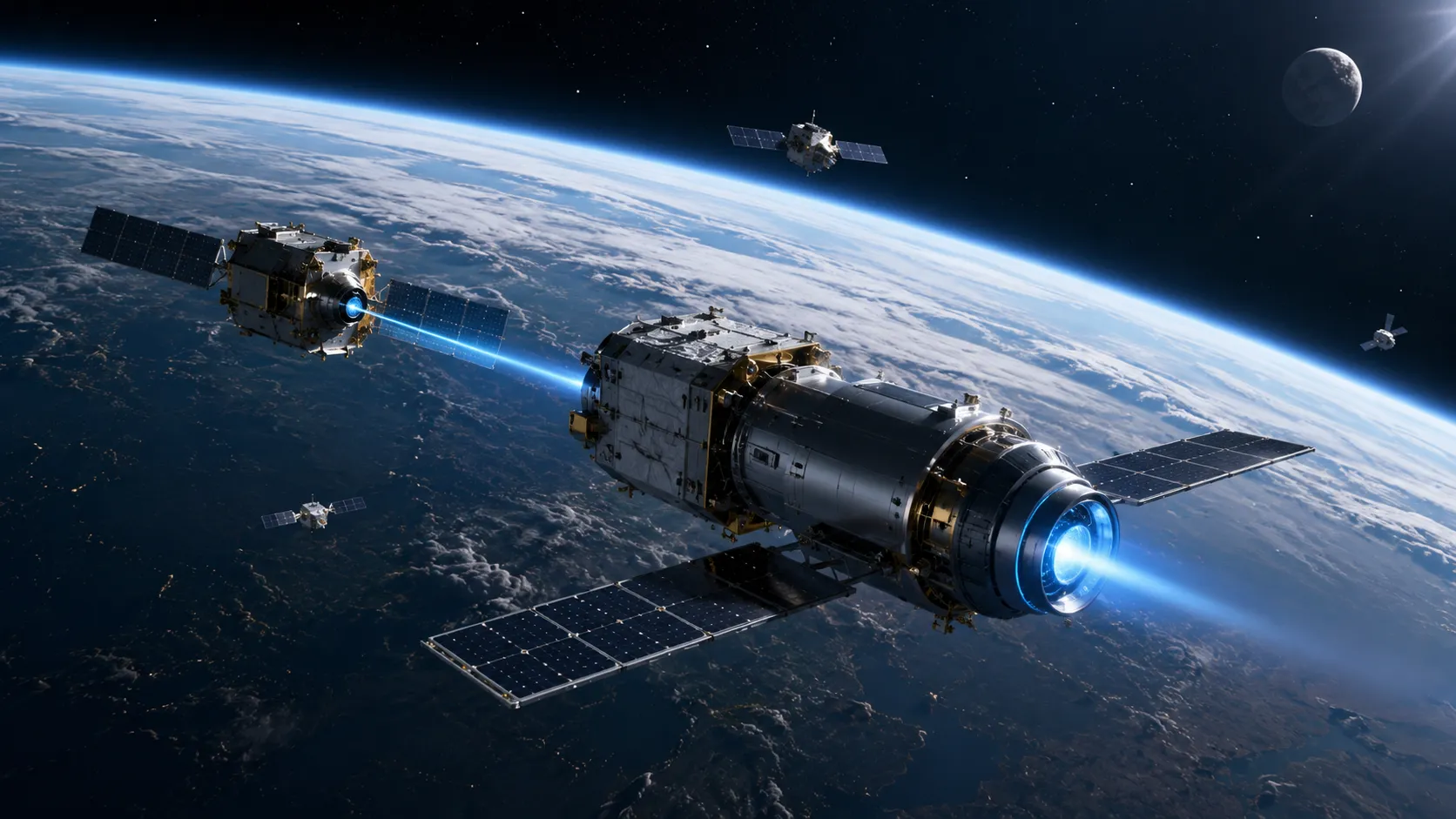
For most of the modern space age, getting to orbit was the hard part.
Governments spent decades and hundreds of billions of dollars trying to make rockets more powerful, reliable and efficient. Launch vehicles became the symbols of national ambition because access to space depended almost entirely on the ability to escape Earth's gravity. The companies that built rockets controlled the gateway to the space economy. But as launch technology becomes increasingly routine, investors are beginning to ask a different question: what happens after the rocket completes its mission?
That question sits at the center of Impulse Space's story.
The California-based company, founded by former SpaceX propulsion chief Tom Mueller, recently raised $500 million in fresh funding, reportedly pushing its valuation to approximately $4.26 billion. The scale of the investment immediately attracted attention across the aerospace industry because Impulse is not trying to build another launch company. Instead, it is focused on an entirely different challenge—moving satellites, spacecraft and cargo once they are already in space.That distinction may sound subtle.In reality, it could define one of the next major categories of the global space economy.
Space Launches Are Becoming A Commodity
A decade ago, reaching orbit was extraordinarily expensive.
Launch opportunities were limited, costs were high and only a small number of organizations possessed the capability to send payloads into space. Companies such as SpaceX fundamentally changed that equation. Reusable rockets dramatically lowered costs, increased launch frequency and transformed access to orbit from a rare event into a rapidly growing commercial service.
The consequences have been profound.
Satellites are being deployed at unprecedented rates. Governments are increasing investments in space programs. Private companies are building new constellations. Research missions, communications platforms and defense-related systems are all expanding. As launch costs decline, entirely new business opportunities become economically viable because getting hardware into space is no longer the primary bottleneck.
That shift is creating a new problem.Once spacecraft reach orbit, they often need additional transportation services to reach their final destinations. Satellites may need repositioning. Payloads may need movement between orbital locations. Future lunar missions will require transportation beyond Earth's immediate vicinity. In many cases, rockets only complete the first part of the journey.
Impulse Space Is Building The Missing Layer
Tom Mueller understands this challenge better than most people.
As one of the key propulsion architects behind SpaceX's success, he spent years helping build engines that transformed the economics of launch. His experience gave him a front-row seat to one of the most important changes in aerospace history. It also revealed where the next opportunity might emerge.
Impulse Space is focused on in-space transportation.
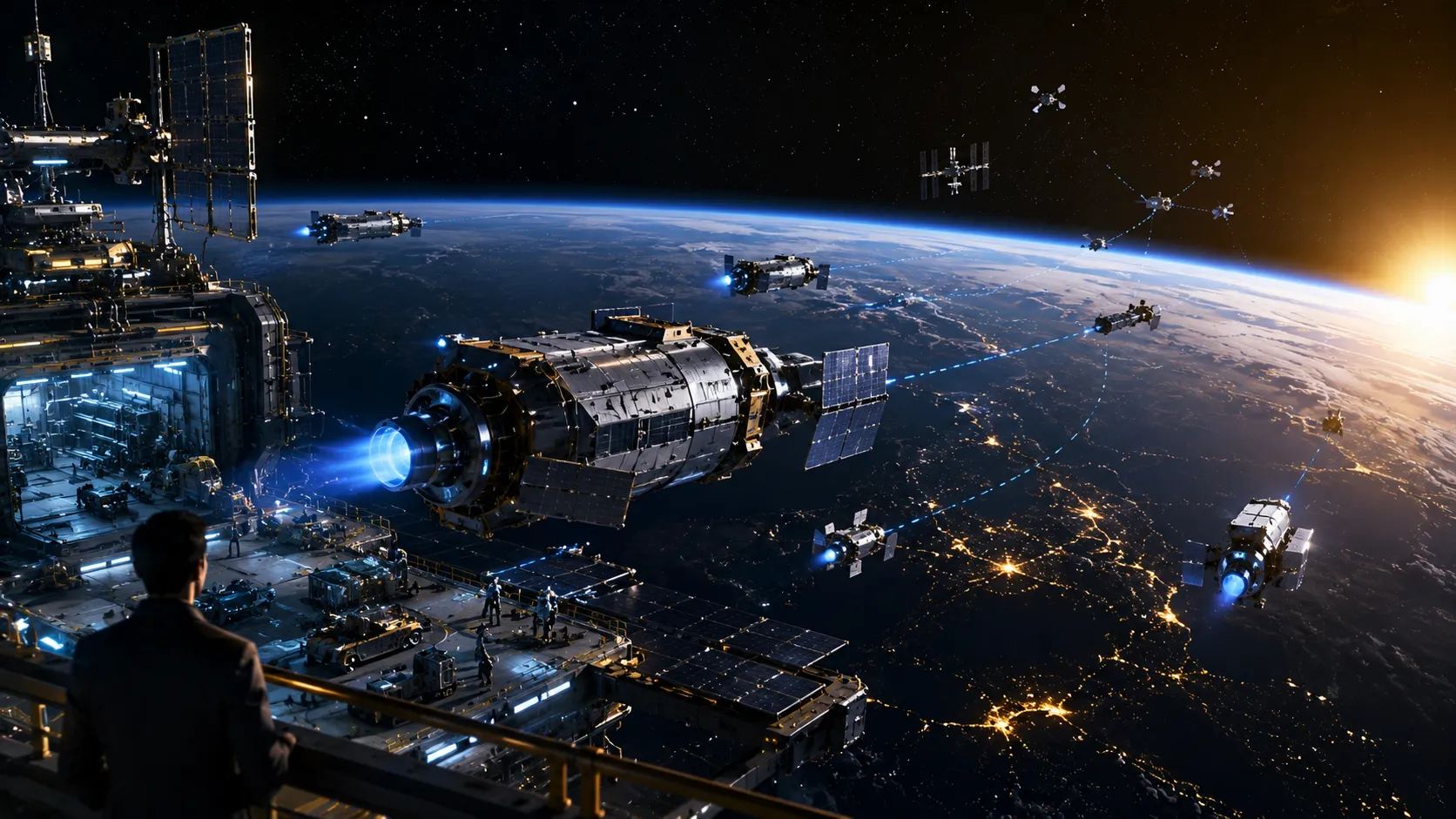
Rather than competing directly with launch providers, the company aims to become a logistics platform operating beyond launch. Its vehicles are designed to move payloads after they reach orbit, creating what many industry observers describe as a missing layer within the space economy. If launch vehicles function like highways connecting Earth to space, companies such as Impulse are attempting to build the transportation networks that operate once travelers arrive.
The analogy is increasingly useful.No economy thrives solely because roads exist. Growth occurs when logistics networks, delivery systems and transportation services emerge around that infrastructure. The same principle may apply to space. Launch providers created access. The next generation of companies may create mobility.
Investors Are Betting On A New Space Category
The size of the funding round reveals how seriously investors are taking that vision.
Raising $500 million is difficult under any circumstances. Achieving that scale in the aerospace sector is particularly notable because space companies often face long development timelines, significant engineering challenges and substantial capital requirements. Investors do not commit such amounts unless they believe the underlying market opportunity could become enormous.
The logic is becoming increasingly compelling.
Every year, more satellites enter orbit. Commercial space activity continues expanding. Governments around the world are increasing investments in national space capabilities. Meanwhile, ambitions are extending beyond Earth orbit toward the Moon and potentially Mars. All of these activities require transportation infrastructure. As space becomes more crowded and economically active, demand for orbital mobility could grow significantly.
That makes Impulse Space less of a rocket company and more of a logistics company.The distinction matters because logistics businesses often become critical infrastructure. Companies that facilitate movement frequently capture value regardless of which individual customers succeed. In the terrestrial economy, transportation networks support entire industries. Investors appear increasingly convinced that similar dynamics could emerge in space.
The Space Economy Is Entering Its Next Phase
Much of the public conversation around space still focuses on launches.
Rocket launches generate dramatic imagery. They produce headlines and capture public imagination. Yet mature industries often shift attention away from access and toward utility. The internet was initially defined by connectivity. Later, value migrated toward the applications built on top of it. Electricity was once a technological marvel. Eventually it became infrastructure supporting countless businesses.
Space may be following a comparable trajectory.The industry is gradually moving from proving that access is possible to figuring out how space can support sustained economic activity. Communications networks, Earth observation systems, manufacturing experiments and future exploration programs all require services beyond launch. Companies capable of enabling those activities may become increasingly important over time.
Impulse Space sits directly within that transition.Its success would not depend on replacing launch providers. Instead, it depends on complementing them. As more objects enter space, demand for transportation within space could expand alongside the broader market. This creates a business model tied to the growth of the entire ecosystem rather than a single mission category.
Why This Funding Round Matters
The investment is ultimately about more than one company.
It reflects a growing belief that the next wave of space innovation will focus on infrastructure rather than access. Launch vehicles solved one problem. The industry is now beginning to solve the next. Investors are increasingly looking for companies capable of supporting long-term economic activity beyond Earth rather than simply reaching orbit.
That is why Impulse Space's funding round stands out.The story is not merely about a former SpaceX executive raising capital.It is about investors recognizing that the future of space may depend less on launching rockets and more on building the transportation systems that operate after launch.And if they are right, the next space race may not be about getting to orbit first.It may be about controlling everything that happens once you arrive.